Nepal Tunnel Rescue: 2 Workers Saved After 9 Days
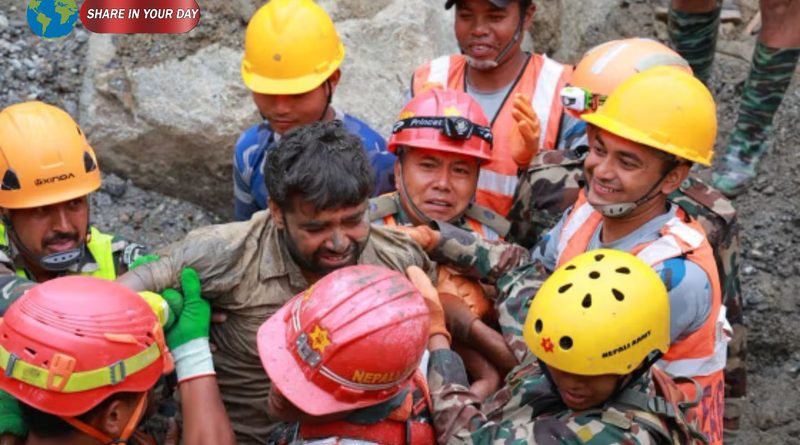
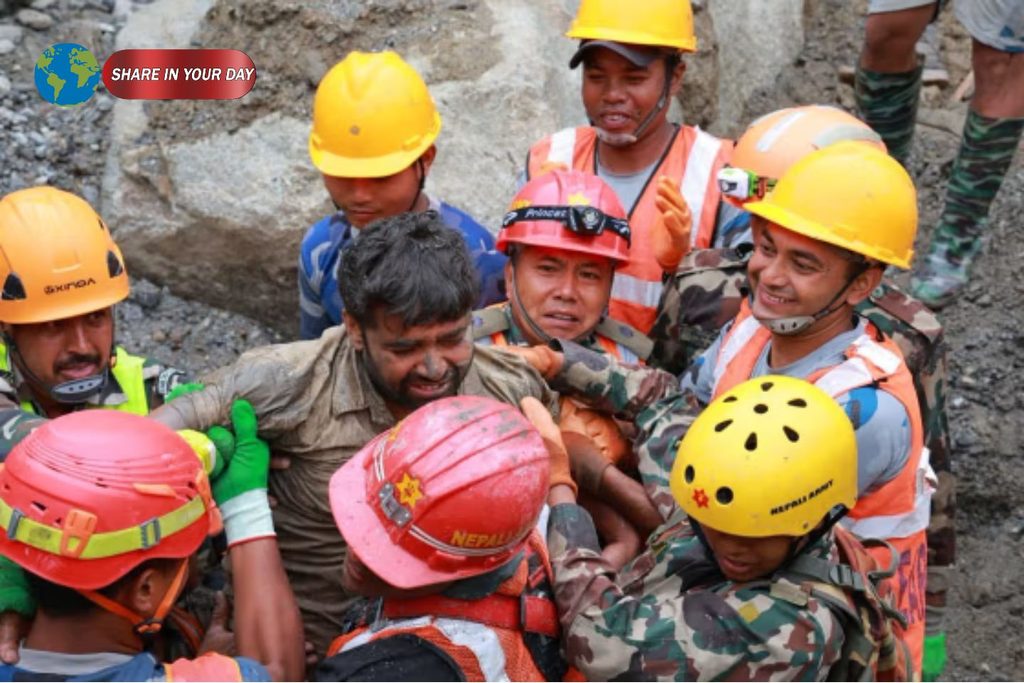
A dramatic Nepal tunnel rescue has ended with two workers being pulled alive from a hydropower tunnel nine days after devastating floods struck the region.
The two men were found inside the Trishuli 3A hydropower project in Nepal after rescue teams heard voices from underground. They were located about 170 meters inside the tunnel and were eventually brought to safety following an intensive operation involving the Nepali Army and other emergency personnel. A
The rescue offers a rare moment of hope in a disaster that has caused widespread destruction and left thousands of people missing.
Nepal Tunnel Rescue Brings Hope After Devastating Floods
The workers became trapped after severe flooding and debris swept through the hydropower area on Aug. 26.
The disaster affected major infrastructure projects along the Trishuli River and surrounding areas. Floodwater and mud blocked tunnel entrances, creating extremely difficult conditions for anyone trapped underground.
At the Trishuli 3A site, rescuers faced a particularly difficult task. Large quantities of mud and debris had changed the landscape around the tunnel, making it difficult to determine where the original entrance and underground passages were located.
The rescue operation continued for days despite the dangerous conditions.
Then rescuers heard signs of life.
That discovery dramatically changed the operation and gave emergency teams renewed hope that other missing workers could potentially still be alive. TThe Guardian+1
Two Workers Found Alive Underground
The rescued workers were identified as Sanjay Sah, a mechanical foreman, and Kabir Maharjan, a project supervisor.
According to reports, the men had survived inside the tunnel for nine days before rescue teams reached them.
The conditions were extremely challenging. They were surrounded by mud and debris deep inside the hydropower facility, with rescuers having to create a narrow route through the blockage.
After establishing contact, rescue teams worked to extract the men from the tunnel.
Both were taken for medical treatment in Kathmandu. Reports said one of the workers was in critical condition, while both required medical attention following their prolonged ordeal underground. AAP News+1
The emotional significance of the rescue was immediately clear.
After spending more than a week in darkness, one survivor reportedly asked rescuers what day it was when he emerged.
How the Nepal Tunnel Rescue Operation Worked
Finding the trapped workers was only the first challenge.
Rescuers had to reach them through a tunnel obstructed by enormous quantities of mud and debris. Conventional access routes were difficult to use, forcing emergency crews to consider alternative approaches.
Satellite imagery, tunnel maps and topographical information were used to help establish where the underground structure remained accessible.
Rescue teams then used heavy equipment, excavation techniques and other methods to clear a path toward the workers. International tunneling expertise was also made available during the broader rescue effort. TThe Indian Express
The operation required patience because rushing into an unstable tunnel could have created another collapse or endangered both the workers and rescuers.
Once contact was established, the priority became creating a safe enough passage to bring the two men out.
Their successful extraction became a major breakthrough in the wider disaster response.
Why the Rescue Is So Significant
The Nepal tunnel rescue is significant because survival for nine days in an isolated underground environment is extremely difficult.
People trapped after floods or tunnel collapses can face multiple dangers at the same time. These include injuries, dehydration, contaminated water, lack of food, poor ventilation, unstable structures and psychological stress.
In this case, the workers were trapped after a disaster that caused enormous amounts of water and debris to enter infrastructure connected to hydropower facilities.
Their survival therefore provides a powerful reminder that underground voids can sometimes protect people from the worst forces of a surface disaster.
It also demonstrates why rescue authorities continue searching even when conditions appear extremely unfavorable.
Thousands Still Missing After Nepal Disaster
Although the successful rescue brought relief, it represents only a small positive development within a much larger tragedy.
The floods and associated disasters have killed more than 1,200 people in Nepal, while thousands more remain missing. The destruction has affected homes, roads, bridges and major infrastructure. AAP News+1
Hydropower projects have been particularly affected.
Nepal relies heavily on hydropower, making these facilities important to the country’s electricity infrastructure. However, many projects are located in mountainous terrain where floods, landslides and other geological hazards can make emergency access extremely difficult.
Authorities have consequently continued searching tunnels and other areas where workers may have survived.
The rescue of Sah and Maharjan has strengthened hopes among families still waiting for information about missing relatives.
Rescue Teams Continue Searching Other Tunnels
The Trishuli 3A rescue is not the end of the operation.
Emergency crews are continuing efforts at other hydropower facilities affected by the disaster. Some tunnels remain blocked by mud and debris, while rescue teams are attempting to determine whether additional workers could still be alive underground.
According to reporting from the region, hundreds of workers are believed to have been trapped across affected hydropower sites. AAP News+1
At some locations, rescuers have had to work with limited information about the condition of underground passages.
That makes every breakthrough important.
The discovery of two survivors demonstrates that apparently inaccessible areas can still contain people who have managed to survive. Rescue authorities therefore face a race against time while also having to protect their own personnel from unstable tunnels and continuing hazards.
The Human Cost of Nepal’s Flood Disaster
Beyond the rescue operations and infrastructure damage, the disaster has left thousands of families searching for answers.
Many people have lost homes, livelihoods and relatives.
The destruction of hydropower facilities also creates longer-term challenges. Damaged roads and bridges can make it difficult to transport equipment and emergency supplies, while destroyed electricity infrastructure can complicate recovery efforts.
Nepal’s mountainous geography adds another layer of difficulty.
Communities can be separated by damaged roads or blocked valleys, and heavy machinery may have to be transported through difficult terrain before rescue operations can even begin.
For emergency crews, every operation is therefore both a technical and logistical challenge.
A Rare Moment of Hope
The successful Nepal tunnel rescue has provided a rare moment of optimism during an otherwise devastating disaster.
Sah and Maharjan spent nine days underground before rescuers finally reached them. Their survival has encouraged authorities and families to continue hoping that other missing workers could also be located.
The rescue also highlights the importance of specialized disaster-response teams, engineering expertise and detailed knowledge of underground infrastructure.
While many questions remain about the full scale of the disaster, the two survivors’ recovery represents an important victory for rescuers.
What Happens Next?
The immediate priority for the two rescued workers is medical treatment and recovery.
Meanwhile, rescue teams remain focused on other locations where people may still be trapped.
Authorities must balance the urgency of finding survivors with the dangers faced by rescue personnel working inside unstable tunnels. Clearing debris can take considerable time, particularly when floodwater has altered underground structures.
The broader recovery will take much longer.
Nepal now faces the difficult task of rebuilding damaged infrastructure, supporting displaced families and assessing the safety of hydropower projects affected by the disaster.
For the families still waiting for missing relatives, however, the rescue at Trishuli 3A offers something invaluable: hope.
Final Takeaway
The Nepal tunnel rescue of two workers after nine days underground is one of the most remarkable developments to emerge from the country’s catastrophic floods.
Sanjay Sah and Kabir Maharjan survived an extraordinarily dangerous situation before rescuers finally brought them out of the Trishuli 3A hydropower tunnel.
Their rescue does not diminish the enormous scale of the disaster, which has killed more than a thousand people and left thousands missing. But it demonstrates why search-and-rescue operations continue even under seemingly impossible circumstances. AAP News+1
As teams continue searching other tunnels and affected communities, the survival of these two workers offers a powerful message to families still waiting for news: hope can survive even in the darkest places.