oman Space Telescope Begins a Critical New Chapter
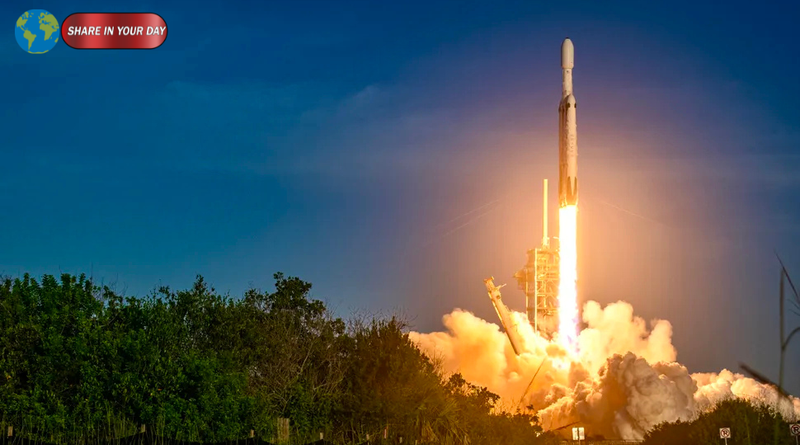
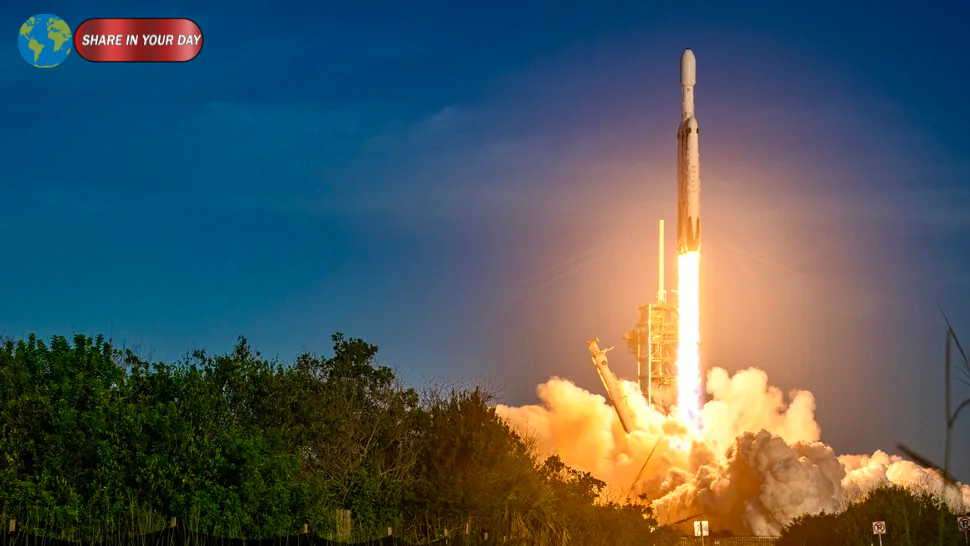
The Roman Space Telescope has entered one of the most important phases of its mission after successfully launching into space and beginning the long process of spacecraft commissioning. NASA’s Nancy Grace Roman Space Telescope lifted off aboard a SpaceX Falcon Heavy from Launch Complex 39A at NASA’s Kennedy Space Center in Florida on Aug. 30, 2026, beginning a journey of roughly three months toward its final operating region near the Sun-Earth Lagrange Point 2.
The launch marked the beginning rather than the end of the mission’s most challenging work. Once safely separated from the rocket, Roman needed to deploy major spacecraft systems, adjust its trajectory, activate scientific instruments and complete extensive testing before it can begin its planned astronomical surveys.
NASA says the observatory is designed to transform studies of dark energy, dark matter, exoplanets and infrared astronomy. Its unusually wide field of view will allow scientists to survey enormous portions of the sky while maintaining detailed infrared vision.
The latest commissioning developments show that Roman is steadily moving from a newly launched spacecraft toward a fully operational space observatory.
1. Roman Space Telescope Successfully Reaches Space
The first major milestone came on Aug. 30, when the Roman Space Telescope launched at 7:26 a.m. EDT aboard a SpaceX Falcon Heavy rocket.
The mission departed from Launch Complex 39A, the historic Florida launch site that has supported numerous major U.S. space missions. NASA confirmed that Roman successfully separated from the rocket’s second stage after launch, allowing the observatory to begin its independent journey.
The Falcon Heavy provided the powerful boost needed to send Roman toward its destination approximately 930,000 miles to 1 million miles from Earth.
That destination is the Sun-Earth L2 region, a gravitationally useful location where Roman can maintain an orbit while observing deep space with relatively stable thermal and communications conditions.
NASA describes the mission as a roughly three-month journey to its final orbit. During that period, the spacecraft will perform deployments, trajectory corrections, instrument activations and extensive commissioning activities.
The successful launch therefore represents only the first step in a much longer process.
2. Roman Performs Its First Major Trajectory Correction
Only a day after launch, the Roman Space Telescope demonstrated that its propulsion system was working as planned.
On Aug. 31, Roman completed an important 3.5-minute engine burn designed to fine-tune its trajectory toward the Sun-Earth L2 region. NASA described the maneuver as the first of two planned burns intended to place the spacecraft on the correct path.
Trajectory corrections are essential for missions traveling millions of miles through space.
Even a spacecraft launched with a highly accurate trajectory can require adjustments. Small differences in speed or direction can become significant over enormous distances. Roman’s propulsion system therefore gives mission controllers the ability to refine its path during the journey.
NASA has said that another trajectory maneuver could be performed if necessary, while orbital insertion around L2 is expected approximately 100 days after launch. Once Roman is operating around L2, periodic station-keeping burns will help maintain its orbit.
This early correction was an important indication that Roman is progressing through its post-launch sequence.
3. The Roman Space Telescope Deploys Its Antenna
Another major milestone came when Roman successfully deployed its high-gain antenna.
The antenna is approximately 5.6 feet wide but weighs only about 24 pounds. Its large size is important because Roman will eventually need to transmit enormous quantities of scientific information across roughly a million miles of space.
NASA expects Roman to generate an exceptionally large amount of data for an astrophysics mission.
The spacecraft’s dual-band antenna will perform different communications functions. One frequency will support commands and spacecraft information, while another will transmit scientific and other data to ground stations.
NASA says Roman’s high-gain antenna can transmit data at speeds of up to 500 megabits per second. Communications will be supported through ground stations in New Mexico, Australia and Japan, helping maintain contact with the spacecraft as Earth rotates.
The antenna deployment lasted roughly four minutes and concluded on Aug. 31.
For mission controllers, the successful deployment was another major step toward transforming Roman from a compact launch configuration into a functioning observatory.
4. Roman Deploys Its Large Sunshade
Following the antenna deployment, NASA successfully released another critical spacecraft component: Roman’s deployable aperture cover.
The large structure functions as a sunshade designed to help keep unwanted light from entering the telescope. This is especially important for an observatory that will search for extremely faint objects and signals across the universe.
NASA reported that the sunshade deployment was completed on Sept. 1. The process used three booms that were electronically triggered to spring upward, with the deployment taking approximately eight minutes.
This system is crucial because astronomical telescopes must carefully control unwanted light.
When scientists are attempting to observe faint stars, galaxies or planets, stray light can interfere with measurements. Roman’s ability to maintain a carefully controlled observing environment will therefore be an important part of its scientific performance.
With both the high-gain antenna and aperture cover deployed, Roman had completed two highly visible pieces of its post-launch transformation.
5. Roman Activates Its Coronagraph Instrument
Perhaps the most exciting commissioning milestone so far is the activation of Roman’s Coronagraph Instrument.
NASA began powering up the instrument on Sept. 1. The coronagraph is designed to block the overwhelming glare of stars so scientists can study much fainter objects located nearby, including planets and dusty disks around other stars.
However, activation does not mean the instrument is immediately ready for scientific observations.
The coronagraph will undergo weeks of testing and calibration. Mission teams must carefully examine how the instrument behaves in the space environment before researchers can rely on its measurements.
The technology is particularly significant because directly observing exoplanets is extremely difficult.
A planet can be vastly fainter than the star it orbits. From Earth’s perspective, the star’s brightness can overwhelm the relatively weak light reflected or emitted by the planet.
Roman’s coronagraph uses specialized technology intended to suppress starlight and make faint planetary signals easier to detect.
NASA’s Jet Propulsion Laboratory previously described the instrument as a technology demonstration designed to take an important step toward advanced direct observations of planets outside our solar system.
Why the Roman Space Telescope Matters
The Roman Space Telescope is not simply another telescope taking pictures of the night sky.
Its mission is built around several major questions in modern astronomy.
One of the biggest is dark energy, the mysterious phenomenon associated with the accelerating expansion of the universe. Scientists still do not fully understand what dark energy is or why the expansion of the cosmos is accelerating.
Roman’s enormous surveys could provide new evidence about how the universe has changed over billions of years.
The observatory will also investigate dark matter, an invisible form of matter that does not appear to interact with light in the way ordinary matter does. Although dark matter cannot be directly seen, its gravitational effects can be detected through observations of galaxies and other cosmic structures.
Roman’s enormous survey capability could therefore provide scientists with an unprecedented amount of information about the distribution and evolution of matter across the universe.
NASA says the telescope could potentially measure light from as many as a billion galaxies over its lifetime. Its field of view is expected to be at least 100 times larger than Hubble’s, giving Roman a dramatically different observational capability.
That combination of wide coverage and infrared sensitivity is what makes the mission especially powerful.
Roman and the Search for Exoplanets
The Roman Space Telescope will also contribute to the rapidly expanding study of exoplanets.
Exoplanets are worlds orbiting stars beyond our solar system. Thousands have already been confirmed, but astronomers believe the Milky Way contains vastly more planets waiting to be discovered and characterized.
Roman will use multiple techniques to investigate planetary systems.
Its surveys can help scientists identify planets through gravitational effects and changes in observed starlight. Meanwhile, its coronagraph technology will demonstrate methods for directly studying planets near their host stars.
The result could be a much larger statistical picture of planetary systems in our galaxy.
Rather than focusing only on a small number of individual worlds, Roman is designed to examine huge numbers of stars and cosmic objects. This broad approach can help astronomers understand how common different types of planetary systems are.
A Telescope Designed to See the Universe Differently
One of Roman’s greatest strengths is its ability to observe large areas of the sky efficiently.
The Hubble Space Telescope has produced some of the most iconic astronomical images in history. The James Webb Space Telescope has dramatically expanded infrared observations and provided extraordinary views of distant galaxies, stars and planetary systems.
Roman will complement those observatories rather than simply replace them.
Its wide field of view means scientists can survey enormous regions of space much more efficiently. NASA expects the mission to create vast datasets that researchers around the world can analyze for years.
The observatory will also study objects ranging from nearby bodies in our solar system to distant galaxies and black holes. NASA’s mission overview describes Roman as a flagship observatory intended to investigate dark matter, dark energy, exoplanets and a broad range of astrophysical questions.
What Happens Next?
The next stage will involve a carefully controlled series of spacecraft and instrument tests.
NASA has said the Wide Field Instrument is expected to power on after the coronagraph activation. Both instruments will then undergo calibration and testing during the remainder of Roman’s approximately three-month commissioning period.
The spacecraft must also continue its journey toward L2.
During this period, engineers will monitor Roman’s health, power systems, communications equipment, thermal performance and propulsion. Scientific instruments will be checked and calibrated before they can begin their full observing programs.
NASA currently anticipates releasing Roman’s first images by early 2027.
That means the public will have to wait a little longer before seeing the telescope’s first major scientific views.
But the commissioning phase itself is already an important part of the mission.
Every successful deployment and activation reduces uncertainty and brings the spacecraft closer to its ultimate goal.
A New Era for Wide-Field Astronomy
The early progress of the Roman Space Telescope represents a major moment for NASA astronomy.
From its Aug. 30 launch to its first trajectory correction, antenna deployment, sunshade deployment and coronagraph activation, the observatory has already completed several critical steps in just its first days in space.
The mission is now moving toward a far more ambitious objective: creating an enormous new map of the universe and using that map to answer questions that have challenged astronomers for decades.
NASA says Roman is expected to have a five-year primary science mission, during which its broad surveys could generate an enormous volume of astronomical data.
The telescope’s importance may ultimately extend beyond any single discovery.
A new galaxy, an unusual planetary system or an unexpected cosmic phenomenon could become headline-making discoveries. Yet Roman’s larger scientific value may come from the patterns hidden inside its enormous datasets.
Those patterns could help scientists determine how galaxies formed, how planetary systems evolved and how the universe’s expansion changed over cosmic time.
Most importantly, Roman may reveal something researchers are not currently expecting.
That is often where major observatories make their greatest contributions. By looking farther, wider and more efficiently, they can expose unexpected features of the universe that existing instruments have not been able to study at scale.
For now, the Roman Space Telescope is still on its journey.
Its scientific era has not fully begun. But with major spacecraft systems successfully deployed and its instruments entering the commissioning process, NASA’s newest space observatory is already showing that its journey toward the dark universe is well underway.