
Kharg Island Explosions: 3 Tankers Struck by US
Kharg Island explosions have raised fresh concerns about the rapidly escalating conflict between the United States and Iran after blasts were reported near Iran’s most important oil-export hub on Saturday, September 5, 2026.
The initial reports from Iran’s semi-official Fars news agency said explosions were heard near Kharg Island in the Persian Gulf, but their cause was initially unknown. A Fars correspondent on the island reportedly heard the sounds coming from the Gulf but did not see smoke. RReuters+1
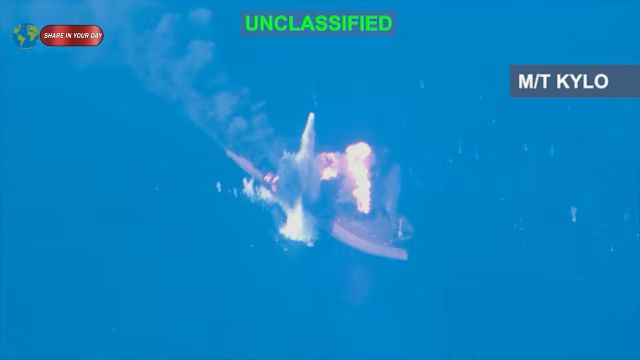
The situation became clearer as the day progressed. The U.S. military confirmed that American forces had struck three Iranian crude-oil tankers following what Washington described as ballistic-missile attacks by Iran’s Islamic Revolutionary Guard Corps, or IRGC, against two U.S. Navy ships. RReuters+1
One of the tankers was struck near Kharg Island, linking the reported explosions to a much broader confrontation involving Iran’s oil industry, military forces and maritime trade.
Kharg Island explosions follow US strikes
The Kharg Island explosions came amid one of the most serious escalations in the U.S.-Iran confrontation in recent months.
According to U.S. Central Command, Iranian forces launched ballistic missiles toward two U.S. Navy ships operating in the region. No American personnel were reported injured in that attack.
The United States responded by striking three Iranian crude-oil carriers. One was targeted near Kharg Island, another near Jask, and a third in the Gulf of Oman, according to reporting surrounding the U.S. military announcement. RReuters+1
U.S. officials characterized the operation as a response to the Iranian missile attack and said the vessels were connected to a shadow network allegedly generating revenue for the IRGC and Iran’s regional allies.
The strikes represent a significant expansion of the confrontation because they directly affect Iran’s maritime oil trade.
Why Kharg Island matters to Iran
Kharg Island is not simply another location in the Persian Gulf.
It is the center of Iran’s oil-export infrastructure and has enormous strategic importance to the country’s economy. Any military activity close to the island therefore carries implications far beyond the immediate battlefield.
Iran relies heavily on energy exports to generate foreign currency. Tankers operating around Kharg Island are an important part of that system.
That is why the Kharg Island explosions immediately attracted international attention.
A strike on a tanker near the island can disrupt shipping even when major oil infrastructure remains physically intact. Shipowners, insurers and crews may become more cautious about operating in the area, potentially reducing the number of vessels willing to enter Iranian waters.
That can create economic pressure without requiring a direct attack on an oil terminal.
Iran reports tanker attack near Kharg
Iranian media also reported that an Iranian tanker had been targeted near Kharg Island.
According to reports, the tanker crew was evacuated and there were no immediate reports of casualties. Iranian sources described the incident as involving a U.S. missile strike, although the earliest reports about the explosions had not established their origin. AArab News+1
The difference between the initial and later reports is important.
When Fars first reported the explosions, the source was unclear. Later information from U.S. authorities provided a possible explanation for at least some of the blasts.
That sequence illustrates the difficulty of verifying events during an active military confrontation. Initial reports can emerge from local witnesses before governments release information about military operations.
Three tankers targeted by US forces
The tanker strikes were broader than the incident near Kharg Island.
Reuters reported that U.S. forces struck three Iranian crude-oil carriers. The operation followed the reported IRGC missile attack against two U.S. Navy ships. RReuters
The American action could have consequences for Iran’s ability to move oil through regional waters.
It also sends a broader message to Iranian shipping operators.
If vessels believed to be supporting Iran’s military financing network can be targeted, shipping companies may face increased risks when operating Iranian-linked vessels.
For Iran, the issue is therefore not limited to the loss or damage of three ships. The larger concern is whether the United States will continue targeting the country’s oil-export network.
Strait of Hormuz remains a major concern
The developments around Kharg Island are also closely connected to the Strait of Hormuz.
The narrow waterway is one of the world’s most important energy routes. Large quantities of oil and other petroleum products traditionally pass through the strait on their way to international markets.
The current U.S.-Iran confrontation has already disrupted shipping activity in the region.
Any further military escalation could increase insurance costs, delay vessels and put additional pressure on global energy markets.
Oil traders are therefore watching military developments around Kharg Island, Jask and the Strait of Hormuz closely.
Even a relatively limited attack can influence prices if traders believe that a larger disruption is becoming more likely.
Oil markets face another potential shock
Energy markets are particularly sensitive to developments involving Iranian oil exports.
Reuters has reported that oil prices have already responded to the renewed U.S.-Iran confrontation. Earlier in the escalation, Brent crude rose sharply as traders assessed the possibility of prolonged disruption to Middle Eastern supply routes. RReuters
The latest tanker strikes could add another layer of uncertainty.
There are several possible scenarios.
The first is a contained confrontation in which both sides avoid attacks on major energy infrastructure.
The second is a sustained campaign against Iranian shipping, which could significantly reduce Iran’s ability to export crude.
The third and most dangerous possibility is an expansion of the conflict involving the Strait of Hormuz itself.
That final scenario could have consequences well beyond Iran and the United States.
A dangerous new phase in the conflict
The Kharg Island explosions are significant because they come after weeks of increasingly direct military confrontation.
The United States and Iran have exchanged attacks during the broader conflict, while tensions around strategic islands and shipping routes have continued to rise.
Reuters previously reported that U.S. forces had attacked Iranian launchers on Larak Island after concerns about threats to maritime navigation. Iran subsequently launched missiles toward U.S. military positions. RReuters+1
The latest tanker strikes suggest that the conflict is increasingly combining military pressure with economic warfare.
Rather than targeting only missile systems or military installations, Washington is now demonstrating that Iranian-linked commercial shipping can also become a military target.
That could fundamentally change the calculations of Iranian officials and shipping companies.
What happens next?
The biggest question is whether Iran retaliates.
Tehran could respond militarily against U.S. forces in the region. It could also increase pressure on commercial shipping or attempt to disrupt maritime traffic.
Another possibility is that both governments attempt to limit the confrontation after the latest exchange.
The United States has already made clear that it intends to impose significant costs on Iranian forces following attacks on American personnel and vessels. Meanwhile, Iran has repeatedly demonstrated its ability to threaten U.S. military assets and regional shipping.
This creates a dangerous cycle.
A military strike can produce retaliation, which then triggers another response.
If that cycle continues, the original dispute can quickly become a much larger regional conflict.
Kharg Island remains under close watch
For now, the key issue surrounding the Kharg Island explosions is whether the incident represents a one-off tanker strike or the beginning of sustained attacks against Iran’s maritime oil infrastructure.
The distinction matters enormously.
If tankers remain the primary targets, the immediate economic impact could be significant but manageable.
If the conflict expands to oil terminals, storage facilities or other energy infrastructure on Kharg Island, the consequences could be much greater.
International energy markets would likely react immediately to any credible evidence of major damage to Iran’s export capacity.
Governments in the region would also face pressure to prevent the conflict from spreading into the wider Gulf.
Global markets are watching Iran’s oil exports
The latest events demonstrate how closely military developments in the Persian Gulf are connected to the global economy.
A tanker attack can affect shipping insurance.
Higher insurance costs can increase transportation expenses.
Reduced shipping can restrict supply.
And concerns about future supply disruptions can push oil prices higher even before physical shortages occur.
That makes Kharg Island strategically important not only to Tehran and Washington but also to energy-consuming countries around the world.
The island’s role in Iran’s oil trade means that every military incident in its vicinity is likely to attract immediate attention from oil traders and governments.
What the Kharg Island explosions mean
The Kharg Island explosions initially appeared to be an unexplained incident reported by Iranian media.
Within hours, however, the event became part of a confirmed U.S. military operation against Iranian oil tankers.
The United States says the strikes were retaliation for an IRGC ballistic-missile attack against two U.S. Navy ships. Iranian reporting confirmed that a tanker near Kharg had been targeted, while initial reports indicated that crews were evacuated and no casualties were immediately reported. RReuters+1
The episode marks another dangerous development in the U.S.-Iran confrontation.
More importantly, it places Iranian oil shipping directly in the center of the conflict.
The coming days will show whether the latest strikes remain limited to individual vessels or lead to a wider campaign against Iran’s energy infrastructure and maritime network.
For global markets, the biggest concern remains straightforward: any prolonged disruption around Kharg Island or the Strait of Hormuz could have consequences far beyond the Middle East.
Image ALT Text
Kharg Island explosions near Iranian oil tanker in the Persian Gulf
Suggested Featured Image
Use a licensed editorial image showing Kharg Island, an Iranian oil tanker, or Persian Gulf maritime activity. For a news site, use an image from a reputable wire service or licensed photo provider rather than an unverified social-media image.
Suggested External Links
- Reuters — Kharg Island and tanker strikes report
- Reuters — US military strikes three Iranian crude oil carriers
- Reuters — Oil markets and renewed US-Iran tensions
Editorial note: Because this is a rapidly developing military story, claims about the cause of the initial explosions should be attributed carefully. The Reuters reporting distinguishes the initial unknown origin from later confirmation by U.S. Central Command regarding the tanker strikes. RReuters+1R
