Trump Middle East strategy takes shape after Iran war
The Trump Middle East strategy is beginning to take shape as the Trump administration works on a broader plan for the region following the Iran war, according to a new Axios report.
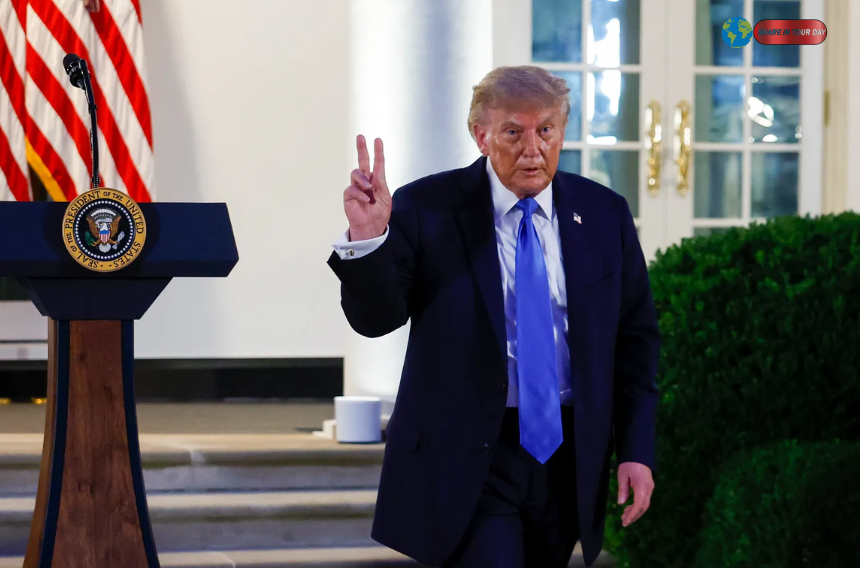
The proposed strategy remains in its early stages. However, U.S. officials and other sources familiar with the discussions say the administration is considering a major regional framework designed to contain Iran, strengthen cooperation among U.S. allies and expand diplomatic ties between Israel and Arab countries. Axios
The emerging plan could become one of the most consequential foreign-policy projects of the remainder of President Donald Trump’s term.
Rather than focusing only on Iran, the administration appears to be considering a strategy that connects several of the Middle East’s most difficult issues. Those include Iran’s regional influence, the future of Gaza, Israel’s relationships with Syria and Lebanon, and the long-discussed possibility of normalization between Israel and Saudi Arabia.
According to Axios, the planning is taking place both among senior political officials and at the interagency level. Trump has also reportedly held two meetings with senior advisers in recent weeks where ideas for the strategy were discussed. Axios
The final plan, however, has not yet been completed.
Trump Middle East strategy centers on containing Iran
The first major component of the emerging Trump Middle East strategy is a proposed regional alignment designed to contain Iran.
According to Axios, administration officials are considering bringing U.S. allies in the region into a more coordinated framework, with Washington potentially serving as a guarantor. Axios
The concept would represent an effort to translate years of U.S. partnerships in the Middle East into a more structured regional security arrangement.
The goal would be to make it harder for Iran to rebuild its regional influence after the conflict while giving U.S. allies a stronger collective security framework.
Such an arrangement could involve closer coordination among countries that already cooperate with Washington. It could also give the United States a more formal role in guaranteeing the security of the regional alignment.
The idea is significant because Washington has spent decades attempting to balance Iran’s influence through relationships with Gulf Arab states and Israel.
Euronews noted that successive U.S. administrations have sought to strengthen ties with Gulf states as a way of limiting Tehran’s regional influence. The potential difference now is that the Trump administration could seek to turn those relationships into a more formal and coordinated structure. euronews
That would make the post-war strategy about more than simply ending hostilities.
It would attempt to reshape the regional balance of power that emerges after the conflict.
The U.S. wants a broader regional alliance
A central question is whether all U.S. partners would actually support the proposed framework.
Axios reported that sources involved in the discussions remain uncertain about whether every American ally in the region would be willing to participate. Axios
That uncertainty could become one of the biggest obstacles to the strategy.
Middle Eastern governments have different relationships with Iran, Israel and the United States. Some may welcome stronger security cooperation with Washington, while others could be reluctant to enter an arrangement that is explicitly designed to constrain Tehran.
The United States would therefore have to balance competing interests.
Washington would need to persuade regional governments that the benefits of joining the framework outweigh the political and security risks.
The administration would also have to determine what an American guarantee actually means.
Would Washington promise military assistance? Would it provide intelligence and missile-defense support? Would the United States commit to defending members of the proposed alliance if Iran attacked them?
Those questions remain unanswered because the strategy is still being developed.
For now, the administration appears to be focused on building the overall architecture.
Trump Middle East strategy links Iran to Gaza
The second major component is the effort to deal with the regional consequences of the October 2023 Hamas attack and the subsequent war in Gaza.
This is where the proposed Trump Middle East strategy becomes considerably broader than an Iran policy.
Axios reported that the administration is considering efforts to advance the next stage of Trump’s Gaza plan while also pursuing security arrangements involving Israel, Syria and Lebanon. Axios
Euronews reported that the potential Gaza framework could involve reconstruction, Hamas disarmament and a transitional administration. euronews
The administration appears to see these issues as interconnected.
The thinking is that a long-term regional order would be difficult to establish if the Gaza conflict and its broader consequences remain unresolved.
That means the future of Gaza could become an important piece of Washington’s larger strategy toward Iran and the wider Middle East.
Israel-Syria security agreement could be another pillar
Another element under consideration is a potential security agreement between Israel and Syria.
Such an agreement would be highly significant because relations between the two countries remain shaped by military tensions, territorial disputes and the broader transformation of Syria following the fall of Bashar al-Assad.
According to Axios, the proposed post-war strategy could include efforts to reach such an agreement. Axios
The objective would be to reduce another source of regional instability while potentially creating conditions for a broader security framework.
However, any agreement would have to address difficult questions concerning Israeli military positions and security arrangements.
The Times of Israel reported that implementation could require Israel to withdraw from buffer zones it has established in Syria and Lebanon. The Times of Israel
That could make negotiations politically difficult.
Israel is likely to weigh any withdrawal against its assessment of security threats, while Syria would have its own demands regarding sovereignty and territorial control.
Still, including Syria in the wider framework would demonstrate how expansive the administration’s thinking has become.
The goal is not simply to manage Iran.
It is to connect several regional conflicts and security arrangements into a larger political structure.
Lebanon and Hezbollah remain part of the plan
Lebanon is another important piece.
The emerging strategy could involve implementing an existing framework between Israel and Lebanon while limiting Hezbollah’s military capabilities.
Euronews reported that the proposal is connected to efforts stemming from the 2024 ceasefire arrangement involving Israel and Hezbollah. euronews
The issue remains highly sensitive.
Israel has accused Hezbollah of rebuilding its military capabilities, while Lebanon has continued to report Israeli strikes on its territory. euronews
A successful agreement would therefore require more than diplomatic statements.
It would need credible mechanisms to enforce security arrangements and prevent renewed fighting.
That could make Lebanon one of the most difficult parts of the proposed regional strategy.
Trump Middle East strategy seeks expanded Abraham Accords
The third major pillar is diplomatic normalization.
The Trump administration is considering an expansion of the Abraham Accords, the agreements first developed during Trump’s first presidency that established or normalized relations between Israel and several Arab and Muslim-majority states.
The existing agreements involved Israel and countries including the United Arab Emirates, Bahrain, Morocco and Sudan. euronews
The most important potential addition, however, would be Saudi Arabia.
A Saudi-Israeli normalization agreement has been a major U.S. foreign-policy objective for years.
The potential agreement could transform the political landscape of the region and further strengthen the alignment of countries that cooperate with Washington.
But the obstacles are substantial.
Saudi Arabia remains the biggest diplomatic challenge
Saudi Arabia has linked normalization with Israel to progress on the Palestinian issue, including a pathway toward Palestinian statehood.
That position creates a major obstacle because Israeli political leaders have resisted commitments that would guarantee the creation of a Palestinian state.
The Times of Israel reported that Saudi demands for an irreversible pathway toward Palestinian statehood could make a normalization agreement particularly difficult to achieve. The Times of Israel
This is where the different elements of the proposed Trump Middle East strategy collide.
Washington wants Saudi-Israeli normalization.
Saudi Arabia wants meaningful movement on Palestinian statehood.
Israel has its own security priorities and domestic political constraints.
And the United States wants to maintain a regional coalition capable of containing Iran.
Each objective is difficult by itself.
Combining them into one comprehensive agreement would be an enormous diplomatic challenge.
Israel’s election could affect Trump’s plan
The Israeli political landscape is another major factor.
Israel is scheduled to hold an election on October 27, according to the Axios report. The U.S. midterm elections will follow on November 3. Axios
Those two elections could significantly affect the political environment in which the strategy is implemented.
The Trump administration reportedly hopes that a future Israeli government will be willing and able to cooperate with the broader post-war framework.
However, U.S. officials have also indicated that Washington intends to move forward regardless of the Israeli election outcome, even if the result produces political stalemate. Axios
That creates another layer of uncertainty.
A strategy that requires cooperation from Israel, Saudi Arabia and other regional partners could be heavily influenced by domestic politics in each country.
The White House will therefore have to negotiate not only with foreign governments but also around their internal political constraints.
The U.S. midterm elections add pressure
The November U.S. midterm elections could also influence the timing and presentation of the policy.
The Trump administration is attempting to manage a costly and politically sensitive conflict while Republicans seek to protect their congressional majorities.
Recent reporting has highlighted the domestic political debate surrounding the Iran conflict. Trump has described the conflict as a military confrontation rather than a traditional war, while Vice President JD Vance has similarly resisted calling it a war. The Times of Israel
At the same time, the conflict has imposed significant costs.
The Times of Israel reported that the fighting had cost U.S. taxpayers more than $37.5 billion and resulted in the deaths of 18 U.S. service members as of September 4. The Times of Israel
That makes the post-war strategy politically important.
The administration will need to demonstrate that military pressure produced a broader strategic result.
A regional security framework, expanded diplomatic ties and a reduction in Iran’s influence could provide Washington with a way to present the conflict as part of a larger transformation rather than an isolated military campaign.
Trump says something “much bigger” is coming
Trump has reportedly described his plans privately as “something much bigger” in the Middle East.
The comment suggests that the administration views the Iran conflict as part of a wider regional restructuring rather than simply a military confrontation. Axios
However, the administration has not publicly released a finished blueprint.
Axios reported that officials expect the drafting process to take several more weeks. One source described the strategy as still being developed and emphasized that it has not yet been finalized. Axios
That distinction is important.
The ideas being discussed are not yet official U.S. policy.
They represent possible elements of a strategy that could change considerably before the administration attempts to implement it.
Why the Trump Middle East strategy matters
The potential Trump Middle East strategy matters because it could attempt to redefine the region after the Iran conflict.
Instead of returning to the pre-war status quo, Washington appears to be considering a new system based on three broad goals: constraining Iran, reducing the remaining regional consequences of the Gaza conflict and expanding normalization between Israel and Arab states.
If successful, the strategy could create a more formal network of U.S.-aligned countries.
It could also deepen Israel’s diplomatic relationships with Arab states while giving Washington greater influence over regional security.
But the risks are equally significant.
Iran could view a regional containment alliance as a direct threat.
Saudi Arabia could refuse normalization without substantial progress on Palestinian statehood.
Israel could resist territorial or security concessions.
And other U.S. partners may not want to participate in an arrangement that could expose them to greater confrontation with Tehran.
A strategy still far from finished
For now, the most important fact is that the plan is still being drafted.
Axios reported that discussions are underway at both the political and interagency levels, but that the final strategy could take several more weeks to complete. Axios
That means major details could still change.
The ultimate plan will depend heavily on how the Iran conflict ends, what happens in Gaza, the results of the Israeli election and the political environment following the U.S. midterms.
The willingness of regional allies to participate will also be critical.
A regional alliance cannot simply be announced from Washington.
It requires governments across the Middle East to believe that cooperation serves their own national interests.
That could prove to be the hardest part of the entire project.
What happens next
The next few weeks will be crucial for understanding where the Trump Middle East strategy is heading.
Officials are expected to continue developing the framework while the administration watches developments in Iran, Israel, Gaza, Syria and Lebanon.
The October 27 Israeli election could provide an early indication of the political environment in which Washington will operate.
The November 3 U.S. midterms could then shape the domestic political space for the administration’s foreign-policy ambitions.
If the Iran conflict ends and the administration can bring regional partners together, Trump’s proposed strategy could become one of the defining foreign-policy initiatives of his second term.
But major obstacles remain.
The proposed alliance must be accepted by U.S. partners. The Gaza issue must move toward a sustainable political arrangement. Israel and its neighbors would have to accept difficult security compromises. And Saudi-Israeli normalization would likely require progress on the Palestinian question.
For now, the administration is building the framework.
The Trump Middle East strategy is not yet finished, but the emerging outline points to an ambitious attempt to connect Iran containment, Gaza diplomacy, regional security and Arab-Israeli normalization into one post-war plan.
Whether those pieces can ultimately fit together may determine the shape of the Middle East for years to come.