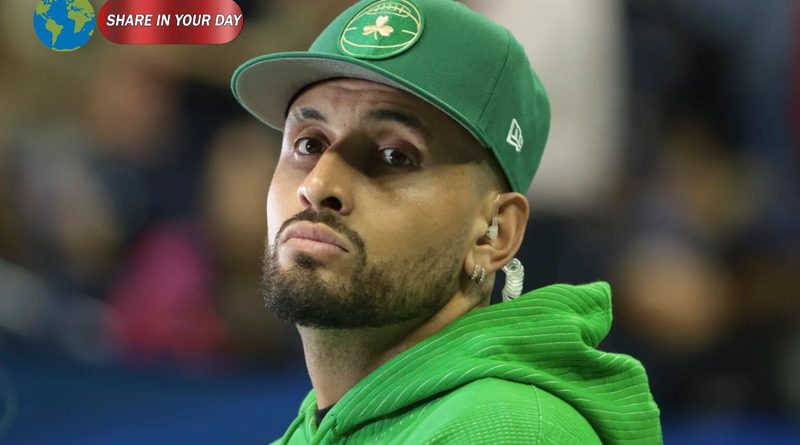
Nick Kyrgios Ban: Ajla Tomljanovic Questions 1-Month Penalty
The Nick Kyrgios ban has triggered fresh debate across professional tennis after former girlfriend and Australian player Ajla Tomljanovic questioned why his suspension was reduced to just one month following a positive cocaine test.
Tomljanovic, speaking while co-hosting The Big T Podcast during the US Open, said she struggled to understand the difference between Kyrgios’ punishment and previous sanctions handed to other players who tested positive for the same substance.
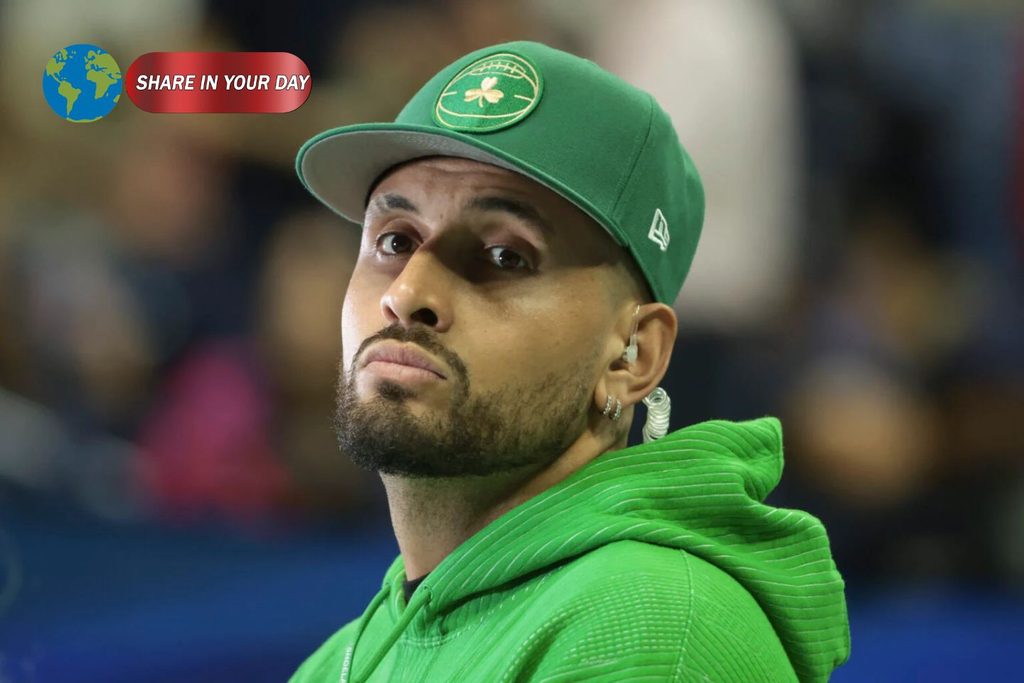
Her comments came after the International Tennis Integrity Agency (ITIA) confirmed that Kyrgios had accepted a reduced one-month suspension under tennis’ anti-doping rules. The original default suspension was three months, but the Australian’s participation in an approved treatment programme allowed the sanction to be reduced.
The decision has already generated considerable discussion within tennis. Tomljanovic’s intervention adds another prominent Australian voice to the debate, particularly because she pointed to previous cases involving Dan Evans and Omar Jasika.
Nick Kyrgios Ban Sparks Questions From Tomljanovic
Tomljanovic did not question whether Kyrgios should receive help. Instead, her concern focused on consistency.
The former couple’s history has made her comments particularly notable, but Tomljanovic approached the subject primarily from the perspective of how tennis authorities have handled comparable disciplinary cases.
She pointed to Evans, who received a one-year suspension after testing positive for cocaine in 2017, and Jasika, who was handed a two-year ban after testing positive for the same substance.
Tomljanovic said she did not understand why Kyrgios’ punishment was so much shorter.
Her central question was whether the rules had changed and, if so, whether players who received harsher punishments under earlier interpretations should somehow be compensated.
That argument has quickly become one of the most important aspects of the discussion surrounding the Nick Kyrgios ban.
Rather than focusing solely on Kyrgios’ conduct, Tomljanovic shifted attention toward the broader question of fairness within the sport’s anti-doping system.
Why Was the Nick Kyrgios Ban Reduced?
The one-month suspension was not simply an informal decision to give Kyrgios a lighter punishment.
According to the ITIA, Kyrgios had been provisionally suspended from August 4 after a sample collected at an ATP event in Mallorca tested positive for cocaine.
The Australian explained to investigators that the cocaine had been used socially during a night out before he was due to compete.
The ITIA then consulted an independent scientific expert at a laboratory accredited by the World Anti-Doping Agency. The expert concluded that the concentration found in Kyrgios’ sample was consistent with his explanation that the substance had been used outside competition.
That distinction was important.
Cocaine is prohibited in competition under the anti-doping rules. However, the circumstances surrounding Kyrgios’ use meant the ITIA accepted that it occurred outside competition.
Under the applicable rules, the default suspension for that type of violation was three months.
Kyrgios subsequently entered an ITIA-approved treatment programme, allowing the suspension to be reduced to one month.
The sanction began on August 4 and ended on September 3, subject to completion of the treatment programme.
As a result, Kyrgios is now eligible to return to professional tennis.
Tomljanovic Points to Dan Evans and Omar Jasika
The strongest part of Tomljanovic’s criticism concerned comparisons with previous players.
Dan Evans’ case is particularly relevant because the British player also tested positive for cocaine.
Evans was suspended for one year in 2017 after a positive test. At the time, the punishment had a major impact on his career and ranking.
Tomljanovic also mentioned Australian player Omar Jasika, who received a two-year suspension following a cocaine-related anti-doping violation.
Her argument was straightforward: if the rules now permit a substantially shorter sanction under circumstances such as those presented in Kyrgios’ case, then tennis authorities need to explain why earlier cases resulted in much longer bans.
She also suggested that previous players may have suffered serious career consequences because of decisions that could now be treated differently.
That does not necessarily mean the cases were identical.
Anti-doping cases can involve different circumstances, evidence, timing, admissions, cooperation and treatment arrangements. Those factors can influence the final sanction.
However, the apparent difference in outcomes is exactly why the Nick Kyrgios ban has become such a controversial topic.
The ITIA Says Kyrgios Cooperated With the Process
Kyrgios’ reduced suspension also followed a different path from simply accepting a punishment.
The ITIA said the Australian entered a treatment programme approved by the agency. That programme was part of the reason his three-month default suspension was reduced.
Kyrgios had also accepted responsibility for the failed test.
In August, he apologized publicly and described his decision as a serious mistake. He said he took full responsibility for what happened.
The treatment element is significant because it demonstrates that the reduced punishment was linked to an established mechanism rather than a special exemption created specifically for Kyrgios.
That distinction is important when considering Tomljanovic’s criticism.
The issue is therefore not simply whether Kyrgios received preferential treatment. It is whether the rules and mitigation available to him were applied consistently compared with earlier cases.
Kyrgios Lost Mallorca Ranking Points and Prize Money
Although the suspension was reduced, Kyrgios did not escape all consequences.
The ITIA confirmed that he would forfeit the prize money and ranking points earned at the Mallorca event.
That means the disciplinary decision affects his competitive position even after the suspension has ended.
Kyrgios has already faced major difficulties rebuilding his ranking because of injuries and a limited playing schedule.
The former world No. 13 has struggled to maintain a consistent presence on tour over recent seasons. His return therefore comes at a particularly challenging moment.
The loss of ranking points and prize money from Mallorca adds another setback to an already complicated comeback.
The Nick Kyrgios Ban Comes During a Difficult Career Period
The timing of the suspension is important because Kyrgios has spent much of the past several years dealing with injuries and uncertainty over his future.
The Australian has repeatedly spoken about the physical and emotional difficulties associated with trying to return to the highest level.
At 31, he is no longer in the same position as when he reached a career-high ranking of No. 13 or made the Wimbledon final in 2022.
His ranking has fallen dramatically, meaning that returning to the ATP Tour regularly could require wildcards or success in qualifying events.
That makes the end of the Nick Kyrgios ban significant from a sporting perspective.
Kyrgios can now compete again, but being eligible to play and being able to return to his previous level are two very different questions.
Brad Gilbert Also Questions the Decision
Tomljanovic is not the only prominent tennis voice to question the sanction.
Former American player and coach Brad Gilbert also criticized the decision, focusing particularly on Kyrgios’ previous comments about doping cases involving other players.
Gilbert argued that Kyrgios had previously been outspoken when other players received reduced sanctions.
His criticism therefore centered not only on the length of the suspension but also on what he saw as a contradiction between Kyrgios’ earlier public positions and his own situation.
Gilbert compared the case with Evans’ suspension and argued that a much longer punishment would have been more appropriate.
Other players and commentators have also expressed strong reactions, making the controversy larger than Kyrgios himself.
Why Anti-Doping Consistency Matters in Tennis
The debate surrounding the Nick Kyrgios ban raises a much bigger issue for professional tennis.
Anti-doping rules are designed to provide a consistent framework for every player.
That consistency is essential because professional athletes build their careers around the expectation that the same rules apply regardless of ranking, nationality or reputation.
At the same time, anti-doping systems also recognize that individual cases can be different.
A substance taken intentionally to enhance performance may be treated differently from one used outside competition. Evidence about when and why a substance was consumed can also influence the outcome.
Treatment and cooperation may provide further grounds for reducing a sanction.
That creates a difficult balance.
The authorities must enforce strict rules while also considering the individual circumstances surrounding each violation.
Tomljanovic’s comments suggest that tennis may need to communicate those distinctions more clearly if it wants to avoid accusations of inconsistency.
Could the Kyrgios Case Change the Debate?
One possible consequence of the controversy is renewed attention on previous anti-doping cases.
If players can demonstrate that the rules have evolved or that mitigation is now being applied differently, earlier cases could come under greater scrutiny.
Tomljanovic’s suggestion that authorities should find a way to compensate players who received harsher punishments is particularly striking.
There is no indication that the ITIA is considering such a compensation scheme.
Nevertheless, the question illustrates the frustration surrounding inconsistent-looking outcomes.
For players, the difference between a one-month suspension and a one- or two-year ban can be enormous.
A long suspension can remove ranking points, tournament opportunities, sponsorship income and momentum. It can also dramatically change the trajectory of an athlete’s career.
That is why comparisons with Evans and Jasika have resonated so strongly.
What Happens Next for Nick Kyrgios?
With his suspension complete, Kyrgios can focus on rebuilding his tennis career.
The immediate challenge will be returning to competition and regaining a ranking that allows him to enter tournaments without relying heavily on wildcards.
He will also have to complete the treatment programme associated with his reduced sanction.
The Australian’s competitive future remains uncertain.
His recent career has been interrupted repeatedly by injuries, and his limited match schedule has made it difficult to establish consistent form.
Nevertheless, his return is likely to attract significant attention.
Kyrgios remains one of the most recognizable and polarizing figures in modern tennis. His powerful serve, unpredictable style and outspoken personality have given him a large global following.
Any return to the ATP Tour is therefore likely to generate substantial interest.
A Controversy That May Continue Beyond Kyrgios
The Nick Kyrgios ban may have ended, but the debate over the decision is unlikely to disappear immediately.
Tomljanovic’s comments have shifted the conversation toward fairness and consistency.
The central issue is not simply whether Kyrgios deserved punishment. He was punished, accepted the sanction and entered an approved treatment programme.
The more complicated question is whether the same principles should have produced similar outcomes in earlier cases.
If the current framework allows for significant reductions based on out-of-competition use, scientific evidence and treatment, tennis authorities may face increasing pressure to explain why previous players received substantially longer suspensions.
That explanation will matter.
Professional sport depends heavily on confidence in its regulatory systems. Players need to believe that disciplinary decisions are transparent and predictable.
Nick Kyrgios Ban Debate Shows Tennis Has a Bigger Challenge
The end of the Nick Kyrgios ban gives the Australian an opportunity to move forward, but the controversy surrounding his case has exposed difficult questions for tennis administrators.
Tomljanovic’s comments have resonated because they go beyond her former relationship with Kyrgios.
Her concern is about whether players are being treated fairly when similar substances and violations are involved.
The ITIA’s explanation provides a clear reason for Kyrgios’ reduced sanction: the agency accepted that his cocaine use occurred outside competition, and his participation in an approved treatment programme allowed the default three-month suspension to be reduced.
Yet comparisons with earlier cases remain difficult to ignore.
For Kyrgios, the next chapter will now be about tennis. He must attempt to rebuild his ranking, regain fitness and prove that he can compete consistently again.
For the sport’s governing bodies, however, the wider challenge is maintaining confidence in the anti-doping system.
Tomljanovic’s question — whether this represents a new approach — is likely to remain part of that conversation.
The Nick Kyrgios ban may officially be over, but the debate about consistency, fairness and the future of anti-doping enforcement in tennis has only just begun.