Houthis Capture Red Sea Island, Raising Shipping Fears
The Houthis capture Red Sea island development has sharply increased concerns about international shipping after Iran-backed Houthi forces seized Mayun Island, also known as Perim, at the entrance to the Red Sea. The strategic island sits in the Bab el-Mandeb Strait, one of the world’s most important maritime chokepoints. NNPR Illinois+1
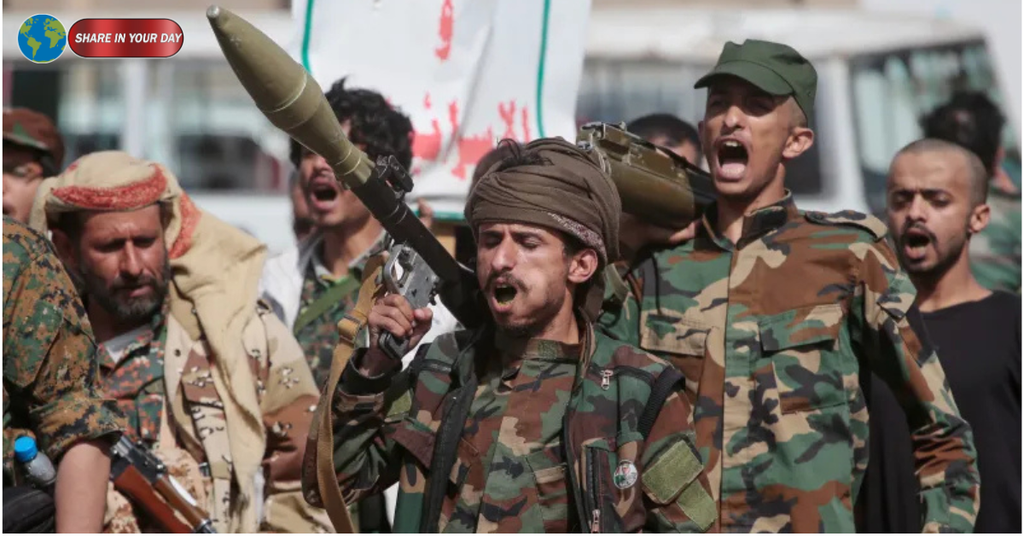
The seizure comes as the Houthis expand their military control along Yemen’s western coast. Their latest advance has added another layer of risk to an already unstable region, particularly for ships carrying oil and other commercial goods between Asia, the Middle East and Europe.
The Bab el-Mandeb is especially important because it connects the Red Sea with the Gulf of Aden and ultimately the Indian Ocean. Ships using the waterway can continue north toward the Suez Canal, making the strait a critical link between Asian and European markets.
According to the Associated Press report published by NPR, roughly 12% of global goods normally pass through the Bab el-Mandeb Strait. The waterway has become even more strategically important because disruptions in the Strait of Hormuz have affected traditional energy routes. NNPR Illinois
Houthis Capture Red Sea Island at Strategic Chokepoint
The Houthis capture Red Sea island story centers on Mayun Island, a small but strategically positioned piece of territory in the Bab el-Mandeb.
The island divides the narrow waterway into two shipping passages. Its location gives whoever controls it an important position from which to monitor activity through the strait.
A senior official from Yemen’s internationally recognized government confirmed the seizure to the Associated Press, while a Houthi official also acknowledged the takeover. Both officials spoke anonymously because they were not authorized to publicly discuss the military development. NNPR Illinois
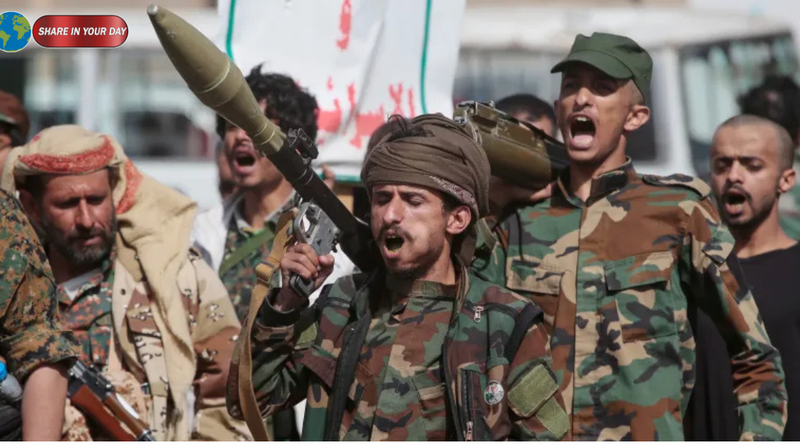
The capture followed a broader Houthi offensive along Yemen’s western coastline.
Other reporting said Houthi fighters also seized the strategic port city of Mokha and additional territory in the surrounding area. Euronews reported that Houthi forces reached Mayun after government troops withdrew from the island. Eeuronews
That combination of territorial gains has intensified concerns about whether the Houthis can now exert significantly greater pressure over traffic entering and leaving the Red Sea.
Why Mayun Island Matters to Global Shipping
Mayun is not important because of its size.
Its importance comes from its location.
The island lies in the middle of the Bab el-Mandeb, where maritime traffic passes between Yemen and Djibouti and Eritrea on the African side. From there, ships can enter the Red Sea before continuing toward the Suez Canal.
For global commerce, that connection is critical.
A disruption in the Bab el-Mandeb can force vessels to take a much longer route around Africa’s Cape of Good Hope. That alternative can add substantial time, fuel expenses, insurance costs and logistical complications.
The consequences can spread far beyond Yemen.
Higher shipping expenses can eventually affect the prices of fuel, food, manufactured goods and other products transported between Asia and Europe.
Euronews reported that analysts expect shipping companies to consider more expensive alternative routes if security conditions deteriorate further around the strait. Eeuronews
Houthis Issue Warning to Saudi Ships
The Houthi takeover has also raised questions about whether the group intends to completely shut down the waterway.
Houthi military spokesperson Yahya Saree said maritime navigation remained safe for companies other than Saudi vessels. That statement suggests the group is attempting to distinguish between general international shipping and vessels associated with Saudi Arabia. NNPR Illinois
However, shipping companies are unlikely to treat the announcement as a guarantee of safety.
The Houthis have previously attacked commercial vessels in and around the Red Sea. Their military capabilities include missiles and drones, creating risks that can be difficult for civilian operators to predict.
Even without a formal blockade, the perception of danger can be enough to change shipping behavior.
Insurance companies may raise premiums. Operators may reroute vessels. Captains may avoid areas considered too dangerous.
As a result, the economic impact can begin before a complete closure occurs.
Saudi Arabia Faces a New Oil Challenge
The Houthis capture Red Sea island development is particularly significant for Saudi Arabia.
The kingdom has increasingly relied on routes through the Red Sea as disruptions around the Strait of Hormuz have complicated oil transportation.
Saudi Arabia recently shut down its major East-West oil pipeline as a precaution after attacks, according to the Saudi government. The pipeline connects the country’s oil-producing regions with the Red Sea port of Yanbu and provides an alternative route for exports. NNPR Illinois+1
That means Riyadh is facing pressure from multiple directions.
The Strait of Hormuz is already under severe strain because of the wider conflict involving Iran. At the same time, the Houthis are expanding their position around another major maritime chokepoint.
Together, those developments threaten to reduce Saudi Arabia’s ability to move oil through alternative routes.
Reuters reported that Saudi Arabia’s East-West pipeline carries millions of barrels of oil per day and has become particularly important because of disruption around Hormuz. RReuters
Oil Prices Rise Above $100
The latest developments have also affected global energy markets.
Oil prices have climbed above $100 per barrel, reflecting growing fears that conflict around key maritime routes could restrict energy supplies. RReuters+1
The concern is not necessarily that the Houthis will immediately stop every tanker from passing through the Bab el-Mandeb.
Markets often react to the possibility of disruption.
If shipping companies begin avoiding the Red Sea, fewer vessels can move through the Suez Canal route. Longer journeys around Africa require additional fuel and time.
Those expenses can eventually be passed along to consumers.
For economies already dealing with high energy and transportation costs, another shipping disruption could create additional inflationary pressure.
Houthis Expand Their Hold Along Yemen’s Coast
The Mayun Island seizure is part of a larger military offensive.
According to current reporting, Houthi forces have captured the port city of Mokha and expanded their presence along Yemen’s western coastline. Euronews reported that the offensive also included advances around other islands and coastal locations. Eeuronews
The speed of the offensive has surprised observers.
The Houthis controlled roughly one-third of Yemen’s territory before the latest operation, according to Euronews. Their new gains could significantly change the balance of power along the Red Sea coast. Eeuronews
For Yemen’s internationally recognized government, the developments represent a major setback.
Government forces have struggled to prevent the Houthi advance, while the country’s long-running political and military divisions have made a coordinated response difficult.
The capture of strategic coastal territory could also complicate any future peace negotiations.
The Humanitarian Cost Is Growing
Behind the military developments is another serious concern: Yemen’s humanitarian crisis.
The latest fighting has already forced tens of thousands of people from their homes. The U.N. migration agency estimated that approximately 46,000 people had been displaced by the Houthi offensive, according to Euronews. More than 500 people have reportedly been killed. Eeuronews
The fighting also affected humanitarian operations.
An official with the United Nations told AP that Houthi forces seized a compound in Mokha that had housed U.N. personnel. The staff had evacuated safely before the city was captured. NNPR Illinois
The situation adds another challenge to a country that has already endured years of war, displacement, food insecurity and economic collapse.
A renewed large-scale conflict could make humanitarian assistance even more difficult.
Iran Welcomes the Houthi Gains
Iran has also responded positively to the Houthi advance.
Iranian officials have described the development as a significant victory while calling for an end to Saudi restrictions on Yemen and a return to negotiations. Eeuronews
The Houthis are part of a broader network of armed groups aligned with Tehran across the Middle East.
Iran denies directly controlling the Houthis, but the group has received significant military and political support from Tehran over the years.
The seizure of Mayun therefore has implications beyond Yemen.
It potentially gives an Iran-aligned force a stronger position near one of the world’s most important maritime corridors.
That could increase Tehran’s leverage at a time when tensions around the Strait of Hormuz are already extremely high.
Red Sea Crisis Could Become a Global Problem
The most important question now is what happens next.
If the Houthis maintain control of Mayun and other positions along the Bab el-Mandeb, shipping companies will have to decide whether the risk of continuing through the Red Sea is acceptable.
That calculation could change quickly.
A single major attack on a commercial vessel could encourage more operators to abandon the route. Conversely, a period of relative calm could allow some shipping traffic to continue.
The situation therefore remains highly fluid.
But the strategic geography is unlikely to change.
Mayun sits at a point where a relatively small military force can threaten or monitor traffic moving through a narrow maritime corridor.
That makes the island disproportionately important.
What the Houthi Advance Means for the Suez Canal
The implications extend north toward Egypt.
The Suez Canal is one of the world’s most important shortcuts for global trade. Ships traveling between Asia and Europe can avoid the much longer route around Africa by using the Red Sea and Suez Canal.
If the Bab el-Mandeb becomes too dangerous, however, the value of that shortcut decreases.
Shipping companies may choose to sail around the Cape of Good Hope instead.
That means longer journeys, greater fuel consumption and higher operating costs.
Euronews cited analysts who warned that avoiding the Red Sea could add weeks to some journeys and increase insurance and operational expenses. Eeuronews
For consumers, the effects could eventually appear in higher prices for imported goods.
For businesses, the consequences could include supply-chain delays.
And for governments, the disruption could create another source of inflation at a time when energy prices are already elevated.
A Dangerous New Phase for Yemen
The Houthis capture Red Sea island development marks a potentially dangerous new phase in Yemen’s conflict.
The group has moved beyond controlling large areas of northern Yemen and is now strengthening its position around one of the world’s most strategically valuable maritime routes.
That creates a difficult dilemma for Saudi Arabia and its allies.
A major military response could push the conflict into an even broader regional confrontation. But failing to respond could allow the Houthis to consolidate control over the coastline and strengthen their bargaining position.
The United States also faces difficult choices.
Washington has previously warned the Houthis against blocking international maritime traffic. Yet the broader conflict with Iran makes another direct military escalation more complicated.
The international community therefore has strong incentives to prevent the Bab el-Mandeb from becoming another prolonged battlefield.
What Happens Next?
The immediate focus will be on whether Houthi forces can maintain their newly captured positions.
The status of government forces on nearby islands will also be closely watched, as will developments around Mokha and other coastal areas.
International shipping companies are likely to monitor the situation carefully.
The most important indicator will be actual maritime traffic.
If major carriers and oil companies begin diverting ships away from the Red Sea in large numbers, the economic consequences could become much more severe.
The next stage could also depend on Saudi Arabia’s response and whether diplomatic efforts can prevent the conflict from spreading.
For now, however, the capture of Mayun has changed the strategic picture.
The Houthis now hold a position directly connected to one of the world’s most important trade routes.
And that means a conflict that has long been centered on Yemen could increasingly affect the global economy.
Final Takeaway
The Houthis capture Red Sea island development is far more significant than the seizure of a small piece of territory.
Mayun Island sits at the entrance to the Red Sea and within the Bab el-Mandeb Strait, giving the Houthis a strategically important position near international shipping lanes. NNPR Illinois+1
The takeover comes alongside a wider Houthi advance along Yemen’s western coast and growing pressure on Saudi Arabia’s oil-export infrastructure.
With oil prices already above $100 per barrel and global shipping facing renewed uncertainty, the consequences could extend well beyond the Middle East. RReuters
For Yemen, the biggest danger is another escalation of war.
For Saudi Arabia, it is the loss of critical maritime alternatives.
And for the global economy, the biggest concern is simple: another major shipping chokepoint is becoming increasingly vulnerable.
Suggested External Links
- NPR/AP — Yemen’s Houthis capture a Red Sea island
- Euronews — Houthis seize key Yemeni island in Bab el-Mandeb
- Reuters — Saudi Arabia shuts down oil pipeline
Internal link suggestion: Link “Red Sea shipping crisis” to your site’s existing Yemen, Middle East, oil-price, shipping, or international-news article.