Xi Jinping India Visit: 5 Signs of a Thaw
The Xi Jinping India visit has put a major spotlight on the fragile relationship between the world’s two most populous countries, with the Chinese president receiving a red-carpet welcome in New Delhi as leaders gathered for the 2026 BRICS summit.
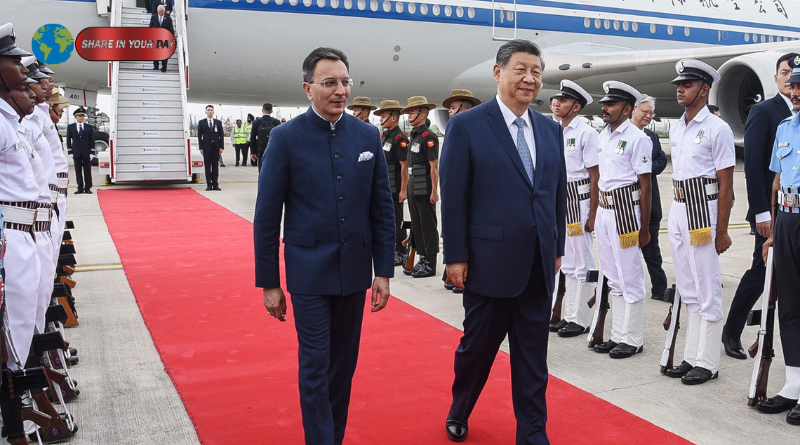
Xi’s arrival marked his first visit to India in seven years and came at a particularly important moment for relations between Beijing and New Delhi. The two Asian powers have spent years managing military tensions, diplomatic mistrust and economic disagreements following a deadly border clash in 2020.
Yet the atmosphere surrounding the latest meeting was notably different.
Indian Prime Minister Narendra Modi and Xi met on the sidelines of the BRICS summit, with both sides signaling a willingness to stabilize relations and expand areas of cooperation. Reuters reported that the leaders backed efforts to strengthen business and transport links while also emphasizing peace along their disputed border.
The meeting does not mean India and China have resolved their longstanding disputes. Instead, it points toward a cautious attempt to prevent disagreements from overwhelming the wider relationship.
Here are five major signs emerging from the Xi Jinping India visit.
1. Xi Jinping India Visit Signals a Diplomatic Reset
The most important message from Xi’s arrival in New Delhi was symbolic.
The Chinese president was given a red-carpet welcome as India hosted the BRICS summit. His presence was significant because Xi had not visited India since 2019, before relations deteriorated sharply following the deadly 2020 confrontation in the Himalayan border region.
The Guardian described the visit as evidence of a potential thaw between the two regional rivals. China has also expressed support for improving relations, while India and China have gradually restored some diplomatic, travel and business connections.
For New Delhi, however, the reset is likely to remain carefully managed.
India does not appear interested in returning to the relationship that existed before the border crisis without addressing security concerns. The government has continued strengthening its military infrastructure along the contested frontier while maintaining close strategic relationships with the United States and other Western powers.
That makes the latest diplomatic engagement less a dramatic reconciliation than an effort to establish a more stable relationship.
2. Modi and Xi Are Trying to Prevent Border Tensions From Spreading
The central problem between India and China remains the disputed Himalayan border.
In 2020, a violent clash in the Galwan Valley resulted in the deaths of at least 20 Indian soldiers and four Chinese soldiers, according to Reuters. The confrontation triggered one of the worst periods in bilateral relations in decades.
The crisis affected far more than military relations.
India increased scrutiny of Chinese investment, restricted several Chinese technology platforms and tightened aspects of economic engagement. China, meanwhile, imposed restrictions affecting exchanges with Indian journalists and businesspeople.
But the situation has changed since then.
A disengagement agreement reached in October 2024 helped reduce tensions along parts of the frontier, with troops subsequently withdrawn from some positions. Travel and business connections have also gradually improved.
During their latest meeting, Modi emphasized the importance of maintaining peace and stability along the border. AP reported that the two leaders also discussed the need to address the boundary question while pursuing broader cooperation.
That combination is important.
India appears to be telling China that economic and diplomatic cooperation cannot become sustainable unless border tensions remain under control.
3. Trade Could Become a Major Test of the New Relationship
The Xi Jinping India visit also comes at a time when economic ties between India and China remain surprisingly strong despite years of political tension.
China has become a major source of imports for India, particularly for industrial components, machinery and other manufactured goods.
Reuters reported that China was India’s leading import partner in fiscal year 2025-26, with bilateral trade reaching approximately $132 billion. Much of that relationship is driven by India’s demand for Chinese industrial products and other critical goods.
However, the trade relationship is heavily unbalanced.
India wants greater access to Chinese markets while also encouraging more investment and cooperation in sectors that support its economic ambitions. At the same time, New Delhi remains cautious about Chinese involvement in strategically sensitive areas such as telecommunications, infrastructure and defense-related industries.
That creates a complicated economic equation.
India needs Chinese products and supply chains, but it also wants to reduce vulnerabilities associated with excessive dependence on a single country.
China, meanwhile, has an interest in keeping one of Asia’s largest economies economically connected.
The two governments therefore have strong reasons to improve commercial ties even while strategic distrust remains.
4. BRICS Gives Modi and Xi a Shared Diplomatic Platform
The timing of Xi’s visit is particularly significant because India is hosting the BRICS summit.
BRICS has grown substantially beyond its original five-member structure. The expanded grouping includes Brazil, Russia, India, China, South Africa, Egypt, Ethiopia, Indonesia, Iran, Saudi Arabia and the United Arab Emirates.
That expansion has increased the bloc’s economic and geopolitical weight.
But it has also made consensus more difficult.
The members do not necessarily share the same vision of the international system. China and Russia have pushed for a stronger challenge to Western economic and political influence, while India has generally favored a more flexible approach that allows it to cooperate with both BRICS members and Western countries.
Indian officials have emphasized that BRICS is not intended to be an anti-American alliance.
That position is important for understanding Modi’s approach to Xi.
India wants BRICS to give emerging economies a greater voice in global affairs without turning the organization into a geopolitical bloc dominated by China and Russia.
The 2026 summit therefore provides a rare diplomatic environment in which Modi and Xi can cooperate on global issues while continuing to manage bilateral disagreements.
The BRICS declaration also showed how difficult that balancing act can be. Reuters reported that member states reached agreement on a joint declaration that addressed international conflicts and unilateral military action without directly naming particular countries.
5. The Xi-Modi Meeting Could Have Wider Global Consequences
The significance of the Xi Jinping India visit extends beyond the India-China relationship.
Both countries are nuclear-armed powers with enormous populations, rapidly expanding economies and major influence across Asia.
A sustained improvement in relations could reduce military pressure along the Himalayan frontier and allow both governments to devote greater attention to economic development.
It could also change the strategic calculations of other major powers.
For the United States, closer India-China relations would complicate Washington’s efforts to strengthen strategic partnerships with New Delhi as part of its broader Indo-Pacific strategy.
India has developed increasingly important relationships with the United States, Japan, Australia and other countries. Yet New Delhi has consistently resisted being treated as a formal member of an anti-China alliance.
A better relationship with Beijing would give India additional strategic flexibility.
For China, improved relations with India could reduce pressure along its southwestern border and potentially create greater room for Beijing to focus on other geopolitical challenges.
That does not mean China and India will suddenly become strategic partners.
Their interests continue to collide across multiple areas.
But even limited stabilization could have significant consequences.
Why the India-China Relationship Remains Fragile
Despite the positive signals, it would be premature to describe the Xi Jinping India visit as the beginning of a full reconciliation.
Several major disputes remain unresolved.
The territorial disagreement along the Himalayan frontier is the biggest obstacle. India and China continue to disagree over sections of their long and contested border, including disputes involving Arunachal Pradesh and areas controlled by China.
Strategic competition is another challenge.
India has deepened cooperation with the United States and other Indo-Pacific partners, while China views many of those relationships through the lens of its competition with Washington.
China’s close relationship with Pakistan is another source of concern for New Delhi.
At the same time, Beijing has its own concerns about India’s growing military and strategic partnerships with countries that compete with China.
Economic relations are similarly complicated.
Although trade has recovered, India continues to worry about its large trade deficit with China and the country’s dependence on Chinese industrial supply chains.
These problems cannot be solved through a single summit.
A Cautious Thaw Rather Than a Full Reconciliation
The most accurate description of the current moment is probably cautious stabilization.
The Modi-Xi meeting demonstrates that both governments recognize the cost of allowing bilateral relations to deteriorate indefinitely.
There are practical reasons for both sides to cooperate.
India wants stable borders, stronger economic growth and access to global markets. China wants stable relations with a major Asian power and an important member of BRICS.
Neither side, however, appears ready to abandon its core strategic interests.
That means progress will probably happen incrementally.
More direct diplomatic communication could come first. Improved transportation and travel links could follow. Business exchanges and trade negotiations could expand if security concerns continue to ease.
The border question will remain the ultimate test.
If India and China can maintain peace along the frontier, their governments will have greater political space to pursue economic cooperation.
If another serious confrontation occurs, the recent diplomatic progress could quickly disappear.
What Xi’s Delhi Visit Means for BRICS
Xi’s presence also strengthens the significance of the 2026 BRICS summit.
China remains one of the bloc’s most influential members, but India is determined to prevent BRICS from becoming an organization defined solely by Chinese and Russian geopolitical priorities.
That difference could become increasingly important as BRICS expands.
The organization now contains countries with very different relationships with the United States, Europe and one another. Iran and the Gulf states, for example, bring their own regional rivalries and security concerns into the group.
The challenge for India is therefore to preserve BRICS as a useful platform for economic and diplomatic cooperation without allowing internal disputes to destroy its effectiveness.
Modi’s approach appears to be pragmatic.
India wants BRICS to push for greater representation for developing countries in global institutions, while also focusing on areas such as trade, technology, energy, health, food security and infrastructure.
That approach allows New Delhi to cooperate with China without accepting Beijing’s broader geopolitical agenda.
Could India and China Become Strategic Partners Again?
That remains uncertain.
The current improvement in relations is meaningful, but the two countries are still competitors.
Their militaries remain deployed in a sensitive border environment. Their strategic interests overlap in some regions and clash in others. Their economic relationship is large but uneven.
Still, the latest developments demonstrate that competition does not necessarily prevent cooperation.
The two countries can disagree over territory while expanding trade.
They can compete for influence while working together in multilateral institutions.
They can maintain different relationships with Washington while supporting selected areas of cooperation.
That may ultimately be the model for the next phase of India-China relations.
Rather than attempting to eliminate strategic competition, both governments may seek mechanisms that prevent competition from escalating into conflict.
What Comes Next After the Xi Jinping India Visit?
The real test will come after the cameras leave Delhi.
Diplomatic gestures are important, but the durability of the thaw will depend on concrete actions.
India and China will need to maintain communication between their militaries and diplomats. They will also need to address trade concerns and create conditions for greater business confidence.
The restoration of flights, visas and other people-to-people connections could become another indicator of whether relations are genuinely improving.
The border will remain the most sensitive issue.
If both sides continue respecting disengagement arrangements and avoid new confrontations, the political environment for broader cooperation will improve.
If tensions return, however, the current optimism could quickly fade.
The Xi Jinping India visit therefore represents an opportunity rather than a completed diplomatic breakthrough.
It is a chance for two powerful neighbors to rebuild a relationship damaged by years of mistrust.
Whether that opportunity becomes a lasting reset will depend on what happens next.
Conclusion
The Xi Jinping India visit has delivered one of the clearest signs yet that relations between Beijing and New Delhi are entering a more cautious and pragmatic phase.
Xi’s return to India after seven years, his meeting with Modi and the emphasis on business, transport, border stability and diplomatic engagement all point toward an attempt to reduce tensions.
But the thaw should not be mistaken for the end of strategic rivalry.
The border dispute remains unresolved. Trade remains imbalanced. India continues to strengthen relationships with the United States and other partners, while China maintains its own strategic priorities in South Asia and beyond.
For now, both governments appear to have reached a practical conclusion: competition is unavoidable, but uncontrolled confrontation is too costly.
That makes the Delhi summit potentially important not because India and China have solved their differences, but because they are once again trying to manage them through diplomacy.
The success of that approach could shape not only the future of India-China relations but also the direction of an increasingly influential BRICS grouping and the broader balance of power across Asia.