
Trump’s $5,000 Dividend Faces Growing Questions Over Funding
Donald Trump’s proposal to give American adults a $5,000 “dividend” if Republicans retain control of Congress has quickly become one of the most striking economic promises of the 2026 midterm campaign. But as attention turns to how such a payment could be financed, questions are growing over where the money would come from and whether the plan could realistically be delivered.
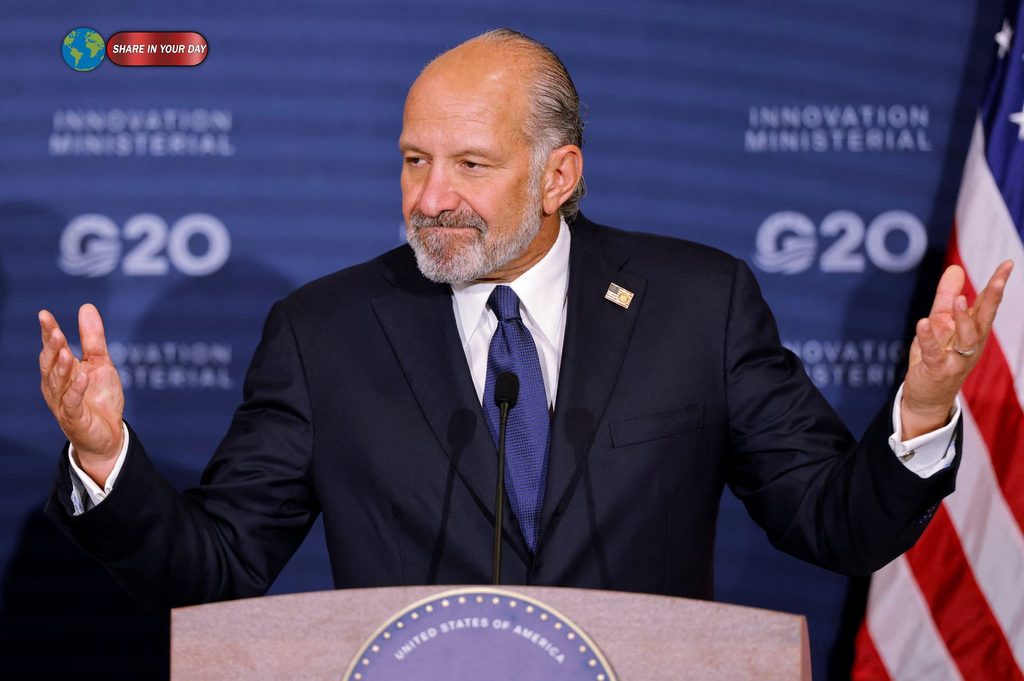
Commerce Secretary Howard Lutnick said the proposed payments would not be financed through ordinary US tax revenue or by adding to the federal deficit. Instead, the administration has pointed to several potential sources of funding, including revenue from immigration-related fees and gains associated with government investments.
The proposal has nevertheless drawn immediate skepticism. A nationwide payment of $5,000 to eligible adults could require hundreds of billions of dollars and potentially approach or exceed $1tn, depending on the number of recipients and the precise eligibility rules. That scale makes the funding question central to whether the plan can move beyond a campaign promise.
Trump has presented the payment as a return to Americans from what he describes as the economic gains generated by his administration. He has compared the proposal with the $1,776 tax-free “Warrior Dividend” announced for military personnel, using the language of dividends to suggest that citizens would receive a share of the country’s financial success.
The president has also repeatedly connected the proposal to the November midterm elections, telling voters that the payment would follow a Republican victory. That political condition has intensified criticism from opponents, who argue that tying a direct cash payment to an election outcome raises serious ethical and political concerns.
Where would the money come from?
Lutnick has suggested that the administration could generate funds from sources that do not directly rely on conventional taxation. One example involves charging wealthy foreign nationals significantly higher fees for extending visas.
Another possibility is the increased value of government-held investments. The administration has pointed to its stake in Intel as an example of how government assets could potentially produce financial returns.
Tariff revenue has also featured prominently in discussions surrounding the proposal. Trump has previously promoted tariffs as a major source of income for the federal government. However, relying on tariff proceeds for a large nationwide payment could face both practical and legal obstacles.
The administration therefore faces a difficult calculation: it would need a reliable and legally available source of money capable of supporting payments on a scale far larger than many individual government programs.
Debt concerns add to the pressure
The proposal arrives as the United States faces an enormous national debt, which has moved beyond $40tn. Critics say adding a major new spending commitment would be difficult to reconcile with promises to maintain fiscal discipline.
Even if the administration identifies revenue sources that could theoretically support the payments, critics question whether those sources could generate enough money quickly enough.
The political appeal of a $5,000 payment is nevertheless obvious. With household budgets still under pressure from the cost of living, a direct cash payment could have considerable resonance with voters. Trump has increasingly framed the midterm elections as a judgment on his presidency, asking supporters to treat his own political standing as if he were personally on the ballot.
A high-stakes midterm promise
The proposal comes at a politically challenging moment for Republicans. Trump remains highly influential within the party, but public concerns over inflation, energy costs and other economic pressures could affect the Republican campaign.
An Associated Press poll cited in recent coverage found that only 32% of Americans approved of Trump’s handling of the economy, highlighting the difficulty facing the administration as it attempts to make economic performance a central argument ahead of the elections. {“fallbackMarkdown”:”(The Guardian)”,”reference”:{“matched_text”:””,”prefix”:null,”start_idx”:5279,”end_idx”:5296,”safe_urls”:[“https://www.theguardian.com/us-news/2026/sep/12/trump-midterm-dividend-funding”,”https://www.theguardian.com/us-news/2026/sep/12/trump-midterm-dividend-funding?utm_source=chatgpt.com”],”refs”:[],”alt”:”(The Guardian)”,”prompt_text”:null,”type”:”grouped_webpages”,”items”:[{“title”:”Taxes wouldn’t fund $5,000 Trump ‘dividend’ if Republicans win midterms, says commerce secretary”,”url”:”https://www.theguardian.com/us-news/2026/sep/12/trump-midterm-dividend-funding?utm_source=chatgpt.com”,”attribution”:”The Guardian”,”pub_date”:1789223905,”snippet”:”Former President Donald Trump has proposed a controversial $5,000 “dividend” for all U.S. adults if Republicans retain control of Congress in the upcoming midterm elections. Commerce Secretary Howard Lutnick clarified that the proposed payment would not come from taxpayer funds or increase the deficit. He suggested the funds could be sourced from initiatives like charging wealthy foreign nationals up to $5 million to extend their visas and benefiting from the increased market value of government investments, such as in Intel. Trump likened this payment to the $1,776 tax-free Warrior Dividend given to military members and claimed it would reflect economic success. Critics argue the proposal could cost up to $1 trillion and resembles a form of voter bribery, especially amid concerns over the U.S. national debt, which recently surpassed $40 trillion. The administration is exploring additional funding methods, including congressional reconciliation, but legal rulings complicate plans to use tariff revenues. Public support for Trump’s economic management has dwindled, with only 32% approval according to a recent AP poll.”,”thumbnail_url”:”https://images.openai.com/static-rsc-1/eACZXtwsBk-OaXJFpoOGikzKppKc8tnaRNzc_Sw-WFgdm41zGLFz07MIFU4K8dZGQoSq3OacKxE8cMqQEOSGpU5m1WfcXUKFeCTBDKKdmOIGQmSRLtOb-r52iPWDViV6HWlBLifvk-n0aUex-anaiJDcfxemqla5iqnX-1g7PImCzp27JXME_OmyE_GgGChXTprD_aWgZxk-WqFc2o9xTgwAU1dUc06MtNVZzif2S8-woL6b8SrAAtYd8SmMsLTobTVH0gRaSlvs2_HhHfPp2KVQ5_emdvIoC1zTMo4UNeMKCCLVVHutp2T_HFbZSinVRu9VK31MK2XEKoicwBTIGCvFsBp4j-Q52mNnztxhhObBhhlaCZurdLXzm4aeYZCZwmSrv8TKaV92Zjlo4Y9MTI4aQYj2UJ_ER_K59ZrsSYhA8DN42-YuKce1hBzKMFhofHXeXF1fnBFV-8PviY6c9Yjm2AR8kZot2irBaA3tQW4AZma2yu2weKRYMkL2cxul”,”attribution_segments”:null,”supporting_websites”:[],”refs”:[{“turn_index”:0,”ref_type”:”news”,”ref_index”:0}],”hue”:null,”attributions”:null}],”fallback_items”:null,”style”:null,”status”:”done”,”error”:null},”showLoginRequiredCard”:false}
The $5,000 dividend could therefore serve two purposes: presenting voters with a tangible financial benefit while reinforcing Trump’s argument that his policies are producing gains that can eventually reach ordinary Americans.
Yet the bigger the promised payment becomes, the harder the financing question is likely to become. A program potentially costing around $1tn cannot easily be explained through relatively limited revenue streams without detailed calculations and congressional approval.
For now, the administration has not provided a comprehensive public blueprint explaining exactly how every payment would be financed, administered and protected from adding to the deficit.
That leaves the proposed Trump dividend suspended between campaign promise and economic policy. Republicans may see it as a powerful message to voters heading into the midterms, while critics see an expensive commitment whose financial foundation remains uncertain.
With the elections approaching, the central question may not simply be whether Americans would welcome a $5,000 payment. It may be whether the government can credibly explain how it would pay for it.