Labor Day Gas Prices Reach a Historic High
Labor Day gas prices are setting a troubling new benchmark for American drivers in 2026, with the national average expected to rise above levels recorded during previous Labor Day weekends. The surge comes as renewed conflict in the Middle East pushes global energy costs higher and adds fresh pressure to household budgets.
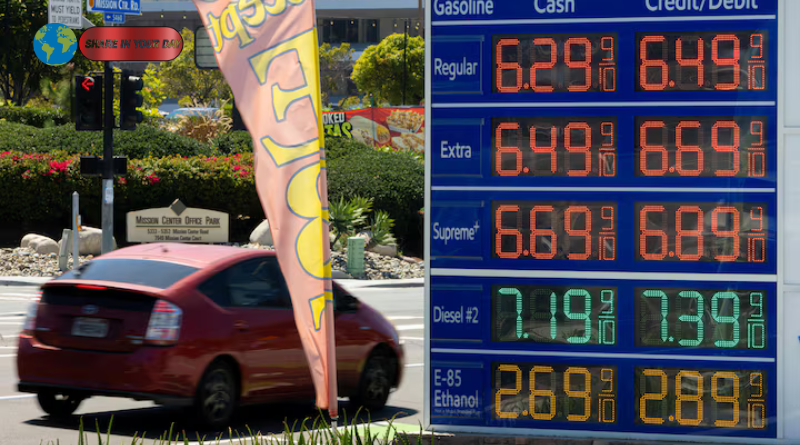
According to Reuters, the national average gasoline price is expected to reach about $4.03 per gallon on Labor Day, exceeding the previous Labor Day record of roughly $3.83 per gallon set in 2012.
The increase is particularly significant because Labor Day traditionally marks one of the busiest travel periods of the summer. Millions of Americans are expected to drive for vacations, family visits and weekend trips, making fuel costs a major consideration for consumers.
At the same time, the rise in gasoline prices is not occurring in isolation. Crude oil has moved above $90 a barrel amid heightened geopolitical tensions, while disruptions involving major oil-producing regions are adding uncertainty to global supplies.
Here are five important facts behind the latest increase in Labor Day gas prices.
1. Labor Day Gas Prices Are Breaking a Long-Standing Record
The most striking development is the projected national average of approximately $4.03 per gallon.
That figure would put gasoline prices well above the previous Labor Day record established in 2012. AAA had already warned before the holiday weekend that Americans were heading toward the most expensive Labor Day at the pump ever recorded.
AAA’s latest national data also show regular gasoline averaging above $4 per gallon, while premium gasoline is considerably more expensive. The organization’s data list a national regular gasoline average of about $4.15 per gallon and a diesel average approaching $5.90 per gallon.
The exact price motorists pay varies significantly by state, city and individual station. However, the national trend demonstrates how dramatically fuel costs have changed compared with a year earlier.
For consumers, even a seemingly small increase per gallon can become substantial during a long road trip.
A driver filling a 15-gallon tank, for example, would spend roughly $60 at $4 per gallon before taxes or other charges. Families traveling with larger vehicles or making several fuel stops can quickly see the additional expense accumulate.
2. Middle East Conflict Is Driving Oil Costs Higher
The biggest factor behind the latest Labor Day gas prices is the continuing turmoil in the Middle East.
Reuters reported that renewed military tensions involving the United States and Iran have increased concerns about global energy supplies. Oil prices have risen as traders assess the possibility of further disruptions to production, exports and shipping routes.
The Strait of Hormuz is particularly important to global energy markets because it is a major route for oil shipments. Any prolonged disruption in the region can create concerns about how much crude will reach international markets.
Those concerns can quickly influence crude oil futures.
When crude becomes more expensive, refiners generally face higher costs for producing gasoline and other petroleum products. Those costs can eventually reach consumers through higher prices at gas stations.
The situation is especially sensitive because oil markets respond not only to actual supply disruptions but also to expectations about what could happen next.
That means geopolitical uncertainty alone can contribute to higher prices.
3. American Drivers Are Feeling the Pressure Beyond Gasoline
Higher Labor Day gas prices are only one part of the broader energy-cost problem.
Diesel prices have also climbed sharply. AAA’s latest figures show the national average for diesel approaching $5.90 per gallon, with the organization listing a new record high of $5.8819 on September 5.
That matters far beyond pickup trucks and diesel-powered passenger vehicles.
Diesel is widely used in commercial transportation, including freight trucks, agricultural equipment and other heavy machinery. When diesel becomes more expensive, transportation companies can face higher operating costs.
Those expenses can eventually affect prices for goods and services.
Air travel is also facing pressure from higher energy costs. Airlines consume large quantities of jet fuel, meaning sustained increases in petroleum prices can raise operating expenses across the industry.
Consequently, a prolonged energy shock could affect Americans even if they do not drive long distances during the holiday weekend.
4. Some States Are Being Hit Much Harder
The national gasoline average does not tell the whole story.
Fuel prices vary substantially across the United States because of differences in taxes, transportation costs, refinery capacity, regional fuel specifications and local supply conditions.
California, in particular, has experienced some of the sharpest increases. Reuters reported that California and Colorado were among the states experiencing significant price increases.
AAA’s state-level data also show substantial differences in pump prices. Hawaii, for example, has been recording gasoline prices well above the national average, while several northeastern states are also seeing prices above $4 per gallon.
For consumers, this regional variation can make road-trip planning especially important.
A traveler crossing several states may encounter dramatically different prices from one location to another. Drivers can therefore reduce some costs by comparing prices before stopping for fuel, particularly when traveling long distances.
However, the savings from shopping around cannot completely offset a nationwide increase in crude oil and gasoline prices.
5. Policymakers Are Looking for Ways to Ease the Pressure
The sharp rise in Labor Day gas prices has also created political pressure.
Reuters reported that President Donald Trump has criticized refiners and retailers over high gasoline prices while promising efforts to reduce energy costs. At the same time, the administration has acknowledged the difficult balance between keeping fuel affordable and pursuing broader geopolitical objectives.
The federal government has already taken steps intended to increase flexibility in the fuel market.
Among the measures reported by Reuters are an extension of a Jones Act waiver and the ending of summer-blend gasoline requirements. These policies are designed to help increase fuel availability and reduce some supply constraints.
However, government policy cannot immediately eliminate the effect of international crude oil prices.
The United States is a major oil producer, but gasoline prices remain connected to global energy markets. As a result, events thousands of miles away can influence what Americans pay at local gas stations.
Why Gas Prices Matter So Much to American Households
Gasoline is one of the most visible energy costs for consumers.
Unlike some expenses that are paid monthly, drivers see gasoline prices every time they visit a filling station. That makes increases particularly noticeable.
The effect is also uneven.
A household with a short commute and access to public transportation may be able to reduce fuel consumption. A family living in a suburban or rural area, however, may have little choice but to drive.
Workers who commute long distances can face higher weekly expenses, while businesses that rely on vehicles may have to adjust their budgets.
For lower-income households, the impact can be even more significant because fuel represents a larger share of disposable income.
That creates a broader economic concern.
When consumers spend more money on gasoline, they may have less money available for restaurants, entertainment, retail purchases and other discretionary spending.
What Could Happen After Labor Day?
The biggest question is whether the current spike in Labor Day gas prices will continue after the holiday.
Gasoline prices can fall relatively quickly when crude oil prices decline and seasonal demand weakens. However, a prolonged geopolitical crisis could keep pressure on energy markets.
Much will depend on developments in the Middle East, global oil production, refinery operations and fuel inventories.
The transition away from the summer driving season could eventually reduce gasoline demand. But that effect may be overwhelmed if crude oil prices remain elevated.
AAA’s data show that the current national average is already substantially higher than it was a year earlier. Regular gasoline was averaging around $4.15 per gallon in its latest data, compared with about $3.20 a year earlier.
That year-over-year difference illustrates the scale of the current energy shock.
How Drivers Can Reduce Fuel Costs
With Labor Day gas prices elevated, motorists can take several practical steps to limit the financial impact.
First, drivers should compare prices at different stations before filling up. Even small differences can add up over several tanks.
Second, maintaining proper tire pressure can help improve fuel efficiency. Aggressive acceleration and unnecessary idling can also increase fuel consumption.
Third, combining errands can reduce unnecessary trips.
For longer journeys, planning fuel stops ahead of time can help drivers avoid paying unusually high prices at isolated stations.
Drivers can also consider using fuel-price comparison services to identify less expensive stations along their route.
These measures will not change the national price of gasoline, but they can reduce the amount individual households spend.
The Bigger Economic Warning
The record Labor Day gas prices are more than a holiday inconvenience.
They are a visible reminder of how quickly geopolitical events can spread through the global economy.
Higher crude oil prices affect gasoline, diesel, aviation fuel and numerous petroleum-based products. Transportation costs can then influence the prices of goods throughout the economy.
That is why energy markets are closely watched by investors, policymakers and economists.
If elevated fuel prices persist, consumers could face additional pressure at a time when household budgets are already sensitive to inflation.
The situation also presents a challenge for policymakers.
They must balance consumer concerns about expensive fuel with the strategic and economic consequences of energy policy.
What Consumers Should Watch Next
Several indicators will be important in the weeks ahead.
The first is crude oil. If oil prices remain above $90 a barrel or move substantially higher, gasoline prices could remain under pressure.
The second is U.S. gasoline inventories. Falling inventories can make regional markets more vulnerable to additional price increases.
The third is refinery utilization. Reuters reported that U.S. refinery utilization was around 98%, indicating that refiners are operating at very high levels.
Finally, consumers should watch developments involving the Middle East.
Any agreement that reduces the risk of supply disruption could ease oil prices. Conversely, further military escalation could create another sharp move higher.
Bottom Line
Labor Day gas prices in 2026 are reaching historic territory, with the national average expected to approach or exceed $4 per gallon during the holiday weekend.
The increase reflects a combination of elevated crude oil prices, geopolitical tensions, supply concerns and strong seasonal demand.
For American drivers, the immediate result is straightforward: road trips are becoming more expensive.
But the consequences could extend beyond the gas station if high energy prices persist. Diesel, transportation and airline costs are already facing pressure, while consumers may have less money available for other purchases.
For now, motorists can limit the damage by comparing fuel prices, reducing unnecessary driving and planning longer trips carefully.
The bigger question, however, is what happens to global oil supplies next.
If geopolitical tensions ease, gasoline prices could eventually retreat. If the energy disruption continues or intensifies, the record Labor Day gas prices of 2026 could become an early warning of an even more expensive fall.