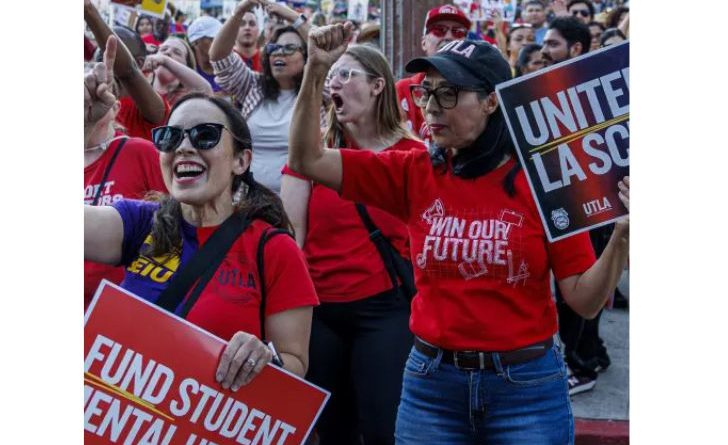
The LAUSD strike had the potential to impact nearly 400,000 students across Los Angeles, making it one of the most significant labor actions in recent U.S. education history.
Three major unions were involved:
- United Teachers Los Angeles (UTLA)
- Associated Administrators of Los Angeles
- SEIU Local 99 (support staff union)
While agreements had already been reached with teachers and administrators over the weekend, negotiations with SEIU Local 99 continued late into Monday night.
The stakes were enormous. If even one union failed to reach an agreement, all three had pledged to strike in solidarity—effectively shutting down the district.
The Final Deal That Stopped the Strike
The breakthrough came in the early hours of Tuesday morning, when LAUSD and SEIU Local 99 reached a tentative agreement.
This deal was the final piece needed to avert the LAUSD strike, ensuring that schools could open as scheduled.
Although full details are still emerging, the agreements across all unions reportedly include:
- Significant salary increases
- Improved working conditions
- Additional support for staff and students
Earlier agreements with teachers included raises approaching 14% over two years, reflecting the unions’ strong bargaining position.
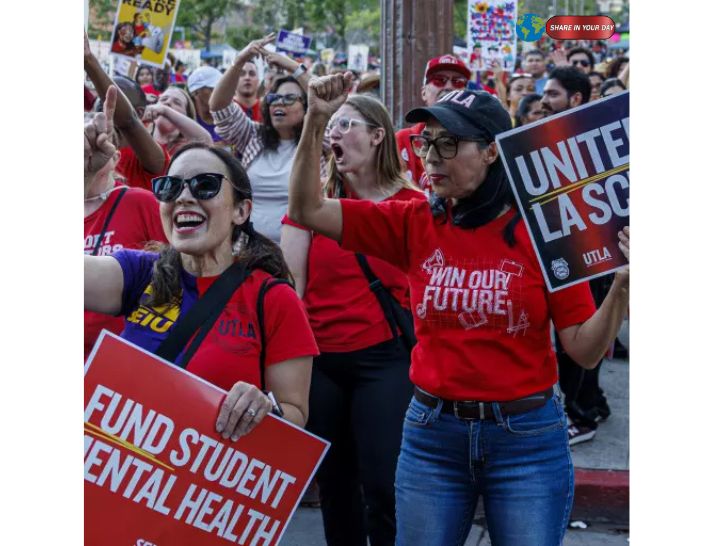
Why the Strike Happened in the First Place
The roots of the LAUSD strike go back to long-standing tensions over pay, staffing, and working conditions.
Union leaders argued that:
- Rising living costs in Los Angeles made current wages unsustainable
- Schools were understaffed, especially in support roles
- Teachers and staff had been working without updated contracts for months
Meanwhile, the district faced its own challenges:
- Budget constraints
- Declining enrollment
- Increasing operational costs
These competing pressures created a perfect storm that led to the brink of a massive strike.
The Role of Union Solidarity
One of the most notable aspects of the LAUSD strike was the unity among different labor groups.
Teachers, administrators, and support staff pledged to act together, significantly increasing their leverage during negotiations.
SEIU Local 99, which represents around 30,000 workers including bus drivers, custodians, and cafeteria staff, played a critical role. Without their agreement, the strike would have proceeded—even if other unions had already settled.
This collective strategy reflects a broader trend in labor movements, where coordinated action across sectors is becoming more common.
A Pattern of Labor Tensions in LAUSD
The near LAUSD strike is not an isolated event. Labor disputes have been a recurring issue in the district.
For example:
- In 2019, more than 30,000 teachers went on strike for six days
- In 2023, support staff staged a major walkout that shut down schools
These past actions highlight ongoing challenges in balancing budgets, staffing needs, and fair compensation.
The 2026 situation, however, stood out due to the scale of coordination across multiple unions and the potential for a prolonged shutdown.
What the Deal Means for Students and Families
For students and families, the resolution of the LAUSD strike brings immediate relief.
Schools opened as normal, avoiding:
- Sudden closures
- Disruptions to learning
- Childcare challenges for parents
However, the broader impact goes beyond a single day.
The agreements could lead to:
- Better classroom support
- Improved teacher retention
- Enhanced student services
At the same time, some critics question whether increased spending will translate into better academic outcomes.
Political and Financial Implications
The LAUSD strike has also sparked debate about education funding and accountability.
Critics argue that increasing salaries without addressing systemic issues may not improve student performance. Others emphasize that investing in educators is essential for long-term success.
The situation comes at a time when:
- Pandemic-era funding is declining
- Costs for school districts are rising
- Public scrutiny of education spending is intensifying
These factors suggest that similar conflicts could emerge in other districts across the country.
What Happens Next?
Although the LAUSD strike has been averted, the story is far from over.
The tentative agreements must still be:
- Approved by union members
- Ratified by the school board
In addition, both sides will need to ensure that the terms of the agreements are implemented effectively.
Future negotiations are also likely, as contracts typically include provisions for reopening discussions after a set period.
Conclusion: A Crisis Avoided, But Challenges Remain
The last-minute resolution of the LAUSD strike highlights both the power of collective bargaining and the fragility of the current education system.
While schools remain open and immediate disruption has been avoided, the underlying issues—funding, staffing, and working conditions—are far from resolved.
For now, students are back in classrooms, and the crisis has passed. But the events of April 2026 serve as a reminder that the future of public education will depend on how these challenges are addressed in the months and years ahead.