Tesla Cybercab: 7 Shocking Robotaxi Details
Tesla has finally begun putting its purpose-built Tesla Cybercab into limited public service, but the futuristic robotaxi comes with several important rules and technical details that were not widely known until the company released new documentation. Among the biggest surprises is a strict age restriction: children under 13 are currently prohibited from riding in the Cybercab.
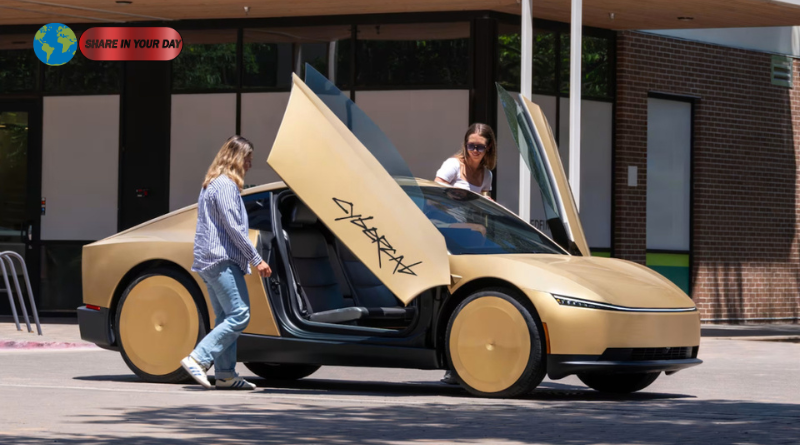
The two-seat vehicle is designed around a very different idea of transportation. There is no steering wheel or conventional pedals for passengers to use, while Tesla relies on autonomous driving technology to handle the trip.
The rollout began in limited areas of Austin, Texas, as Tesla attempts to turn its long-promised robotaxi business into a real transportation service. At the same time, U.S. regulators are examining how Tesla certified the unusual vehicle for public roads.
Tesla’s newly published rider and safety documentation reveals much more about how the Cybercab works, what happens during emergencies and how passengers are expected to interact with the vehicle.


6
Tesla Cybercab bans children under 13
Perhaps the most surprising Cybercab rule concerns its youngest potential passengers.
Tesla says children under 13 are not permitted to ride in a Cybercab at this time. Teenagers aged 13 to 17 can ride, but they must be accompanied by an adult.
The policy is notably stricter than Tesla’s Model Y-based Robotaxi service.
According to Tesla’s Robotaxi rules, minors between 8 and 17 can ride in a Model Y Robotaxi when accompanied by an adult. The Cybercab, however, raises that minimum age to 13.
The difference is particularly interesting because the Cybercab is supposed to be a purpose-built autonomous taxi rather than a conventional passenger car.
There is another important detail. The Cybercab does not use the standard LATCH/ISOFIX child-seat attachment system. Tesla’s compliance documentation says child safety seats must instead be secured using the vehicle’s seat belts.
Tesla provides instructions for installing belt-retained child seats, but the company’s current rider rules still prohibit anyone under 13 from entering the Cybercab as a passenger.
That means families with younger children will have to use another transportation option, at least for now.
1. Tesla Cybercab has no steering wheel or pedals
The defining characteristic of the Tesla Cybercab is its lack of conventional driver controls.
Tesla describes the vehicle as being designed for full autonomy without a steering wheel or pedals. The vehicle has two seats and a large central touchscreen that passengers use to interact with the cabin.
That design represents a major departure from Tesla’s existing vehicles.
Even Tesla’s Full Self-Driving technology in consumer vehicles currently requires active driver supervision. The Cybercab is instead intended to operate as a genuinely autonomous vehicle within the Robotaxi service.
For passengers, the experience is therefore closer to entering a small automated transportation pod than getting into a traditional car.
The passenger does not need to drive, select gears or operate conventional vehicle controls. Instead, the Robotaxi app handles the booking process while the vehicle manages the journey.
2. The Cybercab uses brake-by-wire technology
Tesla has also adopted an electronic braking architecture in the Cybercab.
Rather than relying on a conventional hydraulic system to transmit brake pressure, Tesla says the vehicle uses electronic actuators to control its brake calipers. TechCrunch reported that CEO Elon Musk described the approach as reducing the complexity associated with hydraulic plumbing.
The technology fits Tesla’s broader effort to simplify the vehicle.
For a purpose-built robotaxi, reducing components can potentially help lower manufacturing costs and make large-scale production easier. That matters because Tesla has positioned the Cybercab as a high-volume vehicle for its autonomous transportation network.
However, removing conventional mechanical systems also makes the vehicle’s electronic architecture especially important.
Tesla’s compliance documentation says the Cybercab has anti-lock braking and multiple brake-system monitoring functions. The system can detect faults and alert Tesla Robotaxi Support when problems occur.
For a driverless vehicle, that redundancy and monitoring are crucial because there is no human driver available to compensate for a serious system failure.
3. What happens if a Cybercab crashes?
Tesla has also provided a surprisingly detailed description of what happens after a serious collision.
According to the company’s documentation and reporting on the newly released material, a Cybercab involved in a crash is designed to trigger several automated responses.
These include:
- Airbags deploying where required
- Doors unlocking
- Hazard warning lights turning on
- Interior lights activating
- The high-voltage battery being disabled
- Windows moving into a ventilation position
- The vehicle applying its brakes
- A connection being established with Tesla’s rider-support team
The ability to unlock the doors after a crash is particularly significant.
Tesla has faced scrutiny over electronic door mechanisms in its vehicles, including concerns about how occupants can exit after an accident or power failure. The Cybercab therefore includes mechanical emergency releases in addition to its electronic door system.
The goal is straightforward: passengers should still have a way out if the normal electronic systems become unavailable.
4. Manual door releases are easier to find
The Cybercab uses electronically controlled doors that can open automatically during normal Robotaxi operations.
Passengers can use the touchscreen or the Robotaxi app to control the doors. Tesla also provides an exterior button for opening them.
Inside the vehicle, however, Tesla has placed a manual emergency release on the door armrest.
That is an important distinction.
The mechanical release is intended for emergencies or situations where the vehicle loses power. Tesla warns passengers not to use it unnecessarily because doing so could damage the window or vehicle trim.
If the Cybercab loses power, Tesla instructs passengers to use the mechanical release and push the door open.
The company also warns that passengers should generally wait until the vehicle has completely stopped before trying to exit, unless there is immediate danger.
For an autonomous vehicle, this type of emergency procedure becomes particularly important. A human driver normally understands when it is safe to stop and leave the vehicle. A robotaxi must instead provide passengers with clear alternatives when something goes wrong.
5. Cybercab windows cannot fully open
Another small but unusual detail concerns the windows.
Tesla’s documentation says the Cybercab windows cannot be fully opened at this time. The company does not provide a detailed explanation for the limitation in the documentation highlighted by TechCrunch.
It might sound like a minor feature, but it reflects the different priorities of a vehicle designed primarily for autonomous operation.
Traditional cars give drivers and passengers considerable control over their environment. A robotaxi can instead prioritize automation, security, climate control and predictable cabin conditions.
Still, limited window functionality could become important in certain situations.
Passengers may want fresh air, emergency access or an alternative way to communicate with people outside the vehicle. Tesla’s emergency procedures consequently place more emphasis on the vehicle’s automated systems, touchscreen controls and mechanical door releases.
6. Cybercab offers powerful USB-C charging
The Cybercab also includes a modern convenience feature that may appeal to passengers constantly using their phones and laptops.
According to information highlighted by TechCrunch, the vehicle’s USB-C outlets can provide up to 90 watts of power. That is substantially more than the basic charging output commonly found in vehicles.
For Robotaxi passengers, this could be particularly useful.
A typical ride might involve a passenger working remotely, charging a laptop, connecting a smartphone or using another USB-C device. Because there is no driver to interact with, the cabin experience becomes an important part of the product.
Tesla is therefore not simply building a car that drives itself.
It is attempting to create a compact transportation environment where passengers can work, relax, consume media and travel without needing to interact with a driver.
7. The Cybercab is entering service under regulatory scrutiny
The technology itself is only one part of Tesla’s challenge.
The Cybercab has entered public service at a moment when regulators are examining whether the vehicle complies with existing U.S. safety requirements.
The National Highway Traffic Safety Administration has opened an investigation into Tesla’s certification process involving the Cybercab. The regulator is examining vehicles that lack traditional controls such as steering wheels and brake pedals. Reuters reported that the inquiry could involve as many as 1,000 Cybercabs.
That scrutiny adds another layer of uncertainty to Tesla’s robotaxi ambitions.
Tesla has taken a different approach from some other autonomous-vehicle developers by asserting that the Cybercab complies with applicable requirements rather than relying on the same type of exemption pathway used for some unconventional autonomous vehicles.
The issue is significant because traditional vehicle safety regulations were written largely around vehicles controlled by human drivers.
A car without a steering wheel or pedals challenges assumptions built into those regulations.
The outcome of the regulatory review could therefore influence not only Tesla but the wider autonomous-vehicle industry.
Why the Tesla Cybercab matters
The Cybercab represents a much bigger bet than the launch of another Tesla model.
Tesla wants to create a transportation network in which autonomous vehicles can provide rides without human drivers. The company’s long-term strategy depends on making the economics of those vehicles work at scale.
Tesla has already begun operating Robotaxi services using Model Y vehicles in several U.S. cities. Its own website says the Cybercab is intended to become part of a broader autonomous fleet, with the purpose-built vehicle designed around full autonomy.
Tesla’s regulatory filings also show that Cybercab production has begun. The company described the vehicle as a purpose-built autonomous electric vehicle designed to become the workhorse of its Robotaxi fleet.
That ambition explains why seemingly small details matter.
A cheaper vehicle could potentially make autonomous ride-hailing more profitable. A simpler vehicle could be easier to manufacture. A purpose-built cabin could make passenger transportation more efficient.
But each design decision also introduces new questions.
How will passengers respond to a vehicle without traditional controls? Will families accept the age restriction? How will emergency responders interact with a vehicle designed around autonomous operation? And can regulators create rules that accommodate vehicles that look fundamentally different from conventional cars?
Those questions are now moving from the theoretical stage to real-world testing.
Tesla Cybercab faces a crucial test in Austin
The limited Austin launch gives Tesla an opportunity to demonstrate whether the Cybercab can work reliably with real passengers.
Tesla’s rider guide explains that customers request rides through the Robotaxi app, receive a vehicle assignment and verify the license plate before entering. Once inside, passengers buckle their seat belts and use the app to start the ride.
The Cybercab currently operates only within limited areas of Austin, according to Tesla’s support documentation. The company says its broader Robotaxi network also includes Model Y vehicles operating in other U.S. locations.
That limited rollout is important.
Tesla does not have to immediately solve every challenge associated with nationwide autonomous transportation. Instead, it can gather operational data, improve software and learn how passengers interact with the new vehicle.
At the same time, regulators will be watching closely.
Reuters reported that NHTSA’s review comes as Tesla expands the Cybercab rollout and that the agency is evaluating the company’s certification approach.
The result could become a defining moment for the autonomous vehicle industry.
A futuristic car with very practical limitations
The Tesla Cybercab looks like a futuristic transportation machine, but its latest documentation reveals a vehicle governed by surprisingly practical rules.
Children under 13 cannot ride. Child seats must use seat belts rather than standard anchors. Windows cannot fully open. Electronic doors require mechanical emergency releases. The braking system relies on electronic actuation.
None of those details necessarily means the vehicle is unsafe. Instead, they show how dramatically the design of a purpose-built autonomous vehicle differs from a conventional car.
Tesla is trying to remove components associated with human driving while adding technology that can perform the tasks a driver normally handles.
That is the central experiment behind the Cybercab.
If Tesla succeeds, passengers could eventually view the absence of a steering wheel as completely normal. If the company struggles with reliability, regulation or public confidence, the same design choices could become major obstacles.
For now, the Cybercab remains an early experiment in a rapidly changing transportation market.
Its limited Austin deployment will provide one of the clearest real-world tests yet of whether Tesla can turn its vision of affordable autonomous transportation into a practical service.
And with regulators already examining the rollout, the next chapter could be just as important as the vehicle’s futuristic design.