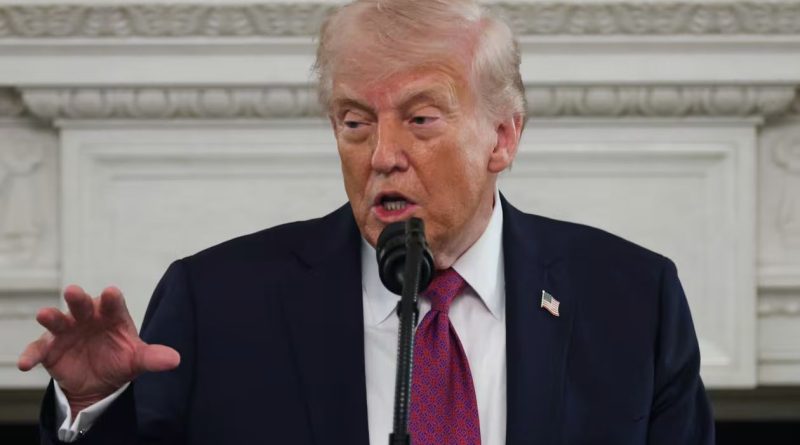
The Trump market influence has reached unprecedented levels, reshaping how investors interpret political signals and economic policy. A recent analysis highlights that no U.S. president in decades has moved financial markets as dramatically as Donald Trump during his second term.
From explosive rallies to sudden sell-offs, markets are reacting not just to policy decisions, but also to statements, geopolitical strategies, and even social media posts. This evolving dynamic is forcing investors to rethink traditional strategies and adapt to a new era of politically driven volatility.
1. Unmatched Power Over Market Swings
One of the most striking aspects of Trump market influence is the sheer magnitude of its impact. According to analysis cited by Fundstrat, Trump has been responsible for both the best and worst trading days of the S&P 500 since early 2025.
This level of control over market direction is highly unusual. Historically, economic data and Federal Reserve policy played the dominant role in shaping investor sentiment. However, under Trump, political developments are often the primary driver.
For example, a single decision to pause tariffs triggered a massive 9.5% rally in the S&P 500—one of the largest gains in recent history.
Meanwhile, renewed tariff threats or geopolitical tensions have caused equally dramatic declines. This dual effect underscores how markets are now closely tied to presidential actions.
2. Policy Volatility Driving Investor Behavior
Another key factor behind Trump market influence is policy unpredictability. Trump’s economic agenda—characterized by tax cuts, deregulation, and aggressive trade strategies—has fueled strong market rallies.
However, these gains often come with significant downside risks.
Markets have repeatedly reacted to sudden shifts in policy direction. For instance, escalating tensions with Iran and threats involving key global shipping routes have triggered market pullbacks and increased uncertainty.
Similarly, unclear timelines on geopolitical conflicts have dampened investor confidence, even after record-breaking highs.
This constant back-and-forth creates a challenging environment where investors must respond quickly to breaking developments rather than rely on long-term forecasts.
3. The Rise of Headline-Driven Trading
In today’s market environment, headlines matter more than ever. Trump market influence has amplified the importance of real-time news, turning financial markets into a reactionary system.
Statements about foreign policy, trade agreements, or interest rates can instantly shift market sentiment. For example, comments about military actions or cease-fire timelines have led to immediate declines in major indexes.
This phenomenon has given rise to what analysts describe as “headline-driven trading.” Investors are no longer just analyzing earnings reports or economic indicators—they are closely monitoring political developments minute by minute.
As a result, volatility has become a defining feature of the current market cycle.
4. Strong Gains Mask Underlying Fragility
Despite extreme volatility, the market has shown resilience. The S&P 500 has posted gains during Trump’s presidency, supported by strong consumer spending and corporate earnings.
However, analysts warn that these gains may not tell the full story.
In fact, research suggests that if the top five best-performing days were removed, overall market performance would turn negative.
This reveals a critical insight: much of the market’s strength is concentrated in a few major rallies, often triggered by policy changes or announcements.
At the same time, underlying risks remain. Rising oil prices, geopolitical tensions, and inflation concerns continue to threaten long-term stability.
Therefore, while the market may appear strong on the surface, it is increasingly dependent on political developments.
5. A New Era for Investors
The growing Trump market influence signals a broader shift in how financial markets operate. Investors are now navigating an environment where political leadership plays a central role in determining outcomes.
This has several important implications:
Increased Volatility
Markets are experiencing larger and more frequent swings, making risk management more critical than ever.
Shorter Investment Horizons
Long-term strategies are being challenged by rapid changes in policy and sentiment.
Greater Need for Adaptability
Investors must stay informed and react quickly to new information.
Analysts emphasize that adapting to this environment is essential. Traditional models based on historical data may no longer be sufficient in a market heavily influenced by political decisions.
How Geopolitics Is Reshaping Markets
Geopolitical tensions have become a major driver of Trump market influence. Conflicts involving key regions, particularly in the Middle East, have had immediate effects on oil prices and stock performance.
For instance, developments in the Strait of Hormuz—a critical global shipping route—have led to spikes in oil prices and corresponding declines in stock markets.
These events highlight how interconnected global markets have become. Political decisions in one region can quickly ripple across the world, affecting everything from energy prices to investor confidence.
What This Means for the Future
Looking ahead, the impact of Trump market influence is likely to persist. As long as policy decisions and geopolitical developments remain unpredictable, markets will continue to experience heightened volatility.
Some analysts remain optimistic, pointing to strong earnings and technological advancements—particularly in artificial intelligence—as drivers of future growth.
However, risks remain significant. Inflation pressures, interest rate changes, and ongoing conflicts could all shape the market’s trajectory in the coming months.
Key Takeaways for Investors
To navigate this new environment, investors should focus on several key strategies:
- Stay informed about political and economic developments
- Diversify portfolios to reduce risk
- Avoid overreacting to short-term market movements
- Maintain a long-term perspective while remaining flexible
These approaches can help mitigate the impact of sudden market swings and provide a more stable foundation for investment decisions.
Conclusion
The Trump market influence represents a fundamental shift in the relationship between politics and financial markets. Never before has a U.S. president had such a direct and immediate impact on stock performance.
While this dynamic creates opportunities for gains, it also introduces new risks. Investors must adapt to a world where headlines can move markets as much as economic fundamentals.
Ultimately, understanding and responding to this evolving landscape will be crucial for success in today’s financial markets.