Full Article
Volkswagen Job Cuts Could Reach 100,000 by 2030
The Volkswagen job cuts are becoming one of the biggest restructuring stories in the global automotive industry. The German automaker has approved plans for roughly 50,000 additional job reductions, potentially bringing the total number of positions targeted by existing and new measures to about 100,000 by the end of the decade.
The decision comes as Volkswagen faces a difficult combination of challenges. Competition from Chinese automakers is intensifying, demand in China has weakened, U.S. tariffs are raising costs, and the company is dealing with excess production capacity in Europe.
The restructuring represents a major change for one of the world’s largest automotive groups. Volkswagen says the measures are intended to make the company more competitive and financially stronger as the industry moves toward electric vehicles and increasingly software-driven cars.
According to Volkswagen’s latest financial figures, the group’s operating margin was 3.8% during the first half of 2026, compared with 4.2% during the same period a year earlier. The company has acknowledged that its cost structure needs to change.
Why Volkswagen Job Cuts Are Happening
Several pressures are coming together behind the Volkswagen job cuts.
One of the most important is the changing competitive landscape in China. Volkswagen has operated in China for decades and built a significant business there. However, domestic Chinese manufacturers have become increasingly competitive, particularly in electric vehicles.
Chinese companies have moved quickly with lower-cost electric models, rapid product development and aggressive pricing. That has made it harder for established European automakers to maintain their previous market position.
Volkswagen itself has said China’s total automotive market was down 20% during the first half of 2026 while Chinese competitors were increasing exports and intensifying competition in Europe.
The company is therefore being forced to rethink how it operates across major markets.
At the same time, U.S. trade tariffs have added another layer of pressure. Volkswagen’s management has warned that geopolitical tensions and uncertainty around international trade are affecting the automotive business.
The company also faces high costs associated with energy, technology development and the transition to electric vehicles.
Volkswagen’s 100,000-Job Reduction Explained
The headline figure of 100,000 jobs requires some context.
Volkswagen had already agreed to significant workforce reductions before the latest restructuring plan. In Germany, the company previously reached an agreement with employee representatives covering tens of thousands of positions through 2030.
The new plan adds approximately 50,000 further job reductions across the wider group.
That means the combined reduction could approach 100,000 positions by the end of the decade. However, the figure should not automatically be interpreted as 100,000 immediate layoffs.
The workforce reduction is expected to involve several mechanisms, including natural attrition, early retirement and other measures negotiated with employee representatives.
Reuters reported that the details of the additional reductions still need to be worked out with unions. Existing agreements with workers have also played an important role in shaping how the restructuring can be implemented.
Volkswagen employs hundreds of thousands of people globally, so the proposed cuts represent a substantial transformation of the company’s workforce.
The Volkswagen Group currently reports about 663,000 employees worldwide and operates 111 production facilities across Europe and other regions.
Four German Plants Face an Uncertain Future
The Volkswagen job cuts are closely connected to the company’s production network.
Volkswagen has identified significant excess capacity in Europe. According to the company’s restructuring plan, European production capacity exceeds expected demand by more than 500,000 vehicles.
That imbalance has made several factories vulnerable.
Four German locations — Hannover, Emden, Zwickau and Audi’s Neckarsulm facility — face an uncertain production future beyond the early 2030s.
Volkswagen has not simply announced that all four factories will immediately close. Instead, the company and labor representatives agreed that vehicle production allocations for some facilities cannot currently be guaranteed for the 2031-2034 period.
The distinction is important.
The company is examining possible alternative uses for affected facilities rather than automatically shutting every location. That could include different manufacturing activities or other industrial purposes.
Nevertheless, the uncertainty represents a significant shift for Germany’s automotive sector.
Volkswagen has historically maintained a powerful manufacturing footprint in its home country. Any major reduction in German production could therefore have consequences far beyond Volkswagen’s direct employees.
Volkswagen Plans to Simplify Its Vehicle Lineup
Job reductions are only one part of Volkswagen’s transformation.
The company also wants to make its product portfolio significantly simpler.
Under the Future Plan 2030, Volkswagen intends to reduce its model portfolio by roughly half and cut product complexity by around 75% by 2035.
The strategy is designed to concentrate production on vehicles that generate stronger volumes and returns.
A simpler lineup could allow Volkswagen to reduce development costs, manufacturing complexity and inventory requirements.
This is particularly important as automakers invest heavily in electric vehicles, batteries, software and digital technologies.
Instead of producing a large number of variations, Volkswagen wants to create vehicles that can be sold at higher volumes across multiple markets.
Reuters reported that Volkswagen is targeting annual vehicle sales of around 9 million and an operating margin of 9% by 2030. The company’s first-half 2026 operating margin was only 3.8%, highlighting the scale of the financial improvement management is seeking.
China Has Become a Critical Problem
The Chinese market is central to understanding the Volkswagen job cuts.
For many years, China was one of Volkswagen’s most important markets. The company developed extensive manufacturing and partnership operations in the country and built a powerful position among Chinese consumers.
However, the market has changed dramatically.
Chinese automakers have expanded their electric vehicle offerings while competing aggressively on price, technology and features.
Companies such as BYD and Geely have also increased their international ambitions. Their growing presence means Volkswagen is no longer competing only for customers inside China.
Chinese automakers are increasingly targeting European consumers as well.
That creates a strategic problem for Volkswagen.
The company must defend its position in Europe while simultaneously adapting its Chinese operations to a market where domestic manufacturers have become increasingly sophisticated.
Volkswagen’s latest financial data show the impact. Vehicle deliveries from its equity-accounted Chinese businesses fell to 856,000 during the first half of 2026, compared with 1.242 million in the same period of 2025. The associated share of operating profit also dropped sharply.
Tariffs Add More Pressure
The other major factor is international trade.
Volkswagen is exposed to tariffs and changing trade rules because its manufacturing and supply chains operate across multiple countries.
The company’s own reporting has identified restrictions on international trade and geopolitical tensions among the major challenges affecting its 2026 outlook.
Tariffs can affect automakers in several ways.
They can increase the cost of imported vehicles, components and raw materials. They can also complicate production decisions when companies have factories and suppliers spread across different regions.
For a company as large as Volkswagen, even relatively small cost increases can have a significant effect on profitability.
That helps explain why management is focusing so heavily on structural cost reductions.
Volkswagen’s Financial Performance Is Driving the Restructuring
The urgency behind the restructuring becomes clearer when Volkswagen’s financial results are examined.
During the first half of 2026, Volkswagen Group reported sales revenue of about €158.1 billion, compared with €158.4 billion a year earlier.
Its operating result declined to approximately €5.9 billion from €6.7 billion.
The resulting operating margin fell to 3.8% from 4.2%.
The numbers show that Volkswagen remains a huge and profitable company. However, management believes profitability is not high enough given the scale of investment required for the industry’s transformation.
The company is simultaneously spending on electric vehicles, batteries, software, autonomous-driving technology and new products.
That creates pressure to generate more profit from every vehicle sold.
Volkswagen has therefore set a much more ambitious profitability target for the end of the decade.
Its Future Plan calls for a 9% operating margin by 2030.
Achieving that target would require a dramatic improvement from the current level.
Management and Unions Reach a Compromise
Implementing the Volkswagen job cuts was never going to be straightforward.
Volkswagen’s German workers have significant representation within the company’s governance structure. Labor representatives sit on the supervisory board, giving employees an important voice in major strategic decisions.
Earlier negotiations over deeper restructuring had produced significant tension between management and labor.
The latest agreement therefore represents more than a simple cost-cutting announcement.
It is also a compromise between management, employees and regional political interests.
Reuters reported that the agreement helped avert a potentially damaging confrontation among the company’s stakeholders.
The agreement does not eliminate the difficult decisions ahead.
Instead, it provides Volkswagen with a framework for beginning the next stage of its transformation.
Employee representatives have continued to emphasize that the burden of restructuring should be shared rather than falling entirely on workers.
Volkswagen Shares React Positively
Despite the scale of the job reductions, investors initially reacted positively to the restructuring agreement.
Volkswagen shares rose sharply after the supervisory board approved the plan, reaching an 11-week high. Reuters reported a gain of roughly 5.9% in early trading.
The market reaction reflects an important distinction between short-term pain and long-term profitability.
Investors often reward companies when management takes decisive steps to address structural problems.
The positive response suggests that shareholders believe Volkswagen’s previous cost structure was becoming increasingly difficult to maintain.
However, approval of a restructuring plan does not guarantee success.
Volkswagen must still execute the changes while maintaining product quality, developing competitive electric vehicles and protecting its market position.
What the Volkswagen Job Cuts Mean for the Auto Industry
The Volkswagen job cuts could have implications beyond the company itself.
European automakers are under pressure from multiple directions.
Chinese manufacturers are becoming more competitive. Electric vehicles require different manufacturing processes and supply chains. Software is becoming increasingly important to vehicle development. At the same time, traditional manufacturers continue to carry large fixed costs from established factories and workforces.
Volkswagen’s response could therefore become a model for other major European automakers.
If Volkswagen succeeds in reducing costs while improving its product competitiveness, rivals may face pressure to undertake similar transformations.
But there is also a risk.
Aggressive cost-cutting can weaken a company if it removes capabilities needed for future growth.
The challenge for Volkswagen is to reduce bureaucracy and excess capacity without cutting too deeply into engineering, software and product-development capabilities.
Volkswagen’s Future Strategy
The company says its transformation is not simply about reducing expenses.
Volkswagen plans to invest heavily in future technologies while becoming more selective about where capital is allocated.
The group has outlined approximately €135 billion in capital and research-and-development spending for 2027 through 2031 as part of its broader transformation strategy.
The strategy is built around several priorities.
First, Volkswagen wants stronger electric vehicle offerings.
Second, it wants to improve software and digital capabilities.
Third, it wants to simplify its product range.
Fourth, it wants to strengthen its position in profitable markets, particularly North America.
Finally, it plans to adapt its China strategy while expanding exports toward other international markets.
That means the Volkswagen job cuts are only one component of a much larger business transformation.
What Happens Next?
The immediate focus will be implementation.
Volkswagen management and employee representatives will have to determine how the workforce reductions are distributed and how individual factories are affected.
The four German facilities facing uncertainty will also require further decisions.
At the same time, Volkswagen must launch products capable of competing with increasingly aggressive Chinese rivals.
The company will need to balance cost reductions with continued investment.
That may be the hardest part of the entire strategy.
Cutting jobs and reducing production capacity can improve costs relatively quickly. Developing a competitive new generation of electric vehicles, software and batteries can take years.
Volkswagen therefore needs to manage both timelines simultaneously.
The Bigger Picture for Volkswagen
The latest Volkswagen job cuts announcement marks a major turning point for Europe’s largest automaker.
The company is confronting a fundamentally different automotive market than the one in which its traditional business model was built.
China is becoming more competitive. Electric vehicles are changing the technology landscape. Tariffs are disrupting international supply chains. European production capacity is higher than demand.
Volkswagen’s answer is a sweeping restructuring program that could ultimately reduce its workforce by around 100,000 positions when new and previously agreed reductions are combined.
The company is also targeting a smaller and simpler vehicle lineup, lower structural costs and significantly higher profitability.
The plan is ambitious.
For employees, it signals years of uncertainty and major changes to the traditional German automotive industry. For investors, it represents an attempt to restore profitability before competitive pressures become even more difficult.
For Volkswagen itself, the stakes are enormous.
The company must prove that it can become leaner without losing the engineering strength, technology and global brand power that made it one of the world’s dominant automakers.
The next several years will show whether the Volkswagen job cuts become the foundation for a successful turnaround — or simply another sign of how dramatically the global auto industry is changing.
Sources and Recommended Links
Official company information:
Volkswagen Group
Volkswagen financial results:
Volkswagen Group Financial Results
Suggested internal links:
External reporting: Reuters and Associated Press reporting were used to cross-check the restructuring details and market reaction.
Image ALT Text
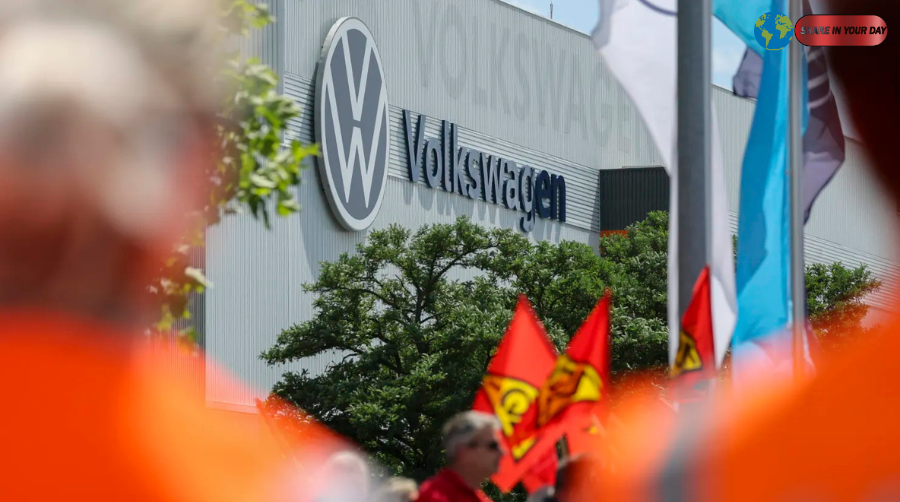
Volkswagen job cuts and Future Plan 2030 restructuring
Suggested Image Caption
Volkswagen is undertaking one of the most significant restructurings in its history as it responds to tariffs, weaker Chinese demand and growing competition from Chinese automakers.