Haiti Forced Returns Reach Nearly 200,000 in 2026
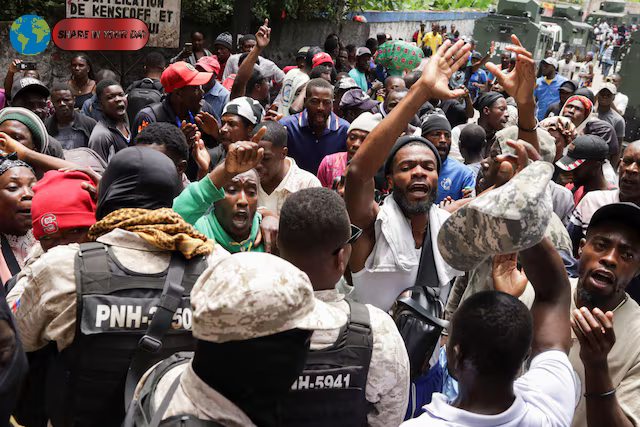
Haiti forced returns have reached nearly 200,000 people during the first eight months of 2026, according to a senior United Nations humanitarian official, adding another layer of pressure to a country already struggling with widespread gang violence, mass displacement and a severe humanitarian crisis.
The figure, announced as the United Nations Security Council examined Haiti’s worsening security situation, is at least 20,000 higher than the number recorded during the same period last year. The latest returns are taking place while armed groups continue to expand their influence across parts of the country.
The scale of the movement has raised concerns about whether people sent back to Haiti can find safe housing, food, medical care and protection once they arrive.
The situation is particularly difficult because many Haitians are returning to communities that are already struggling to cope with violence and displacement.
Meanwhile, the security crisis continues to deepen.
Haiti Forced Returns Add Pressure to a Country in Crisis
The growing number of Haiti forced returns comes at a particularly difficult moment for the Caribbean nation.
The United Nations says nearly 1.5 million people remain internally displaced inside Haiti. Many have been forced from their homes by armed groups, while others have lost access to basic services because violence has disrupted transportation, schools, health facilities and local economies.
The latest returnees therefore face a complicated reality.
They may technically be back in their country, but returning does not necessarily mean returning home.
Some people may have no safe place to live. Others may have little access to employment or healthcare. For families arriving in areas affected by armed groups, the risks can be even greater.
UN officials have repeatedly warned that forced returns can create additional humanitarian needs when people are sent to places where protection and essential services are unavailable.
Earlier this year, the United Nations reported that more than 140,000 Haitians had already been forcibly returned between January and June.
By late August, the total had climbed to nearly 200,000.
Haiti Gang Violence Makes Returns More Dangerous
The security environment is one of the biggest concerns surrounding Haiti forced returns.
Haiti has experienced a dramatic expansion of gang control, particularly around Port-au-Prince. Armed groups have also extended their influence into areas outside the capital.
The United Nations reported that at least 1,408 people were killed and another 656 injured between April and June 2026 alone.
The violence has included killings, kidnappings, sexual violence and attacks on communities.
One of the most recent incidents occurred in Kenscoff, a hillside community near Port-au-Prince. A gang attack killed at least 47 people, including children, while others were abducted and homes were burned.
The attack illustrates why the return of Haitians is occurring against such a dangerous backdrop.
For someone who has been deported or otherwise forcibly returned, finding a secure place to live can be extremely difficult when armed groups control roads and neighborhoods.
The combination of displacement and forced returns therefore risks creating a cycle in which vulnerable people move repeatedly without finding long-term safety.
Why Nearly 200,000 People Have Been Returned
The rise in Haiti forced returns is connected to increased deportation activity in the region.
The United States has resumed deportation flights to Haiti, while the Dominican Republic has also played a major role in returning Haitians.
Historical United Nations data show how significant the Dominican Republic’s role has been. A UN document citing International Organization for Migration figures reported that 148,664 Haitians were deported to Haiti between January and July 2025, with 97.97% coming from the Dominican Republic.
The issue has therefore become a major regional migration challenge.
Governments have argued that they have the authority to enforce immigration laws and return people who do not have legal status to remain.
However, humanitarian organizations have emphasized that returns must also account for conditions in the receiving country.
That debate has become especially urgent as Haiti’s security situation deteriorates.
Haiti Forced Returns and the Humanitarian Burden
The humanitarian consequences extend beyond the people being returned.
Haiti’s existing population is already facing enormous pressure.
The United Nations has reported that about 5.8 million people in Haiti are experiencing food insecurity. At the same time, approximately 1.47 million people are internally displaced because of violence.
Adding thousands of returnees to communities with limited resources can increase demand for shelter, food, healthcare and protection.
Local organizations and humanitarian agencies must also operate in an environment where access is often restricted by insecurity.
That makes the response more expensive and more difficult.
The problem is not simply the number of people arriving. It is also where they arrive and what resources are available when they get there.
A returnee arriving in a stable community may have family members and support networks available.
A person arriving in an area affected by armed groups may have very different prospects.
Women and Children Face Particular Risks
The humanitarian impact of Haiti forced returns can be especially serious for women and children.
United Nations officials previously reported that women accounted for roughly one-quarter of Haitians forcibly returned during the first months of 2026. Nearly 10% were children, including unaccompanied minors and newborns.
These groups can face additional protection challenges.
Children may arrive without documentation, stable housing or access to education. Unaccompanied minors can be particularly vulnerable to exploitation, trafficking and recruitment by armed groups.
Women and girls also face significant risks in areas where sexual violence has increased.
The United Nations has reported more than 1,000 victims of sexual violence in Haiti during 2026, according to figures cited in a recent Reuters assessment of the country’s conflict.
For humanitarian agencies, protecting vulnerable returnees therefore requires more than providing temporary shelter.
It requires documentation, healthcare, psychosocial assistance, food, safe transportation and access to longer-term housing.
The Security Crisis Is Threatening Haiti’s Elections
The worsening security situation also threatens Haiti’s political future.
The country is preparing for long-delayed elections, with voting plans extending into December 2026 and February 2027. However, the ability to conduct credible elections depends heavily on whether security conditions improve.
The United Nations has repeatedly warned that armed groups continue to challenge state authority.
Carlos Ruiz Massieu, the UN’s Special Representative for Haiti, told the Security Council on August 28 that the violence demonstrated the ability of gangs to expand their influence beyond Port-au-Prince. He called for the rapid and full deployment of the Gang Suppression Force.
The international community has been working to strengthen Haiti’s security institutions, but progress remains difficult.
The Gang Suppression Force is intended to support Haitian authorities in confronting armed groups. Its planned deployment has become a central part of international efforts to restore security.
International Support Remains Critical
The United Nations says Haiti needs concrete international support rather than short-term responses.
In June, Secretary-General António Guterres said Haiti could not wait while its security and humanitarian crises continued. He also highlighted the importance of international backing for the Gang Suppression Force and the restoration of state authority.
The challenge is enormous.
Security operations alone cannot solve the country’s problems. Haiti also needs functioning schools, healthcare facilities, jobs, food security and reliable public institutions.
The United Nations has stressed that security operations should be accompanied by measures to restore basic services and provide young people with alternatives to joining armed groups.
That broader approach could also influence the future of Haiti forced returns.
If security improves, returnees may have a greater chance of rebuilding their lives.
If violence continues to spread, however, returning people could become increasingly difficult from a humanitarian perspective.
Haiti Forced Returns Highlight a Larger Migration Challenge
The nearly 200,000 returns recorded during the first eight months of 2026 show how closely migration policy and humanitarian conditions are connected.
Countries have legitimate concerns about border management and immigration enforcement. At the same time, Haiti’s extraordinary security crisis creates difficult questions about what happens after people are returned.
The issue is especially complicated when returnees have spent years outside Haiti.
Some may have limited connections to their original communities. Others may have family members who have also been displaced. Still others may arrive without the financial resources needed to establish a new life.
That means the consequences of deportation can extend well beyond the flight or border crossing itself.
For Haiti, each new group of returnees adds pressure to an already fragile system.
For the international community, the situation presents a difficult test of how migration enforcement can be balanced with humanitarian protection.
What Happens Next?
The number of Haiti forced returns is likely to remain an important issue as the security situation develops.
The immediate priority for humanitarian agencies is ensuring that people arriving in Haiti can access basic protection and assistance.
At the same time, international governments face pressure to increase support for Haiti’s security forces and humanitarian programs.
The Gang Suppression Force is expected to play an increasingly important role. UN officials have called for its rapid deployment, while international partners continue discussing additional contributions.
The force’s effectiveness could have consequences far beyond security operations.
Improved security could allow displaced Haitians to return home voluntarily, reopen businesses and schools, and create better conditions for elections.
But if violence continues to expand, Haiti could face even greater displacement and humanitarian needs.
A Crisis Bigger Than the Numbers
The nearly 200,000 people forcibly returned to Haiti in 2026 represent more than a migration statistic.
Each person is returning to a country facing an extraordinary combination of armed violence, displacement, food insecurity and weak public services.
The United Nations’ warnings underscore the scale of the challenge. More than 1.4 million people remain displaced, thousands have been killed or injured this year, and communities continue to face attacks by powerful armed groups.
Against that backdrop, Haiti forced returns have become an increasingly urgent humanitarian issue.
The coming months will be critical.
If international security assistance expands and Haitian institutions regain control of more territory, returnees could eventually find better conditions to rebuild their lives.
If the violence continues unchecked, however, the country may struggle to absorb even more vulnerable people.
For Haiti, the central challenge is therefore not simply how many people are being returned.
It is whether those people can return to a country capable of providing safety, dignity and a realistic path toward a stable future.