Daisy Chain Fields: Olivia Rodrigo’s $20M Triumph
Daisy Chain Fields turned a sweltering Southern California Saturday into a major celebration of music, community and women’s causes. Organized and headlined by Olivia Rodrigo, the inaugural festival brought together 45,000 fans and a striking mix of contemporary pop stars, emerging artists and influential rock veterans.
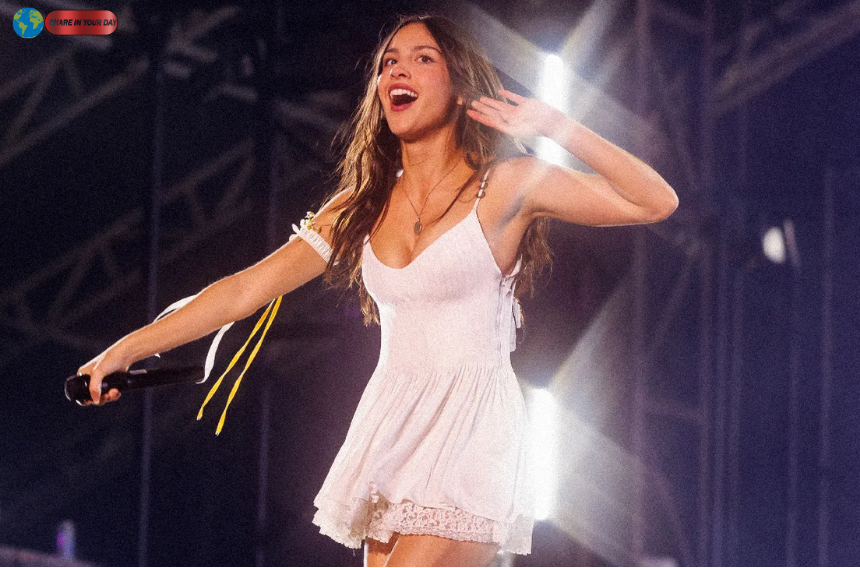
Held at Great Park in Irvine, California, on Aug. 29, the one-day benefit event was designed to do more than deliver a major concert. Rodrigo wanted to create a space where young women could see themselves represented, connect with nonprofit organizations and experience the power of music as a force for community.
By the end of the night, the event had raised $20 million for organizations supporting women and girls.
The achievement gave Daisy Chain Fields a significance that extended well beyond its performances. It became a meeting point between pop culture, activism, philanthropy and several generations of women musicians.
Daisy Chain Fields Brings 45,000 Fans Together
The scale of Daisy Chain Fields was immediately apparent as fans arrived at Great Park.
Pitchfork described a crowd that ultimately reached approximately 45,000 people, gathering for a 14-artist lineup that stretched across generations and genres. The bill included Chappell Roan, Doechii and Mitski alongside Bikini Kill, Garbage and the Breeders. Emerging artists such as Eli, Quiet Light and Devon Again also took part.
The lineup was intentionally broad.
Instead of concentrating exclusively on mainstream pop, Rodrigo created a festival that connected contemporary chart success with the musicians who helped shape the culture that followed.
That approach became one of the defining characteristics of the event.
Fans could move between modern pop, hip-hop, indie music and punk without the usual separation between generations. The result was a festival that felt less like a conventional commercial concert and more like a shared cultural gathering.
The event also drew comparisons to the influential Lilith Fair, the women-led touring festival associated with Sarah McLachlan in the 1990s.
Rodrigo has cited Lilith Fair as a major inspiration for her own event.
Olivia Rodrigo Turns Music Into Philanthropy
The central idea behind Daisy Chain Fields was philanthropy.
Rodrigo partnered with 10 nonprofit organizations working on issues affecting women and girls. Those organizations included Planned Parenthood, the National Women’s Law Center and the National Domestic Workers Alliance.
The festival did not simply place charity information in the background.
Nonprofit groups were present on the festival grounds through what organizers called a “philanthropy village.” Attendees could learn about the organizations, interact with representatives and discover specific causes connected to women’s health, workplace protections and legal rights.
That model gave the festival an additional layer.
Fans were not only watching performances. They were being introduced directly to organizations doing work in areas that can often feel distant from celebrity culture.
The approach also reflected Rodrigo’s interest in connecting younger audiences with philanthropy.
For many Gen Z fans, a music festival can be a more natural entry point into social causes than a traditional fundraising event.
Daisy Chain Fields used that connection deliberately.
Daisy Chain Fields Raises $20 Million
One of the biggest moments of the festival came when Rodrigo revealed that the event had raised $10 million for its nonprofit partners.
Then came another surprise.
Melinda French Gates appeared during Rodrigo’s headlining set and announced that she would match the fundraising through Pivotal Ventures.
That brought the total charitable contribution to $20 million.
The donation transformed what was already an ambitious benefit concert into a major philanthropic achievement.
According to AP, the original $10 million was set to be distributed among 10 nonprofit partners. The organizations included groups focused on women’s health, legal rights, workplace protections and other areas of women’s well-being.
The financial result was particularly striking because the event was built around entertainment.
Instead of treating charity as an additional feature, Rodrigo made fundraising one of the festival’s central purposes.
Chappell Roan and Doechii Join a Powerful Lineup
The contemporary side of Daisy Chain Fields was represented by several of the biggest names in modern music.
Chappell Roan brought her theatrical pop energy to the festival, while Doechii represented the increasingly boundary-free world of contemporary hip-hop and pop.
Mitski added an indie perspective, while artists such as Rachel Chinouriri and other emerging performers expanded the event’s musical range.
The presence of these younger artists mattered because the festival was not designed simply as a nostalgia event.
Instead, Rodrigo created a bridge between generations.
Young fans could experience artists they already knew while also encountering musicians whose influence stretches back decades.
That was particularly evident in the presence of Bikini Kill, Garbage and the Breeders.
Pitchfork noted how the lineup moved from today’s biggest pop stars to legendary rock figures and newer acts, creating a deliberately intergenerational bill.
Sarah McLachlan Connects the Festival to Lilith Fair
One of the most important artistic connections came through Sarah McLachlan.
Lilith Fair served as a direct inspiration for Daisy Chain Fields, making McLachlan’s appearance especially meaningful.
During Rodrigo’s headlining performance, McLachlan joined her onstage for “Building a Mystery.” The pair also performed “Angel,” which McLachlan dedicated to the late Dolly Parton.
The moment connected Rodrigo’s current generation of fans with a landmark period in women’s music.
Lilith Fair demonstrated in the 1990s that women artists could headline and sustain a major touring festival at a time when the music industry often questioned whether audiences would support female performers in consecutive slots.
Daisy Chain Fields revived that philosophy for a new generation.
However, Rodrigo did not simply reproduce the past.
She combined the spirit of Lilith Fair with Gen Z culture, modern pop, social activism and a digital-first understanding of community.
Stevie Nicks and Alanis Morissette Deliver Surprise Moments
Rodrigo’s set also included several major surprises.
Stevie Nicks joined Rodrigo for a performance of “Landslide,” producing one of the night’s most emotional moments.
Alanis Morissette also appeared for “Ironic.”
Morissette’s appearance was particularly notable because Karen O, who had initially been planned as a special guest, was unable to perform because of a last-minute personal matter. Rodrigo instead surprised the audience with Morissette.
Those collaborations reinforced the festival’s central concept.
Rodrigo was not positioning herself as the sole star of the event.
She was presenting herself as part of a larger musical lineage.
The performances allowed her to celebrate artists who influenced her while simultaneously introducing those artists to a younger audience.
The Heat Became a Major Challenge
Despite the excitement, Daisy Chain Fields was not without problems.
The Southern California heat created difficult conditions for both performers and attendees.
Pitchfork described the event as sweltering, while The Guardian reported temperatures climbing into the mid-90s and criticized aspects of the festival’s preparation for the conditions.
The heat affected the entire experience.
Artists including Mitski and Bikini Kill’s Kathleen Hanna encouraged attendees to stay hydrated. Chappell Roan even incorporated the conditions into her performance with a playful reference before launching into “HOT TO GO!”
However, the more serious concern was access to basic resources.
The Guardian reported long lines at water refill stations and medical tents, along with lengthy food queues and limited shade.
For a sold-out crowd of approximately 45,000 people, those conditions created an uncomfortable and potentially dangerous environment.
The festival ultimately continued, but the heat became one of the event’s biggest weaknesses.
A Festival Built Around Community
Even with the difficult weather, many attendees described a strong sense of community.
The Guardian noted that crowd interactions were generally peaceful and considerate, with people helping one another navigate the difficult conditions.
That atmosphere reflected Rodrigo’s original vision.
The festival was designed as a place where women and girls could gather, listen to music and feel comfortable expressing themselves.
Its physical design reinforced that goal.
The grounds included umbrellas, beanbags and couches, while interactive art installations encouraged attendees to write down their hopes and dreams.
There was also a strong connection to activist art.
The Guerrilla Girls contributed an installation that invited festivalgoers to write their concerns on chalkboards. The festival’s broader visual identity drew inspiration from protest movements, riot grrrl culture and the colorful aesthetics associated with earlier feminist music movements.
Daisy Chain Fields Gives Gen Z a New Model
Perhaps the most important achievement of Daisy Chain Fields was its attempt to redefine how young audiences interact with philanthropy.
Traditional charity fundraising can sometimes feel formal or disconnected from everyday life.
Rodrigo took a different approach.
She began with music.
Then she built a community around that music.
Finally, she connected that community directly with organizations working on issues affecting women and girls.
AP reported that the festival aimed to bridge a gap between Gen Z and nonprofits, particularly as younger donors often prefer informal and experiential ways of supporting causes.
That strategy could have implications beyond a single festival.
If artists can mobilize their audiences around specific causes without making the experience feel like a traditional fundraising campaign, concerts could become increasingly important spaces for civic engagement.
Daisy Chain Fields offers a prominent example of that model.
Why the Festival Matters Beyond Olivia Rodrigo
Olivia Rodrigo’s success has traditionally been measured through songs, albums, awards and ticket sales.
Daisy Chain Fields adds another dimension to her career.
The festival demonstrates that she can use her cultural influence to bring together artists from different generations and direct significant financial resources toward nonprofit organizations.
It also gives Rodrigo a platform to celebrate her influences.
The connections to Lilith Fair, riot grrrl and feminist music history were not subtle. They were part of the festival’s identity.
At the same time, the event remained unmistakably contemporary.
Chappell Roan, Doechii and Rodrigo represented a younger generation of artists whose audiences have grown up with different expectations about representation, activism and community.
The result was a festival that looked backward and forward simultaneously.
The Future of Daisy Chain Fields
The success of the inaugural event raises an obvious question: Will Daisy Chain Fields return?
The concept has significant potential.
The festival already demonstrated that there is an audience for a large-scale women-led music event with a philanthropic mission. It also showed that major artists from different generations are willing to share a stage for a common cause.
However, future editions would have an opportunity to improve the practical side of the experience.
The heat-related concerns are difficult to ignore. Better water access, additional shade, stronger medical capacity and improved food-service planning would be important considerations for any future festival.
Those lessons could help turn Daisy Chain Fields from a successful first edition into a sustainable annual institution.
Daisy Chain Fields Leaves a Powerful First Impression
Daisy Chain Fields was ambitious from the beginning.
Olivia Rodrigo wanted to create a music festival inspired by the spirit of Lilith Fair while speaking directly to a new generation.
The result brought together 45,000 people, an unusually diverse women-led lineup and 10 nonprofit organizations. It also raised $20 million after Melinda French Gates matched the initial $10 million contribution.
The festival was not perfect.
Extreme heat exposed weaknesses in event preparation, and some attendees faced long lines for water, food and medical services.
But its central idea proved powerful.
Music can create community. Community can create momentum. And that momentum can be turned into meaningful financial support for organizations working on issues that affect millions of people.
For Rodrigo, Daisy Chain Fields was more than a concert.
It was an attempt to build a cultural space where music, activism, philanthropy and joy could exist together.
If the festival returns, its biggest challenge may not be proving that the concept works.
The first edition already did that.
The challenge will be deciding how much bigger and stronger that idea can become