Lindsay Clancy Trial: 7 Days End in Major Twist
The Lindsay Clancy trial ended Friday with no unanimous verdict after jurors spent seven days deliberating over whether the Massachusetts mother was criminally responsible for the deaths of her three young children. Judge William Sullivan said he would declare a mistrial after jurors reported for a third time that they could not reach an agreement, but the proceedings took another unexpected turn when Clancy’s defense received additional time to pursue an emergency appeal. RReuters+1
The dramatic development marked a new chapter in one of Massachusetts’ most closely watched criminal cases. The trial has centered not on whether Clancy caused the deaths, which her defense does not dispute, but on her mental state at the time and whether severe psychiatric illness prevented her from being held criminally responsible.
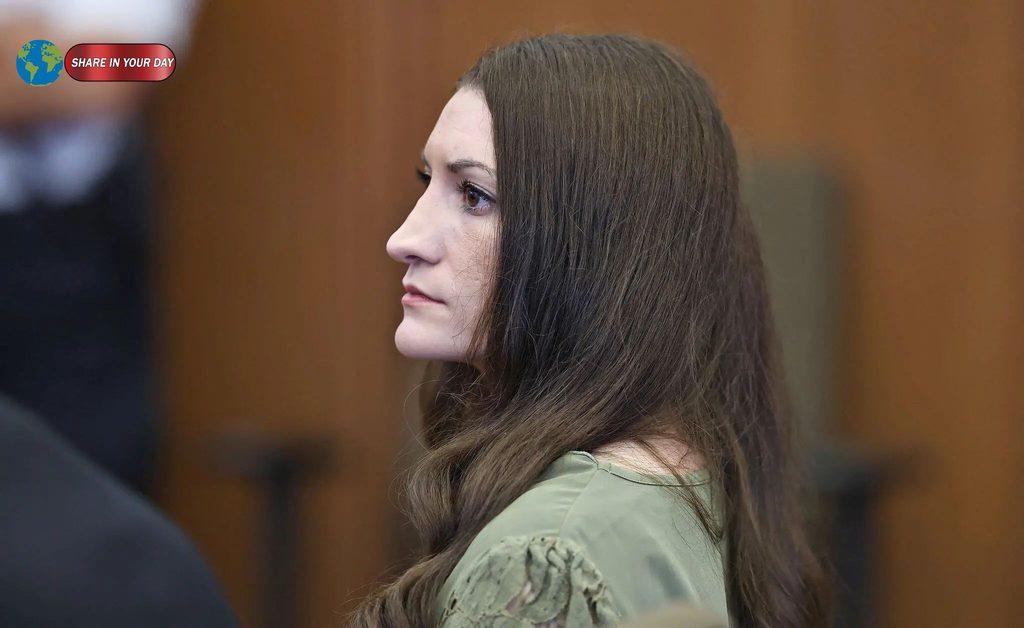
The case has also drawn national attention to postpartum mental health, psychiatric treatment and the difficult legal questions surrounding criminal responsibility when a defendant claims to have been experiencing psychosis.
Lindsay Clancy Trial Ends With Jury Deadlock
The jury had been deliberating since August 27 and spent parts of seven days considering the evidence and legal instructions presented during the trial.
On Friday, jurors again indicated that they were unable to reach a unanimous verdict. Their latest communication with the court came after earlier attempts to resolve the disagreement had failed.
A criminal jury in Massachusetts must reach a unanimous verdict. When jurors cannot agree, the court can ultimately declare a mistrial.
Judge William Sullivan indicated that the case had reached that point.
The decision followed an extraordinary dispute involving a juror who had reportedly become the focus of concerns raised by the defense. Clancy’s attorney, Kevin Reddington, argued that the juror was not properly applying the court’s instructions concerning reasonable doubt.
The judge rejected the request to remove that juror.
Sullivan had previously questioned jurors individually about their ability to follow the law and reminded them that reasonable doubt does not mean eliminating every imaginable doubt. He also emphasized that the burden of proof remains with prosecutors. TThe Guardian+1
Defense Makes Emergency Appeal Attempt
What appeared to be the end of the trial quickly became another legal battle.
After Sullivan indicated that he would declare a mistrial, Reddington requested additional time to seek emergency relief from a higher court. The judge granted the defense a one-hour delay to make that request.
The unusual move temporarily placed the formal conclusion of the case on hold.
The defense’s position was tied to its argument that the disputed juror should not remain on the panel. Reddington maintained that the juror’s approach to reasonable doubt was preventing the other jurors from reaching a verdict.
The judge, however, had already rejected the argument that the juror had demonstrated an unwillingness to follow the law.
That distinction is important. A disagreement among jurors does not automatically mean that one juror is violating the court’s instructions. Judges generally must avoid becoming involved in the substance of jury deliberations, particularly when the disagreement appears to concern how evidence should be interpreted.
The legal dispute therefore added another layer of complexity to an already extraordinary trial. BBoston.com+1
What Happened to Lindsay Clancy’s Children?
The criminal case concerns the deaths of Clancy’s three children: Cora, Dawson and Callan.
According to trial reporting, the children were five years old, three years old and eight months old when they died in January 2023.
Clancy does not deny killing them. Instead, her defense has argued that she was experiencing severe postpartum psychosis and therefore should be found not criminally responsible for her actions.
The prosecution presented a dramatically different interpretation of the events.
Prosecutors argued that Clancy intentionally killed the children and understood what she was doing. They pointed to evidence surrounding the sequence of events and argued that her actions demonstrated planning rather than an uncontrollable psychotic episode.
That disagreement became the central question for jurors.
The prosecution and defense therefore presented the same underlying tragedy through fundamentally different legal lenses: one emphasizing intentional criminal conduct and the other emphasizing severe mental illness and a loss of criminal responsibility. AAP News+1
Postpartum Psychosis Became a Central Issue
The Lindsay Clancy trial has received substantial attention because of the defense’s reliance on postpartum psychosis.
Postpartum psychosis is a rare but serious psychiatric condition that can occur after childbirth. It can involve hallucinations, delusions, confusion and significant changes in behavior.
The defense argued that Clancy’s mental health deteriorated dramatically before the killings. Her lawyers pointed to her psychiatric history and treatment and argued that she had sought help but did not receive the care necessary to prevent the crisis.
A psychologist who testified for the defense described symptoms consistent with psychosis and said Clancy experienced a voice compelling her toward the killings, according to trial coverage.
Prosecutors challenged that interpretation. Their case was that Clancy was suffering from depression and other mental health problems but remained aware of her actions and understood the difference between right and wrong.
That distinction is critical in a criminal case involving an insanity defense.
The question for jurors was not simply whether Clancy had a mental illness. They had to determine whether her mental state reached the legal threshold required to establish a lack of criminal responsibility.
Prosecutors and Defense Offered Different Stories
Throughout the trial, prosecutors and defense lawyers highlighted different portions of Clancy’s behavior before and after the killings.
The prosecution argued that certain actions demonstrated preparation and awareness. Prosecutors also questioned aspects of Clancy’s suicide attempt following the deaths.
The defense, meanwhile, emphasized the severity of her psychiatric symptoms and the treatment she had received before the tragedy.
The defense portrayed Clancy as a mother in profound psychological crisis who had become disconnected from reality.
The prosecution portrayed her as a person who deliberately acted against her children and then attempted to take her own life.
Those competing narratives left jurors with an exceptionally difficult question: where does severe mental illness end and criminal responsibility begin?
The absence of a verdict suggests that the jury could not resolve that question unanimously after extensive deliberations.
Why the Hung Jury Matters
A hung jury does not mean that Clancy was found innocent.
It also does not mean that prosecutors proved their case.
Instead, it means the jury failed to reach the unanimous decision required for a criminal verdict.
That distinction is particularly important because the public response to the case has been sharply divided.
A mistrial effectively leaves the criminal case unresolved. Prosecutors may have several options, including seeking a new trial, negotiating a resolution with the defense or deciding not to continue the prosecution.
A retrial would also create a new courtroom battle over the same fundamental questions.
The prosecution would have to decide whether another jury should hear the case and whether the evidence could produce a different outcome.
The defense, meanwhile, has already demonstrated that it believes its evidence regarding Clancy’s mental state is strong enough to support a finding of no criminal responsibility.
What Could Happen Next?
The immediate issue is the defense’s emergency appeal and the court’s handling of the mistrial.
If the mistrial ultimately stands, prosecutors will have to determine what comes next.
One possibility is a new trial. Another is a negotiated resolution. Prosecutors could also choose to abandon the criminal case, although the decision would depend on the legal circumstances and the evidence available.
A retrial could look significantly different from the first proceeding.
Both sides have now seen the arguments presented in court, the testimony that resonated with jurors and the areas where the evidence generated disagreement.
The prosecution could refine its presentation.
The defense could do the same.
The reported 11-to-1 division among jurors, if accurately characterized by defense lawyers, could also become an important consideration for both sides. However, the precise reasoning of individual jurors generally remains confidential, and public descriptions of the deliberations should therefore be treated carefully. PPeople.com+1
The Case Has Broader Implications
Beyond the courtroom, the Lindsay Clancy trial has reignited discussion about maternal mental health and the challenges faced by women experiencing severe psychiatric symptoms after childbirth.
The case has prompted questions about whether warning signs were recognized, whether treatment was adequate and how the healthcare system responds when postpartum mental illness becomes severe.
At the same time, mental health experts and legal observers have emphasized the importance of separating medical diagnoses from legal conclusions.
A person can have a serious psychiatric disorder without automatically meeting the legal definition of insanity or lack of criminal responsibility.
That distinction is one reason the trial became so focused on expert testimony and Clancy’s behavior before the killings.
A Case Without a Final Answer
The seven days of deliberation produced no final resolution.
For the families involved, the absence of a verdict means that one of the most painful chapters of the case remains legally unsettled.
For Clancy, the mistrial means that she has not been convicted or acquitted through the trial that just ended.
For prosecutors, the decision creates another difficult choice over whether and how to proceed.
And for the public, the case leaves an uncomfortable question unanswered: how should the criminal justice system respond when an alleged act of extreme violence is intertwined with claims of profound psychiatric illness?
The next stage could determine whether those questions return to a courtroom.
For now, the Lindsay Clancy trial has ended without the verdict that jurors were asked to deliver. Judge Sullivan’s mistrial decision, combined with the defense’s emergency appeal effort, means the case remains active even though the first trial has reached an impasse.
The story is therefore not necessarily over.
What We Know About the Lindsay Clancy Case
- The jury deliberated for parts of seven days.
- Jurors were unable to reach a unanimous verdict.
- The judge indicated that the trial would end in a mistrial.
- Clancy’s defense sought emergency relief concerning a disputed juror.
- The defense argues that postpartum psychosis left Clancy not criminally responsible.
- Prosecutors argue that Clancy understood her actions and intentionally killed her children.
- A mistrial does not constitute a finding of innocence or guilt.
- Prosecutors must now consider their options, including a possible retrial. R
Reuters+1
Sources and Further Reading
For readers seeking additional reporting, the original New York Times live coverage can be used as a source reference: New York Times live coverage of the Lindsay Clancy trial
Reuters also reported on the deadlocked jury and the judge’s decision to move toward a mistrial, while AP provided additional background on the trial and its central mental-health arguments. RReuters+1
Internal link recommendation: Add a link here to your website’s existing article about postpartum mental health, Massachusetts crime news, or previous Lindsay Clancy trial coverage. Because the target domain was not provided, the internal URL should be inserted manually.
Editorial note: This article is an original news-style synthesis based on current reporting. It does not reproduce the NYT article’s wording.
Image ALT Text
Lindsay Clancy trial jury deadlock and mistrial in Massachusetts
Image suggestion: Use a properly licensed editorial photograph of the Plymouth County courthouse or courtroom proceedings. Do not reuse a New York Times image unless your publication has the appropriate rights.