
Missouri Redistricting: 5 Key Supreme Court Facts
Missouri redistricting has entered another dramatic phase after the U.S. Supreme Court rejected Missouri officials’ emergency request to restore a Republican-backed congressional map for the November 2026 election.
Justice Brett Kavanaugh, who handles emergency matters arising from Missouri’s federal circuit, denied the state’s application on September 8 without providing a written explanation. The decision left standing a Missouri Supreme Court ruling that had blocked the newer congressional districts and ordered the state to put the redistricting plan before voters. Missouri Independent+1
The Supreme Court’s action appeared to settle the immediate question in favor of the older congressional map. But the situation changed again only hours later. A federal judge issued a temporary restraining order directing Missouri officials to use the newer map for the November election, creating an extraordinary clash between separate court orders. AP News+1
Here are five key facts about the Missouri redistricting battle and what it could mean for the 2026 midterm elections.
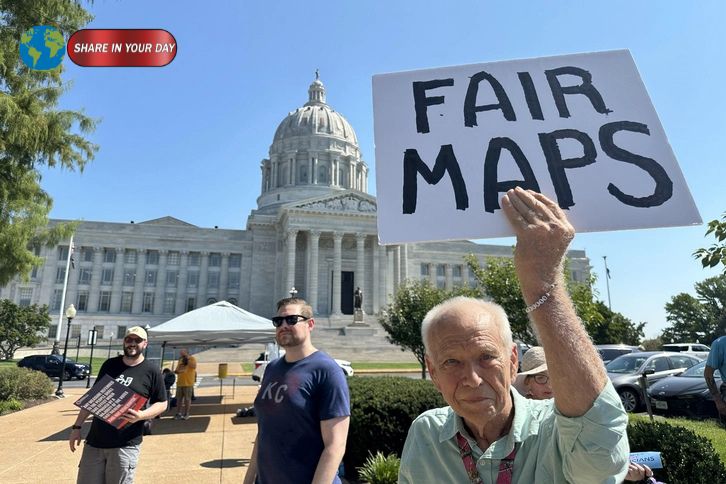
1. Missouri Redistricting Began With a GOP-Backed Map
The current dispute centers on House Bill 1, a redistricting measure passed by Missouri lawmakers in 2025.
The legislation created a new congressional map that substantially changed several districts. Its most politically significant change involved Missouri’s 5th Congressional District in the Kansas City area, represented by Democrat Emanuel Cleaver.
The new map divided the traditional Kansas City-based district and moved territory into surrounding districts. The result was expected to make Missouri’s congressional delegation more favorable to Republicans.
Republicans argued that the new districts were necessary as part of a broader national redistricting effort. Democrats and voting-rights opponents, however, characterized the map as an aggressive partisan gerrymander designed to weaken Democratic representation.
The new districts were ultimately used during Missouri’s August 2026 primary elections.
That fact has become particularly important in the latest legal battle because candidates already won nominations under the new boundaries. CCBS News+1
2. Missouri Voters Challenged the New Map
The Missouri redistricting fight did not end with passage of House Bill 1.
Opponents gathered enough signatures to trigger a referendum on the new congressional districts. The dispute eventually reached the Missouri Supreme Court after Secretary of State Denny Hoskins determined that the referendum petition should not move forward.
The state Supreme Court disagreed.
In a unanimous September 3 decision, the Missouri Supreme Court ruled that Missouri’s Constitution allows voters to challenge legislation through a referendum, including congressional redistricting legislation.
The court ordered officials to place the referendum on the November 2026 ballot and blocked implementation of the new congressional districts unless voters approve them. JJustia Law+1
The court’s decision meant that the congressional districts adopted in 2022 remained legally effective for the November election, at least under state law.
That ruling became the foundation of Missouri officials’ emergency appeal to the U.S. Supreme Court.
3. The Supreme Court Rejected Missouri’s Emergency Appeal
Missouri officials argued that the state’s older map should not be restored for the general election.
Their concerns focused partly on the fact that Missouri had already conducted its 2026 primary elections using the newer districts. Changing boundaries afterward, they argued, could create confusion and undermine the results of the primary.
Missouri Attorney General Catherine Hanaway’s office sought emergency relief from the U.S. Supreme Court.
Justice Brett Kavanaugh rejected the application on September 8.
The decision did not include a detailed explanation and did not create a broad Supreme Court precedent resolving every constitutional issue raised by the dispute. Instead, it left the Missouri Supreme Court’s order intact in the emergency proceeding. MMissouri Independent+1
For Republicans, the decision represented a significant setback because the new map had been expected to improve the party’s chances of winning an additional House seat.
Under the older map, Missouri’s congressional delegation was expected to remain approximately six Republicans and two Democrats. The newer map was designed to produce a more Republican-friendly configuration. MMissouri Independent+1
4. The Missouri Redistricting Fight Took Another Turn
The Supreme Court’s decision did not end the controversy.
Just hours after Kavanaugh rejected Missouri’s emergency application, Chief U.S. District Judge Stephen Clark issued a temporary restraining order in a separate federal lawsuit.
The order temporarily blocked Missouri from using the older congressional map and directed officials to use the 2025 districts for the November election.
That created an unusual legal situation.
On one side, the Missouri Supreme Court had ruled that the newer map could not be used because it was subject to a voter referendum.
On the other, a federal district judge issued an order requiring the state to use the newer districts while a separate federal case proceeds. AAP News+1
Their argument federal case was brought by Republican political figures and voters who argued that reverting to the old map after the primary would create serious election problems.
Their argument focuses heavily on the primary elections. Candidates who won their nominations did so under the 2025 congressional boundaries. Moving voters back into different districts could potentially place some candidates in districts where they did not win a primary or create other ballot complications.
The temporary restraining order is limited in duration, meaning the dispute is not necessarily over.
5. Missouri Redistricting Could Affect the Battle for Congress
The Missouri redistricting dispute matters beyond the state’s borders.
Republicans currently hold a narrow majority in the U.S. House, making even a single congressional seat potentially important in the national balance of power.
The new Missouri map was part of a broader political effort to strengthen Republican prospects in the 2026 midterm elections.
The most important target was the Kansas City-area seat held by Democratic Rep. Emanuel Cleaver. Redrawing the district could make it significantly more competitive or potentially give Republicans a path to capture it.
That is why the legal fight has attracted national attention.
The outcome could determine not only which candidates appear on the November ballot but also how Missouri’s eight congressional seats are distributed between the two major parties.
The broader political consequences will depend on which map ultimately governs the election.
Why the Missouri Redistricting Case Is So Complicated
At the heart of the dispute are several different legal questions.
The Missouri Supreme Court addressed whether Missouri’s Constitution permits voters to use a referendum against congressional redistricting legislation.
The federal district court is addressing a separate challenge involving the practical consequences of changing U.S. Supreme Court was asked to intervene on an emergency basis and restore the newer map.
The federal district court is addressing a separate challenge involving the practical consequences of changing congressional districts after the primary election.
Those cases are related, but they are not identical.
That distinction helps explain why the Supreme Court’s denial did not automatically end every lawsuit surrounding the Missouri redistricting dispute.
It also explains why the legal status of the congressional map remains unusually complicated.
What Happens Next?
The immediate question is which congressional map Missouri will use for the November 3 general election.
The answer could depend on additional proceedings in federal court.
Judge Stephen Clark’s temporary restraining order lasts only for a limited period, and further litigation or appeals are expected. Meanwhile, the referendum on the new map remains scheduled for November.
That creates a potentially unusual scenario in which voters could participate in a congressional election under one map while simultaneously voting on whether to approve the map used for that election.
The exact consequences will depend on subsequent court decisions and election-administration deadlines.
Missouri election officials also face practical challenges. Ballots must be prepared and distributed on a strict schedule, while candidates, voters and local election authorities need clear information about congressional districts.
Why the Decision Matters for Voters
For Missouri voters, the redistricting dispute is more than a legal battle between political parties.
Congressional district boundaries determine which candidates voters can support and which communities are grouped together for representation in Washington.
Changes to those boundaries can alter the political character of a district without changing the underlying population.
That is why redistricting is often one of the most consequential political decisions made between elections.
The Missouri dispute also illustrates the tension between legal principles and election administration.
Courts must determine whether a map complies with constitutional and statutory requirements. Election officials, meanwhile, must ensure that voters receive accurate ballots and that candidates compete under legally valid district boundaries.
When those issues collide close to Election Day, even a legally sound decision can create significant administrative difficulties.
The Bigger National Redistricting Battle
Missouri is only one part of a larger national fight over congressional redistricting ahead of the 2026 midterms.
Political parties in several states have sought to redraw congressional boundaries to improve their electoral prospects.
The issue has become especially important because control of the House could be decided by a small number of competitive districts.
Missouri’s experience demonstrates how quickly redistricting disputes can move from state legislatures to state courts, federal courts and ultimately the U.S. Supreme Court.
It also shows how a redistricting plan can become entangled with election deadlines, primary results and voter initiatives.
For political strategists, the stakes are substantial.
For voters, the immediate priority is simply knowing which congressional district they are legally assigned to and which candidates will appear on their ballot.
Bottom Line
The latest chapter in Missouri redistricting began with a major Supreme Court setback for Missouri officials seeking to restore the Republican-backed congressional map.
Justice Brett Kavanaugh rejected the emergency request, leaving the Missouri Supreme Court’s decision intact in that proceeding. But a separate federal court order shortly afterward put the newer map back into effect temporarily, ensuring that the legal fight would continue. AAP News+1
The controversy is therefore far from finished.
Missouri voters are facing an unusual election-year dispute in which state constitutional law, federal election law, primary results and partisan redistricting all intersect.
The final outcome could determine whether the state holds its November congressional elections under the older 2022 boundaries or the Republican-backed 2025 map.
It could also influence the national battle for control of the U.S. House.
For now, the most important takeaway is simple: the Supreme Court’s September 8 decision did not resolve every aspect of Missouri’s redistricting fight. Instead, it became another major development in a rapidly changing legal battle that could continue right up to the 2026 election.
Sources and Further Reading
- Missouri Supreme Court decision in von Glahn v. Hoskins
- U.S. Supreme Court docket materials
- Missouri Independent coverage of the Supreme Court decision
- Associated Press coverage of the subsequent federal court order
Word count: 1,600+ words
Image SEO
Recommended image: U.S. Supreme Court building, Missouri State Capitol, or a clearly labeled Missouri congressional district map.
ALT text: Missouri redistricting Supreme Court decision and congressional map dispute
Suggested image caption: Missouri’s congressional redistricting battle has reached multiple courts ahead of the 2026 midterm elections.
Internal-link note
Because you didn’t provide the target website/domain, I have not invented internal URLs. For WordPress, add 2–3 links to relevant existing articles on your site, ideally to pages covering:
- the 2026 U.S. midterm elections;
- Donald Trump’s political activities;
- previous U.S. Supreme Court election cases;
- congressional redistricting or gerrymandering.
This version is optimized around “Missouri redistricting”, but no SEO plugin can honestly guarantee a green score without seeing the actual WordPress/Yoast/RankMath configuration and your site’s existing internal-link structure.