
Full Article
The tax exemption for schools could face a major change under a new Trump administration proposal targeting private educational institutions that use race, color or national or ethnic origin in their policies. The Treasury Department and Internal Revenue Service have proposed regulations that could put the federal tax-exempt status of as many as 18,000 private elementary schools, secondary schools, colleges, universities and other educational institutions under new scrutiny. IIRS+1
The proposal represents a significant expansion of the federal government’s approach to racial nondiscrimination in private education. While existing rules already require private schools seeking federal tax exemption to maintain racially nondiscriminatory policies, the proposed regulations would establish a broader standard covering admissions, scholarships, loans, athletics and other school-administered or school-supported programs.
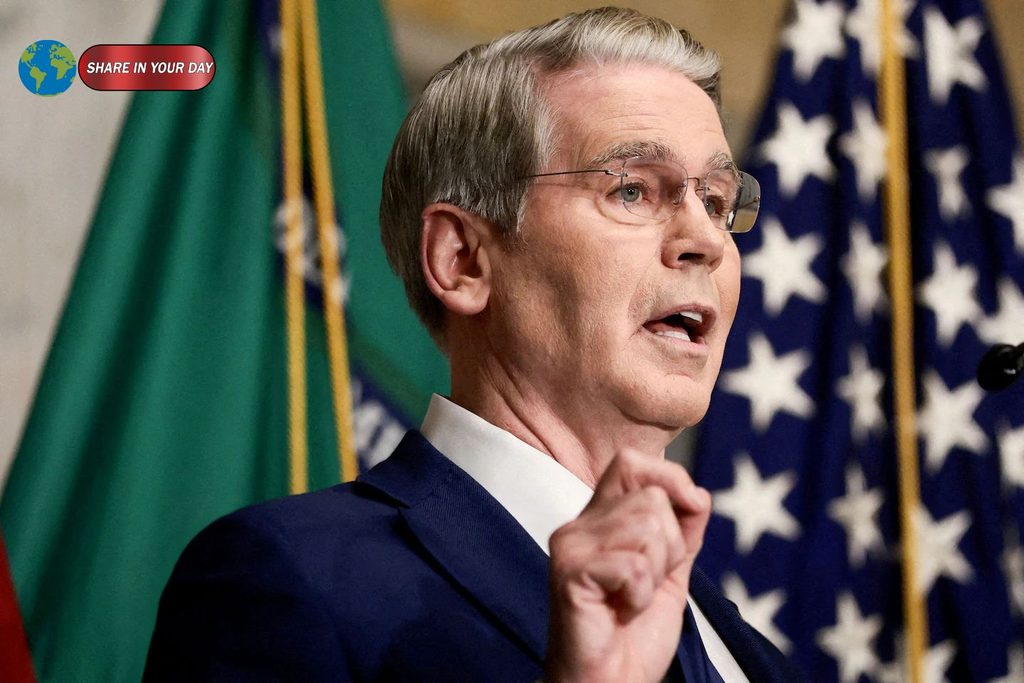
The administration says the move is intended to ensure that federal tax benefits do not support racial discrimination or preferences. Critics, however, are likely to argue that the proposal could reach programs designed to address historic inequality and could create uncertainty for schools that have used race-conscious initiatives to expand educational opportunity.
Tax Exemption for Schools Could Be Tied to Race Policies
At the center of the proposal is Section 501(c)(3) of the Internal Revenue Code, which provides federal tax-exempt status to qualifying organizations operating for charitable, educational and other specified purposes.
Under the proposed regulations, a private school would not qualify for federal income-tax exemption if it adopts, maintains or enforces policies that discriminate based on race, color, or national or ethnic origin.
The proposed standard would cover much more than admissions.
Treasury and the IRS specifically identify educational policies, admissions, scholarship and loan programs, athletic programs and other school-administered or school-supported programs. The proposed language also says discrimination based on race or ethnicity would qualify regardless of the purpose behind the policy. FFederal Register Public Inspection
That last provision could become particularly important for schools operating programs intended to address historic disparities.
A school might argue that a race-conscious scholarship is designed to expand opportunity or remedy past discrimination. Under the proposed regulations, however, the government’s position would be that the use of race itself can make such a policy discriminatory.
The administration’s announcement says schools would not be able to avoid the proposed restrictions simply by changing the names of their programs.
Treasury Secretary Scott Bessent said schools that rebrand race-based preferences as equitable, inclusive or diversity-enhancing would still face scrutiny under the proposed standard. IIRS
Which Schools Could Be Affected?
The proposal is aimed at private educational institutions, rather than public schools operated by government entities.
The Federal Register document defines a private school broadly for purposes of the proposed regulation. The definition includes private primary and secondary schools, colleges, universities, professional schools and trade schools that otherwise qualify under the relevant sections of the tax code. Government-operated schools are excluded. FFederal Register Public Inspection+1
Treasury and the IRS estimate that approximately 18,000 private elementary, secondary and postsecondary schools currently have tax-exempt status and could potentially be affected by the regulatory framework.
The government also estimates that roughly 750,000 students attending these schools could potentially be affected because they may qualify for scholarships allocated using racial, ethnic or national-identity criteria. FFederal Register Public Inspection
That does not mean all 18,000 schools are expected to lose their tax exemption.
Instead, the figure represents the population of private educational institutions that could fall within the scope of the proposed regulations. Schools that already comply with the proposed nondiscrimination requirements would not necessarily face any change.
The Treasury Department itself expects many institutions to adjust their policies rather than risk losing their tax-exempt status.
Race-Based Scholarships Are a Major Focus
One of the most consequential areas could be financial aid.
Many private institutions provide scholarships using a variety of criteria, including academic achievement, financial need, geographic location, family background and other characteristics. Some scholarships, however, have historically been targeted toward particular racial or ethnic groups.
The proposed regulations would prevent private schools from administering scholarships or loans based on race, color or national or ethnic origin if the rules are finalized in their current form. FFederal Register Public Inspection
Treasury estimates that schools could respond by replacing race-based criteria with race-neutral alternatives.
Those alternatives could include family income, geography, first-generation college status, individual hardship, military-family status or academic achievement. The IRS says such criteria could continue to be used because they do not explicitly make race or ethnicity the basis for eligibility. IIRS
The proposed rulemaking also acknowledges that some of these criteria can correlate with race and ethnicity.
For example, a scholarship based on household income could disproportionately benefit students from racial groups that experience higher rates of economic disadvantage. But the distinction under the proposal would be that the eligibility requirement itself is based on income rather than race.
Treasury and the IRS anticipate that many donors could redirect their scholarship programs toward such alternatives.
What Happens to Existing Scholarship Funds?
Existing scholarship endowments could present a more complicated problem.
Some donors have established funds with explicit requirements that scholarship recipients belong to a particular racial or ethnic group. Changing those conditions may require negotiations with donors or their heirs, depending on the terms governing the fund.
The government’s economic analysis acknowledges that schools could face legal and administrative costs when attempting to modify such arrangements. FFederal Register Public Inspection
However, Treasury estimates that scholarship dollars restricted by donor instructions represent no more than 16 percent of total scholarship dollars.
The department therefore expects the overall financial impact of changing scholarship criteria to be limited for most institutions. FFederal Register Public Inspection
That assessment could nevertheless become a subject of debate during the regulatory process, particularly among universities with large numbers of specialized scholarship funds.
Tax Exemption for Schools and the Supreme Court
The administration’s proposal relies heavily on existing Supreme Court precedent.
One important case is Bob Jones University v. United States, decided by the Supreme Court in 1983. The Court upheld the government’s position that racially discriminatory private educational institutions could be denied federal tax-exempt status.
The Court concluded that racial discrimination in education was contrary to fundamental public policy and incompatible with the charitable purposes underlying Section 501(c)(3). LLegal Information Institute+1
The Trump administration is using that precedent as part of the legal foundation for its proposed rules.
Another major case is Students for Fair Admissions v. Harvard College, decided in 2023. In that case, the Supreme Court ruled against race-conscious admissions systems at Harvard and the University of North Carolina under the Equal Protection Clause. LLegal Information Institute+1
The new Treasury proposal attempts to connect these legal developments to the federal tax system.
The administration’s position is that private educational institutions should not receive federal tax benefits while using racial criteria in their programs.
This Is Broader Than College Admissions
One important feature of the proposal is its breadth.
The 2023 Supreme Court ruling directly concerned race-conscious college admissions. The new tax proposal goes further by potentially covering scholarships, loans, athletics and other programs operated or supported by private schools.
The proposed regulations explicitly state that the nondiscrimination requirement would apply to school policies and programs beyond admissions. FFederal Register Public Inspection
That could affect how universities review their financial-aid systems and other student programs.
It could also force schools to conduct broader internal audits.
Institutions may need to examine application procedures, scholarship eligibility, financial-aid policies, athletics programs and other initiatives to determine whether race or ethnicity plays a role in decision-making.
Religious Schools Would Retain Important Protections
The proposed rules do not prohibit private religious schools from maintaining their religious missions.
Treasury and the IRS specifically state that religious schools could continue to maintain religious curricula, religious observance and student-selection policies based on genuine religious affiliation or membership. FFederal Register Public Inspection
The proposed regulations distinguish religious affiliation from racial or ethnic identity.
In other words, selecting students because they belong to a particular religion would not automatically become racial discrimination simply because members of that religious community may share ancestry or ethnicity.
The rule would focus on whether the selection criterion is actually based on religion or instead on race or ethnic characteristics.
That distinction could become important for religious schools with highly specific admissions policies.
Schools Could Still Help Disadvantaged Students
The proposal does not prohibit private schools from trying to expand access for disadvantaged students.
Instead, the administration says schools could use race-neutral criteria to pursue those goals.
A school could, for example, offer financial assistance based on household income, geographic location or first-generation college status. It could also consider individual hardship or other race-neutral circumstances. IIRS
This distinction is likely to become one of the central issues in the debate.
Supporters of the proposal are likely to argue that schools can pursue economic and educational opportunity without making race an eligibility requirement.
Opponents may contend that race-neutral criteria cannot always address disparities that are directly connected to race and the legacy of discrimination.
The dispute could ultimately test how federal tax law should treat programs designed to remedy unequal educational outcomes.
When Could the New Tax Rules Take Effect?
The proposal is not yet a final regulation.
Treasury and the IRS are seeking public comments before finalizing the rules. The Federal Register notice states that comments and requests for a public hearing must be submitted during the regulatory process. FFederal Register Public Inspection+1
If the regulations are finalized as proposed, they would apply to taxable years beginning after May 31, 2027.
That gives private schools time to review and potentially modify admissions, scholarship and other policies before the new requirements take effect. FFederal Register Public Inspection
The proposed rule is identified as REG-119986-25.
The official proposal and information about the rulemaking are available through the federal regulatory system. FFederal Register Public Inspection
Official IRS announcement on the proposed private-school tax rules
Federal Register proposed regulation — REG-119986-25
Why the Tax Exemption Matters
Losing federal tax-exempt status would have consequences beyond simply paying federal income taxes.
Section 501(c)(3) status is an important part of the financial structure of many nonprofit educational institutions. It also affects the tax treatment of charitable contributions made to qualifying organizations.
The proposed regulations therefore create a strong financial incentive for schools to comply.
Treasury’s economic analysis suggests that most institutions would likely change their policies rather than give up their tax-exempt status. The department expects private schools to seek alternative, race-neutral criteria where necessary. FFederal Register Public Inspection
That could make the regulatory proposal powerful even before any school actually loses its exemption.
In practice, universities may begin changing policies simply because maintaining tax-exempt status is financially more attractive than challenging the government.
A New Chapter in the DEI Debate
The proposal is also the latest development in the Trump administration’s broader campaign against race-conscious policies and diversity, equity and inclusion programs.
Many colleges have already changed or eliminated certain DEI programs following pressure from federal officials and the Supreme Court’s 2023 admissions decision.
The proposed tax rules would add another layer of pressure.
Rather than relying only on education funding, civil-rights investigations or admissions policy, the administration would use the federal tax system as an additional mechanism for enforcing its interpretation of racial nondiscrimination.
That could make the consequences particularly significant for private institutions.
A school that disagrees with the administration’s interpretation could face a choice between changing its policies, risking its tax status or challenging the government’s action in court.
Legal Challenges Could Follow
The proposal is also likely to generate legal questions.
The Supreme Court’s Bob Jones decision provides important support for the government’s authority to deny tax benefits to racially discriminatory private schools. But the current proposal raises a different question: whether that precedent supports denying tax exemption to programs that use race for remedial or diversity-related purposes rather than to exclude students.
The proposed regulations explicitly say that race-based action intended to ameliorate the effects of past discrimination would still fall within the definition of discrimination. FFederal Register Public Inspection
That distinction could become central to future litigation.
Schools or organizations challenging a final rule could argue that the administration has interpreted existing tax law too broadly. The government, meanwhile, is expected to rely on the longstanding principle that tax exemptions are benefits conditioned on compliance with fundamental public policy.
The eventual outcome could have implications well beyond private schools.
What Private Schools Need to Watch
For private schools and colleges, the immediate issue is not losing their tax exemption tomorrow.
The more immediate question is whether their policies could conflict with the proposed rules if those rules become final.
Institutions may begin reviewing:
- Admissions criteria
- Race-specific scholarships
- Loan programs
- Financial-aid policies
- Athletics programs
- Student-support initiatives
- Diversity-related programs
- Donor-restricted scholarship funds
- Policies involving race, ethnicity or national origin
Schools may also look for race-neutral ways to pursue educational-access goals.
The proposed rule gives institutions considerable time to make changes before the proposed May 2027 applicability date.
The Bigger Question for American Education
The debate over tax exemption for schools is ultimately about more than taxes.
It raises a fundamental question about how the federal government should regulate nonprofit educational institutions and whether tax benefits can be conditioned on specific policies involving race.
The Trump administration says the answer is clear: federal tax benefits should not support racial discrimination, regardless of whether a school describes its program as diversity-oriented, inclusive or remedial. IIRS
Opponents are likely to focus on the broader consequences, particularly for scholarships and programs designed to address longstanding educational disparities.
For now, the proposal remains just that — a proposal.
But if finalized, it could fundamentally reshape how thousands of private schools and colleges approach race-conscious policies, particularly in financial aid and student programs. Treasury and the IRS estimate that approximately 18,000 institutions fall within the potentially affected population, making this one of the most consequential proposed changes to the federal tax treatment of private education in years. FFederal Register Public Inspection
The next stage will be the public-comment process, followed by the administration’s decision on whether to finalize, modify or withdraw the rules.
Internal Link Note
Because no target website/domain was supplied, I cannot safely invent internal URLs. For WordPress SEO, add 2–3 links from your own site to relevant articles such as “Trump Education Policy,” “College Admissions,” and “DEI in Higher Education.”
Source Links
Washington Post — Original Report
U.S. Treasury and IRS — Official Announcement
Federal Register — Proposed Regulation REG-119986-25
Supreme Court/Bob Jones University Decision
Students for Fair Admissions v. Harvard DecisionI