Mars Fungus Contamination Revealed: 5 Shocking NASA Risks
The growing concern over Mars fungus contamination is shaking the scientific community after new research revealed that certain Earth-based fungi may survive the harsh journey to the Red Planet. The findings, supported by NASA-backed studies, raise serious questions about the safety of future Mars missions and the integrity of the search for extraterrestrial life.
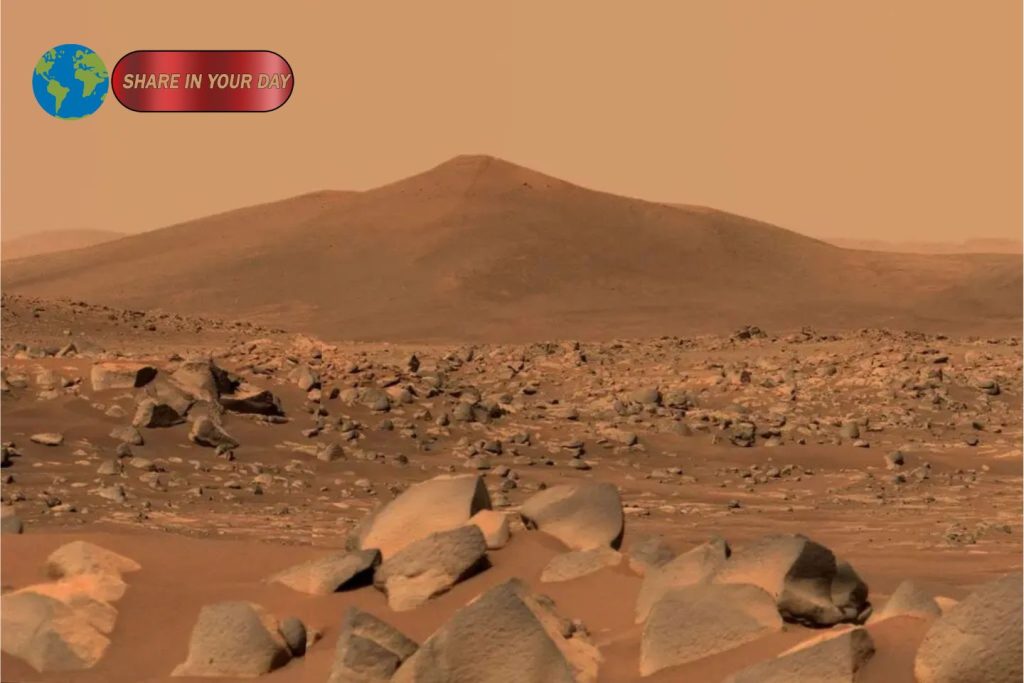
For decades, scientists believed that the extreme conditions of space—radiation, freezing temperatures, and near vacuum—would destroy most forms of life hitchhiking on spacecraft. However, recent discoveries suggest that assumption may no longer hold true.
A Hardy Fungus That Defies Space Conditions
At the center of the Mars fungus contamination debate is a resilient species known as Aspergillus calidoustus. This fungus has demonstrated an extraordinary ability to survive conditions that closely mimic space travel and the Martian surface.
In controlled experiments, researchers exposed fungal spores to:
- Intense ultraviolet radiation
- Extremely low pressure
- Freezing temperatures similar to Mars
Remarkably, the spores endured these conditions for extended periods. Some even survived simulations lasting over a year, highlighting just how adaptable microbial life can be.
Scientists emphasize that fungal spores are naturally built for survival. Their structure allows them to remain dormant under stress and reactivate when conditions improve.
Cleanrooms Are Not as Sterile as Expected
One of the most surprising revelations is that these fungi were discovered in NASA cleanrooms—the ultra-controlled environments where spacecraft are assembled.
These facilities are designed to eliminate contamination. Yet, certain microbes persist despite:
- Chemical sterilization
- Heat treatment
- Radiation exposure
Studies found that fungal strains collected from these cleanrooms were already highly resistant before being tested in space simulations.
This raises a critical issue: if microbes can survive cleanroom conditions, they may already be pre-adapted for survival in space.
The Risk of Contaminating Mars
The possibility of Mars fungus contamination is more than just theoretical—it poses real risks to future exploration.
If Earth microbes reach Mars, they could:
- Interfere with life-detection experiments
- Mimic signs of extraterrestrial organisms
- Permanently alter the Martian environment
Scientists warn that even a small number of surviving spores could compromise decades of research aimed at answering one of humanity’s biggest questions: Is there life beyond Earth?
NASA and other space agencies follow strict planetary protection protocols to prevent such contamination. These guidelines are rooted in international agreements like the Outer Space Treaty.
However, the new findings suggest that current measures may not be enough.
Why Fungi Are More Dangerous Than Bacteria
Traditionally, planetary protection efforts have focused on bacteria. But the Mars fungus contamination threat highlights why fungi may be even more concerning.
Unlike many bacteria, fungi:
- Produce highly resilient spores
- Withstand extreme dehydration
- Tolerate radiation and nutrient scarcity
These traits make them uniquely suited to survive long-duration space missions.
In fact, researchers found that fungal spores could endure multiple stress factors simultaneously—something many bacteria cannot do.
This discovery is forcing scientists to rethink how contamination risks are assessed and managed.
Mars: A Harsh but Not Impossible Environment
Mars is far from hospitable. Its surface is exposed to intense radiation, extreme cold, and a thin atmosphere.
Yet, laboratory simulations show that some organisms can survive at least temporarily under these conditions. While long-term survival remains unlikely, even short-term persistence could be enough to contaminate experiments.
The concern is not that Mars will suddenly become overrun with Earth life, but that even minimal contamination could distort scientific findings.
Planetary Protection Under Pressure
The issue of Mars fungus contamination is putting pressure on global space agencies to strengthen their protocols.
Current standards allow a limited number of microbial spores on spacecraft surfaces. However, the discovery of highly resistant fungi suggests that:
- Existing sterilization methods may be insufficient
- Monitoring systems need improvement
- Fungi must be included in contamination risk models
Scientists are now calling for updated guidelines that account for a broader range of microorganisms—not just bacteria.
A Threat to the Search for Alien Life
Perhaps the most significant implication of Mars fungus contamination is its impact on the search for extraterrestrial life.
If Earth microbes contaminate Mars:
- Future discoveries could be misinterpreted
- Scientific credibility could be compromised
- The true origin of detected life forms may become impossible to determine
This scenario is often referred to as “forward contamination,” where human activity alters another planet before it can be properly studied.
Avoiding this outcome is one of the primary goals of planetary science.
Not a Crisis—But a Wake-Up Call
Despite alarming headlines, scientists stress that contamination of Mars is not inevitable.
The research does not prove that fungi will thrive on Mars. Instead, it highlights the potential for survival under certain conditions and the need for better risk management.
As one researcher noted, these findings help “quantify potential microbial survival risks,” rather than confirm a direct threat.
In other words, this is a warning—not a disaster.
What Happens Next?
The discovery is already influencing how future Mars missions are planned.
Possible next steps include:
- Developing stronger sterilization technologies
- Expanding research on fungal resistance
- Revising international planetary protection policies
Space agencies may also invest in new detection systems to identify and eliminate microbes before launch.
The Bigger Picture: Protecting Other Worlds
The Mars fungus contamination issue reflects a broader challenge in space exploration: how to explore other worlds without harming them.
As missions become more frequent and ambitious, the risk of contamination increases. This is especially true for plans involving:
- Human missions to Mars
- Sample-return missions
- Long-term colonization efforts
Balancing exploration with preservation will be one of the defining challenges of the space age.
Conclusion: A Critical Turning Point
The discovery of fungi capable of surviving space-like conditions marks a turning point in our understanding of planetary protection.
The Mars fungus contamination debate is not just about microbes—it is about the future of space exploration itself.
If humanity hopes to answer the question of life beyond Earth, it must first ensure that we do not bring our own life with us.
The message from scientists is clear: Mars must be studied carefully, protected rigorously, and explored responsibly.
Because once contamination happens, it may be impossible to undo.