NASA Ring Current Mission Revealed for 2026 Launch
The upcoming NASA ring current mission could finally help scientists solve one of the biggest mysteries surrounding Earth’s magnetic environment. In partnership with the United States Space Force, NASA is preparing to launch a new spacecraft mission designed to investigate the origins and behavior of the powerful electrical current that circles Earth deep within its magnetosphere.
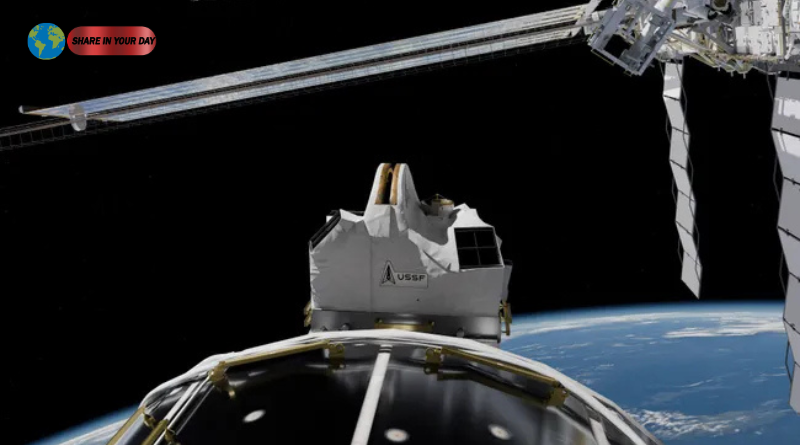
The mission aims to uncover how the mysterious “ring current” forms, how it evolves during geomagnetic storms, and why it can dramatically impact satellites, communications systems, and even power grids on Earth.
Scientists say understanding the ring current has become increasingly urgent as modern civilization grows more dependent on space-based infrastructure. Severe space weather events can disrupt GPS systems, damage spacecraft electronics, and interfere with aviation and military operations.
The new mission represents another major step in NASA’s expanding effort to better predict dangerous solar activity and understand how Earth interacts with the harsh environment of space.
What Is Earth’s Ring Current?
Earth is surrounded by an invisible magnetic field known as the magnetosphere. This giant protective bubble shields the planet from charged particles emitted by the sun. However, some of those particles become trapped within Earth’s magnetic environment and begin circulating around the planet.
That circulation creates the phenomenon known as the ring current.
Scientists describe the ring current as a massive flow of energetic charged particles that moves around Earth near the equator within the magnetosphere. These particles are primarily ions and electrons originating from solar wind and Earth’s own upper atmosphere.
The movement of these particles generates an electrical current:
I=tQ
In this equation, electrical current depends on the amount of electric charge moving through space over time.
Although the concept sounds straightforward, researchers still do not fully understand where many of the particles come from or how the current intensifies during geomagnetic storms.
That uncertainty is exactly why the NASA ring current mission is attracting major attention within the scientific community.
Why the Ring Current Matters
The ring current plays a critical role in space weather events. During periods of intense solar activity, the current can strengthen dramatically, altering Earth’s magnetic field and triggering geomagnetic storms.
These storms can produce serious technological consequences, including:
- Satellite communication disruptions
- GPS inaccuracies
- Increased radiation exposure for astronauts
- Power grid instability
- Spacecraft electronics damage
- Airline navigation problems
Scientists warn that understanding space weather is becoming increasingly important because humanity now relies heavily on orbital technology.
According to NASA researchers, a powerful solar storm similar to the historic Carrington Event of 1859 could potentially cause widespread modern infrastructure damage if it struck Earth today.
The NASA ring current mission is expected to improve forecasting models that help governments and companies prepare for such events.
NASA and the US Space Force Join Forces
The new mission highlights the growing cooperation between NASA and the US Space Force on space weather research and national security.
The spacecraft will launch aboard a military-supported mission managed in coordination with the NASA Heliophysics Division and the Space Force’s growing space monitoring infrastructure.
The collaboration reflects how space weather is now viewed as both a scientific and strategic concern.
Modern military systems rely heavily on satellites for communications, navigation, surveillance, and missile warning capabilities. Severe geomagnetic storms could interfere with those systems at critical moments.
As a result, both civilian and defense agencies are investing heavily in better forecasting tools and real-time monitoring technologies.
The Science Behind the Ring Current
Earth’s magnetic field traps charged particles in several regions around the planet, including the Van Allen radiation belts.
The ring current exists within this broader magnetic system and intensifies when energetic particles become injected into the inner magnetosphere.
The force acting on these charged particles is described by the Lorentz force equation:
F=q(E+v×B)
This equation explains how charged particles respond to electric and magnetic fields in space.
During solar storms, huge bursts of plasma from the sun can dramatically alter these forces, pushing additional particles into Earth’s magnetosphere. As more charged particles circulate, the ring current grows stronger.
However, scientists still debate which sources contribute most strongly to the current. Some particles appear to come directly from solar wind, while others may originate from Earth’s ionosphere.
The NASA ring current mission will attempt to resolve that debate using advanced instruments capable of directly measuring particle composition and energy levels.
How the Mission Will Work
The spacecraft involved in the NASA ring current mission will carry sensitive scientific instruments designed to observe charged particles and magnetic activity in unprecedented detail.
Researchers hope to track:
- Particle energy levels
- Ion composition
- Magnetic field fluctuations
- Plasma movement
- Solar wind interactions
- Radiation intensity
By collecting data from multiple orbital regions, scientists aim to create a more complete picture of how the ring current develops during geomagnetic disturbances.
The mission will also study how energy from the sun flows through Earth’s magnetic environment.
Understanding this process is essential for improving computer models used in space weather forecasting.
Space Weather Is Becoming a Global Concern
Space weather was once considered a relatively obscure scientific topic. Today, however, it has become a major international concern due to society’s dependence on satellite systems.
Modern technologies vulnerable to geomagnetic storms include:
- Internet infrastructure
- Financial transaction timing systems
- Aviation communications
- Weather satellites
- Military surveillance systems
- Power transmission networks
Experts warn that severe solar storms could cause billions — or even trillions — of dollars in economic damage.
The NASA ring current mission is therefore not only about scientific discovery. It is also part of a broader effort to protect critical global infrastructure.
Governments worldwide are increasingly investing in space weather monitoring and resilience planning.
A New Era of Magnetosphere Research
The upcoming mission builds on decades of magnetosphere research conducted by NASA and other international space agencies.
Previous missions, including the Van Allen Probes and THEMIS program, helped scientists better understand radiation belts and auroras. However, many important questions about the ring current remain unanswered.
One major challenge is that the ring current changes rapidly during solar storms, making it difficult to observe with limited spacecraft coverage.
Newer missions are using improved sensors, faster data transmission systems, and advanced modeling techniques to address those limitations.
The NASA ring current mission could become one of the most detailed investigations ever conducted into Earth’s magnetic dynamics.
Could Better Forecasts Prevent Future Disasters?
One of the biggest goals of the mission is improving prediction accuracy for geomagnetic storms.
Currently, scientists can monitor solar eruptions and estimate when disturbances might reach Earth. However, forecasting the exact severity of magnetic impacts remains difficult.
The ring current is one reason why.
Because the current directly affects Earth’s magnetic field strength, understanding its behavior could dramatically improve storm prediction models.
Researchers hope future warning systems could eventually provide earlier and more accurate alerts for satellite operators, airlines, utility companies, and governments.
That capability could help reduce the impact of extreme solar events before they trigger major disruptions.
The Future of Space Weather Science
NASA officials say missions like this are part of a long-term strategy to better understand the sun-Earth connection.
Future projects may involve:
- Swarms of small satellites
- AI-powered forecasting systems
- Deep-space solar observatories
- Improved radiation monitoring
- Real-time geomagnetic mapping
Scientists believe a deeper understanding of Earth’s magnetic environment will become increasingly important as human activity in space continues expanding.
Commercial satellite networks, lunar missions, and future crewed journeys to Mars will all require stronger protection from space weather hazards.
The NASA ring current mission could provide critical knowledge needed for that future.
Earth’s Invisible Shield Still Holds Many Secrets
Despite decades of research, Earth’s magnetic environment remains filled with mysteries.
The ring current is invisible to humans, yet it can influence everything from satellite operations to global communications networks. Understanding how it forms and behaves may unlock major advances in both space science and technological protection.
That is why scientists are watching the upcoming NASA ring current mission so closely.
As the spacecraft prepares for launch, researchers hope the mission will finally answer one of the most persistent questions in space physics: where exactly does Earth’s mysterious ring current come from — and how dangerous can it become?