
MacKenzie Weegar Reveals Why NHL Stars Want Out of Canada
MacKenzie Weegar has offered a candid perspective on the growing number of American NHL stars seeking moves away from Canadian teams, admitting that the trend is “a bit unfortunate” while also acknowledging why playing in the United States can be attractive.
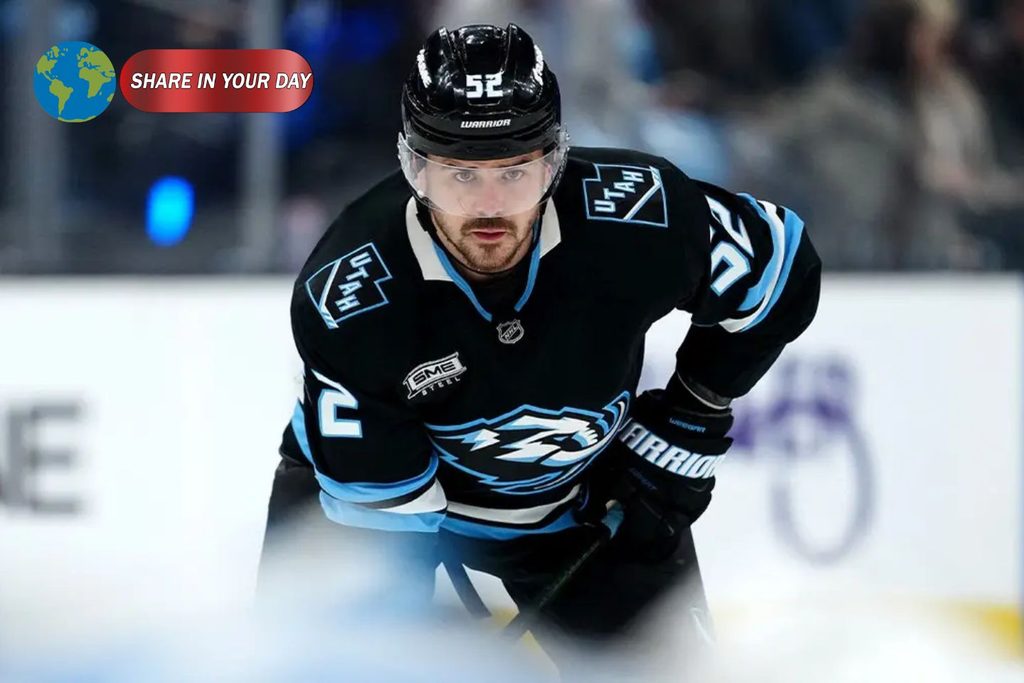
The Utah Mammoth defenseman has a unique perspective on the debate. Weegar is Canadian-born and spent several seasons playing for the Calgary Flames before joining Utah, giving him direct experience of both Canadian and American hockey markets.
His comments come at a time when several prominent American players have sought trades away from Canadian franchises.
Brady Tkachuk was moved from the Ottawa Senators to the Florida Panthers after requesting a trade. Winnipeg Jets goaltender Connor Hellebuyck has also confirmed that he wants out of Winnipeg, while Quinn Hughes previously requested a trade from the Vancouver Canucks before ultimately joining the Minnesota Wild.
The trend has attracted considerable attention because the players involved are not fringe NHL names. They are established stars and, in several cases, among the most important players on their respective teams.
For Canadian hockey fans, that has created understandable frustration.
For Weegar, however, the situation is more complicated.
MacKenzie Weegar Says Leaving Canada Is “Unfortunate”
Speaking with TSN’s OverDrive, Weegar explained that he understands why Canadian fans are disappointed when star players want to leave.
“As a Canadian-born player and to play in Calgary, for me personally, I had a great experience in Canada,” Weegar said. “Calgary was an absolute blast to play in that city.”
That experience shaped his reaction to the recent wave of trade requests.
Weegar said it is difficult to watch players seek exits from Canadian markets because of the passion surrounding hockey in those cities.
He specifically pointed to the relationship between players and supporters. Canadian NHL franchises often occupy a unique place in their communities, with teams representing more than just another professional sports organization.
For many fans, the players become central figures in the identity of their city.
That is why seeing an American star request a trade can feel personal.
Weegar understands that perspective.
At the same time, he stopped short of criticizing the players themselves.
Why American Players May Prefer U.S. Teams
Although Weegar described the situation as unfortunate, he also acknowledged that American teams can offer certain advantages.
He pointed to Utah as an example of a U.S. market that can provide an attractive environment for NHL players.
“There’s a lot of teams out here [like] Utah that has a little bit more to offer than, say, in Canada,” Weegar said.
That observation touches on several factors that have become increasingly important in NHL player decisions.
Taxes are one consideration.
Players earning millions of dollars can face significant differences in their overall financial situations depending on where they play. Some U.S. states have lower income-tax burdens than Canadian provinces, while others have no state income tax at all.
That does not automatically mean every American NHL player will prefer a U.S. destination.
However, when combined with other factors, the financial difference can become significant.
Lifestyle is another consideration.
Players and their families may weigh weather, travel, schools, housing and general quality of life when considering where they want to spend several years.
Competitive prospects can be just as important.
An NHL player has a limited window to compete for the Stanley Cup. If a player believes another organization offers a stronger path to a championship, that can influence his decision regardless of geography.
Weegar appeared to recognize all of those realities.
MacKenzie Weegar: Hockey Players Ultimately Want to Play
Despite the discussion surrounding taxes, markets and geography, Weegar brought the conversation back to the central point.
Players want to play hockey.
“And at the end of the day, we’re all hockey players; it doesn’t matter where you play, you just want to play in the NHL,” he said. “It’s the best league in the world.”
That statement provides an important perspective on the controversy.
A player’s decision to request a trade does not necessarily mean he dislikes the city where he currently plays.
It can instead reflect a combination of professional and personal priorities.
For some players, the desire to compete for a championship may outweigh everything else.
For others, financial considerations could play a larger role.
Still others may simply prefer living in the United States.
The situation is therefore more complicated than a simple Canada-versus-America debate.
Brady Tkachuk Became a Major Example
One of the most visible examples is Brady Tkachuk.
The longtime Ottawa Senators captain was dealt to the Florida Panthers after requesting a trade from Ottawa. His move placed another major American-born star on a U.S. team after spending his NHL career in Canada.
The destination was particularly notable because Florida has established itself as one of the NHL’s strongest organizations in recent years.
The Panthers have won the Stanley Cup and built a reputation as a serious contender.
For an elite player, joining a team with championship aspirations can be difficult to resist.
Florida also offers a very different lifestyle from Ottawa.
That combination of competitive ambition and location makes the Panthers an attractive destination for many players.
Tkachuk’s move therefore became part of a larger discussion about whether Canadian franchises are facing a structural disadvantage when competing for elite American talent.
Connor Hellebuyck Adds More Pressure
The situation became even more significant when Connor Hellebuyck confirmed that he had requested a trade from the Winnipeg Jets.
Hellebuyck is one of the NHL’s most accomplished goaltenders and was a key part of the U.S. Olympic team that won men’s hockey gold at the 2026 Winter Olympics.
His situation differs from Tkachuk’s because the Jets have not simply completed an immediate trade.
Winnipeg reportedly wants the right return and is expected to control the timing of any potential deal.
That creates an interesting tension.
Hellebuyck can request a trade, but the organization still has to decide whether moving him makes sense and what package would justify losing a franchise-level goaltender.
For Winnipeg fans, the possibility of losing such an important player is understandably painful.
For other NHL teams, however, an available Hellebuyck represents one of the biggest opportunities in the league.
Quinn Hughes Already Made the Move
Quinn Hughes provides another major example.
The star defenseman requested a trade from the Vancouver Canucks and eventually joined the Minnesota Wild.
His move is especially relevant because Hughes had established himself as one of the league’s premier defensemen.
Vancouver therefore lost not just a recognizable American star but a player capable of shaping the organization’s entire defensive structure.
The fact that Hughes eventually landed with another U.S.-based organization added to the perception that American players are increasingly seeking opportunities south of the border.
However, each case has its own circumstances.
It would be too simplistic to claim that geography alone caused any individual trade.
Contract situations, organizational direction, relationships with management, team performance and long-term career goals can all contribute to a player’s decision.
The Olympic Connection Has Added Intrigue
The recent trade requests have attracted even more attention because several of the players involved were members of the U.S. team that defeated Canada to win men’s hockey gold at the 2026 Olympics.
Tkachuk, Hellebuyck and Hughes were all major pieces of that American team.
That has created an unusual narrative.
The United States celebrated a historic Olympic victory over Canada, and several of the American team’s most recognizable players have subsequently become associated with moves away from Canadian NHL organizations.
There is no evidence that the Olympic experience itself caused those trade requests.
Still, the timing has made the storyline especially compelling for hockey fans.
It also highlights the increasing strength of American hockey.
The United States has developed a deep pool of NHL talent, while American cities now host some of the league’s most competitive organizations.
The result is a changing NHL landscape.
Canadian Hockey Still Has a Unique Advantage
Despite the concerns, Weegar’s comments also underline why Canadian hockey markets remain special.
He described Calgary as an “absolute blast” and emphasized the passion of the fans.
That passion is difficult to replicate.
Teams such as the Calgary Flames, Edmonton Oilers, Montreal Canadiens, Toronto Maple Leafs, Vancouver Canucks and Winnipeg Jets operate in cities where hockey is deeply embedded in the local culture.
Games can dominate conversations throughout the community.
Star players are often treated as major public figures.
The pressure can be intense, but so can the rewards.
For players who embrace that environment, playing in Canada can be an extraordinary experience.
Weegar’s own comments demonstrate that.
Even after leaving Calgary, he has spoken positively about his time there.
That distinction is important.
A player leaving Canada does not necessarily mean Canadian hockey markets are undesirable.
The Pressure of Canadian Markets Can Be Different
At the same time, the intense attention surrounding Canadian hockey can become a burden.
In markets where hockey dominates the sports landscape, players can face relentless scrutiny.
Every mistake can become a major discussion.
Every contract negotiation can generate headlines.
Every losing streak can bring questions about coaching, management and individual performance.
That environment is not necessarily negative.
Some players thrive under pressure.
Others may prefer a quieter setting.
The difference can be particularly noticeable when comparing traditional Canadian hockey markets with newer U.S. markets.
Utah, for example, is still developing its NHL identity. The Utah Mammoth are building a new hockey culture in Salt Lake City, and the environment is naturally different from playing in a city where NHL hockey has been part of the community for generations.
For Weegar, that contrast provides a firsthand look at both sides.
MacKenzie Weegar Understands Both Sides
Perhaps the most important aspect of MacKenzie Weegar’s comments is that he did not frame the issue as a moral argument.
He understands why Canadians feel disappointed.
He also understands why players might prefer an American team.
That balanced position makes his comments particularly interesting.
Weegar has played in Florida, Calgary and Utah, giving him experience in very different NHL environments.
His career has also shown that moving between markets is simply part of professional hockey.
Players are traded.
Organizations change direction.
Contracts expire.
Teams rebuild.
Players get older.
Championship windows open and close.
Against that backdrop, asking where a player wants to spend the next several years is a reasonable part of the business.
Could More American Stars Leave Canadian Teams?
The biggest question now is whether the current trend will continue.
If more American stars request trades from Canadian organizations, NHL executives could face difficult questions about player retention.
Canadian teams may need to emphasize the advantages of their markets while also building organizations that players genuinely want to remain with.
Winning will probably be the biggest factor.
A championship-caliber team can make almost any location attractive.
Players want to win.
That is why Weegar’s comments about the NHL being “the best league in the world” may ultimately provide the simplest explanation.
Geography matters.
Taxes matter.
Lifestyle matters.
But winning matters too.
If a Canadian organization consistently builds a Stanley Cup contender, many players may be willing to overlook other differences.
What Weegar’s Comments Mean for the NHL
The debate surrounding American players leaving Canada is unlikely to disappear soon.
For Canadian fans, the concern is understandable. Losing franchise players can be devastating, particularly when those players become stars elsewhere.
For American players, however, trade requests are part of exercising career preferences.
And for NHL organizations, the challenge is to create environments that make elite players want to stay.
MacKenzie Weegar appears to recognize all three perspectives.
He respects Canadian hockey fans.
He appreciates his own experience in Calgary.
But he also understands why American players may find U.S. teams attractive.
That is what makes his response more nuanced than a simple criticism of players who want to leave.
Ultimately, Weegar’s message is straightforward: it may be unfortunate to see stars leave Canada, but NHL players are still professionals trying to build the best careers and lives possible.
For Canadian hockey fans, that may not make the trend any easier to accept.
But it does offer a reminder that the decision is rarely as simple as choosing one country over another.
The NHL is changing.
American markets are becoming increasingly attractive.
And Canadian teams will have to find new ways to convince their biggest stars that staying home is still the best choice.