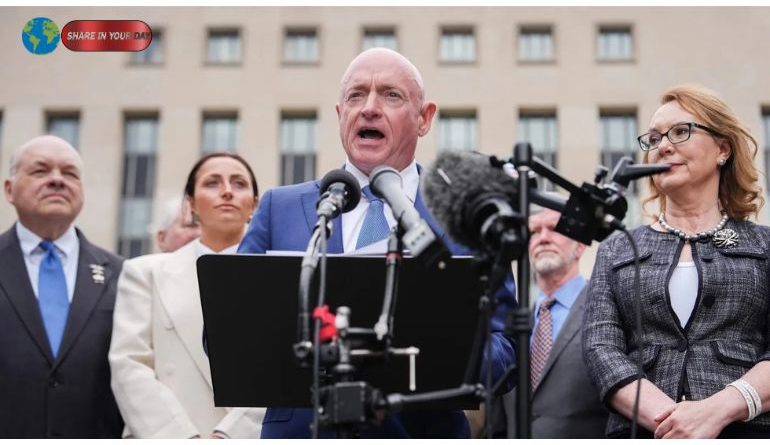
Judges Challenge Pentagon Move Against Senator Mark Kelly
The ongoing Mark Kelly Pentagon case intensified this week after federal appeals court judges openly questioned the legality of the Pentagon’s effort to punish Democratic Senator Mark Kelly over comments related to unlawful military orders. The dispute has quickly evolved into a major constitutional debate involving military authority, free speech rights, and political retaliation within the United States government.
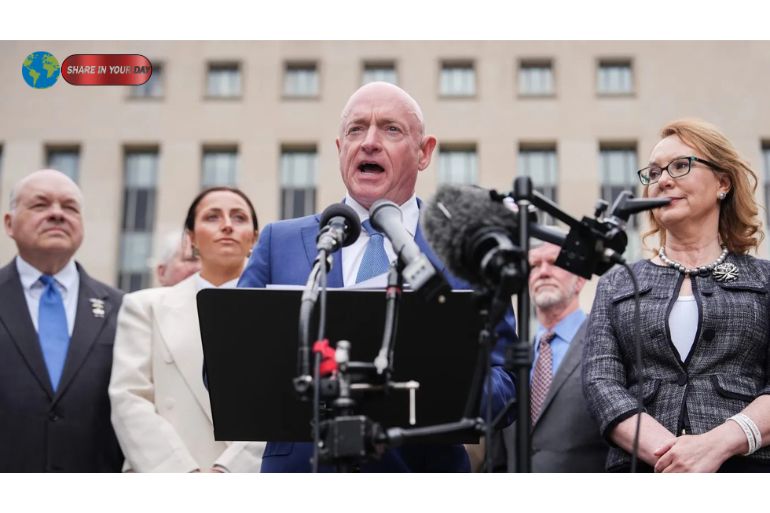
During a hearing before the U.S. Court of Appeals for the District of Columbia Circuit, judges appeared skeptical of the Pentagon’s argument that Kelly’s public remarks justified disciplinary action against him as a retired Navy officer. The case centers on whether retired military personnel remain subject to punishment for political speech made after retirement.
The Pentagon, led by Defense Secretary Pete Hegseth, has argued that Kelly’s statements undermined military discipline. However, legal experts and civil liberties advocates say the case could have far-reaching consequences for the constitutional rights of millions of retired veterans.
Appeals Court Questions Pentagon Strategy
The latest hearing focused on the Pentagon’s attempt to reverse a lower court ruling that temporarily blocked disciplinary measures against Senator Mark Kelly. Earlier this year, U.S. District Judge Richard Leon ruled that the Pentagon likely violated Kelly’s First Amendment rights.
Appeals court judges repeatedly questioned government attorneys about how Kelly’s comments could legally justify military punishment. According to reports from the courtroom, judges expressed concern that punishing retired service members for political speech could create dangerous constitutional precedents.
Kelly, a former Navy captain and retired astronaut, became the focus of Pentagon scrutiny after participating in a political video released in November 2025. In the video, Kelly and several Democratic lawmakers reminded military personnel that they have a duty to refuse unlawful orders.
The Pentagon argued that Kelly’s statements encouraged disobedience within the military chain of command. Officials initiated censure proceedings and explored reducing Kelly’s retirement rank and pension benefits.
However, the appeals court appeared unconvinced that Kelly’s remarks crossed legal boundaries. One judge reportedly questioned whether reminding troops to reject unlawful orders was simply a restatement of established military law.
What Sparked the Mark Kelly Pentagon Case?
The Mark Kelly Pentagon case began after a group of Democratic lawmakers released a social media video during growing political tensions over military operations authorized by the Trump administration. In the video, lawmakers urged troops to remain loyal to the Constitution and reject illegal directives.
President Donald Trump responded angrily to the video, accusing the lawmakers of “seditious behavior” in social media posts. The controversy escalated rapidly after the Pentagon launched an investigation into Kelly’s conduct.
Pentagon officials argued that Kelly remained subject to military regulations because he formally retired from the Navy rather than resigning his commission. Defense Secretary Hegseth later issued a formal letter of censure against Kelly.
Kelly responded by filing a federal lawsuit against the Pentagon, arguing that the government was attempting to punish protected political speech. His legal team described the Pentagon’s actions as unprecedented and unconstitutional.
The dispute quickly became one of the most closely watched legal battles involving military free speech rights in recent years. Constitutional scholars warned that the outcome could affect how retired military officers participate in public debate moving forward.
Judge Previously Blocked Pentagon Punishment
Earlier this year, Judge Richard Leon granted Kelly a preliminary injunction blocking the Pentagon from enforcing disciplinary measures while the lawsuit proceeds. The ruling represented a major setback for the Defense Department.
In his opinion, Leon sharply criticized the Pentagon’s legal arguments and defended the constitutional protections afforded to retired service members. The judge wrote that the government had “trampled” Kelly’s First Amendment freedoms and threatened the liberties of military retirees nationwide.
Leon also rejected claims that Kelly sought immunity from military law simply because he now serves in Congress. The judge suggested the Pentagon’s actions appeared politically motivated rather than grounded in military necessity.
The Pentagon immediately appealed the ruling, bringing the case before the federal appeals court this week. However, based on the judges’ questioning during oral arguments, legal analysts believe the administration may face significant difficulties overturning the injunction.
Free Speech Rights at the Center
At the heart of the Mark Kelly Pentagon case lies a broader constitutional issue: whether retired military officers retain full First Amendment protections when speaking publicly about government policy.
Military law traditionally places certain restrictions on active-duty personnel in order to preserve discipline and command authority. However, legal experts say applying those same standards to retired officers could dramatically expand government control over political speech.
Several constitutional scholars have argued that Kelly’s comments reflected longstanding military legal principles. U.S. service members are already obligated under military law to refuse unlawful orders. Critics therefore question why restating that principle should trigger punishment.
The Pentagon has maintained that Kelly’s status as a retired officer creates ongoing obligations under military law. Yet experts cited in multiple reports argue that retirement rank reviews generally apply only to misconduct committed during active military service.
That distinction could become critical as the courts determine whether the Pentagon exceeded its legal authority.
Political Fallout Continues
The controversy surrounding the Mark Kelly Pentagon case has also intensified political tensions in Washington. Democratic lawmakers accused the Trump administration of attempting to intimidate critics within both the military and Congress.
Meanwhile, supporters of the administration argue that military discipline must remain protected regardless of political considerations. Some conservatives defended Hegseth’s decision to pursue disciplinary action, claiming Kelly’s remarks could undermine confidence in military leadership.
The dispute has become part of a broader debate over Defense Secretary Hegseth’s leadership style and growing influence within the Pentagon. Recent reports indicate that Hegseth has consolidated significant control over military operations and personnel decisions since taking office.
Critics say the administration’s aggressive approach toward dissenting voices inside the military establishment reflects increasing politicization of national security institutions.
Legal Experts Predict Major Constitutional Decision
Legal analysts believe the final outcome of the Mark Kelly Pentagon case could establish important precedents for military law and free speech rights. If courts ultimately side with Kelly, the ruling could limit the government’s ability to discipline retired officers over public political statements.
On the other hand, a Pentagon victory could potentially expand military jurisdiction over retired personnel and reshape how veterans engage in political debate. Civil liberties groups warn that such a ruling could discourage retired officers from speaking openly on national security issues.
Several experts have already described the Pentagon’s legal strategy as unusually aggressive. Some scholars believe the administration risks creating constitutional conflicts that may eventually reach the U.S. Supreme Court.
The appeals court has not yet announced when it will issue a decision.
Why the Case Matters Beyond Washington
Although the legal fight centers on one senator, the implications extend far beyond Capitol Hill. Millions of retired military personnel could potentially be affected by how courts interpret the Pentagon’s authority in this case.
Retired officers frequently participate in political commentary, television analysis, academic research, and public policy debates. Many experts fear that allowing broad military punishment for political speech could silence veterans who provide valuable perspectives on national security matters.
Judge Leon highlighted that concern in his earlier ruling, arguing that retired service members have historically contributed important expertise to public discussions involving military affairs.
For now, the injunction blocking Pentagon punishment remains in effect while the appeals process continues. However, the case has already become a defining legal and political battle involving free speech, military authority, and constitutional rights in modern America.