Interstellar Arc Closes After 10 Months at AREA15
Interstellar Arc has stopped selling tickets at AREA15 in Las Vegas after less than a year, bringing an abrupt end to one of the city’s most ambitious virtual-reality attractions.
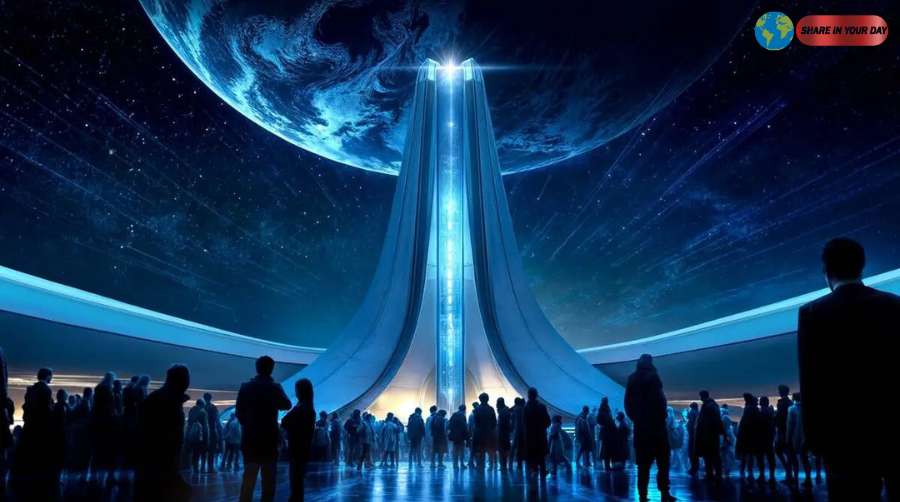
The large-scale experience opened in October 2025 as a centerpiece of AREA15’s expanding Zone 2 entertainment district. Less than 10 months later, ticket departures disappeared from the attraction’s booking system, while reports emerged that its creator, Montreal-based Felix & Paul Studios, had also closed.
The development is a major surprise for the immersive-entertainment industry. Interstellar Arc had been promoted as a next-generation location-based VR experience and had received industry recognition during its short run.
However, neither Felix & Paul Studios nor AREA15 had publicly explained the circumstances surrounding the closure in the latest available reporting. VVR Collective+1
Interstellar Arc Stops Selling Tickets
Reports indicate that Interstellar Arc stopped selling tickets on Aug. 18, 2026.
The attraction’s booking system stopped showing available departures, while Google Maps reportedly listed the venue as temporarily closed. At the same time, several employees associated with Felix & Paul Studios posted publicly on LinkedIn that the Montreal company had closed its doors. VVR Collective
The situation created an unusual contrast.
The official Interstellar Arc website remains accessible and still describes the attraction as operating at AREA15, including information about daily departures and ticket purchases. IInterstellar Arc+1
That means visitors should be cautious about relying solely on older promotional material when determining whether the attraction is currently operating.
The closure reports, however, have been independently reported by VR industry sources and reinforced by statements from former employees.
A 20,000-Square-Foot VR Attraction
Interstellar Arc was not a conventional arcade-style VR attraction.
The experience occupied approximately 20,000 square feet and was designed as a free-roam virtual-reality journey. Guests were invited to become part of a futuristic mission traveling roughly 11 light-years from Earth to the fictional exoplanet Arcadia. VVR Collective+1
The attraction combined VR headsets with a physical environment and interactive storytelling.
Guests began their journey at a futuristic spaceport before boarding the fictional Interstellar Arc spacecraft. The story then transported participants into a far-future scenario involving cryogenic sleep and humanity’s search for a new home.
The official attraction description said visitors would awaken hundreds of years later as their spacecraft approached Arcadia. IInterstellar Arc
Each journey lasted about 60 minutes.
That ambitious format helped distinguish Interstellar Arc from shorter VR games and conventional theme-park simulations.
Why Interstellar Arc Was Different
The central appeal of Interstellar Arc was its attempt to turn virtual reality into a destination attraction.
Instead of standing in one location while playing a game, guests physically moved through a large environment while wearing VR equipment.
The experience was designed to make the physical and digital worlds feel connected.
That approach is often called location-based virtual reality, or LBVR. It is one of the industry’s attempts to transform VR from a home technology into a shared entertainment experience.
For Felix & Paul Studios, Interstellar Arc represented years of work in immersive storytelling.
The company had previously developed major immersive projects and worked with high-profile entertainment and technology partners. Interstellar Arc was intended to demonstrate how those capabilities could translate into a permanent, ticketed attraction.
Felix & Paul Studios Closure Raises Bigger Questions
The reported closure of Interstellar Arc is closely linked to developments at Felix & Paul Studios.
Several employees publicly announced that the Montreal studio had closed and that team members were looking for new opportunities. Industry reporting identified staff from areas including technical art, audio, engineering and production among those posting about the closure. VVR Collective+1
The development is particularly notable because Felix & Paul was an established name in immersive storytelling.
The studio had built a reputation for pushing the technical boundaries of VR and producing large-scale experiences.
Interstellar Arc was therefore not a small experiment from an unknown operator.
It was a substantial commercial project created by a studio with considerable experience in immersive media.
That makes its short lifespan particularly striking.
Interstellar Arc Opened in October 2025
Interstellar Arc officially opened at AREA15 on Oct. 22, 2025.
The attraction was located in Zone 2: The Terminals, an expansion area across from AREA15’s original complex. Visitors could reach the area through the district’s internal transportation system. TThe Vox Agency+1
At launch, the experience was positioned as a major addition to Las Vegas’ rapidly expanding immersive-entertainment scene.
The attraction offered departures throughout the day, with tickets starting at around $49 for adults and lower prices available for children, locals and military members. IInterstellar Arc
The pricing reflected the attraction’s positioning as a premium entertainment experience rather than a traditional arcade attraction.
Yet despite the investment and ambitious concept, the project appears to have lasted less than a year.
AREA15’s Expansion Faces a Difficult Test
The reported closure also comes at an important moment for AREA15.
The Las Vegas entertainment complex has been expanding beyond its original building, with Zone 2 intended to become a significant destination of its own.
The district has been designed around a collection of immersive experiences, restaurants and entertainment concepts.
Interstellar Arc was one of the attractions expected to help bring visitors into the new section.
That creates a potential challenge.
When a new entertainment district is being built, each attraction can benefit from the traffic generated by neighboring businesses. Conversely, attractions can struggle when visitors have fewer reasons to make a separate trip into an expansion area.
Industry observers have pointed to the importance of location and surrounding attractions when assessing the economics of destination VR.
The situation illustrates how even technologically impressive attractions can face significant commercial challenges.
An Award-Winning Attraction
The closure is especially surprising because Interstellar Arc had recently received industry recognition.
According to VR industry reporting, the attraction won the Best Location-Based Entertainment award at the 2026 Auggie Awards in July. Eextra!
That recognition came only months before ticket sales reportedly stopped.
The timing underscores the difference between critical or industry recognition and long-term commercial viability.
An attraction can win awards for technology, design and storytelling while still struggling to generate enough revenue to remain open.
For Interstellar Arc, that contrast is now one of the most notable aspects of its story.
What Went Wrong?
The exact reason for the closure remains unclear.
Felix & Paul Studios had not issued a detailed public explanation in the latest available reporting. AREA15 also had not publicly outlined the circumstances behind the attraction’s shutdown. VVR Collective
Therefore, it would be premature to identify one specific cause.
Several factors may have contributed to the difficulty of operating a large-scale VR attraction.
The experience required specialized technology, a large physical venue, trained employees and a steady flow of paying customers.
Unlike a digital VR product that can be downloaded once and sold repeatedly, a location-based experience carries substantial ongoing costs.
Rent, staffing, maintenance, equipment replacement, marketing and utilities can all affect the economics of a venue.
The attraction also depended on visitors physically traveling to its location.
That creates a fundamentally different business model from consumer VR.
The Challenge of Location-Based VR
The story of Interstellar Arc highlights one of the biggest challenges facing location-based VR.
Technology alone is not enough.
Visitors need to understand what the attraction is, why it is worth the ticket price and why they should choose it over dozens of other entertainment options.
Las Vegas is an especially competitive market.
Visitors can choose from casinos, concerts, sporting events, theme attractions, immersive exhibitions, restaurants and increasingly sophisticated entertainment venues.
A VR attraction therefore has to compete for attention as well as money.
Interstellar Arc’s concept was technologically ambitious, but its short operating period demonstrates how difficult it can be to turn innovation into a sustainable destination business.
What Happens to the Space Next?
The future of the Interstellar Arc venue remains uncertain.
The attraction was purpose-built as part of AREA15’s Zone 2 expansion, meaning its large physical footprint could potentially be repurposed for another entertainment concept.
However, no definitive replacement has been announced in the sources reviewed for this article.
The same is true of the Interstellar Arc brand and intellectual property.
Whether the experience could eventually return in another location, be acquired by another company or remain permanently closed is not known.
Industry reporting said Felix & Paul had previously been exploring additional locations for the attraction, but those plans now appear uncertain following the studio’s reported closure. VVR Collective
What the Closure Means for Las Vegas
The end of Interstellar Arc is more than the disappearance of another attraction from the Las Vegas entertainment map.
It represents a test for the broader location-based VR industry.
Las Vegas has long served as a proving ground for new forms of entertainment. The city attracts millions of visitors looking for experiences they cannot easily find elsewhere.
That makes it an attractive market for immersive technology companies.
But the same competition makes Las Vegas extremely demanding.
An attraction must deliver an experience memorable enough to stand out while also maintaining the economics of a physical venue.
Interstellar Arc attempted to do exactly that.
Its futuristic story, enormous physical environment and free-roam VR technology offered something different from conventional entertainment.
Yet less than a year after opening, the attraction appears to have gone dark.
Interstellar Arc’s Legacy Could Continue
Although the closure is disappointing for fans of immersive entertainment, the technology and creative ideas behind Interstellar Arc may continue to influence the industry.
The attraction demonstrated what can happen when virtual reality is combined with physical environments, cinematic storytelling and group participation.
It also showed that audiences are willing to consider VR as a destination experience rather than simply a gaming accessory.
Those lessons could be valuable for future developers.
The next generation of location-based VR attractions may place even greater emphasis on repeat visits, operating costs, surrounding attractions and sustainable audience acquisition.
Final Thoughts
The reported closure of Interstellar Arc after less than a year is one of the more unexpected developments in Las Vegas’ immersive-entertainment sector.
The attraction arrived with an ambitious premise, significant creative expertise and an impressive technological foundation.
It also received industry recognition shortly before its reported shutdown.
Yet the experience appears to have been unable to continue operating after only about 10 months.
For now, the precise reasons remain unclear, and the official Interstellar Arc website has continued to display attraction and ticket information. IInterstellar Arc+1
That makes the situation worth watching.
Whether Interstellar Arc eventually returns, moves to another venue or becomes a short-lived chapter in the history of location-based VR, its rise and apparent fall offer an important lesson.
In Las Vegas, even the most futuristic entertainment concept ultimately has to survive the realities of the entertainment business.
Image ALT Text
Interstellar Arc VR attraction at AREA15 in Las Vegas
Suggested Image Placement
Use a properly licensed photograph of the Interstellar Arc entrance, AREA15 Zone 2, or an authorized promotional image of the attraction. The official Interstellar Arc website provides current promotional material and attraction information. II