Starliner 2028 Return Set After Major NASA and Boeing Overhaul
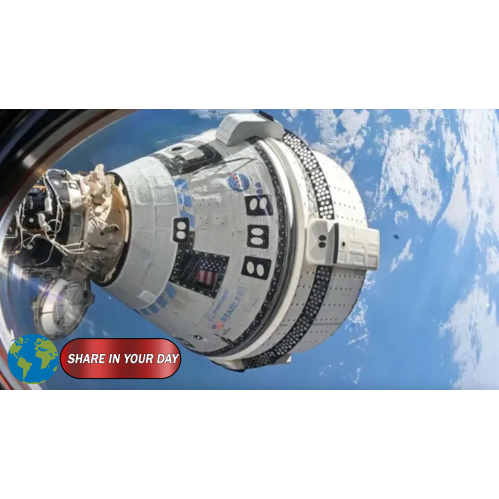
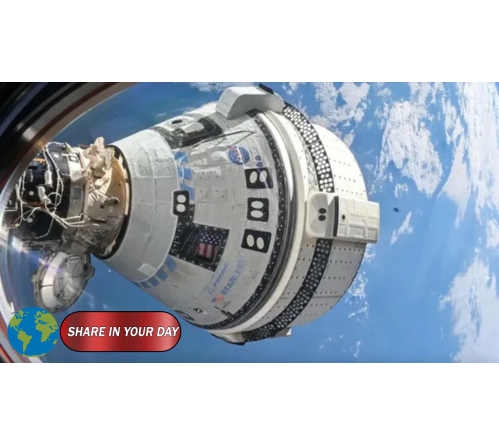
The Starliner 2028 return is now the target for Boeing’s astronaut spacecraft, with NASA and the company outlining a new path that includes an uncrewed test flight, extensive hardware upgrades and potentially a new rocket for future crewed missions.
NASA announced Sept. 28 that Boeing’s CST-100 Starliner is expected to return to the International Space Station without astronauts as early as December 2026 or January 2027. If that flight succeeds and the spacecraft completes the remaining certification work, astronauts could fly aboard Starliner again in 2028.
The schedule represents a significant delay from the original vision for Boeing’s Commercial Crew spacecraft. Starliner was intended to become a second U.S. transportation system for astronauts alongside SpaceX’s Crew Dragon.
Instead, a troubled 2024 crewed test flight forced NASA to ground Starliner while engineers investigated helium leaks, failed thrusters and other problems.
NASA now says the spacecraft will receive additional modifications before it can be certified for regular human spaceflight.
Starliner 2028 Return Depends on an Uncrewed Test
The first major milestone in the Starliner 2028 return plan will not involve astronauts.
NASA and Boeing are preparing Starliner-1, an uncrewed flight to the International Space Station. The mission is currently targeted for December 2026 or January 2027, although the exact launch date remains subject to technical and operational readiness.
The purpose of Starliner-1 is to demonstrate that changes made after the 2024 Crew Flight Test have addressed the spacecraft’s major problems.
Engineers will pay particular attention to the propulsion system.
The spacecraft experienced serious propulsion-related problems during its 2024 mission. NASA ultimately decided that astronauts Butch Wilmore and Suni Williams should not return to Earth aboard Starliner.
Instead, Starliner came home without a crew in September 2024.
Wilmore and Williams remained aboard the space station for months longer than originally planned before returning aboard a SpaceX Crew Dragon spacecraft in March 2025.
NASA subsequently classified the Starliner incident as a Type A mishap, its most serious mishap category.
The upcoming uncrewed flight is therefore more than a routine demonstration. Its performance will provide critical evidence for NASA’s decision on whether Starliner is ready to carry people again.
Boeing Is Changing Starliner’s Propulsion System
One of the most important changes concerns the spacecraft’s thrusters and associated valve system.
During the 2024 Crew Flight Test, Starliner suffered helium leaks and failures involving its reaction-control thrusters. NASA and Boeing’s investigation identified problems involving the spacecraft’s propulsion components.
According to NASA, the helium leaks were traced to valve issues involving material degradation after exposure to nitrogen tetroxide, an oxidizer used by Starliner’s propulsion system.
Boeing has changed the material used for the seals and selected seals toward the larger end of the allowable tolerance range.
NASA says those changes have already been incorporated into the Starliner-1 spacecraft.
Additional modifications are also planned.
The spacecraft will receive new crew-module thrusters and upgraded batteries. NASA and Boeing also plan minor parachute-system modifications intended to improve performance and reliability.
These changes are designed to reduce the likelihood that the problems experienced during the 2024 mission will happen again.
Starliner 2028 Return Could Involve a Different Rocket
The spacecraft itself is not the only part of the system facing changes.
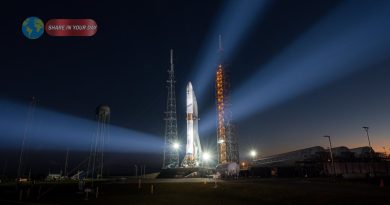
Boeing’s future Starliner missions could eventually fly on United Launch Alliance’s Vulcan Centaur rocket instead of the Atlas V.
That is because the Atlas V is no longer in production and is approaching retirement.
The current plan has Starliner-1 through Starliner-4 using Atlas V rockets. Starliner-5 and Starliner-6 are planned to use ULA’s Vulcan Centaur.
However, Vulcan has not yet been certified for crewed missions.
That creates another major certification requirement.
For NASA, human-rating a rocket means demonstrating that its design, hardware, software and operational procedures meet the safety requirements necessary for carrying astronauts.
NASA’s Commercial Crew Program already relies on certified launch systems, including SpaceX’s Falcon 9 and Crew Dragon combination. NASA describes the program as a partnership with private industry designed to provide transportation to and from the International Space Station.
For Boeing, getting Starliner back into service therefore involves two related challenges: completing spacecraft certification and preparing the launch system for future crewed operations.
NASA Estimates $359 Million for the Upgrades
The effort will require additional funding.
NASA’s Low Earth Orbit Program Manager Dana Weigel said the combined cost of the spacecraft upgrades and Vulcan certification work is expected to be about $359 million.
That figure covers work associated with improving Starliner’s propulsion system and other spacecraft components, along with efforts to certify Vulcan for crew transportation.
The additional spending reflects the complexity of returning a human-rated spacecraft to flight after a serious mishap.
NASA is also balancing the cost against the strategic value of maintaining multiple U.S. crew transportation options.
Why NASA Still Wants Starliner
Despite Starliner’s setbacks, NASA continues to support the program.
The agency has repeatedly emphasized the importance of having more than one commercial spacecraft capable of transporting astronauts.
SpaceX’s Crew Dragon has successfully carried astronauts for NASA since 2020 and has become the agency’s established commercial crew vehicle. But NASA does not want the United States to depend on a single spacecraft for human transportation to low Earth orbit.
That concern becomes especially important as NASA plans for the future of the International Space Station and the emergence of commercial space stations.
A second operational spacecraft could provide additional flexibility if one vehicle experiences a technical problem or becomes temporarily unavailable.
NASA’s latest announcement also expands the Starliner program’s planned missions. The agency and Boeing remain committed to additional crewed flights beyond the first return to service.
Woody Hoburg Will Command Starliner-2
NASA has already assigned an astronaut to the first planned crewed Starliner mission after the return-to-flight process.
Veteran astronaut Woody Hoburg will command Starliner-2, which is currently targeted for 2028.
NASA has not yet announced the complete crew.
Hoburg said he has confidence in Starliner and in the NASA and Boeing teams responsible for preparing the spacecraft for its next human mission, according to the latest program update.
The mission is expected to provide another important demonstration of Starliner’s capabilities.
However, the 2028 date remains a target rather than a guaranteed launch date.
The spacecraft must first complete its uncrewed test, NASA must evaluate the results, and the remaining certification requirements must be satisfied.
The 2024 Mission Changed Starliner’s Future
The path toward the Starliner 2028 return cannot be separated from what happened during the spacecraft’s first crewed test.
Starliner launched in June 2024 carrying NASA astronauts Butch Wilmore and Suni Williams toward the International Space Station.
The spacecraft encountered helium leaks and multiple reaction-control thruster failures during its journey.
Although Starliner successfully reached the station, NASA eventually determined that returning the crew aboard the vehicle posed too much risk.
The spacecraft therefore returned to Earth without its astronauts.
The decision resulted in Wilmore and Williams spending roughly nine months in orbit rather than the approximately 10-day mission originally planned. They eventually returned to Earth aboard SpaceX’s Crew Dragon.
The episode became one of the most consequential setbacks in NASA’s Commercial Crew Program.
It also forced NASA and Boeing to rethink how Starliner would be tested and certified before another crew boarded the spacecraft.
SpaceX Continues to Operate While Boeing Works on Starliner
While Boeing works toward the Starliner 2028 return, SpaceX continues to provide NASA with crew transportation.
SpaceX’s Crew Dragon completed its first NASA crewed mission in 2020 and has since become the agency’s operational commercial crew vehicle.
NASA recently awarded SpaceX another $946 million contract covering three additional International Space Station astronaut missions: Crew-15, Crew-16 and Crew-17. Those missions are expected to launch by 2030.
That means NASA has an established crew transportation system available while Starliner undergoes its rehabilitation.
However, NASA’s long-term strategy calls for multiple providers rather than a single commercial crew vehicle.
The agency’s continued investment in Starliner reflects that broader objective.
Starliner Faces a Tight Timeline for the Space Station Era
Timing is another important factor.
NASA plans to transition away from the International Space Station later this decade as commercial space stations are expected to take on a larger role in low Earth orbit.
The ISS is currently expected to remain operational into the early 2030s.
That gives Starliner a limited window to establish itself as a regular crew transportation system before the existing station era ends.
A successful 2026-27 uncrewed flight would therefore be an important step.
But even a successful test would not immediately make Starliner operational. NASA and Boeing would still need to evaluate flight data, complete certification and demonstrate that the redesigned systems perform as intended.
What the Next Starliner Test Will Show
The upcoming uncrewed mission will answer several critical questions.
First, engineers need to determine whether the redesigned propulsion components behave reliably throughout the flight.
Second, NASA needs to evaluate how the spacecraft performs during its approach to and departure from the International Space Station.
Third, the agency needs to verify the changes to the batteries, crew-module thrusters and parachute system.
Finally, NASA must determine whether the entire spacecraft can meet human-rating requirements.
A successful test would not erase the problems of 2024, but it would provide the data needed to determine whether the modifications have addressed them.
A problem during the uncrewed flight, meanwhile, could lead to additional redesign work and another schedule change.
Boeing Starliner Could Eventually Have a New Rocket
The possible transition from Atlas V to Vulcan Centaur is particularly important for Starliner’s future.
Atlas V has a long record of successful missions, including Starliner’s previous flights. However, the rocket’s production is ending.
Vulcan is ULA’s next-generation launch vehicle and is intended to become the company’s primary rocket.
For Starliner, that means NASA must eventually establish that Vulcan can safely launch astronauts.
The transition also demonstrates how complicated human spaceflight systems can become.
A spacecraft can be ready while its launch vehicle is still going through certification. Conversely, a rocket can be operational for cargo and satellite missions without yet being approved for carrying people.
Human spaceflight requires an additional level of safety assurance.
What Happens Before Astronauts Fly Again?
Several milestones now stand between Boeing and the Starliner 2028 return.
The first is Starliner-1’s uncrewed flight.
Next will come an extensive review of the spacecraft’s performance and the effectiveness of the modifications.
NASA and Boeing will then continue work toward human-rating certification.
The agency also needs to complete the required work for future Vulcan crew launches.
Only after those steps are satisfied can Starliner-2 proceed with astronauts.
NASA’s current target is for that mission to launch around the middle of 2028.
Starliner 2028 Return Marks a New Test for Boeing
The Starliner 2028 return plan represents a major reset for Boeing’s astronaut spacecraft.
Rather than rushing back to crewed operations, NASA and Boeing are taking a phased approach that starts with an uncrewed test flight.
The spacecraft is being modified extensively, particularly around the propulsion system. Batteries, thrusters and parachute components are also receiving upgrades.
At the same time, NASA is supporting certification work for ULA’s Vulcan Centaur, which is expected to eventually replace the Atlas V for later Starliner missions.
The program’s next major test will come with Starliner-1, targeted for December 2026 or January 2027.
If the spacecraft performs as planned and certification requirements are completed, NASA expects Starliner-2 to carry astronauts in 2028.
For Boeing, that mission will represent more than another launch. It will be the clearest test yet of whether the company can transform Starliner from a troubled development program into a dependable component of NASA’s long-term human spaceflight strategy.
For NASA, the objective is broader: maintain more than one American pathway for transporting astronauts to low Earth orbit while preparing for the next generation of commercial destinations beyond the International Space Station.
The Starliner 2028 return is therefore still several years away, but the work needed to make it possible is already underway.