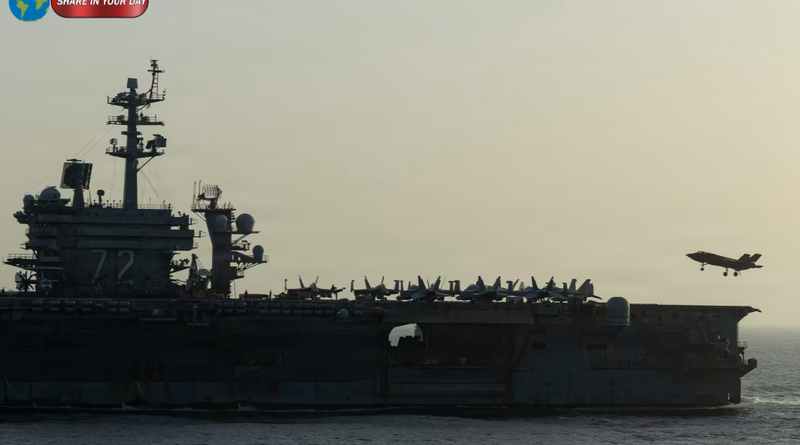
Iran US Ship Claim: 5 Key Facts on Hormuz Clash
The Iran US ship claim has triggered another dangerous moment in the already tense Strait of Hormuz, after Iranian authorities said their forces struck an unmanned American vessel attempting to enter the strategic waterway. The United States, however, strongly rejected the allegation, with a U.S. Central Command spokesperson describing the claim as a “total lie.”
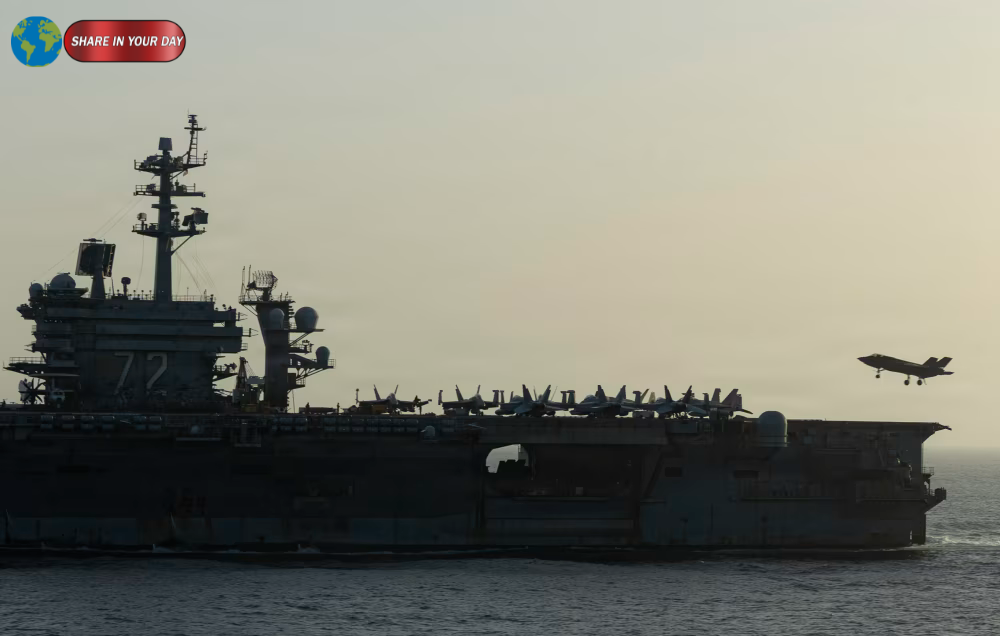
The disputed incident came only one day after the United States said it had struck three Iranian oil tankers. Washington described those attacks as retaliation for ballistic-missile attacks against U.S. Navy warships.
The back-and-forth claims highlight how quickly maritime incidents can escalate in the Strait of Hormuz. The waterway is one of the world’s most important energy corridors, making any confrontation there potentially significant far beyond the Middle East.
Here are five key facts behind the latest Iran US ship claim and why the confrontation matters.
1. Iran US ship claim remains disputed
Iranian state media reported Sunday that Iranian forces had attacked an unmanned U.S. vessel near Iran’s southern coast.
According to Iranian accounts, the vessel was attempting to enter an area Tehran considers restricted. The Islamic Revolutionary Guard Corps, or IRGC, presented the alleged attack as a response to continued U.S. military activity in the region.
The United States offered a sharply different account.
Capt. Tim Hawkins, a spokesperson for U.S. Central Command, rejected the Iranian allegation and said there had been no such successful strike on an American vessel. The U.S. characterization of the claim means there is currently no independent confirmation that an American ship was hit.
That distinction is important.
In an active conflict zone, military statements can be difficult to independently verify. Governments may release information designed to influence public opinion, demonstrate strength or justify subsequent military action.
For that reason, the reported Iranian strike should be treated as an allegation rather than an independently verified attack.
2. The claim followed U.S. strikes on Iranian oil tankers
The latest dispute did not happen in isolation.
On Saturday, the U.S. military said American forces had struck three Iranian oil tankers. The operation followed Iranian ballistic-missile attacks targeting U.S. Navy warships, according to American officials.
Reuters reported that U.S. Central Command said the strikes targeted three Iranian tankers, including vessels operating near important Iranian maritime locations.
The developments represent a major escalation because commercial shipping is becoming increasingly connected to the military confrontation.
Iran has previously threatened vessels it considers connected to U.S. interests. The United States, meanwhile, has been using naval forces to support shipping and pressure Tehran economically.
The result is a growing risk that a military operation involving one country’s forces could quickly affect commercial ships operated by completely different countries.
That is particularly dangerous in a narrow waterway where large numbers of tankers normally travel.
3. Why the Strait of Hormuz matters so much
The Strait of Hormuz connects the Persian Gulf with the Gulf of Oman and the Arabian Sea.
It is one of the world’s most important maritime chokepoints because huge quantities of oil and natural gas move through it.
According to the U.S. Energy Information Administration, oil flows through the Strait averaged about 20.9 million barrels per day during the first half of 2025. That represented roughly one-fifth of global petroleum liquids consumption and about one-quarter of worldwide maritime oil trade.
The same EIA analysis said around 11.4 billion cubic feet per day of LNG traveled through the strait during the first half of 2025, representing more than 20% of global LNG trade.
That explains why the latest Iran US ship claim is being watched closely by energy markets.
A serious interruption could affect crude oil prices, shipping insurance, tanker availability and energy costs in countries thousands of miles away.
Asia would be particularly exposed.
The EIA estimates that approximately 89% of crude oil and condensate moving through the Strait of Hormuz went to Asian markets during the first half of 2025. China, India, Japan and South Korea together accounted for approximately 74% of those flows.
4. Shipping traffic is already under pressure
The maritime environment around Hormuz has become increasingly dangerous.
Reuters reported that traffic through the Strait of Hormuz had fallen sharply amid recent U.S. and Iranian attacks on vessels. Kpler data cited by Reuters showed average traffic dropping to roughly 10 commodity ships per day over a recent 10-day period.
That decline matters because shipping companies make decisions based not only on whether a route is technically open, but also whether crews, insurers and vessel owners believe the route is safe enough to use.
Even when the waterway remains physically navigable, heightened military activity can discourage commercial operators.
Ships may wait offshore, change routes, delay departures or seek additional security guarantees.
The International Maritime Organization has repeatedly warned about the risks.
In August, the International Maritime Organization said at least 70 attacks against international shipping had been verified since the conflict began on Feb. 28, with 19 seafarers killed.
The organization has also stressed the importance of freedom of navigation and the safety of civilian crews.
5. The Iran US ship claim could increase the risk of escalation
The biggest concern is not necessarily the disputed vessel incident itself.
The greater danger is what happens next.
If Iran believes it successfully attacked an American military vessel, its leaders could view the incident as evidence that their forces can impose costs on U.S. naval operations.
If Washington concludes that Iran is deliberately attacking American assets, U.S. officials could respond with additional military action.
That creates a cycle of retaliation.
The pattern is already visible.
Iran has launched attacks against U.S. military targets. The United States has responded with strikes against Iranian assets, including oil tankers. Tehran has warned that future responses could become faster and more severe.
Each new incident therefore carries the possibility of becoming the justification for another attack.
Hormuz could become the center of the conflict
The strategic importance of the waterway makes it especially vulnerable to this escalation cycle.
Iran has announced plans for a new “exclusion zone” near the Strait of Hormuz, according to the Associated Press. Tehran says the measure would target vessels attempting to pass through areas it considers restricted.
The United States, meanwhile, has been seeking to maintain maritime access and protect commercial shipping.
Those objectives directly collide.
Iran wants to preserve leverage over a waterway that borders its southern coastline. The United States wants to prevent Tehran from using the strait to disrupt international trade or pressure Washington.
The result is a confrontation in which even relatively small maritime incidents can have strategic consequences.
Oil markets face another major warning
The Iran US ship claim is also important because it arrives as energy markets are already responding to the conflict.
Reuters reported that Brent crude had climbed above $90 a barrel amid concerns about disruptions around the Strait of Hormuz and Iranian oil exports.
The exact effect of any individual maritime incident is difficult to predict.
Markets can respond quickly to the perception of risk even before physical supplies are disrupted.
If tanker operators begin avoiding the strait in larger numbers, the consequences could become more significant.
Shipping costs could rise. Insurance premiums could increase. Delivery times could lengthen. Buyers could compete for alternative supplies.
The region does have some alternatives.
The EIA estimates that pipelines in Saudi Arabia and the United Arab Emirates could bypass part of the Strait of Hormuz, with combined capacity of approximately 4.7 million barrels per day. However, that is only a fraction of the oil volumes normally passing through the waterway.
That limited capacity is one reason Hormuz remains so strategically important.
International maritime authorities warn of growing danger
The crisis is also creating serious concerns for civilian sailors.
The International Maritime Organization has repeatedly urged all sides to protect seafarers and avoid actions that put commercial crews at unnecessary risk.
In June, the IMO warned that there were no reliable security guarantees for ships attempting to pass through the Strait of Hormuz and said safe passage could not be considered to exist under those circumstances.
The organization later reported that thousands of seafarers had been caught in the conflict and that hundreds of ships had been affected by the wider maritime crisis.
This makes the current confrontation different from a conventional military standoff.
The potential victims are not only soldiers.
Crews aboard tankers, container ships, bulk carriers and other commercial vessels can find themselves operating in an increasingly militarized environment.
What happens next?
The immediate question is whether the disputed Iran US ship claim leads to another round of retaliation.
For now, the United States is denying that Iran successfully struck an American vessel.
Iran, however, is portraying its reported action as a demonstration of military capability and resistance to U.S. pressure.
The situation could therefore develop in several ways.
One possibility is that the incident remains limited and both sides avoid a direct response.
Another is that Washington conducts additional strikes against Iranian military or economic targets.
A third and more dangerous possibility is a broader maritime confrontation involving commercial ships, naval escorts and Iranian forces.
Such an escalation could quickly affect global energy markets.
The Strait of Hormuz does not need to be completely closed for international markets to feel the impact. A sustained reduction in tanker traffic could be enough to increase transportation costs and create fears about future supplies.
Diplomacy remains the key to preventing a wider crisis
Military power may dominate the headlines, but diplomacy remains crucial.
The United States and Iran have already experienced periods of fighting and attempted negotiations during the current conflict. A fragile ceasefire announced in June reduced tensions temporarily, but fighting later resumed and negotiations collapsed.
The maritime confrontation makes a diplomatic solution even more urgent.
Any agreement that reduces attacks on commercial shipping could provide immediate benefits to global energy markets and the shipping industry.
International organizations are also likely to continue pushing for safe passage and protection of civilian crews.
The IMO has emphasized that freedom of navigation through internationally used straits should be preserved under international law.
For businesses and consumers, the most important development will therefore be whether the latest military exchange remains contained.
Bottom line
The Iran US ship claim marks another dangerous episode in the escalating confrontation around the Strait of Hormuz.
Iran says its forces struck an unmanned U.S. vessel. Washington strongly denies the allegation. The dispute follows U.S. strikes on Iranian oil tankers and a series of attacks involving military and commercial vessels in the region.
The immediate facts remain contested.
The broader danger, however, is clear.
The Strait of Hormuz is too important to global energy markets for repeated military incidents to be treated as isolated events. Millions of barrels of oil and large quantities of LNG normally pass through the waterway, while thousands of maritime workers depend on it remaining safe.
As the United States and Iran continue trading threats and military strikes, the next incident could determine whether the current crisis remains a limited confrontation—or becomes a much wider threat to global shipping and energy security.