Bulgaria Election Victory: 5 Shocking Impacts of Radev
The Bulgaria election victory of former president Rumen Radev is sending ripples across Europe, signaling a dramatic shift in the country’s political direction and raising new questions about the balance of power within the European Union. After years of instability and fragmented coalition governments, Bulgarian voters delivered a decisive mandate that could reshape both domestic governance and international alliances.
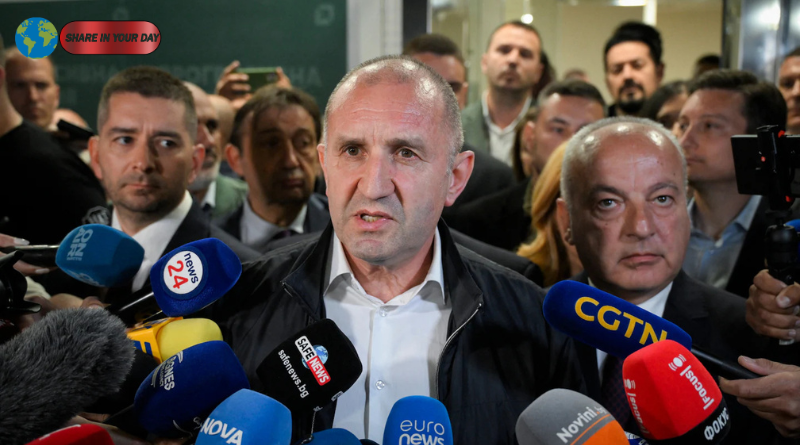
This landmark result marks not only a political turning point for Bulgaria but also a strategic moment for global geopolitics, particularly regarding relations with Russia and the European Union.
A Landslide Win Ends Years of Political Chaos
The Bulgaria election victory handed Radev and his newly formed party, Progressive Bulgaria, a commanding lead—one of the strongest electoral performances in decades. According to multiple reports, the party secured roughly 44–45% of the vote, far ahead of traditional political rivals.
For a country that has endured eight elections in five years, this outcome represents a clear demand from voters for stability and decisive leadership.
Unlike previous fragmented parliaments, this result allows Radev to potentially form Bulgaria’s first single-party government in nearly 30 years, ending a prolonged era of weak coalitions and political gridlock.
Anti-Corruption Message Resonates with Voters
A major driver behind the Bulgaria election victory was public frustration with corruption and entrenched political elites. Radev positioned himself as a reformer, promising to dismantle oligarchic influence and restore trust in state institutions.
His campaign tapped into widespread dissatisfaction with long-dominant parties, many of which have been plagued by scandals and inefficiency.
Moreover, mass protests and repeated government collapses in recent years created fertile ground for a political outsider—even one with prior leadership experience—to present himself as a vehicle for change.
A Potential Shift Toward Russia?
Perhaps the most closely watched aspect of this Bulgaria election victory is its potential impact on international relations—especially with Russia.
Radev has long been viewed as Kremlin-friendly, having criticized Western sanctions, opposed military aid to Ukraine, and advocated for restoring dialogue with Moscow.
This stance has prompted concern among European leaders and analysts, who fear that Bulgaria could become a new foothold for Russian influence within the EU, particularly after setbacks faced by pro-Russian allies elsewhere in Europe.
At the same time, experts caution that Bulgaria’s economic reliance on EU funding may limit how far Radev can pivot toward Moscow without risking domestic backlash or financial consequences.
Balancing EU Membership and National Interests
Despite concerns, Radev has signaled that Bulgaria will remain committed to the European Union, albeit with a more pragmatic approach.
He has criticized certain EU policies—particularly regarding energy and economic integration—but stopped short of advocating a full departure from European structures.
This balancing act will be critical. Bulgaria is deeply integrated into the EU economy and benefits significantly from European funding. Any drastic shift could destabilize both the national economy and the broader regional order.
As a result, analysts expect Radev to pursue a dual-track strategy: maintaining EU membership while pushing for policies that better align with domestic priorities.
Energy Politics at the Center of Debate
Energy policy is likely to become a major battleground following the Bulgaria election victory.
Bulgaria plays a strategic role in Europe’s energy network, particularly as a transit route for Russian gas and a hub for oil refining. Radev’s openness to restoring energy ties with Russia could complicate EU efforts to reduce dependence on Russian resources.
This issue is especially sensitive given ongoing geopolitical tensions and Europe’s broader push for energy independence. Any deviation from EU consensus could create friction within the bloc.
Domestic Challenges Still Loom Large
While the Bulgaria election victory provides a strong mandate, significant challenges remain at home.
These include:
- Persistent corruption within institutions
- Economic inequality and rising living costs
- Demographic decline and workforce shortages
Critics have also pointed out that Radev’s campaign lacked detailed policy proposals, raising questions about how effectively his government can address these issues.
Furthermore, opposition parties have vowed to resist any moves that could undermine Bulgaria’s European alignment, setting the stage for potential political clashes despite the election outcome.
Europe Watches Closely
The implications of the Bulgaria election victory extend far beyond national borders.
For the European Union, the rise of a leader perceived as sympathetic to Russia presents both a challenge and an opportunity. On one hand, it could complicate efforts to maintain a unified stance on key issues such as sanctions and defense policy. On the other, it highlights the need to address underlying political and economic grievances within member states.
Meanwhile, the Kremlin has reacted positively, viewing the result as a potential opening to rebuild influence within Europe.
What Comes Next?
The coming months will be crucial in determining the true impact of this Bulgaria election victory.
Key questions include:
- Will Radev pursue closer ties with Russia or maintain EU alignment?
- Can his government deliver on anti-corruption promises?
- Will Bulgaria achieve long-term political stability?
While the election result marks a decisive moment, the real test lies in governance.
Conclusion
The Bulgaria election victory of Rumen Radev represents a pivotal shift in the country’s political landscape. It ends years of instability, reflects deep public frustration with corruption, and introduces new uncertainties into European geopolitics.
As Bulgaria navigates this new chapter, the balance between reform, stability, and international alignment will define not only its future but also its role within a rapidly changing Europe.