Nepal China Flood Death Toll Reaches 669
The Nepal China flood has become one of the deadliest disasters to hit the Himalayan region in years, with at least 669 people confirmed dead in Nepal and another seven reported killed in Tibet, while nearly 3,000 people remain missing.
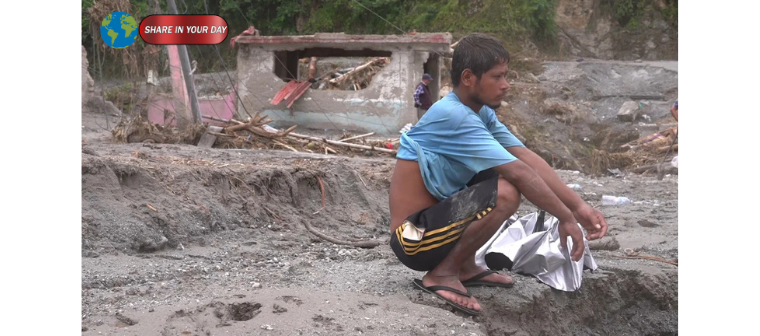
Rescue teams are continuing to search through devastated communities along the Nepal-China border after a massive torrent of water, mud, rocks and debris swept through the mountainous region on August 26.
The disaster destroyed homes, bridges, roads, hydropower facilities and a major border crossing. Difficult terrain and damaged infrastructure have made rescue operations extremely challenging.
Officials are now turning their attention not only to the search for survivors but also to restoring critical infrastructure and identifying victims.
Nepal has requested international technical assistance as authorities confront the enormous scale of the destruction.
What Caused the Nepal China Flood?
The disaster was linked to a collapse involving a glacier and surrounding mountain terrain in the Himalayan border region.
The collapse sent a huge volume of water, ice, rock and mud downstream, creating a destructive flood that moved rapidly through valleys and communities.
The force of the flood was powerful enough to destroy infrastructure along the route, leaving some areas isolated and cutting important transportation links between Nepal and China.
The event also created concerns about additional flooding because debris and water have formed temporary lakes in parts of the affected region.
Authorities are monitoring those areas closely for signs of another sudden release of water.
The disaster demonstrates the extraordinary risks faced by communities living in high-altitude Himalayan valleys.
Nearly 3,000 People Are Still Missing
The number of missing people has become one of the most alarming aspects of the catastrophe.
Nearly 3,000 people remain unaccounted for across Nepal and Tibet, according to the latest reporting.
Among those missing are hundreds of foreign nationals, as the affected region is an important route for tourists, trekkers, workers and traders.
The disappearance of so many people has created an enormous challenge for authorities.
Communication networks have been damaged in some areas, while roads and bridges have been swept away. In several locations, rescue teams must travel through difficult mountain terrain before they can even begin searching.
Families are therefore facing long periods of uncertainty as authorities attempt to establish accurate lists of those who survived, those who died and those who remain missing.
Rescue Teams Face Dangerous Conditions
Search and rescue operations have continued despite the difficult conditions.
Nepalese military personnel and emergency workers have been working to reach isolated communities and people trapped by the disaster.
Helicopters have played an important role because many roads have been destroyed or blocked by debris.
Rescuers have also had to deal with unstable terrain, mudslides and the possibility of additional flooding.
The destruction of bridges has made ground access particularly difficult.
In some cases, rescue teams have had to reach victims through tunnels or use specialized equipment to move through areas where conventional vehicles cannot operate.
The scale of the destruction means that the operation is no longer simply about finding people.
It is also about reopening roads, restoring communications, securing damaged infrastructure and preventing secondary disasters.
China Sends Rescue Teams Into Tibet
Chinese authorities have also launched a major rescue operation on the Tibetan side of the border.
The disaster badly damaged the area around Gyirong, a major crossing point between Nepal and China.
Chinese professional rescue teams eventually reached the core disaster zone after significant difficulties caused by destroyed infrastructure and dangerous terrain.
Rescuers used boats, mountain routes, ropes and heavy-lift drones to move through the damaged area.
The Chinese operation is complicated by the mountainous geography of the region.
Access to some areas remains extremely difficult, while authorities must also monitor the possibility of additional flooding.
The cross-border nature of the disaster makes coordination between Nepal and China especially important.
Nepal Seeks Technical Help
Nepal’s government has said it needs international technical assistance as the emergency enters a new phase.
Rather than requesting large numbers of foreign search-and-rescue teams, Nepal is seeking specialized help for complex operations.
Those needs include tunnel rescue, infrastructure restoration and forensic identification of victims.
The government also needs assistance assessing damaged bridges, roads and power facilities.
This approach reflects the changing nature of the emergency.
In the immediate aftermath of the flood, rescuers focused on finding people who might still be alive.
Now, authorities must simultaneously manage recovery, identification, reconstruction and the continuing risk of additional hazards.
Billions of Dollars May Be Needed for Reconstruction
The economic cost of the disaster is expected to be enormous.
Nepal’s finance minister has estimated that rebuilding could require between $4 billion and $5 billion, although the final figure could change as damage assessments continue.
The flood destroyed critical infrastructure that supports both local communities and international trade.
Among the damaged facilities are roads, bridges, power infrastructure and the Rasuwagadhi border crossing.
The destruction of these facilities could have long-term economic consequences.
For communities in remote mountain regions, a destroyed bridge or road can mean weeks or months of isolation.
For Nepal’s broader economy, damage to an important trade route with China could disrupt commerce and transportation.
The Rasuwagadhi Border Crossing Was Devastated
One of the most visible symbols of the disaster is the destruction around the Nepal-China border crossing.
The Rasuwagadhi area is an important commercial link between the two countries.
Satellite imagery showed extensive destruction after the flood swept through the region, destroying infrastructure around the crossing.
The damage is significant because Nepal relies on cross-border routes for trade and supplies.
Restoring the crossing will therefore be an important part of the country’s recovery.
But reconstruction cannot happen immediately.
Authorities first need to determine whether the surrounding terrain is stable and whether the threat of additional landslides or flooding has passed.
Foreign Nationals Among the Missing
The disaster has also triggered concern among families around the world.
The affected region attracts foreign tourists, trekkers and workers.
As a result, nationals from numerous countries have been reported missing.
Authorities and embassies are working to establish the status of individuals who may have been in the affected areas when the flood struck.
The lack of communication in remote mountain areas has made the process particularly difficult.
For families waiting overseas, even small updates can be significant.
Some survivors have already reached safety, while others remain unaccounted for.
Officials are expected to continue updating missing-person lists as rescue teams reach previously inaccessible locations.
Survivors Face a Long Road Ahead
For people who survived the Nepal China flood, the emergency did not end when the water disappeared.
Many survivors lost homes, businesses and personal possessions.
Some communities have been left without reliable roads, electricity or communications.
Others are now living in temporary shelters while authorities assess whether their homes are safe.
The psychological impact is also expected to be severe.
Survivors witnessed the sudden destruction of communities and, in many cases, lost relatives, friends or colleagues.
Recovery will therefore require more than rebuilding physical infrastructure.
Local authorities and humanitarian organizations will need to provide food, shelter, medical assistance and long-term psychological support.
Why the Himalayas Are Particularly Vulnerable
The Himalayan region is exposed to a combination of natural hazards.
Steep slopes, unstable geological formations, glaciers, rivers and rapidly changing weather conditions can interact to produce extremely dangerous events.
Glacier-related hazards are particularly concerning because large amounts of water and ice can be released suddenly.
The region has also experienced growing attention from scientists studying the effects of a warming climate on Himalayan glaciers.
The connection between a specific disaster and climate change requires careful scientific analysis.
However, scientists have warned that warming conditions are altering glaciers and increasing risks associated with glacial lakes and unstable mountain environments.
The latest disaster has therefore renewed attention on the vulnerability of Himalayan communities.
A Disaster That Crossed an International Border
The Nepal China flood is unusual because its effects extend across an international boundary.
Nepal and China are both dealing with deaths, missing people and damaged infrastructure.
The disaster has also highlighted the importance of communication between the two countries.
Emergency officials need to exchange information about water levels, temporary lakes, damaged roads and potential downstream risks.
That cooperation could become even more important if additional flooding occurs.
A sudden release of water from a temporary lake or blocked river could create another dangerous wave downstream.
Another Flood Could Still Be Possible
Officials remain concerned about secondary hazards.
The initial flood created debris and temporary water barriers in parts of the affected region.
If one of those barriers fails suddenly, another surge of water could move downstream.
Chinese experts have reported that water flow has become more stable in some areas, reducing the immediate risk of a catastrophic secondary release.
However, authorities continue to monitor the situation because Himalayan terrain can change rapidly after major landslides and glacial collapses.
Residents in vulnerable areas are therefore being urged to remain alert.
International Aid Begins to Arrive
Several countries and international organizations have offered assistance.
India has provided relief supplies and deployed specialist personnel.
China is conducting its own rescue and recovery operations in Tibet.
Other countries and international organizations have also announced financial or humanitarian support.
The European Union has pledged emergency funding, while Canada has also announced assistance for the response.
The immediate priority remains saving lives.
But international assistance will likely become even more important during the reconstruction phase.
Nepal will need resources to rebuild roads, bridges, power facilities and communities destroyed by the flood.
The Human Cost Continues to Grow
The final death toll may not be known for some time.
Thousands remain missing, and rescuers have only recently gained access to some of the worst-hit areas.
Some recovered bodies are reportedly too badly damaged to be identified visually.
Authorities have begun using DNA sampling and forensic techniques to help identify victims.
In some cases, unidentified remains are being buried to reduce public-health risks while identification efforts continue.
Every recovered victim represents another devastating loss for a family.
At the same time, each newly reached community could provide information about people who were previously listed as missing.
What Happens Next?
The coming days will be critical.
Rescue teams will continue searching for missing people while authorities assess the stability of the affected mountain valleys.
Engineers will begin evaluating damaged infrastructure.
Officials will also need to determine which communities can safely return home and which areas remain too dangerous.
The reconstruction process could take years.
The estimated $4 billion to $5 billion price tag highlights the scale of the challenge.
For Nepal, the disaster is not only a humanitarian emergency.
It is also a major economic and infrastructure crisis.
The Bottom Line
The Nepal China flood has left a devastating human and economic toll across the Himalayan border region.
At least 669 people have died in Nepal, while seven deaths have been reported in Tibet. Nearly 3,000 people remain missing as rescue teams continue searching through areas devastated by water, ice, rock and mud.
The disaster destroyed homes, roads, bridges, power facilities and a major Nepal-China border crossing.
Nepal is now seeking specialized international assistance for rescue operations, infrastructure restoration and victim identification.
The country’s government estimates that reconstruction could cost between $4 billion and $5 billion.
For survivors, however, the immediate priority is much more basic: finding missing loved ones, securing shelter and rebuilding shattered communities.
The full scale of the disaster may become clearer only after rescuers reach the most isolated areas.