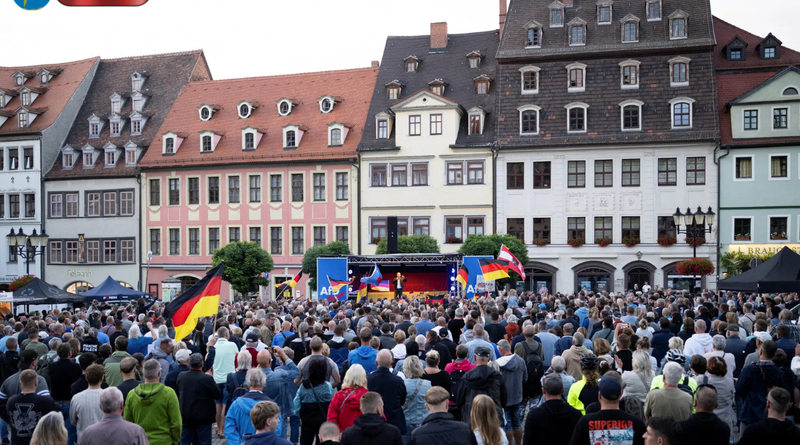
Saxony-Anhalt Election Puts AfD at the Center of Germany’s Political Storm
The Saxony-Anhalt election has become one of Germany’s most closely watched political contests, with the far-right Alternative for Germany, or AfD, seeking a breakthrough that could reshape the country’s political debate. Voters in the eastern German state are deciding whether the party can move from being a powerful opposition force to leading a state government for the first time since World War II.
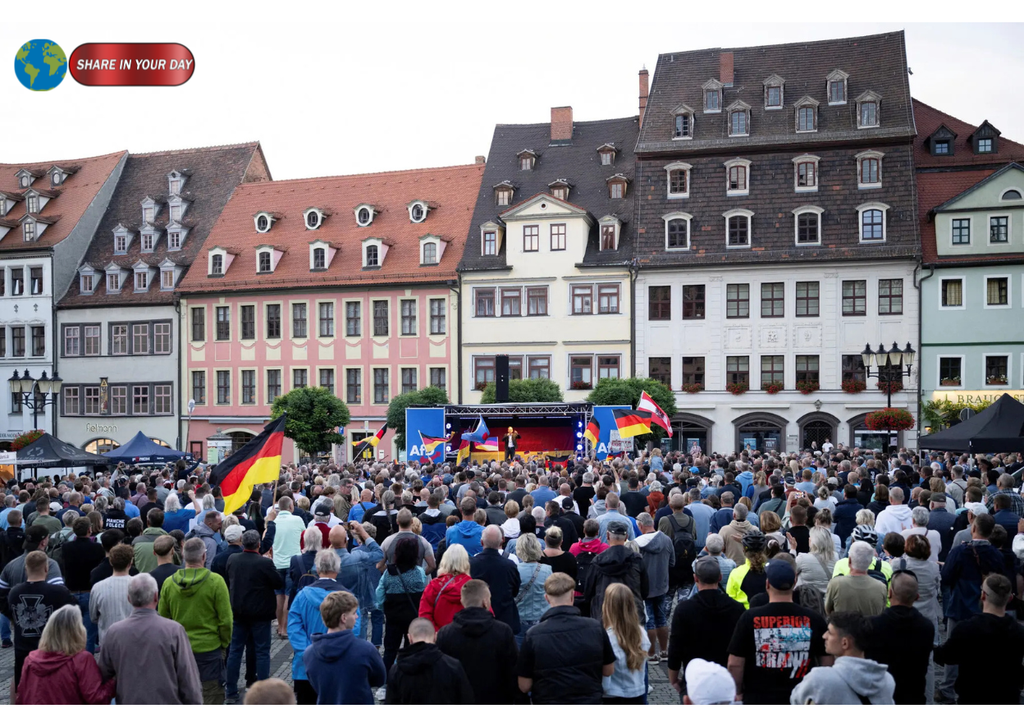
The election is taking place on September 6, 2026, and the result could carry significance far beyond Saxony-Anhalt. Recent polling has placed the AfD at around 40%, well ahead of Chancellor Friedrich Merz’s Christian Democratic Union, or CDU, at roughly 23%.
As voting continues, however, there is an important distinction: the final result is not yet known. Polling stations are scheduled to close at 6 p.m. local time, with initial results expected afterward.
The uncertainty makes the election especially consequential. A strong AfD result could intensify pressure on Germany’s mainstream parties, while an outright majority could create an unprecedented situation at the state level.
Saxony-Anhalt Election Could Deliver a Historic AfD Breakthrough
The AfD entered the Saxony-Anhalt election with a major advantage in the polls.
The party’s lead candidate, Ulrich Siegmund, has spent months campaigning on immigration, security, traditional values and opposition to Germany’s established political parties. The AfD hopes its strong support will translate into enough seats to govern without relying on another party.
That possibility is what makes the vote historic.
Germany’s mainstream parties have maintained a political “firewall” against cooperation with the AfD. The CDU, Social Democrats and other established parties have repeatedly rejected forming conventional governing coalitions with the far-right party.
If the AfD wins an absolute majority, that barrier would become less relevant inside Saxony-Anhalt because the party would not need coalition partners.
Siegmund has indicated that he would prefer governing alone rather than entering a coalition with parties that reject the AfD.
That creates a remarkably simple political equation: either the AfD wins enough seats to govern by itself, or mainstream parties will face difficult negotiations over how to prevent it from taking power.
1. The AfD Is Polling Far Ahead of the CDU
The most striking development surrounding the Saxony-Anhalt election is the size of the AfD’s polling advantage.
Surveys before voting put the AfD at approximately 40%, while the CDU has been around 23%. That gap is far larger than the margin seen in Saxony-Anhalt’s previous state election.
The numbers reflect a broader transformation in eastern German politics.
The AfD has built particularly strong support in parts of the former East Germany, where voters have often expressed dissatisfaction with established parties, economic conditions and migration policies.
Saxony-Anhalt has become one of the clearest examples of that trend.
In the 2021 state election, the CDU won about 37% of the vote and 40 seats, while the AfD received about 21% and won 23 seats. The contrast with today’s polling illustrates how dramatically the political balance has shifted.
The 2026 election could therefore represent not simply another change in party standings, but a fundamental reversal of the state’s political hierarchy.
2. Ulrich Siegmund Has Become the Face of the Campaign
Much of the AfD campaign has centered on Ulrich Siegmund, the party’s leading candidate.
Siegmund, a relatively young politician, was selected as the AfD’s top candidate with overwhelming support from party delegates. He has presented himself as a challenger to the established political system and has argued that the AfD should seek direct control rather than compromise with mainstream parties.
His campaign has focused heavily on issues that have helped the AfD gain support nationally, particularly migration and security.
The strategy is not limited to traditional political rallies. Siegmund has also developed a strong social-media presence, helping the campaign appeal to voters who may be less connected to traditional party structures.
That approach has helped make the Saxony-Anhalt election a test of whether the AfD can convert national frustration into direct governing power.
3. The Five-Percent Threshold Could Decide Everything
One of the most important factors in the Saxony-Anhalt election may not be the AfD’s percentage alone.
Smaller parties must reach the required threshold to enter the state parliament. If several parties fail to cross the threshold, the seats can be distributed among fewer parties, potentially making it easier for the AfD to obtain a parliamentary majority.
This creates an unusual situation.
The AfD could potentially win close to 40% of the vote but still need to watch the performance of smaller parties carefully. If enough parties clear the threshold, they could collectively prevent the AfD from obtaining an outright majority.
On the other hand, if several parties fall below the threshold, the AfD’s share of parliamentary seats could increase substantially.
That is why election-night results from smaller parties may be almost as important as the AfD’s headline percentage.
The state’s official election authorities provide the latest information and results through the Saxony-Anhalt election system.
4. Friedrich Merz Faces a Major Political Test
The Saxony-Anhalt election is also a test for Chancellor Friedrich Merz.
Merz leads the CDU at the federal level and has attempted to address some of the issues driving AfD support, particularly migration and security.
But the strategy has produced a difficult political dilemma.
If the CDU moves too far toward AfD positions, it risks alienating voters who oppose the far right. If it refuses to address issues that are important to AfD supporters, the party risks leaving those voters with little reason to return to the CDU.
Merz has personally intervened in the campaign, emphasizing the importance of preventing an AfD majority. German government officials have stressed that the election decision ultimately belongs to voters in Saxony-Anhalt, while Merz has argued that extremist political forces should be confronted through political and substantive debate.
The outcome could therefore become a referendum of sorts on whether the CDU’s approach is capable of containing the AfD.
A disappointing CDU performance could trigger difficult questions inside the conservative party.
5. The Election Could Reshape Germany’s Political Future
The biggest consequence of the Saxony-Anhalt election may come after the ballots are counted.
If the AfD performs exceptionally well, politicians across Germany will have to confront a new political reality.
The party is already Germany’s largest opposition force in the federal parliament. A state-level governing breakthrough would give it an opportunity to demonstrate whether its political program can be implemented in government rather than simply promoted from opposition.
The implications could extend into other eastern German states.
Germany is scheduled to hold additional important regional elections later in September, including votes in Berlin and Mecklenburg-Vorpommern.
A strong AfD showing in Saxony-Anhalt could therefore provide momentum heading into those contests.
It could also influence the political conversation ahead of Germany’s next federal election in 2029.
For the CDU, SPD and other mainstream parties, the challenge is increasingly difficult. They must compete with the AfD on issues such as migration and economic insecurity while maintaining their opposition to cooperation with the party.
Why Eastern Germany Matters So Much
The Saxony-Anhalt election cannot be understood without considering the political and economic history of eastern Germany.
Saxony-Anhalt was part of East Germany before reunification in 1990. Like several other eastern states, it has experienced demographic changes, economic restructuring and the long-term effects of reunification.
Many communities have faced population decline and an aging population.
At the same time, some voters believe political and economic decisions made in Berlin do not sufficiently reflect conditions in smaller eastern communities.
The AfD has successfully turned those frustrations into a political message.
Its campaign presents the party as an alternative to established political institutions and argues that Germany’s mainstream parties have failed to adequately address concerns about migration, security and economic change.
Critics, however, argue that the AfD’s proposals could deepen social divisions and weaken democratic institutions.
Germany’s domestic intelligence service has classified the AfD as an extremist organization, a designation the party disputes.
That controversy has made the election about more than ordinary party competition.
It has become a debate over what political direction Germany should take.
Protests Show the Depth of the Concern
The possibility of an AfD-led state government has also generated significant public opposition.
Thousands of people gathered in Magdeburg before the vote for a demonstration supporting an open and democratic society. Organizers estimated that between 15,000 and 20,000 people attended.
The protests demonstrate that the election is producing strong emotions on both sides.
AfD supporters argue that the party’s popularity reflects legitimate dissatisfaction with Germany’s established political system.
Opponents argue that allowing the AfD to govern would represent a dangerous shift for Germany and could normalize a party they consider extremist.
That divide is unlikely to disappear after election day.
What Happens If the AfD Wins?
There are several possible outcomes.
The first would be an outright AfD majority.
That would be the most dramatic result. The party could attempt to form a government without relying on other parties, giving Siegmund the opportunity to seek the position of state premier.
The second possibility is an AfD plurality without a majority.
In that situation, coalition negotiations would become critical. Because mainstream parties have ruled out cooperation with the AfD, the CDU could be forced to build a complicated coalition involving parties with very different political positions.
The third possibility is that the AfD wins less strongly than polling suggests.
That would still leave the party as a major political force, but it could give the CDU and other mainstream parties more room to construct a government.
In all three scenarios, the election will reveal whether the AfD’s extraordinary polling numbers can translate into actual parliamentary power.
What Happens Next?
The Saxony-Anhalt election is scheduled for September 6, 2026. Polls close at 6 p.m. local time, with initial results expected shortly afterward.
Because voting is still underway at the time of publication, readers should be careful with claims describing the AfD as having already won the state.
What is clear is that the party enters election day in an unusually strong position.
A victory would mark a historic moment for the AfD and potentially change the conversation about Germany’s political future.
A failure to win a majority, meanwhile, could produce weeks of negotiations and another test of Germany’s long-standing refusal by mainstream parties to cooperate with the AfD.
Either way, the result will be watched closely across Europe.
The Saxony-Anhalt election has evolved into something much larger than a regional contest. It is a test of the strength of Germany’s political center, the durability of the firewall against the far right and the ability of mainstream parties to respond to voters who increasingly feel disconnected from the established political system.