The Steam Frame starts at $1,059 for the 256GB model, while a higher-capacity 1TB version costs $1,299. Both versions include the headset, Steam Frame Controllers, a wireless adapter and a copy of Half-Life: Alyx.
However, getting one is not as simple as adding the headset to a shopping cart.
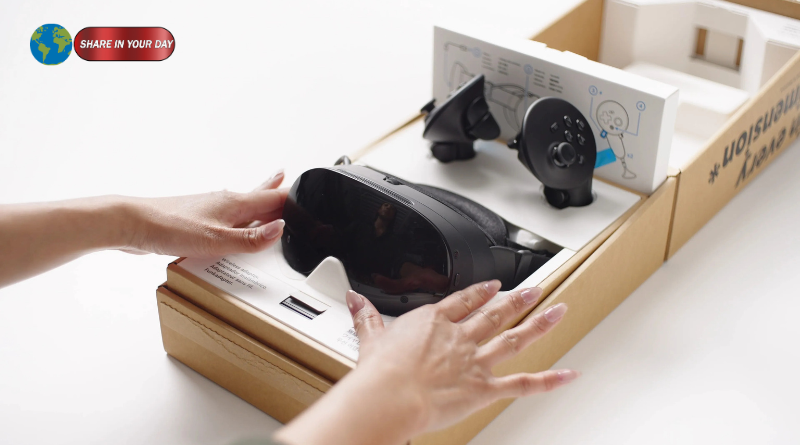
Valve is using a reservation and randomized-selection system for the initial launch. Customers who want a Steam Frame need to sign up through Steam before the deadline. Sign-ups are scheduled to close on September 17 at 10 a.m. Pacific Time, after which Valve will select customers through a randomized process. Those who are not immediately selected can remain in the reservation queue.
That makes the Steam Frame one of the most unusual gaming hardware launches of 2026.
How to Get the Steam Frame
The first step is to visit the official Steam Frame page on Steam and sign up for the initial reservation process.
Official Steam Frame page on Steam
The current process is centered around availability rather than a traditional preorder. Valve is limiting the first wave of purchases, which means signing up does not necessarily guarantee that a customer will immediately receive an order opportunity.
For buyers interested in the device, the important dates are:
- Steam Frame launch: September 14, 2026
- 256GB model: $1,059
- 1TB model: $1,299
- Reservation signup deadline: September 17 at 10 a.m. Pacific Time
- Purchase invitations: Beginning September 18
- Initial purchasing: Subject to Valve’s randomized selection and reservation queue
In practical terms, interested buyers should sign up as early as possible rather than waiting until the final hours.
Steam Frame Comes in Two Models
Valve is offering two storage configurations.
The entry-level 256GB Steam Frame costs $1,059, while the 1TB model costs $1,299. The primary difference between the two versions is storage capacity rather than a major performance upgrade.
That distinction is important because the Steam Frame is designed to run some games directly on the headset.
Standalone games can consume significant amounts of storage, particularly as larger titles become available for SteamOS and the headset’s ARM-based hardware. Buyers who plan to maintain a substantial collection of locally installed games may therefore find the 1TB version more attractive.
On the other hand, users who expect to rely heavily on wireless PC streaming could potentially find the 256GB model more practical.
The price difference between the two versions is $240, giving consumers a straightforward choice between lower upfront cost and substantially more storage.
What Is the Steam Frame?
The Steam Frame is more than a conventional VR headset.
Valve describes it as a streaming-first wireless VR headset with controllers that can handle a user’s Steam library. The device is built around SteamOS and is intended to operate both as a standalone gaming system and as a wireless interface for a gaming PC.
That dual-purpose design is one of the most important features of the Steam Frame.
Traditional PC VR headsets generally depend on a powerful computer to render games. Standalone VR systems, meanwhile, use mobile-class processors and their own operating systems.
Valve is attempting to bridge those categories.
The Steam Frame can run supported games directly on the headset while also connecting wirelessly to a PC. This gives the device access to much more demanding PC games without requiring the headset itself to perform all of the rendering.
Steam Frame Hardware and Key Specifications
Under the hood, the Steam Frame uses a Qualcomm Snapdragon 8 Gen 3 processor paired with 16GB of unified LPDDR5X memory. The headset features displays with 2160 × 2160 resolution per eye and supports refresh rates ranging from 72Hz to 144Hz.
The hardware is designed around wireless operation.
The Steam Frame supports Wi-Fi 7, Bluetooth 5.4 and a dedicated wireless connection for PC streaming. Valve also includes a wireless adapter with the headset, helping establish the connection between the gaming PC and headset.
Another notable feature is eye tracking.
Valve uses eye tracking to support its Foveated Streaming technology. Instead of treating every part of the image with identical priority, the system can concentrate image quality around the area where the user is looking.
That approach can help reduce the amount of data that needs to be transmitted at the highest quality during wireless streaming.
For VR, this matters because maintaining a high-quality image while keeping latency low is one of the biggest technical challenges.
Steam Frame Is Also Designed for Regular Games
One of the more surprising aspects of the Steam Frame is that it is not limited to VR titles.
Valve is positioning the headset as a way to access both VR and traditional flat-screen Steam games. Regular games can appear on a virtual display, effectively turning the headset into a private gaming screen.
The controllers also support traditional game controls, making the Steam Frame potentially useful for games that were never designed for virtual reality.
This strategy gives Valve a major advantage over VR hardware that depends almost entirely on a dedicated VR game catalog.
Instead of asking customers to buy a headset for a narrow selection of VR experiences, Valve wants the Steam Frame to provide access to a much broader Steam ecosystem.
More Than 100 Games Support Steam Frame at Launch
Valve has been building a compatibility program around the Steam Frame ahead of its release.
The company created a Great on Frame category for games that meet its performance and compatibility requirements. The catalog expanded rapidly during the months leading up to launch, reaching 131 listed titles on launch day, according to current tracking of Valve’s storefront data.
The supported catalog includes both VR and traditional games.
Among the titles associated with the platform are games such as Portal 2, Balatro, Hades, Hades II, Cuphead, Hollow Knight: Silksong and numerous VR experiences.
The distinction between locally running games and streamed PC games is important.
A game that runs directly on the Steam Frame needs to meet the headset’s performance requirements. A PC-streamed title, however, can use the processing power of the connected computer.
That means the Steam Frame’s effective library can be much larger than its standalone compatibility list suggests.
Half-Life: Alyx Is Included
Perhaps the biggest software incentive for the Steam Frame is Half-Life: Alyx.
Every Steam Frame includes a copy of Valve’s acclaimed VR game. More importantly, Valve has worked on a native ARM64 version that can run directly on the headset instead of requiring a traditional gaming PC.
That is a significant technical achievement.
Half-Life: Alyx was originally developed as a demanding PC VR title. Getting it to operate directly on the Steam Frame required Valve to adapt the game and its underlying technology for the headset’s Snapdragon-based architecture.
The native version also supports existing mods and saves, giving Steam Frame owners access to an experience that historically required a powerful PC and PC VR headset.
For Valve, Half-Life: Alyx also provides an obvious showcase for what the new hardware can accomplish.
Steam Frame Accessories Add to the Cost
The headline price does not necessarily represent the complete cost of owning the Steam Frame.
The headset includes the core hardware and controllers, but Valve also offers additional accessories.
One example is the Arcturus Vision Camera, a $149 accessory designed to add color passthrough capabilities and advanced camera functionality. Valve has also announced other accessories, including an ergonomic kit and replacement components.
There is also an important detail that potential buyers should know: the power supply is sold separately in the launch configuration.
The official Steam Frame information indicates that a compatible USB-C charger capable of supplying sufficient power can be used. Game Informer’s report notes that users can also purchase a compatible charger separately.
That means buyers should check their existing USB-C charging equipment before adding another charger to their purchase.
Why Is the Steam Frame So Expensive?
The $1,059 starting price is considerably higher than many consumers might have expected.
Valve previously positioned the Steam Frame as a product that would be more affordable than the company’s $999 Valve Index. However, hardware costs changed significantly during development, particularly because of increases affecting memory and storage components.
The result is a headset that launches at a price comparable to premium PC hardware rather than mainstream standalone VR devices.
That does not necessarily mean Valve is targeting the mass market.
The Steam Frame appears aimed primarily at PC gamers, VR enthusiasts and Steam users who are willing to pay for a more integrated gaming experience.
Its wireless PC streaming, SteamOS environment, native game support, high-resolution displays and PC-like functionality make it considerably more ambitious than a basic standalone VR headset.
Steam Frame vs. Traditional Standalone VR
The Steam Frame enters a market dominated by products such as Meta’s Quest family.
Its biggest differentiator is its connection to the Steam ecosystem.
Rather than building an entirely separate storefront around the headset, Valve is taking advantage of the massive PC gaming library it already operates.
The result is a product that can potentially function as:
- A standalone VR headset
- A wireless PC VR headset
- A virtual monitor for traditional games
- A SteamOS gaming computer
- A portable entertainment device
- A platform for compatible Android and Steam software
That flexibility could make the Steam Frame appealing to existing PC gamers who do not want to maintain multiple ecosystems.
However, the price remains a major barrier.
Is the Steam Frame Worth $1,059?
The answer depends heavily on how a buyer plans to use it.
For someone who already owns a powerful gaming PC and wants an advanced wireless VR experience, the Steam Frame could offer a compelling package.
For a buyer who simply wants an affordable introduction to VR, however, the $1,059 starting price is difficult to justify.
The Steam Frame’s strongest argument is not that it is the cheapest VR headset. It clearly is not.
Instead, Valve is selling the idea of a single device that can connect to a PC, run supported games locally, access Steam and handle both VR and traditional gaming.
That makes the Steam Frame closer to a wearable Steam computer than a conventional VR accessory.
What Buyers Should Know Before Ordering
Anyone planning to enter the reservation process should consider several factors before choosing a model.
First, storage matters. The 256GB model is cheaper, but locally installed games can consume space quickly.
Second, PC streaming can change the equation. Users with a powerful gaming PC may depend less on local storage because demanding games can be rendered remotely.
Third, accessories can increase the final price. The $1,059 headline figure represents the entry point, not necessarily a fully equipped Steam Frame setup.
Finally, buyers should remember that the launch process is not a standard first-come, first-served preorder.
Valve’s randomized selection system means signing up is the crucial first step, but it does not guarantee immediate access.
Steam Frame Marks a Major New Direction for Valve
The Steam Frame represents a significant expansion of Valve’s hardware strategy.
After the success of Steam Deck and the company’s renewed push into living-room hardware, the Steam Frame gives Valve another way to turn SteamOS into a broader platform.
The headset’s combination of standalone gaming, wireless PC streaming and traditional Steam games is particularly ambitious.
Its $1,059 starting price will undoubtedly limit its mainstream appeal. Yet Valve is not necessarily trying to compete on price alone.
Instead, the company is betting that dedicated PC gamers will pay a premium for a device that brings a large portion of the Steam ecosystem into a wireless, wearable format.
For buyers who have been waiting for Valve’s next major VR product, that wait is now over.
The Steam Frame launched on September 14, 2026, with two storage configurations: 256GB for $1,059 and 1TB for $1,299. Customers interested in the initial allocation should enter Valve’s reservation process before the September 17 deadline.
The bigger question now is whether Steam Frame can do for wireless PC VR what Steam Deck did for handheld PC gaming.
If Valve’s software support continues expanding, the answer could become clearer very quickly.
Where to Buy or Check Availability
The best place to check current availability, regional pricing and reservation information is Valve’s official Steam Frame storefront page: