Claude for Financial Advisors: 8 Powerful Changes
Claude for Financial Advisors has arrived with an ambitious goal: to make artificial intelligence a more deeply integrated part of the daily work performed by wealth managers and financial advisors.
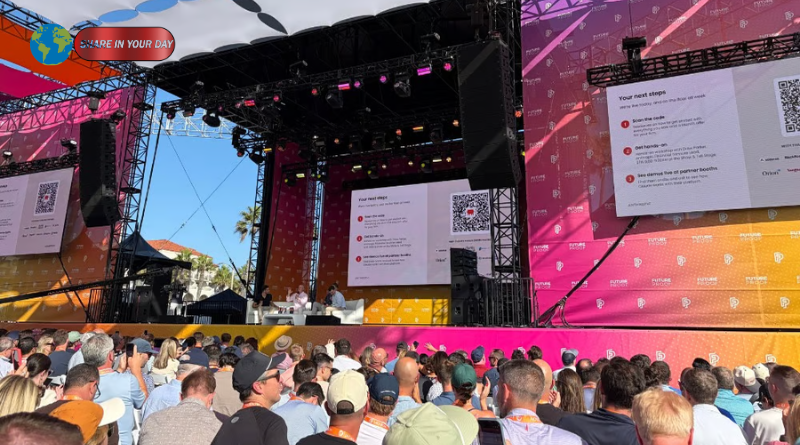
Anthropic unveiled the new offering September 14 at the Future Proof Festival in Huntington Beach, California, bringing together a powerful group of wealth-management and financial-technology companies. The launch immediately became one of the biggest talking points at the event, with industry executives describing the development as a potentially significant turning point for independent financial advice.
Unlike a conventional chatbot that simply answers questions, Claude for Financial Advisors is designed to work across the technology systems advisors already depend on. The platform can connect Claude with custodians, portfolio platforms, customer relationship management systems and financial-planning tools.
That distinction could be crucial.
Financial advisors spend substantial amounts of time moving information between systems, preparing documents, updating records, conducting research and completing administrative tasks. If AI can connect those workflows, advisors may be able to devote more time to clients instead.
Here are eight important ways the launch could change wealth management.
1. Claude for Financial Advisors connects the advisor technology stack
One of the most important features of Claude for Financial Advisors is its ability to work with existing financial technology rather than operating as an isolated AI application.
According to InvestmentNews, the launch involves major industry participants including Dynasty Financial Partners, Charles Schwab, BlackRock, iCapital, Addepar, Envestnet, SS&C Black Diamond, Wealthbox, Wealth.com, Vanguard and Zocks.
That ecosystem matters because financial advisors rarely work inside a single software platform.
An advisor might use one system for custody, another for financial planning, another for portfolio management and another for client relationship management. Switching between those systems can create repetitive work and increase the possibility of errors.
Claude’s integration strategy aims to reduce that friction.
Instead of manually moving information from one application to another, advisors could increasingly use natural-language instructions to retrieve, analyze or update information across connected systems.
For advisors, that could represent a much more meaningful AI upgrade than simply having another chatbot available.
2. AI could take on more back-office work
The financial advice industry has long faced a productivity challenge.
Many people enter wealth management because they want to build relationships, understand clients’ goals and provide financial guidance. Yet a significant portion of an advisor’s working day can be consumed by operational responsibilities.
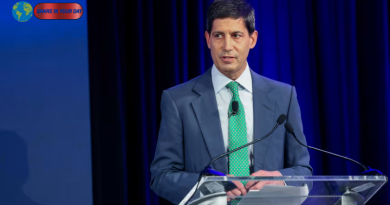
At the Future Proof Festival, Dynasty Financial Partners founder and CEO Shirl Penney argued that advisors did not enter the industry to spend most of their week performing middle- and back-office work.
That is precisely the problem AI companies are trying to solve.
Claude can potentially help with research, document preparation, information retrieval and other repetitive workflows. Anthropic has already expanded its financial-services capabilities beyond basic chat, offering specialized agents for tasks such as research, valuation review, KYC screening and financial modeling.
The larger trend is therefore clear: AI is moving from an assistant that answers questions toward an operational layer that can perform multi-step tasks.
3. Natural-language interaction could become a game changer
Financial software can be powerful, but it can also be complicated.
Advisors may need to understand different interfaces, search functions, reporting systems and data structures to retrieve the information they need.
Claude for Financial Advisors could change that interaction model.
Instead of navigating several applications manually, an advisor could potentially ask a question in ordinary language and have Claude retrieve information from connected systems.
That is one reason some advisors at Future Proof expressed enthusiasm about the technology. Moneco Advisors CEO Charlie Rocco told InvestmentNews that being able to query and update multiple systems through natural language could be a game changer.
The significance goes beyond convenience.
If software becomes easier to use, advisors may spend less time learning how to operate technology and more time applying the information it provides.
4. Claude is moving deeper into financial services
The new advisor-focused launch is part of a much broader financial-services strategy from Anthropic.
In May 2026, Anthropic announced a collection of financial-services agent templates covering research, client coverage, finance and operations. The company said these tools can support tasks ranging from pitch preparation and market research to valuation reviews, general-ledger reconciliation and KYC screening.
Claude also works across Microsoft Excel, PowerPoint and Word through Anthropic’s Microsoft 365 integrations, with Outlook integration announced as forthcoming.
For financial professionals, that matters because spreadsheets, presentations, emails and documents remain central to everyday work.
AI that can move between those environments has the potential to reduce the need for employees to repeatedly copy information between applications.
5. Major financial companies are joining the ecosystem
The involvement of major financial institutions is another reason the Claude for Financial Advisors announcement is attracting attention.
The launch includes some of the industry’s largest and best-known companies, according to InvestmentNews.
That broad participation suggests the financial sector is moving beyond experimental AI projects.
Custodians, asset managers, wealth platforms and planning providers increasingly appear to be treating AI as part of the core technology infrastructure of wealth management.
Anthropic has also developed a broader network of financial-data and research integrations. Its financial-services platform supports connections to organizations and data providers including FactSet, S&P Capital IQ, MSCI, PitchBook, Morningstar, LSEG and Daloopa.
For advisors, access to high-quality data may ultimately be more important than the AI model itself.
An intelligent model with poor or incomplete information will not produce reliable financial work. Combining AI reasoning with governed access to professional data could therefore be one of the industry’s most important developments.
6. Data privacy remains a critical issue
The enthusiasm surrounding Claude for Financial Advisors comes with an important caveat: financial firms handle extremely sensitive information.
Client portfolios, financial plans, tax information, personal details and account information cannot simply be sent to an AI system without appropriate controls.
Anthropic has emphasized its approach to data protection. During the Future Proof discussion, Anthropic’s head of asset and wealth management, Peter Nolan, said the company does not train on customer data.
However, advisors should still evaluate the exact contractual and technical protections attached to any AI deployment.
InvestmentNews previously reported concerns from wealth-management technology professionals after an Anthropic-related code exposure incident. The experts emphasized the importance of vendor risk management, data protections, zero-data-retention provisions and clear incident-response responsibilities.
The lesson is straightforward: AI adoption cannot be separated from cybersecurity and compliance.
7. Human advisors are unlikely to disappear overnight
The rise of AI has naturally raised concerns about whether financial advisors could eventually be replaced.
The current direction of Claude for Financial Advisors suggests something more nuanced.
Several advisors interviewed by InvestmentNews viewed AI primarily as a tool for increasing advisor productivity rather than eliminating the human relationship.
That distinction is particularly important in wealth management.
Clients often need more than an answer to a financial question. They may need help making difficult decisions involving retirement, inheritance, family finances, investment risk and long-term goals.
Those conversations involve trust and judgment.
AI can analyze information quickly, but the advisor remains responsible for understanding the client’s circumstances and determining how technology should be used in the relationship.
That could create a future in which the best advisors are not those who avoid AI, but those who know how to use it responsibly.
8. The future of wealth management may be AI-assisted
The Claude for Financial Advisors launch reflects a larger shift taking place throughout financial services.
Anthropic is positioning Claude as an infrastructure layer capable of working with financial data, business applications and specialized tools rather than merely functioning as a standalone conversational assistant.
Its financial-services strategy already includes agents for research, modeling, compliance and operational tasks.
That could eventually produce a new model for advisory firms.
Instead of hiring additional employees every time administrative workloads increase, firms could automate portions of those processes while allowing human employees to focus on higher-value activities.
For smaller advisory firms, the impact could be particularly significant.
Large wealth-management organizations have traditionally had more resources to invest in technology, operations and specialized employees. If AI can make sophisticated workflows easier to access, smaller firms could potentially compete more effectively.
What Claude for Financial Advisors means for investors
The most important question is not whether Claude is technically impressive.
It is whether clients ultimately receive better service.
If AI reduces administrative work, advisors could potentially spend more time speaking with clients, preparing personalized strategies and reviewing financial goals.
If AI makes research faster, advisors could potentially respond more quickly to changing market conditions.
If AI connects fragmented systems, firms could potentially reduce repetitive data entry and improve operational efficiency.
However, those benefits will depend on implementation.
Poorly governed AI could introduce new risks instead of eliminating old ones. Financial firms will need strong controls around data access, human review, cybersecurity, compliance and accuracy.
The technology therefore should not be viewed as a replacement for professional judgment.
It is better understood as a new layer of infrastructure that could amplify what financial professionals are already capable of doing.
Anthropic is betting on a major transformation
The timing of the Claude for Financial Advisors launch is significant.
AI adoption across financial services has accelerated rapidly, while wealth-management firms face pressure to control costs and provide increasingly personalized service.
Anthropic’s broader financial-services strategy shows that the company sees a substantial opportunity in this market. It has invested in specialized agents, financial-data connections and integrations with workplace software.
The Future Proof launch takes that strategy directly into the advisor’s daily workflow.
If the integrations work as intended, advisors could eventually interact with their technology stack in much the same way they interact with a knowledgeable digital colleague: asking questions, requesting analysis, preparing documents and initiating workflows through natural language.
That would represent a major shift from today’s fragmented financial software environment.
What comes next for financial advisors?
The next stage will likely be less about whether advisors use AI and more about how deeply AI becomes embedded in their businesses.
Early adopters will have to determine which workflows are appropriate for automation and which require direct human oversight.
Firms will also need clear policies governing client information, AI-generated content, recordkeeping and regulatory compliance.
Meanwhile, vendors will compete to connect AI models with increasingly large portions of the financial advisor’s technology stack.
That competition could ultimately benefit advisors.
The more seamlessly systems communicate, the less time professionals may need to spend managing software and the more time they can spend serving clients.
Final Takeaway
Claude for Financial Advisors represents an important step in Anthropic’s push into wealth management. The technology combines AI with connections to custodians, portfolio systems, CRMs and financial-planning tools, potentially allowing advisors to automate more administrative work and interact with complex technology through natural language.
The biggest opportunity may not be replacing financial advisors.
Instead, it could be giving them more time to do the part of the job that technology cannot easily replicate: understanding people, building trust and helping clients make important financial decisions.
For an industry under pressure to become more efficient while delivering increasingly personalized service, that could make Claude for Financial Advisors one of the more important AI developments to watch.