Fed Chair Succession Saga Revealed: A High-Stakes Power Struggle
The Fed Chair Succession Saga in the United States has escalated into one of the most complex and politically charged transitions in modern financial history. What was expected to be a routine leadership change at the Federal Reserve has instead turned into a multi-layered conflict involving politics, legal battles, and economic uncertainty.
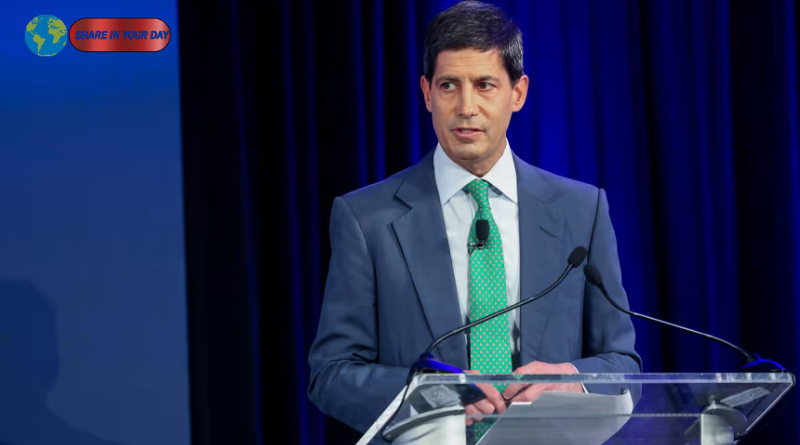
At the center of the storm is Kevin Warsh, the nominee selected to replace Jerome Powell. However, despite being nominated months ago, Warsh’s path to confirmation remains uncertain, raising serious concerns about the future direction of U.S. monetary policy.
A Routine Transition Turns Into a Crisis
Typically, appointing a new Federal Reserve chair follows a predictable process. The U.S. president nominates a candidate, the Senate Banking Committee reviews the nomination, and a full Senate vote confirms the appointment.
However, this time, the Fed Chair Succession Saga has deviated sharply from tradition.
Warsh, nominated in January 2026, still faces significant political obstacles. A key issue is resistance within the Senate, particularly from Thom Tillis, whose vote is crucial for advancing the nomination.
Tillis has made it clear that he will not support Warsh unless a Department of Justice investigation into Powell is resolved. This probe centers on Powell’s testimony regarding cost overruns in the renovation of the Federal Reserve’s headquarters.
As a result, the nomination process has effectively stalled, creating a bottleneck at a critical moment for the U.S. economy.
The Looming Deadline: May 15
Time is rapidly running out in this Fed Chair Succession Saga. Powell’s term as chair is set to expire on May 15, leaving a narrow window to confirm a successor.
If Warsh is not confirmed by that date, Powell has indicated he may continue serving in an interim capacity.
However, this potential scenario introduces further complications. Former President Donald Trump has strongly opposed the idea of Powell remaining in power beyond his term. In fact, Trump has suggested he would attempt to remove Powell if he continues as acting chair.
Such a move could trigger a legal battle, further intensifying the already volatile situation.
Why This Saga Matters for the Economy
The Fed Chair Succession Saga is not just a political drama—it carries significant implications for the global economy.
The Federal Reserve plays a central role in setting interest rates, controlling inflation, and stabilizing financial markets. Any uncertainty surrounding its leadership can have ripple effects across global markets.
Investors and policymakers are closely watching the situation for several reasons:
1. Interest Rate Policy Uncertainty
Warsh is widely seen as someone who could bring a different approach to monetary policy. While he has experience from the 2008 financial crisis, his future decisions remain unpredictable.
2. Market Volatility
Leadership uncertainty often leads to increased volatility in financial markets. Investors prefer stability, and the ongoing saga undermines confidence.
3. Inflation Concerns
With inflation pressures still lingering globally, the Fed’s next moves are critical. A delay in leadership transition could slow decision-making at a crucial time.
Political Tensions and Fed Independence
One of the most alarming aspects of the Fed Chair Succession Saga is the growing concern over the independence of the Federal Reserve.
Historically, the Fed has operated independently from political influence. However, the current situation challenges that principle.
The Justice Department investigation into Powell, combined with political pressure surrounding Warsh’s nomination, has raised fears that the central bank could become entangled in partisan conflicts.
Even within the same political party, divisions are evident. Some lawmakers support Warsh, while others insist on resolving the investigation first.
This internal conflict highlights a deeper issue: the balance between political authority and central bank autonomy.
Kevin Warsh: The Man at the Center
Understanding the Fed Chair Succession Saga requires a closer look at Kevin Warsh himself.
Warsh is not new to the Federal Reserve. He previously served as a governor from 2006 to 2011, including during the global financial crisis.
Since then, he has built a career in finance and academia, gaining significant influence in economic circles.
Supporters argue that Warsh brings valuable experience and fresh ideas to the role. Critics, however, question whether his views align too closely with political interests.
Adding to the debate is Warsh’s considerable wealth, which has drawn public attention and scrutiny.
A Rare and Complex Confirmation Battle
The Fed Chair Succession Saga is already being described as one of the most complicated confirmation processes in recent history.
Unlike previous transitions involving figures like Janet Yellen or Ben Bernanke, this nomination is entangled in legal disputes and political standoffs.
Several factors make this situation unique:
- A pending federal investigation involving the current chair
- Internal divisions within the Senate
- Potential legal challenges over interim leadership
- Heightened political pressure from the executive branch
These elements combine to create a perfect storm of uncertainty.
What Happens If Warsh Is Not Confirmed?
If Warsh fails to secure confirmation in time, multiple scenarios could unfold:
Interim Leadership by Powell
Powell could remain as acting chair, maintaining continuity in policy decisions.
Presidential Intervention
Trump could attempt to appoint an alternative interim leader, potentially sparking legal disputes.
Extended Political Gridlock
The Senate could remain deadlocked, delaying any resolution and prolonging uncertainty.
Each of these outcomes carries its own risks for financial stability and governance.
Global Implications of the Saga
The Fed Chair Succession Saga is not just a domestic issue—it has global consequences.
The U.S. Federal Reserve is arguably the most influential central bank in the world. Its policies affect:
- Global interest rates
- Currency markets
- Emerging economies
- International trade
Therefore, any instability in its leadership can have far-reaching effects beyond U.S. borders.
Countries and investors worldwide are closely monitoring developments, as decisions made in Washington can influence economic conditions globally.
The Bigger Picture: Trust in Institutions
At its core, the Fed Chair Succession Saga reflects broader concerns about institutional trust.
When political disputes interfere with key economic institutions, it can erode confidence among investors, policymakers, and the public.
This saga raises important questions:
- Can the Federal Reserve remain independent?
- Will political conflicts shape economic policy?
- How resilient are U.S. institutions under pressure?
These questions extend far beyond the current nomination battle.
Conclusion: A Defining Moment for the Federal Reserve
The Fed Chair Succession Saga is shaping up to be a defining moment for the Federal Reserve and the broader U.S. economic system.
What began as a routine nomination has evolved into a high-stakes confrontation involving politics, law, and global finance.
As the May 15 deadline approaches, the pressure is mounting. Whether Kevin Warsh is confirmed or not, the outcome will have lasting implications for the Federal Reserve’s independence, credibility, and effectiveness.
In the coming weeks, all eyes will remain on Washington as this unprecedented saga continues to unfold.