China Tutoring Crackdown Creates a New Education Dilemma
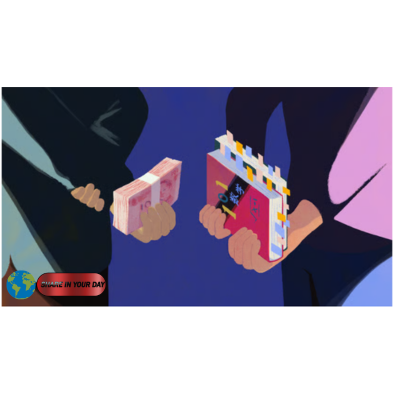
China’s tutoring crackdown was designed to make education less stressful, reduce household costs and slow the intense competition surrounding school admissions. Five years after Beijing launched its sweeping “double reduction” campaign, however, demand for extra academic instruction has not disappeared.
Instead, parts of the tutoring industry have moved into less visible channels.
Recent reporting suggests that private tutoring is once again becoming increasingly common in some Chinese cities. Tutoring centres have quietly returned, while private arrangements and other forms of supplementary education allow families to seek academic help outside the tightly regulated system. South China Morning Post+1
The development highlights a difficult problem for policymakers. Regulations can restrict the formal supply of tutoring, but they cannot easily eliminate the demand created by a highly competitive education system.
For many parents, the stakes remain too high to simply stop looking for additional help.
Why China Launched the Tutoring Crackdown
Beijing introduced the “double reduction” policy in 2021 as part of a broad effort to reduce pressure on children and families.
The policy targeted for-profit academic tutoring in core school subjects, including mathematics and English. Authorities wanted to reduce excessive homework, limit after-school classes and prevent families from spending huge amounts of money on private education.
The government also had broader social goals.
Officials were concerned that the education race was increasing household costs and placing heavy pressure on children. The tutoring industry had become a major business, with large companies building extensive networks of physical learning centres and online courses.
The crackdown dramatically changed that market.
Many companies were forced to restructure or close. Academic tutoring providers faced much tighter restrictions, while regulators introduced additional rules covering institutions, teachers, course content, prices and operating practices. China’s Ministry of Education continues to maintain a dedicated department overseeing after-school tutoring institutions. MOE China
The policy was therefore not simply an attempt to regulate an ordinary commercial sector. It was part of a much broader attempt to reshape how Chinese families approach education.
The Demand for Tutoring Never Disappeared
The central challenge is that the reasons parents sought tutoring in the first place have remained.
Chinese students still face intense competition for places at high-quality schools and universities. Academic performance can influence access to educational opportunities and, eventually, employment prospects.
That creates a powerful incentive for parents to look for an advantage.
Recent reporting from China illustrates the persistence of this demand. A September 2026 survey of affluent families found that 84.5% had paid for subject-specific tutoring during the July-August school holiday, compared with 80.7% the previous year. Mathematics, English and exam preparation were among the most popular choices. South China Morning Post
Those figures are particularly significant because they show that regulation has not eliminated parents’ willingness to spend on additional education.
Instead, the market has adapted.
From Legal Tutoring Centres to a Shadow Market
The China tutoring crackdown severely reduced the traditional business model. But when consumers continue to want a service, suppliers often search for new ways to provide it.
That dynamic helps explain the emergence of a more fragmented tutoring market.
Instead of relying entirely on large, highly visible education companies, tutoring can take place through smaller operators, private teachers, informal arrangements and other less prominent channels.
The result is a market that can be harder to monitor.
China’s Ministry of Education has previously acknowledged the difficulty of dealing with “hidden” tutoring operations. Official complaints have included illegal tutoring schools, irregular pricing and advertising violations. The ministry has said enforcement efforts would continue against such practices. MOE China
The issue is therefore not necessarily that the old tutoring industry has simply returned unchanged.
Rather, the industry has been reshaped.
Why the Black Market Can Be More Unequal
One of the unintended consequences of suppressing formal tutoring is that education services can become less transparent.
A regulated tutoring centre can be subject to requirements involving teachers, pricing, curriculum and consumer protections. An informal tutor operating outside the formal system may not face the same level of scrutiny.
That creates a potential fairness problem.
Wealthier families may be better positioned to find highly qualified private tutors or establish informal educational networks. Less affluent households, meanwhile, may have fewer opportunities to access those services.
The result can be the opposite of what the original policy intended.
The goal of the tutoring crackdown was partly to reduce inequality by preventing wealthy families from buying increasingly expensive educational advantages. But if tutoring moves underground, families with greater financial resources and stronger social connections may still be able to purchase additional support.
The difference is that the advantage becomes less visible.
Regulation Has Not Eliminated Competition
The deeper problem is that tutoring is only one part of China’s education competition.
Even if private classes disappear completely, parents can still compete through school selection, extracurricular activities, educational technology, books, summer programmes and other forms of investment in their children.
The pressure therefore comes from the wider system.
The government has attempted to strengthen school-based education and improve after-school services. In a 2023 notice, China’s Ministry of Education and other agencies instructed schools to expand appropriate after-school services while prohibiting excessive academic drilling and compulsory participation. The rules also called for tighter controls over outside organisations working with schools. China Ministry of Education
These measures demonstrate that Beijing understands the problem cannot be solved solely by banning private tutoring.
Schools themselves have to provide credible alternatives.
Parents Are Still Spending Despite the Crackdown
The persistence of tutoring demand also reflects changing economic conditions.
China’s families are increasingly concerned about future employment opportunities. In a competitive labour market, education can appear to be one of the few investments parents can directly influence.
That makes academic preparation particularly attractive.
Recent reporting indicates that some affluent families are prioritising domestic educational preparation over overseas experiences, with tutoring increasingly linked to concerns about employment and competition inside China. South China Morning Post
This represents an important shift.
Parents are not necessarily buying tutoring because they want their children to spend more time studying for its own sake. They may see additional instruction as protection against an uncertain future.
That motivation is much harder for regulation to remove.
The Return of Tutoring Could Become a Policy Test
The resurgence of private tutoring presents Beijing with a complicated policy choice.
Authorities could intensify enforcement and attempt to push informal tutoring further underground. But that approach could also increase the risks associated with unregulated services.
Alternatively, policymakers could focus more heavily on improving the quality and availability of legitimate educational support.
That would address the demand side of the problem rather than focusing exclusively on supply.
The government has already moved in that direction in some areas. Official policies have sought to strengthen after-school services, regulate participating organisations and prevent schools from using such programmes simply as another form of academic cramming. China Ministry of Education
However, making school-based alternatives genuinely competitive with private tutoring is difficult.
Parents will continue to compare outcomes.
If they believe private instruction provides an advantage, demand is likely to persist regardless of how strict the regulations become.
Technology Could Change the Shape of the Market
Another factor is technology.
Online education dramatically lowered the cost of connecting students with teachers. Even after Beijing’s regulatory campaign transformed the formal online tutoring industry, technology continued to make educational services easier to distribute.
The next phase could involve even smaller-scale services.
A tutor does not necessarily need a large company, classroom or branded learning centre to reach students. Digital communication can connect teachers and families directly.
That creates another enforcement challenge.
Regulators may be able to close a physical tutoring centre, but monitoring thousands of small private arrangements is far more difficult.
At the same time, technology can also help authorities improve oversight and provide legitimate educational services at scale.
The policy outcome will depend partly on which side develops faster.
What the Tutoring Black Market Reveals About China
The most important lesson from the China tutoring crackdown may be that education demand cannot easily be regulated away.
Beijing successfully transformed one of the country’s most lucrative education industries. The old model of large commercial tutoring companies was heavily disrupted, and the government substantially reduced the visibility of formal academic tutoring.
But the underlying competition remained.
That distinction matters.
If parents believe academic performance determines their children’s future, they will continue searching for ways to improve it. When legal channels become restricted, demand can move elsewhere.
The result is not necessarily a complete failure of the policy.
The crackdown did achieve some of its original objectives. It changed the economics of tutoring, reduced the dominance of major commercial providers and forced the education industry to operate under a much more restrictive framework.
Yet it also demonstrated the limits of regulation.
A New Challenge for China’s Education System
China now faces a second-generation education problem.
The first challenge was an enormous commercial tutoring industry that encouraged families to spend more and more money on academic competition.
The second is what happens when that industry is pushed out of the formal economy but the competitive incentives remain.
A shadow market can be more difficult to regulate, less transparent and potentially more unequal.
For policymakers, the answer may therefore require more than another crackdown.
Schools need to provide high-quality education. Families need confidence that children can succeed without purchasing private advantages. And the wider system needs to reduce the perception that every academic disadvantage could permanently affect a child’s future.
Without those changes, tutoring demand is likely to remain resilient.
The story of China’s education market is therefore not simply about a government banning private lessons. It is about what happens when powerful economic and social incentives collide with regulation.
Five years after the original crackdown, the return of tutoring in less visible forms suggests that the pressure has not disappeared.
It has simply changed shape.
Conclusion
China’s tutoring crackdown transformed the country’s education industry, but it did not eliminate the forces that created the tutoring boom.
Parents still want better educational opportunities for their children. Students still face intense competition. And businesses and teachers have strong incentives to meet that demand.
That combination makes the emergence of a shadow tutoring market unsurprising.
The long-term test for Beijing will be whether it can reduce education pressure without simply moving the competition out of sight.
If private tutoring continues to return through informal channels, the government may have to confront a difficult reality: controlling the tutoring industry is easier than changing the educational competition that sustains it.