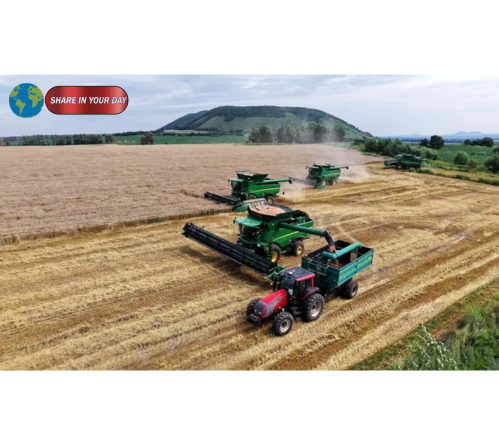
Agriculture ETFs: 5 Powerful War-Hedge Plays
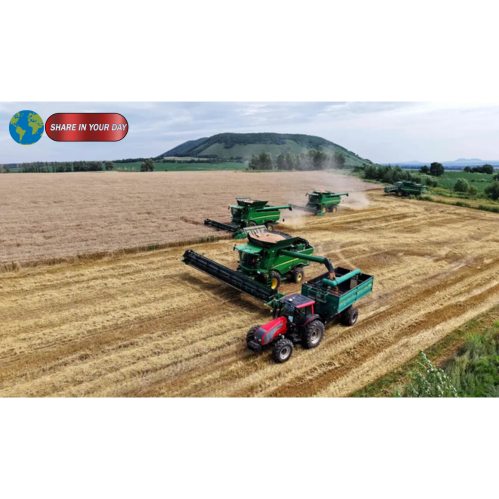
Agriculture ETFs are attracting fresh attention from investors as geopolitical tensions, rising fertilizer costs and potential weather disruptions create new risks for global food supplies.
The agricultural market has become an increasingly important part of the broader commodity story in 2026. While oil has dominated headlines since the conflict involving Iran intensified, investors are now looking beyond energy to commodities that could be affected by disruptions in fertilizer, transportation and crop production.
According to a recent Business Insider report, agricultural commodity funds have experienced significant inflows this year. The Invesco DB Agriculture ETF recorded $413 million in inflows during the first quarter of 2026, while agricultural ETFs managed by Teucrium attracted another $345 million. Combined, those flows helped push assets in the funds sharply higher.
The renewed interest comes as investors consider whether agricultural commodities can provide protection against inflation, market volatility and supply shocks.
However, agriculture is not a simple defensive trade. Commodity prices can move sharply in either direction, and futures-based funds can behave very differently from traditional stock ETFs.
Why Agriculture ETFs Are Suddenly Getting More Attention
The biggest driver is uncertainty.
The ongoing Iran conflict and disruptions surrounding major Middle Eastern shipping routes have raised concerns about the availability and cost of key agricultural inputs. Fertilizer is especially important because modern farming depends heavily on nitrogen, phosphate and potash products.
Higher fertilizer prices can increase farmers’ production costs. If those higher costs eventually affect planting decisions or crop yields, food prices could also rise.
Business Insider reports that fertilizer prices have already climbed about 20% and could remain elevated through 2028. The potential consequences extend well beyond farmers because fertilizer costs can eventually feed into the prices of grains, livestock feed and other agricultural products.
At the same time, investors are watching weather patterns.
A potential strong El Niño event could disrupt agricultural production in several major growing regions. That creates another source of uncertainty for crops such as corn, wheat and soybeans.
Together, geopolitical tensions and weather risks are creating a market environment in which investors are paying closer attention to agriculture.
1. Agriculture ETFs Offer Direct Commodity Exposure
One reason investors are considering agriculture ETFs is that they can provide exposure to agricultural commodities without requiring investors to trade individual futures contracts themselves.
Traditional commodity futures can be complicated. Investors have to understand contract expiration dates, margin requirements, leverage and the process of rolling contracts forward.
An ETF can package some of that exposure into a familiar exchange-traded structure.
Funds focused on agriculture may track baskets of commodities including corn, wheat, soybeans, sugar, coffee and other products. The exact exposure depends on the fund’s strategy and underlying holdings.
That diversification can be useful because agricultural commodities do not always move together.
For example, a drought could push corn prices higher while a strong harvest could pressure soybean prices lower. A basket approach can reduce the impact of any single crop.
However, investors still need to examine what a particular fund actually owns.
Some agricultural ETFs hold futures contracts directly. Others may use swaps or other financial instruments. As a result, two funds with similar names can produce significantly different returns.
2. Wheat and Soybeans Are Drawing Investor Interest
Professional investors are also becoming more bullish on several major food commodities.
Business Insider reports that traders have built year-high net-long positions in important agricultural futures, particularly wheat and soybeans.
Wheat is particularly sensitive to geopolitical disruptions because the global wheat market is heavily dependent on major exporting countries.
Soybeans have a different set of supply and demand drivers. They are widely used for animal feed and vegetable oil, making them an important part of the global food chain.
When investors expect tighter supplies or stronger demand, futures prices can rise.
That does not necessarily mean farmers will immediately benefit. Higher futures prices can be offset by higher fertilizer, fuel, transportation and labor costs.
For investors, however, the futures market can provide an early indication of how traders are pricing potential supply problems.
3. Fertilizer Could Become a Critical Part of the Trade
The agriculture story is not only about crops.
Fertilizer may be one of the most important links between the Iran conflict and agricultural commodity prices.
Modern farming requires substantial quantities of fertilizer to maintain crop yields. Production of some fertilizer products is closely connected to natural gas and other energy markets.
That creates an important chain reaction.
Higher energy prices can increase fertilizer production costs. Transportation costs can rise at the same time. Farmers then face more expensive inputs before their crops even reach the market.
The situation is particularly significant because oil prices have also surged amid Middle Eastern supply disruptions. Brent crude recently climbed above $100 per barrel as the conflict intensified and concerns about global energy flows increased.
Recent market data also show the broader agricultural commodity market moving higher. MarketWatch reported that wheat futures were up 43% in 2026, while soybeans and corn had gained 24% and 20%, respectively, amid geopolitical tensions, production concerns and higher energy-related costs.
If elevated fertilizer and energy costs persist, agriculture could remain an important inflation story.
4. Agriculture ETFs Could Act as an Inflation Hedge
Another reason investors are examining agriculture ETFs is inflation protection.
Food is one of the most visible components of household spending. When grain and other agricultural commodities become more expensive, those increases can eventually affect everything from supermarket prices to restaurant bills.
Commodity exposure can therefore offer a potential hedge against certain inflationary pressures.
The relationship is not perfect.
Agricultural commodity prices can fall even while overall inflation remains elevated. Crop production can also increase unexpectedly, creating excess supply and pushing prices lower.
Still, agriculture has historically behaved differently from many traditional financial assets.
During periods when economic shocks damage stocks and bonds, commodities can sometimes benefit from the same supply disruptions that hurt other investments.
That diversification potential is one reason professional investors continue to monitor agricultural futures.
5. Agriculture Futures Can Provide a More Direct Hedge
Investors with greater experience may choose agricultural futures rather than ETFs.
Futures provide direct exposure to the price of a specific commodity. Traders can take positions on wheat, corn, soybeans and other agricultural products.
But the additional flexibility comes with additional risk.
Futures contracts are leveraged instruments. A relatively small price movement can produce a substantial gain or loss compared with the amount initially deposited.
Investors must also understand contract specifications, expiration dates and margin requirements.
For most individual investors, therefore, agriculture-focused ETFs may be easier to understand than directly trading futures.
That convenience does not eliminate risk, but it can make commodity exposure more accessible.
What Could Push Agriculture Prices Even Higher?
Several factors could continue supporting agricultural commodities.
Geopolitical Disruptions
The first is the possibility that the Iran conflict continues to disrupt shipping and energy markets.
The Strait of Hormuz is particularly important to global energy trade. Continued disruption can increase oil, gas and transportation costs, which can then affect the agricultural supply chain.
The impact may extend beyond energy.
Higher shipping costs can make it more expensive to transport fertilizer, animal feed and finished agricultural products around the world.
Weather Problems
Weather represents another major risk.
Agricultural markets are unusually sensitive to drought, excessive rainfall, heat waves and other extreme conditions.
A significant production shortfall in a major growing region can rapidly change the global supply-demand balance.
That is why investors are watching forecasts for potential El Niño-related disruptions.
Higher Fertilizer Costs
Fertilizer is another key variable.
If fertilizer prices remain elevated, farmers could face difficult decisions over how much to plant and which crops to grow.
Higher costs can eventually influence acreage and yields.
That could create additional upward pressure on agricultural commodities if demand remains strong.
The Risks Investors Should Not Ignore
Despite the bullish arguments, agriculture ETFs are not guaranteed winners.
Commodity markets are notoriously cyclical.
Prices can rise quickly during supply scares and then fall just as rapidly when conditions improve.
A stronger harvest, an improvement in geopolitical tensions or lower energy prices could reverse some of the recent gains.
There is also the issue of futures contracts.
Many commodity ETFs obtain exposure through futures rather than physically holding the underlying commodities. As contracts approach expiration, funds may need to sell existing contracts and purchase new ones.
Depending on market conditions, that process can either help or hurt returns.
This is known as the impact of futures roll costs and is one reason investors should not assume that an agriculture ETF will perfectly match the spot price of the commodities it tracks.
Agriculture ETFs Are Not a Long-Term Set-and-Forget Investment
The recent enthusiasm does not necessarily mean agricultural commodities should become a permanent part of every portfolio.
Business Insider’s report highlights an important distinction: agriculture can potentially serve as a protective or tactical allocation, but commodities remain cyclical assets.
That distinction matters.
A stock investor can potentially hold a profitable company for decades as it grows earnings and pays dividends. A commodity does not work the same way.
Wheat does not generate earnings.
Corn does not pay dividends.
Soybeans do not produce cash flow.
Their investment value depends primarily on changing supply and demand conditions.
For that reason, agricultural exposure may be most useful when investors understand exactly what economic or geopolitical scenario they are trying to hedge.
What This Means for Investors in 2026
The growing interest in agriculture ETFs reflects a broader shift in how investors are thinking about geopolitical risk.
The Iran conflict initially pushed investors toward traditional safe-haven and energy-related assets. But as the disruption persists, attention is moving through the supply chain.
Oil affects transportation.
Energy affects fertilizer.
Fertilizer affects farming costs.
Farming costs affect crop economics.
And crop prices ultimately affect food inflation.
That chain makes agriculture an important part of the wider market response to geopolitical instability.
At the same time, recent market data suggest that investors are already positioning for higher food and commodity prices. Agricultural futures positioning, ETF inflows and rising crop prices all point to increased attention from Wall Street.
Whether that trend continues will depend on several variables, including the duration of the Iran conflict, energy prices, weather conditions, fertilizer availability and global crop production.
The Bottom Line on Agriculture ETFs
Agriculture ETFs have emerged as an intriguing investment theme as geopolitical tensions, fertilizer costs and weather risks threaten to reshape global food markets.
The case for agricultural commodities is straightforward: disruptions can reduce supply or increase production costs, potentially pushing prices higher.
But the investment risks are equally important.
Agricultural commodities are volatile, cyclical and heavily influenced by factors that investors cannot control. A sudden improvement in weather or a resolution to geopolitical tensions could quickly change market expectations.
For investors considering agriculture exposure, the most important step is understanding the structure of the specific ETF, the commodities it tracks and the risks associated with futures contracts.
Agriculture may offer diversification and a potential inflation hedge, but it should not automatically be treated as a permanent portfolio holding.
As the 2026 commodity cycle develops, however, one thing is becoming increasingly clear: investors can no longer view food markets separately from energy, geopolitics and global supply chains.
The next major agricultural trade may be shaped as much by events far from the farm as by what happens in the field.