Teen Summer Jobs Are Showing a Modest Rebound
Teen summer jobs are making a small comeback in the United States after decades of decline, according to a new analysis from Pew Research Center.
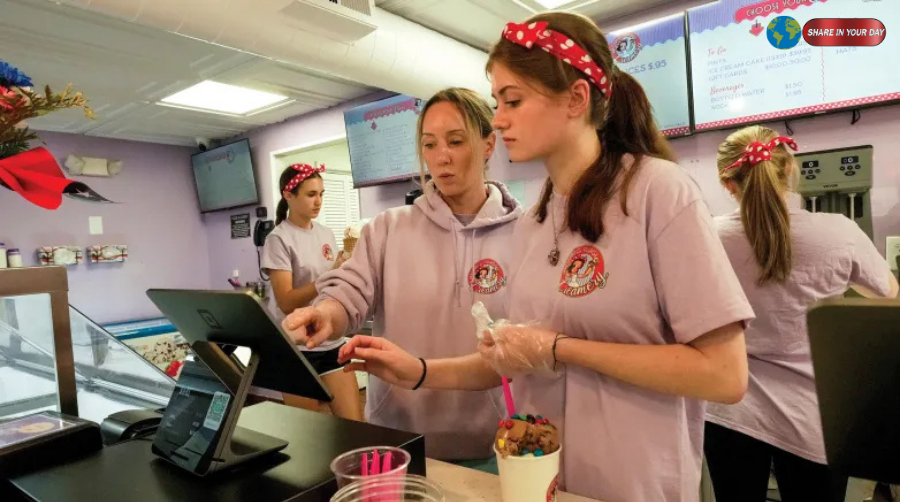
About 35.5% of U.S. teenagers ages 16 to 19 held a paying job for at least part of summer 2026, based on the average of June and July employment data. That is up from 33.8% in 2025. However, the increase is modest, and today’s teen employment rate remains dramatically below the levels seen in previous generations.
The contrast is striking.
In 1978, 58% of U.S. teenagers worked for pay during the summer. More than half of teens were also employed during the summer in most years between 1948 and 2000, according to Pew’s analysis of federal employment data.
The latest numbers therefore suggest something more complicated than a simple recovery.
Teenagers are working again at slightly higher rates than they did last summer. Yet the traditional American summer job remains far less common than it was decades ago.
Teen Summer Jobs Remain Far Below Their Historic Peak
The long-term decline is one of the clearest findings in the Pew analysis.
In 1978, 58% of Americans ages 16 to 19 worked for at least part of the summer. By 2000, the rate was still 51.7%.
After that, however, the numbers began falling sharply.
The summer employment rate dropped to 48% in 2001 and continued declining through the 2000s. The Great Recession accelerated the trend. By 2009, only 32.9% of teens worked during the summer.
The rate reached a low of 29.6% in both 2010 and 2011. Fewer than 5 million teens, on average, were employed during those summers.
The decline was not simply temporary.
Teen employment recovered somewhat during the middle of the 2010s, reaching 35.8% in 2019. The COVID-19 pandemic then pushed the rate down to 30.8% in 2020 as restaurants, stores, tourist attractions and recreational facilities closed or sharply reduced operations.
Employment bounced back in 2021 and 2022 as pandemic restrictions eased.
But that recovery did not continue.
The rate fell from 37.4% in 2022 to 36.6% in 2023, 36% in 2024 and 33.8% in 2025.
That makes the 35.5% recorded so far in 2026 notable, but hardly a return to the traditional summer-job economy.
Teen Summer Jobs Increased by Thousands in 2026
There is still a positive signal in this year’s data.
Pew estimates that an average of about 6.2 million teenagers were working during June and July 2026. That is approximately 19,500 more young workers than the June-July average in 2025.
The increase is especially interesting because fewer teens overall have been actively looking for work this summer.
That means the modest rise in employment is not simply the result of a much larger group of teenagers entering the labor market.
Instead, the available data suggest that a slightly larger share of teens who are working-age and participating in the labor market have found jobs.
The federal Bureau of Labor Statistics provides additional context.
For all young people ages 16 to 24, 53.8% were employed in July 2026, compared with 53.1% in July 2025. Meanwhile, the youth unemployment rate dropped from 10.8% in July 2025 to 9.1% in July 2026.
That is a healthier picture than the headline teen employment rate alone might suggest.
However, the numbers cover different age groups. Pew’s main analysis focuses specifically on teenagers ages 16 to 19, while the BLS youth report covers everyone ages 16 to 24.
The distinction matters because older young adults are considerably more likely to work.
Older Teens Are Much More Likely to Have Jobs
Age is one of the strongest factors affecting teen summer jobs.
Pew found that 18- and 19-year-olds had an average employment rate of 48% during June and July 2026.
For 16- and 17-year-olds, the rate was only 24%.
That two-to-one difference reflects several factors.
Older teenagers are more likely to have completed enough schooling to work longer hours. They may also have access to a wider range of jobs and fewer restrictions on when they can work.
Younger teenagers face greater limitations under federal and state labor laws.
The federal data also do not cover people younger than 16 in the same employment statistics because most children that age cannot work many jobs and are subject to stricter restrictions on working hours.
As a result, the traditional image of a teenager spending the summer working a part-time job increasingly applies to older high school students rather than the entire teenage population.
Teen Summer Jobs Still Center on Food and Retail
The types of teen summer jobs available today also reveal how the youth labor market has changed.
Accommodation and food services remained the largest industry for teenage workers in 2026.
Pew estimates that an average of about 2 million employed teens worked in accommodation and food services during June and July. That represented 32% of all employed teenagers.
Retail was the second-largest industry.
Nearly 1.3 million teenagers worked in retail, accounting for about 21% of employed teens.
Together, those two industries employed more than half of all working teenagers during the first two months of the summer.
This is consistent with the traditional summer-job model.
Restaurants, hotels, stores, snack stands and similar businesses have historically provided large numbers of entry-level positions that can accommodate students.
However, the distribution of jobs has shifted over time.
Pew found that accommodation and food services accounted for 32.2% of teen employment in 2026, down from 37% in 2021. Retail’s share was 20.7%, compared with 19% in 2025.
If that retail share continues through August, Pew says it would represent the first increase in retail’s share of teen summer employment since 2020.
Food Service Remains the Biggest Teen Job Category
Looking at occupations rather than industries gives an even clearer picture.
Food preparation and serving jobs were by far the largest occupation for teenage workers during June and July 2026.
Pew estimates that about 1.53 million teenagers worked in food preparation and serving-related occupations.
Sales and related positions were second, with approximately 1.1 million teenage workers.
Transportation and material-moving occupations ranked third, employing about 701,000 teens.
Other common categories included office and administrative support, personal care and service, building and grounds maintenance, construction and extraction, and production.
The numbers show that summer employment remains concentrated in jobs that generally do not require extensive previous experience or advanced qualifications.
That is important because the decline in teen employment has often been linked to changes in the availability of these entry-level positions.
Why Are Teen Summer Jobs Less Common Than Before?
The decline in teen summer jobs does not have a single explanation.
Several economic and social changes have occurred at the same time.
One factor is the changing labor market.
The United States has fewer of the low-skill, entry-level jobs that once provided an easy entry point for teenagers. Businesses have changed how they operate, and some jobs that once relied heavily on young workers have become more automated or require different skills.
Another factor is education.
Teenagers today are more likely to spend portions of their summers taking classes, participating in academic programs or preparing for college.
Summer has become a more structured period for many students.
College admissions can also influence how teenagers spend their time. Students may prioritize internships, academic programs, sports, volunteer work or other activities that they believe will strengthen future applications.
That does not necessarily mean teenagers are less willing to work.
It means they may have more competing ways to spend their summer.
Teen Employment Also Varies by Race and Ethnicity
The Pew analysis highlights significant differences in summer employment across racial and ethnic groups.
During June and July 2026, approximately 39% of White teenagers were employed.
That compared with 28% of Hispanic teens, 27% of Black teens and 21% of Asian teens.
The differences are not limited to summer.
Pew found that White teenagers have also generally been more likely than teenagers from other racial and ethnic groups to work during the rest of the year.
The gap can reflect differences in household income, access to transportation, local labor markets, school schedules and other economic and social factors.
It also means that the national teen employment rate can hide very different experiences among young people.
For some teenagers, getting a summer job remains relatively common.
For others, finding an entry-level position may be much more difficult.
The 2026 Youth Labor Market Looks Healthier in Some Ways
The broader BLS data provide a more encouraging picture for young workers.
In July 2026, 53.8% of Americans ages 16 to 24 were employed. The figure was only slightly higher than the 53.1% recorded in July 2025, but the unemployment rate improved substantially.
The youth labor force also expanded by 2.1 million between April and July 2026.
That represented a 9.8% increase, taking the youth labor force from 21.4 million in April to 23.5 million in July.
The number of employed young people rose by 1.8 million during the same period.
These figures suggest that young people are still entering the labor market in large numbers during the summer.
The problem is that teenage employment remains structurally lower than it was several decades ago.
So the question is not simply whether young people can find jobs today.
It is whether the American economy still provides the same quantity and type of entry-level summer work that it once did.
Teen Summer Jobs Could Be Starting a Slow Recovery
The 2026 numbers provide a reason for cautious optimism.
Teen summer employment rose from 33.8% to 35.5%.
That is the first meaningful improvement after several years of decline.
The number of employed teens also increased slightly, even as fewer teenagers were actively looking for jobs.
Meanwhile, the broader youth unemployment rate has fallen.
Together, those indicators suggest that the youth labor market is not collapsing.
But calling it a full rebound would be premature.
The current 35.5% rate remains more than 20 percentage points below the 58% peak recorded in 1978.
It is also below the 51.7% level recorded as recently as 2000.
A true long-term recovery would require several consecutive years of improvement.
For now, 2026 looks more like a modest bounce than a dramatic return to the past.
What the Rebound Means for Teenagers
A summer job can provide more than a paycheck.
For teenagers, early work experience can offer an introduction to workplace expectations, customer service, teamwork and time management.
It can also provide an opportunity to earn money before college or other post-high-school plans.
That makes the long-term decline in teenage employment important beyond the headline numbers.
Young people who never enter the workforce until after high school or college may have fewer opportunities to develop basic workplace experience.
At the same time, the disappearance of traditional summer jobs is not necessarily entirely negative.
Some teenagers are replacing paid work with education, internships, training or other activities that can also build valuable skills.
The key issue is whether young people have meaningful opportunities to develop skills and independence.
What Comes Next for Teen Summer Jobs?
The remaining 2026 employment data could provide more clues.
Pew’s 2026 summer measure uses June and July because August data were not yet available when the analysis was published. Previous years use the average of June, July and August.
That means the final summer figure could move higher or lower.
August is traditionally an important month for teenage employment, particularly before students return to school.
The final number will therefore help determine whether the 2026 increase represents a genuine change in direction or simply a temporary fluctuation.
Still, the current data are encouraging enough to warrant attention.
Teen employment has not returned to its historic highs, but the downward trend appears less severe than it was during the years immediately following the pandemic.
Final Thoughts
The latest data on teen summer jobs tell a story of cautious improvement rather than a dramatic comeback.
About 35.5% of U.S. teenagers ages 16 to 19 worked for pay during at least part of summer 2026, up from 33.8% last year. An estimated 6.2 million teenagers worked during June and July.
Yet the historical comparison remains striking.
In 1978, 58% of teens worked during the summer. More than half did so in most summers between 1948 and 2000.
The labor market has changed significantly since then.
Teenagers have more educational commitments. Employers offer fewer traditional entry-level positions in some areas. Technology and business practices have changed. And young people increasingly have other ways to spend their summers.
Still, the 2026 figures offer a positive signal.
Food service and retail remain major sources of jobs, while the broader youth labor market has seen lower unemployment compared with 2025.
Whether this becomes a sustained recovery remains uncertain.
For now, the message is clear: teen summer jobs are showing signs of life again, but the American summer-job tradition remains a long way from its historic peak.