GLP-1 Low Doses Still Show Measurable Weight Loss
GLP-1 low doses may produce meaningful weight loss even when patients do not progress to the higher maintenance doses commonly used in obesity treatment, according to a new real-world study published August 31 in Biology Methods & Protocols.
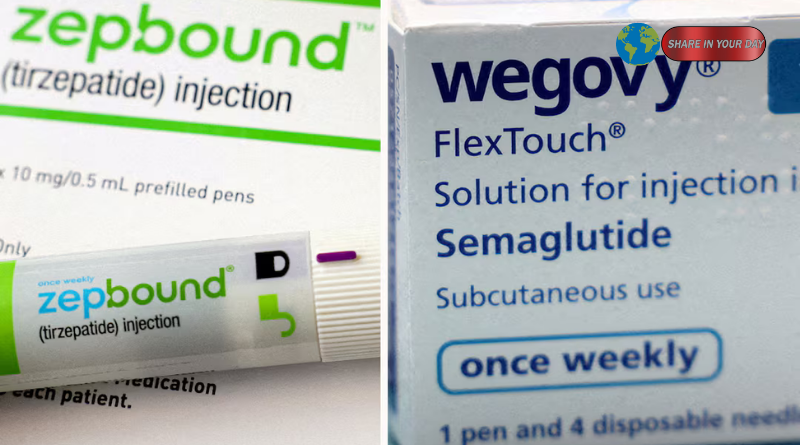
The findings could add an important layer to the growing debate over how much medication patients actually need to achieve useful results. Researchers found that people who remained on the lowest approved injectable doses of semaglutide or tirzepatide for at least six months still lost weight over the following year.
However, the results were substantially smaller than the weight loss typically reported at higher doses. The study also found that staying on a lower dose did not eliminate the possibility of adverse effects.
That distinction is important as millions of people use medicines such as Wegovy, Zepbound, Ozempic and Mounjaro for obesity and metabolic conditions.
Read the original Reuters report
GLP-1 Low Doses Produced Different Results
The study examined real-world prescription and clinical data involving people taking semaglutide and tirzepatide. Reuters reported that researchers analyzed 534 patients who remained on the 0.25-milligram semaglutide starter dose and another 534 who stayed on the 2.5-milligram tirzepatide starter dose for at least six months.
After one year, average body-weight reduction was:
- 5.5% with low-dose tirzepatide
- 2.2% with low-dose semaglutide
Those numbers show that the medications continued to have a measurable effect even when patients did not move beyond the initiation dose.
But the results should not be interpreted as evidence that low doses are equivalent to standard maintenance treatment.
For comparison, Reuters reported that an earlier head-to-head trial found average one-year weight loss of 20.2% with tirzepatide and 13.7% with semaglutide at recommended higher doses.
The gap is substantial.
In other words, GLP-1 low doses can work, but they generally do not deliver the same degree of weight reduction associated with higher therapeutic doses.
Why Patients Stay on GLP-1 Low Doses
GLP-1 medications are normally introduced at lower doses before being gradually increased.
The purpose is partly to help the body adjust to treatment and reduce problems such as gastrointestinal side effects.
For example, the current U.S. prescribing information for injectable Wegovy calls for an initial semaglutide dose of 0.25 mg once weekly for four weeks, followed by dose escalation toward a recommended maintenance dose.
For Zepbound, the FDA prescribing information lists 2.5 mg once weekly for four weeks as the starting dose. The dose is then increased, with maintenance doses for weight reduction listed as 5 mg, 10 mg or 15 mg once weekly.
Yet not every patient reaches those higher levels.
Reuters noted that patients may remain below recommended maintenance doses because of tolerability, access, cost, supply limitations or individual treatment goals.
That makes real-world research on lower doses increasingly relevant.
Some patients may not be seeking the maximum possible weight loss. Others may struggle with side effects or the financial burden associated with treatment. For these patients, a lower dose may represent a compromise between effectiveness and tolerability.
GLP-1 Low Doses Do Not Mean Zero Side Effects
One of the most important findings is that reducing the dose did not completely eliminate adverse effects.
The researchers found that patients remaining on starter doses experienced less nausea and constipation than has been reported with higher doses. However, side effects were still observed.
The study also found notable differences between the two medicines.
Among people taking sustained low-dose tirzepatide, the reported two-year rate of acute kidney injury was 2.7%, compared with 0.4% among those taking low-dose semaglutide.
Tirzepatide was also associated with higher rates of several other reported outcomes, including constipation and muscle cramps. Meanwhile, some events were more common among people taking semaglutide, including ear inflammation and ankle swelling.
These findings should be interpreted carefully.
The researchers used observational real-world data. That means the study can identify associations, but it cannot establish that the medication itself caused every difference observed between the groups.
The study authors specifically noted that prospective research is needed to better understand sustained initiation-dose treatment.
Low-Dose Tirzepatide Outperformed Low-Dose Semaglutide
Another notable result was the difference in average weight loss.
At the low starter doses examined, tirzepatide produced greater average weight reduction than semaglutide: 5.5% versus 2.2% after one year.
That difference is consistent with the broader clinical picture surrounding the two medicines.
Semaglutide primarily acts as a GLP-1 receptor agonist. Tirzepatide targets both the GLP-1 and GIP pathways.
However, patients should not assume that one drug will necessarily produce the same result for every individual.
A separate 2026 analysis published in Biology Methods & Protocols found considerable variation in weight-loss responses among people taking semaglutide and tirzepatide. The researchers identified groups ranging from minimal responders to people who lost more than 15% of their body weight.
That variation reinforces a central point: dose is only one part of the weight-loss equation.
Individual biology, treatment duration, adherence, diet, physical activity, medical conditions and tolerability can all influence outcomes.
What the New Study Says About “Microdosing”
The findings are likely to attract attention because of growing interest in so-called GLP-1 “microdosing.”
But researchers are careful about the terminology.
The published study used prescription patterns as a real-world proxy for sustained treatment at the lowest approved dose. It did not establish that all patients were intentionally “microdosing” in the popular sense of deliberately taking unusually small quantities.
That distinction matters.
A person taking a medication exactly as prescribed at its labeled initiation dose is not necessarily following an alternative or experimental microdosing strategy.
At the same time, the study provides evidence that some people remain on initiation doses for extended periods and still experience measurable weight loss.
That makes the results potentially useful for future research into individualized dosing strategies.
Still, medical experts caution against independently changing a prescribed dose. A lower dose may reduce some side effects, but it can also reduce treatment effectiveness or fail to address the medical goals for which the medicine was prescribed.
FDA Labels Still Recommend Dose Escalation
The new findings do not change the approved dosing instructions for these medicines.
For injectable Wegovy, the FDA label recommends starting at 0.25 mg weekly for four weeks and then following the escalation schedule toward the appropriate maintenance dose. The label also allows clinicians to consider delaying escalation when a patient does not tolerate a dose.
Zepbound follows a similar approach. Its label recommends 2.5 mg weekly for four weeks before increasing the dose. The 2.5 mg dose is intended for treatment initiation rather than maintenance therapy.
Therefore, the new study should not be interpreted as a recommendation for everyone to remain at the starter dose.
Instead, it offers real-world evidence about what happens when some patients do remain there.
That difference is particularly important for people considering these medications without medical supervision.
Why the Findings Matter for Patients
The study could influence how doctors and patients think about treatment goals.
For someone seeking a relatively modest reduction in body weight, a lower dose may potentially provide some benefit. For another patient who needs substantial weight reduction to improve obesity-related health risks, the smaller effect associated with starter doses may not be sufficient.
The key issue is therefore not simply whether a low dose “works.”
It is how much benefit is enough for a particular patient, and at what dose can that benefit be achieved safely and sustainably?
That question is becoming increasingly important as GLP-1 medicines move from specialized obesity treatment into mainstream healthcare.
The growing use of these medications has also created pressure to understand how different dosing strategies affect cost, adherence, side effects and long-term outcomes.
Researchers are beginning to study those questions more directly.
More Research Is Already Underway
The new study arrives as drugmakers and researchers explore whether some patients could benefit from lower long-term doses.
Reuters reported that Novo Nordisk recently launched a clinical trial examining lower maintenance doses of its Wegovy pill. However, results from that research are not expected soon.
The distinction between observational evidence and randomized clinical trials will remain important.
Real-world studies can reveal how medicines are actually being used outside controlled trials. They can also identify patterns that may be difficult to see in conventional clinical studies.
But randomized prospective trials are better suited to determining whether a particular dose directly causes a specific outcome.
The newly published study itself calls for prospective research into sustained initiation-dose semaglutide and tirzepatide treatment.
GLP-1 Low Doses Could Become Part of a More Personalized Approach
The emerging evidence suggests that the future of obesity treatment may not be about finding one universally optimal dose.
Instead, treatment could become more individualized.
Some patients may need higher doses to achieve substantial weight reduction. Others may experience useful benefits at lower doses. Still others may need to switch medications because of side effects, inadequate results or other medical considerations.
The new data add another piece to that puzzle.
The researchers found that GLP-1 low doses were associated with measurable weight loss, particularly with tirzepatide, while also showing that lower dosing did not completely remove safety concerns.
That creates a more nuanced picture than the idea that patients must either take the maximum dose or receive no benefit.
At the same time, the study does not prove that staying indefinitely on a starter dose is the best strategy.
For now, the evidence supports a cautious conclusion: lower doses can have real effects, but the magnitude of weight loss is generally smaller, and individual risks and benefits still need to be evaluated by a healthcare professional.
The Bottom Line
The latest research provides encouraging evidence that GLP-1 low doses can still produce measurable weight loss in some patients who remain on starter doses for extended periods.
Tirzepatide produced an average one-year weight reduction of 5.5%, compared with 2.2% for semaglutide in the low-dose groups studied. Yet those figures remained well below the double-digit weight-loss percentages associated with higher recommended doses.
The study also found fewer reports of some common gastrointestinal side effects at lower doses, while differences in other adverse events emerged between semaglutide and tirzepatide.
Most importantly, however, this was an observational study. It cannot prove cause and effect, and it does not establish that patients should deliberately stay on starter doses.
For patients and doctors, the takeaway is more practical than dramatic: lower doses may still offer benefits, but treatment decisions should balance expected weight loss, medical goals, tolerability and safety rather than focusing on dose alone.
As research continues, GLP-1 treatment may increasingly move toward a personalized model in which the “right” dose is determined not simply by reaching the highest permitted level, but by finding the most appropriate balance between effectiveness and tolerability for each patient.