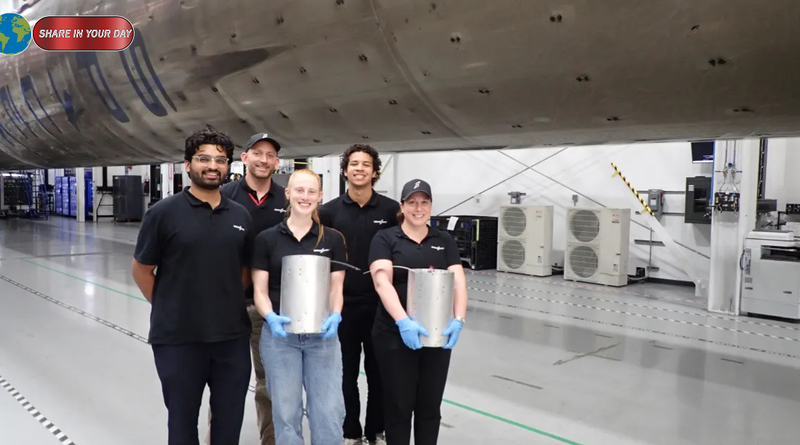
Orbital Semiconductor Factory: Besxar’s Bold Space Plan
The idea of an orbital semiconductor factory is moving from science fiction toward an early-stage engineering experiment. Besxar, a startup founded by former OpenAI staffer Ashley Pilipiszyn, is developing small manufacturing systems designed to produce semiconductor materials in the vacuum of space. The company has already begun testing its technology aboard SpaceX Falcon 9 missions. TTechCrunch
The concept is based on a deceptively simple argument: some of the biggest challenges facing advanced semiconductor manufacturing on Earth may be easier to solve by moving parts of the production process into orbit.
Traditional chip fabrication requires extremely controlled environments. Even microscopic particles can contaminate wafers and ruin delicate manufacturing processes. That is why semiconductor fabs on Earth require sophisticated clean rooms, filtration systems, temperature controls and other expensive infrastructure.
Besxar believes the vacuum of space could naturally provide one of those critical conditions.
Instead of spending enormous sums creating a perfect vacuum on Earth, the startup wants to use the environment that already exists above the atmosphere.
What Is an Orbital Semiconductor Factory?
An orbital semiconductor factory is essentially a manufacturing facility designed to operate in space rather than on Earth.
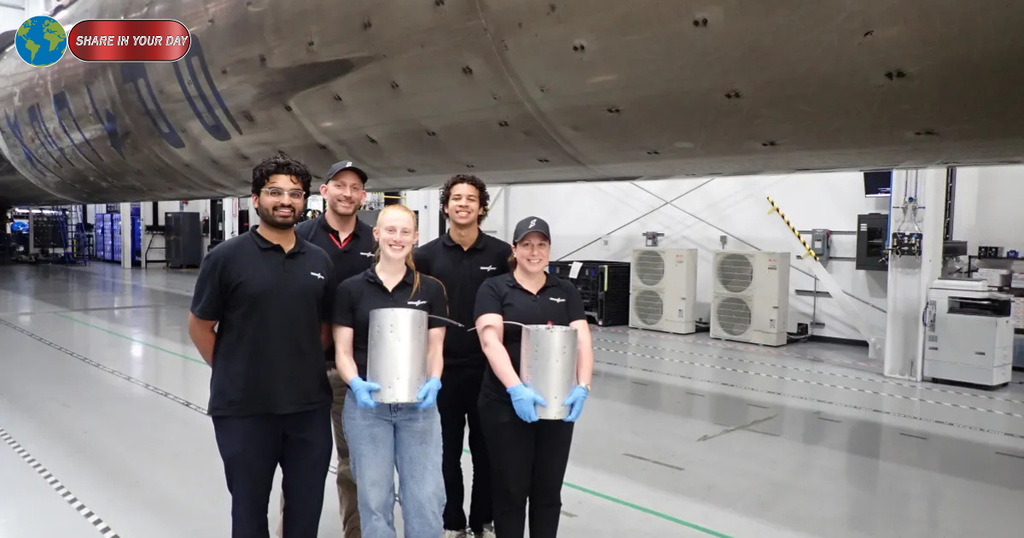
Besxar’s approach is still at the experimental stage. The company is not yet operating a full-scale chip fabrication plant in orbit. Instead, it is developing small spacecraft-like containers called “fabships” that can carry semiconductor materials into space and expose them to the orbital environment. TTechCrunch
The first two Besxar fabships reportedly flew aboard a SpaceX Starlink mission in July.
Their initial purpose was relatively narrow but important. The company wanted to determine whether the containers could survive launch, protect wafer samples from contamination and successfully expose the materials to the vacuum of space.
According to Besxar founder Ashley Pilipiszyn, the initial experiment achieved those objectives, although one canister experienced a flight-data-system malfunction that the company is investigating. TTechCrunch
That makes the experiment less about producing finished computer chips today and more about proving that manufacturing processes can eventually be performed reliably in orbit.
Why Make Semiconductors in Space?
The biggest argument behind the orbital semiconductor factory concept is the unique physical environment of space.
On Earth, semiconductor manufacturers have to fight against contamination. Dust and microscopic particles can damage wafers during production, forcing factories to create highly controlled clean-room environments.
Space provides an enormous natural vacuum.
Besxar’s strategy is to use that environment rather than recreate it artificially.
Pilipiszyn told TechCrunch that the company believes it can become more cost-effective to take manufacturing processes to an environment where the desired physics already exists instead of trying to reproduce those conditions on Earth. TTechCrunch
That does not mean manufacturing in space is automatically cheap.
Getting equipment into orbit remains expensive. Returning products to Earth is another major challenge. Equipment must also survive launch vibrations, radiation and the difficult transition between Earth and space.
However, Besxar argues that rapidly reusable rockets could eventually change that equation.
SpaceX Falcon 9 Becomes Part of the Experiment
SpaceX’s Falcon 9 is central to Besxar’s early development strategy.
The reason is straightforward: Falcon 9 is one of the most frequently flown orbital rockets in operation. TechCrunch reported that Falcon 9 boosters completed 163 round trips in the previous year and had already flown more than 100 times during the current year at the time of publication. TTechCrunch
That flight frequency gives companies like Besxar something extremely valuable: repeated access to space.
Instead of waiting for a dedicated spacecraft, Besxar can potentially attach relatively small experimental systems to existing missions.
The strategy also reduces risk.
A full-scale orbital semiconductor manufacturing platform would require significantly more hardware, money and engineering. By beginning with small payloads, Besxar can test individual manufacturing steps before attempting a much larger system.
The company reportedly plans to continue experimenting over approximately the next two years.
Besxar Wants to Build Larger Fabships
The first experiments are only the beginning.
Besxar plans to gradually increase the complexity of its orbital manufacturing process. The next steps include heating wafers and depositing one material onto them. Eventually, the company wants to deposit multiple materials and move closer to producing qualification samples. TTechCrunch
This incremental strategy is important.
Manufacturing advanced semiconductor materials is an extremely complicated process. Demonstrating that a wafer can survive a trip to orbit is one challenge. Performing precise manufacturing steps in space is another.
The company therefore has to establish that each stage works reliably before combining the processes into a larger manufacturing system.
If those experiments succeed, the eventual objective is to fly larger fabrication systems.
Besxar sees SpaceX’s Starship as a potential platform for that future stage.
Starship Could Change the Economics
The future of an orbital semiconductor factory may depend heavily on the development of large reusable rockets.
SpaceX’s Starship is particularly important because it is designed to carry substantially larger payloads than Falcon 9.
Besxar initially approached SpaceX several years ago about using Starship for its technology. The startup ultimately decided to begin with payload opportunities on Falcon 9 while it developed and de-risked its technology. TTechCrunch
That decision reflects one of the biggest challenges facing space manufacturing.
Small experiments can be launched relatively easily through rideshare opportunities. But commercial manufacturing requires volume.
A company cannot build a major business around returning a handful of wafers to Earth at a time.
Besxar therefore needs launch costs to decline dramatically while available payload capacity increases.
Starship could eventually provide that combination if it becomes operational at the scale SpaceX intends.
The Biggest Challenge Is Bringing Products Back
The vacuum of space may solve one manufacturing problem, but it creates another.
A factory in orbit still needs to send its products back to customers on Earth.
That is a major logistical hurdle.
Besxar will need reliable systems capable of protecting semiconductor materials during atmospheric reentry and recovery. The economics will also depend on how much material each mission can return.
The company expects its manufacturing capacity to eventually grow from hundreds to thousands of wafers per fab, according to TechCrunch. TTechCrunch
That is a dramatic increase compared with the tiny experimental payloads being tested today.
The economics will only work if transportation becomes inexpensive and frequent enough.
In other words, Besxar’s manufacturing technology and the rocket industry are closely connected.
Besxar Is Not Alone
Besxar is part of a broader effort to use space for advanced manufacturing.
Other companies, including United Semiconductors and Space Forge, are also exploring ways to take advantage of the space environment for semiconductor production and related applications. TTechCrunch
The attraction is not limited to vacuum conditions.
Researchers and companies have long investigated whether microgravity and other aspects of the space environment could produce materials with properties that are difficult to achieve on Earth.
For semiconductor manufacturing, even relatively small improvements in material quality could have significant value if they translate into better-performing components.
That could be especially relevant for industries demanding highly efficient electronics.
What Kind of Chips Could Benefit?
Besxar is not positioning its technology as a replacement for every semiconductor factory on Earth.
Instead, the company wants to focus on specialized materials that could serve important applications.
The startup ultimately hopes to supply leading chipmakers with wafers used to manufacture advanced chips involved in regulating electrical power.
Potential applications include data centers, robots and electric vehicles. TTechCrunch
Those markets are expanding rapidly.
Data centers are consuming increasing amounts of electricity as artificial intelligence workloads grow. Meanwhile, robotics and electric vehicles require increasingly sophisticated power-management technologies.
If space-based manufacturing can produce higher-quality semiconductor materials at a competitive price, specialized applications could potentially become the first commercial market.
The AI Connection Is Hard to Ignore
Besxar’s origins also highlight the connection between artificial intelligence and the new space economy.
Pilipiszyn previously worked at OpenAI before founding the startup. Her company is now targeting semiconductor manufacturing at a time when demand for computing infrastructure is exploding.
AI systems require enormous quantities of advanced hardware.
Data centers need processors, memory and power-management components capable of operating efficiently under intense workloads. That creates pressure throughout the semiconductor supply chain.
An orbital semiconductor factory could eventually become another tool for addressing specialized parts of that supply chain.
However, it is far too early to conclude that space manufacturing will solve the semiconductor industry’s broader capacity challenges.
The technology must first demonstrate reliable production, consistent quality and commercially viable economics.
The Two-Year Test Could Be Crucial
Besxar’s next two years could determine whether the concept progresses beyond an intriguing experiment.
The company needs to demonstrate that it can repeatedly manufacture increasingly sophisticated materials in orbit.
The process also has to survive transportation.
A successful system must withstand launch, operate in space, maintain extremely clean manufacturing conditions and eventually return useful products to Earth.
Every one of those steps creates opportunities for failure.
The startup’s first mission already demonstrated that unexpected problems can occur. One of its initial canisters experienced a flight-data-system malfunction even though the overall experiment met its primary objectives. TTechCrunch
That is exactly why incremental testing matters.
The Future Could Be a New Kind of Factory
If Besxar succeeds, the definition of a factory could change.
For centuries, manufacturing has generally happened on land, close to energy sources, workers, transportation networks and customers.
Space manufacturing reverses that model.
Instead of bringing the environment into a factory, companies would send factories into an environment that provides useful physical conditions naturally.
That could eventually create a new category of industrial infrastructure in orbit.
The model would not necessarily replace terrestrial manufacturing. Instead, it could complement existing factories by producing specialized materials that are difficult or expensive to manufacture on Earth.
The long-term vision could therefore involve a hybrid supply chain, with raw materials and components moving between Earth and orbit.
Rocket Reusability Is the Key
The success of an orbital semiconductor factory may ultimately depend as much on rockets as semiconductor technology.
Besxar can develop an excellent manufacturing process, but it still needs affordable transportation.
Falcon 9 already provides a relatively mature transportation system, allowing Besxar to conduct small-scale experiments.
But large-scale manufacturing will require much greater payload capacity and significantly lower transportation costs.
That is why Starship matters so much to the company’s long-term plans.
Other reusable launch providers could also become important. TechCrunch identified companies such as Rocket Lab and Stoke Space as potential participants in the emerging next-generation launch market. TTechCrunch
Competition among reusable rockets could eventually benefit space manufacturers by creating more launch capacity and reducing transportation costs.
A Risky Idea With Potentially Huge Rewards
The concept of manufacturing semiconductor materials in orbit remains highly speculative.
There is no guarantee that Besxar will develop a commercially viable factory. The company still needs to solve manufacturing, transportation, quality-control and economic challenges.
Yet the experiment is significant because it tests a fundamentally different approach to industrial production.
Rather than continuing to build ever more complicated clean-room infrastructure on Earth, Besxar is asking whether some manufacturing processes should simply be moved into space.
Its early Falcon 9 experiments provide a practical starting point.
If the company can progress from tiny test canisters to reliable production systems, and if reusable rockets make orbital transportation inexpensive enough, the economics of space manufacturing could look very different in the future.
For now, Besxar’s orbital semiconductor factory is still an ambitious work in progress.
But the company’s strategy illustrates a broader shift in the space industry. Rockets are increasingly becoming transportation infrastructure rather than one-time scientific instruments.
And once access to orbit becomes routine enough, the next question is no longer simply what humans can launch into space.
It is what humans can manufacture there.
Image ALT Text
Orbital semiconductor factory developed by Besxar using SpaceX Falcon 9 launches
Suggested Image Caption
Besxar is testing small “fabships” designed to expose semiconductor materials to the vacuum of space as a step toward orbital manufacturing.
Suggested External Links
Internal Link Recommendations
Add 2–3 relevant links from your own website using natural anchor text such as:
- SpaceX Starship explained
- The future of semiconductor manufacturing
- AI chip manufacturing and the global semiconductor industry
The article is structured for the “orbital semiconductor factory” keyword while avoiding excessive repetition. Since you haven’t provided your target domain yet, the internal links are recommendations rather than invented URLs.