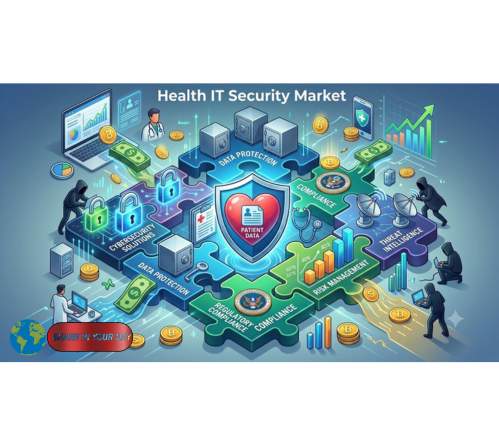
Health IT Security Market Poised for Major Expansion
The Health IT Security Market is entering a period of sustained expansion as healthcare providers accelerate digital transformation while facing increasingly sophisticated cyber threats. Market.us estimates that the global market will grow from $16.5 billion in 2024 to approximately $67.3 billion by 2034, representing a compound annual growth rate (CAGR) of 15.1% during the forecast period.
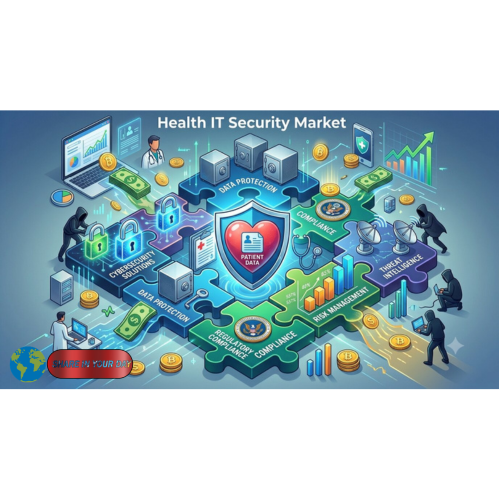
The growth reflects a fundamental shift in healthcare technology. Hospitals, clinics, insurers and other healthcare organizations now depend heavily on electronic health records, cloud platforms, telemedicine, connected medical devices and digital communication systems.
These technologies have improved access to information and made healthcare operations more efficient. At the same time, they have expanded the number of systems, devices and endpoints that attackers can target.
Cybersecurity is therefore becoming an essential part of healthcare infrastructure rather than simply an IT function.
Rising Cyber Threats Push Healthcare Security Spending
One of the strongest drivers of the health IT security market is the growing frequency and potential impact of cyberattacks against healthcare organizations.
Healthcare providers store valuable information, including names, addresses, medical histories, insurance details and other sensitive records. This makes healthcare systems attractive targets for cybercriminals.
The scale of the problem remains significant in 2026. TechTarget reported that more than 19 million individuals had been affected by healthcare data breaches reported to the U.S. Department of Health and Human Services Office for Civil Rights during the first half of the year. Hacking and IT incidents represented the overwhelming majority of reported cases during that period.
Another industry analysis found that healthcare organizations experienced an average of 2.3 ransomware attacks per day during the first half of 2026. The number of recorded attacks reached 410, up nearly 14% compared with the second half of 2025.
For hospitals, the consequences can extend well beyond stolen information.
A successful attack can interrupt patient services, delay administrative processes, disrupt medical systems and create significant recovery costs. In healthcare environments, where many operations run around the clock, even a temporary technology outage can create serious operational challenges.
Digital Healthcare Creates a Larger Attack Surface
The rapid adoption of digital healthcare technologies is another major factor supporting market growth.
Electronic health records have become central to modern healthcare operations. Telehealth platforms allow clinicians to interact with patients remotely. Cloud systems enable organizations to store and share information across locations. Connected medical devices can continuously transmit patient data.
Each development creates additional opportunities for healthcare organizations to improve services. However, each also introduces new security requirements.
Market.us identifies the growing use of digital healthcare solutions, including electronic health records, telemedicine and mobile health applications, as important factors behind increasing demand for health IT security.
The growing number of connected devices is particularly important.
Medical equipment increasingly communicates with hospital networks and other digital systems. If these devices are inadequately protected, attackers may potentially use them as entry points into broader healthcare infrastructure.
As a result, organizations are increasingly looking beyond traditional antivirus software and firewalls. Modern healthcare security strategies can include identity management, encryption, endpoint protection, network monitoring, intrusion detection and incident response.
Products Remain a Major Market Segment
According to Market.us, products represented 58.2% of the health IT security market in 2024, making them the leading product-type segment.
This category includes a broad range of technologies designed to prevent unauthorized access, detect threats and protect sensitive information.
Important solutions include:
- Antimalware and antivirus systems
- Identity and access management
- Firewalls and unified threat management
- Intrusion detection and prevention systems
- Encryption and data loss prevention
- Risk and compliance management
These technologies address different parts of the healthcare security challenge.
Identity and access management, for example, helps organizations control who can access sensitive systems and information. Encryption can protect data from unauthorized use if information is intercepted or improperly accessed.
Intrusion detection and prevention technologies can identify suspicious network activity, while data loss prevention systems are designed to reduce the risk of sensitive information leaving protected environments.
The combination of these technologies is increasingly important because healthcare organizations rarely operate a single, isolated IT system.
Cloud Security Becomes Increasingly Important
Cloud computing is transforming healthcare IT infrastructure and is also reshaping cybersecurity requirements.
Market.us reports that on-cloud deployment accounted for 62.5% of the market in 2024.
Cloud platforms can offer healthcare organizations greater scalability and accessibility. They can also reduce the need to maintain extensive physical infrastructure.
However, moving healthcare workloads to the cloud does not eliminate cybersecurity risks.
Healthcare organizations must still manage user identities, permissions, data encryption, application security, monitoring and regulatory compliance. Misconfigured systems or compromised credentials can create significant exposure.
The broader healthcare cybersecurity industry is also moving toward more sophisticated cloud-based protection. Fortune Business Insights, for example, expects solutions and managed security services to remain important components of healthcare cybersecurity as organizations respond to ransomware, digital identity risks and increasingly connected environments.
The shift toward cloud infrastructure therefore creates opportunities for security providers that can combine scalability with strong data protection and compliance capabilities.
Network Security Leads Healthcare Applications
Network security was the leading application segment in Market.us’s analysis, accounting for 44.5% of revenue in 2024.
The position of network security reflects the growing complexity of healthcare IT environments.
Hospitals and healthcare networks connect computers, servers, medical devices, cloud applications, mobile devices and external partners. Protecting communication between these systems is increasingly difficult as the number of connections grows.
Network security technologies can help organizations monitor traffic, identify suspicious behavior and prevent unauthorized access.
The need is particularly important as healthcare providers exchange increasing volumes of information between hospitals, laboratories, insurers, pharmacies and technology vendors.
A strong network security strategy can therefore become an important layer in protecting both patient information and clinical operations.
Healthcare Providers Represent the Largest End-User Segment
Healthcare facility providers accounted for 59.3% of the health IT security market in 2024, according to Market.us.
Hospitals and other healthcare facilities have several characteristics that make cybersecurity especially important.
First, they manage large quantities of sensitive patient information. Second, they operate complex technology environments containing numerous connected systems. Third, many clinical services cannot simply stop when an IT problem occurs.
This combination creates a strong incentive to invest in cybersecurity.
Healthcare organizations are also under increasing pressure to comply with privacy and security requirements. Regulatory frameworks can require organizations to implement safeguards around sensitive information, manage access and maintain appropriate security controls.
As healthcare becomes increasingly digital, these requirements are likely to remain an important component of technology investment decisions.
North America Holds a Leading Position
North America remains a major regional market for health IT security.
Market.us estimates that North America held approximately 39.9% of the global market in 2024, with revenue of about $6.6 billion.
The region benefits from advanced healthcare infrastructure, widespread adoption of electronic health records and substantial investment in cybersecurity technologies.
The United States also has a large and highly interconnected healthcare ecosystem. Hospitals, insurers, pharmaceutical companies, medical technology providers and healthcare technology vendors exchange enormous quantities of information.
That complexity creates both opportunities and risks.
Other research also identifies North America as the largest regional market for healthcare cybersecurity. Fortune Business Insights estimated that the region accounted for 38.5% of the global healthcare cybersecurity market in 2025.
At the same time, Asia-Pacific is emerging as an important growth region as healthcare digitization accelerates.
AI Could Transform Healthcare Cybersecurity
Artificial intelligence is expected to play an increasingly important role in health IT security.
AI can help security teams analyze large quantities of network and system information, identify unusual behavior and prioritize potential threats. This could become especially valuable for healthcare organizations that have limited cybersecurity personnel but operate large and complex technology environments.
The relationship between AI and cybersecurity is not entirely one-sided, however.
Attackers can also use AI to improve phishing campaigns, automate reconnaissance and develop more convincing social-engineering attacks.
Deloitte highlighted this emerging dual role in its 2026 healthcare outlook, noting that AI can expand the cyberattack surface while also creating new defensive capabilities for healthcare organizations.
Healthcare security teams will therefore need to consider both the opportunities and risks created by AI.
Data Protection Is Becoming a Strategic Priority
Healthcare cybersecurity is increasingly being viewed as a business and patient-safety issue rather than a narrow technology concern.
A cyberattack can expose personal information, disrupt operations and damage patient confidence. In some circumstances, technology failures can also affect the delivery of healthcare services.
This makes resilience increasingly important.
Organizations are investing in multiple layers of defense rather than relying on one security product. These layers can include identity and access management, network security, endpoint protection, encryption, cloud security, backup systems, employee training and incident response planning.
The objective is not simply to prevent every attack. It is also to ensure that organizations can detect, contain and recover from incidents when they occur.
Healthcare Security Vendors Face Growing Opportunities
The expected expansion of the health IT security market creates opportunities for established cybersecurity companies and specialized healthcare technology providers.
Market.us identifies companies including Trend Micro, Symantec, Northrop Grumman, McAfee, Intel, IBM, Cisco and AO Kaspersky Lab among the major players in the market.
Competition is likely to focus increasingly on integrated security platforms rather than isolated products.
Healthcare organizations need technologies that can operate across cloud environments, traditional infrastructure, endpoints, medical devices and applications. Vendors that can combine threat detection, identity protection, compliance management and automated response could be well positioned as healthcare security requirements become more sophisticated.
The competitive landscape is also changing as cybersecurity companies expand through partnerships, acquisitions and new AI capabilities.
What the Market Outlook Means for Healthcare Organizations
The projected growth of the Health IT Security Market highlights a broader transformation taking place across the healthcare industry.
Digital technologies are no longer optional additions to healthcare operations. They are becoming fundamental infrastructure.
That means cybersecurity must evolve at the same pace.
Healthcare organizations will likely continue prioritizing technologies that protect patient information while maintaining access to critical systems. Cloud security, identity management, network protection, endpoint security and AI-powered threat detection are expected to remain important areas of investment.
The increasing frequency of cyber incidents also means that security planning will need to include response and recovery.
A healthcare organization that can quickly detect an attack, isolate affected systems and restore critical services may be better positioned to reduce operational disruption.
Conclusion
The global Health IT Security Market is positioned for substantial growth as healthcare digitization and cyber threats advance simultaneously.
Market.us projects the market to rise from $16.5 billion in 2024 to $67.3 billion by 2034, representing a 15.1% CAGR.
The expansion is being driven by multiple forces, including the adoption of electronic health records, cloud computing, telehealth, connected medical devices and mobile healthcare technologies. At the same time, ransomware, data breaches and increasingly sophisticated cyberattacks are forcing healthcare organizations to strengthen their defenses.
North America currently holds a leading position, while cloud-based security, network protection and healthcare facility solutions represent important areas of demand.
Looking ahead, artificial intelligence could further reshape the sector by improving threat detection and response while simultaneously introducing new risks.
As healthcare becomes more connected, protecting digital infrastructure will become inseparable from protecting patient information, operational continuity and trust. That makes health IT security one of the increasingly important technology priorities for the global healthcare industry.