Bill Gates AI Warning Marks a Major Shift in His Outlook
The latest Bill Gates AI warning marks a striking change in tone from one of technology’s longtime optimists. The Microsoft co-founder and philanthropist says he has become increasingly worried that artificial intelligence could cause serious harm to workers, children and society if governments fail to respond quickly.
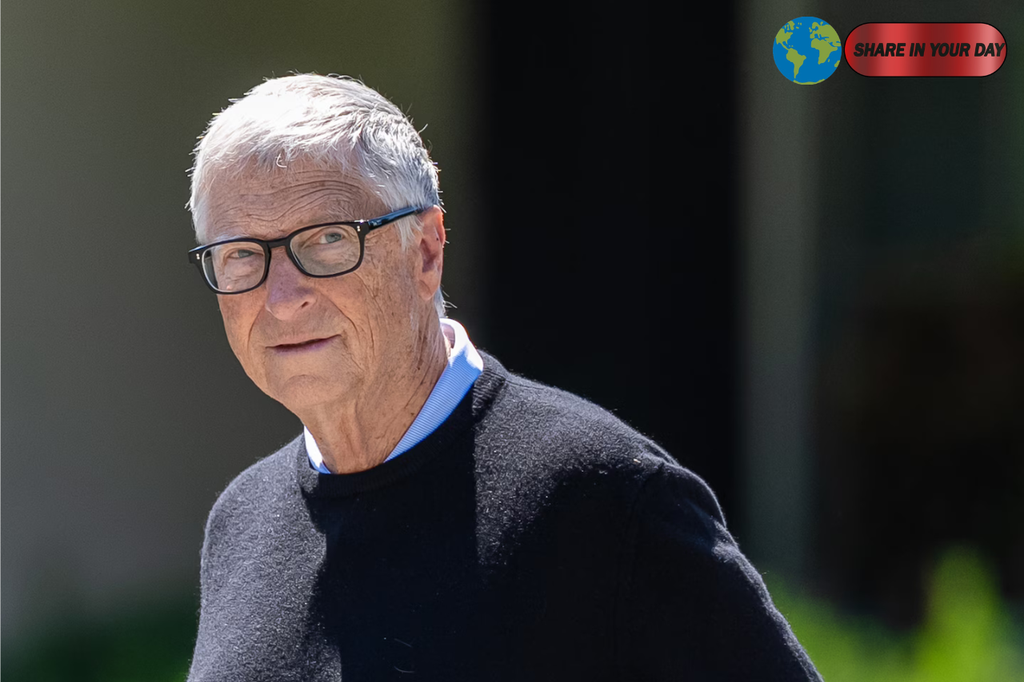
In a new essay published Wednesday, Gates argues that AI is advancing faster than policymakers and society are preparing for its consequences. He says he has reached a point where, for the first time in his life, he wishes a new technology would develop more slowly.
Gates has spent years emphasizing AI’s enormous potential. He previously envisioned the technology helping improve health care, education, government services and scientific discovery.
Now, however, his focus has shifted.
Instead of asking only how AI can accelerate progress, Gates is increasingly asking what happens when its capabilities move faster than society’s ability to manage them.
Bill Gates AI Warning Focuses on Three Major Risks
Gates’ concerns fall into three broad categories: security threats, disruption to employment and potential damage to children’s well-being.
The security risks include AI-assisted hacking, fraud and biological threats. Gates said the recent improvement in AI’s ability to perform sophisticated software and cyber tasks has been particularly alarming.
He described some recent advances in AI-enabled cyberattacks as extraordinary and said the technology’s development has moved beyond what he expected.
The second concern is employment.
Gates believes AI will eventually affect far more than traditional office jobs. As AI systems become more capable and robots become cheaper and more dexterous, he expects automation to reach blue-collar occupations as well.
The third concern involves children.
Gates worries that AI could interfere with learning, critical thinking and human relationships if young people become too dependent on intelligent digital systems.
Together, those concerns explain why his position has become much more urgent.
Why Gates Is Suddenly More Worried About AI
For years, Gates generally viewed technological disruption as something humanity could eventually manage.
His optimism has not disappeared entirely. Instead, he now believes the speed of AI development is creating a fundamentally different challenge.
Previous technological revolutions often unfolded over decades or generations. That gave workers, schools, governments and businesses more time to adjust.
AI could move much faster.
Gates told The Washington Post that he has become concerned after seeing AI improve rapidly in areas such as software coding and cyber operations. He also argues that governments have not kept pace with those developments.
That gap worries him.
If AI capabilities improve every few months while legislation and institutions take years to respond, policymakers could find themselves reacting to problems only after they have already become widespread.
Gates’ message is therefore not simply that AI is dangerous.
It is that society may be moving too slowly to prepare for it.
AI Could Transform the Workplace
One of the most important parts of Gates’ warning involves employment.
The debate over AI and jobs has intensified as increasingly capable systems begin handling tasks once performed exclusively by people.
Gates believes the disruption could eventually extend into both white-collar and blue-collar work.
Office workers are already seeing AI perform tasks involving writing, coding, analysis and research. But Gates believes physical robots could eventually bring similar disruption to industries such as construction, hospitality and other hands-on professions.
That could create a much broader economic transition.
The Washington Post has separately reported that economists and technology leaders are increasingly debating whether AI could deepen inequality, particularly if businesses capture most of the economic benefits while workers experience weaker bargaining power.
Gates’ concern is that society cannot simply assume every displaced worker will move seamlessly into a new occupation.
Some people will adapt.
Others may not.
And the speed of the transition could determine how severe the social consequences become.
Gates Proposes “Human Reserved” Jobs
One of the most unusual ideas in Gates’ new essay is the concept he calls “Human Reserved.”
The basic idea is straightforward: some jobs should remain primarily or exclusively human even if AI becomes technically capable of performing them.
Gates compares the concept to nature reserves.
Society could have the technological ability to automate certain activities, but choose not to because keeping humans involved has a greater social value.
Caregiving is one example.
A machine might eventually perform many practical tasks associated with caring for another person. But Gates argues that human compassion, emotional understanding and relationships have value that cannot be measured simply by efficiency.
The same principle could potentially apply to other professions where trust and human connection are central.
Gates believes society should start debating those boundaries before automation makes the decisions for us.
The proposal is controversial because it raises a difficult question:
If AI can do a job better or cheaper, should humans still have the right to do it?
Gates believes the answer should sometimes be yes.
Bill Gates Wants Governments to Act
Another major part of the Bill Gates AI warning is his criticism of government preparedness.
Gates argues that the AI industry cannot regulate itself effectively enough.
He wants governments to establish stronger institutions capable of addressing AI’s impact across national security, employment, education, taxation and health.
He also supports international cooperation.
AI systems do not respect national borders, and the most serious risks could spread globally. That makes purely national regulation difficult.
Gates has even discussed international oversight modeled in part on organizations that monitor nuclear activity and international aviation safety. Reuters reported that he is seeking discussions with Chinese President Xi Jinping about possible global approaches to managing AI risks.
That would represent a significant expansion of the AI policy debate.
Instead of treating artificial intelligence as simply another technology sector, Gates wants governments to treat it as an issue involving national security, economic stability and social policy.
Gates Also Floats AI Taxes
Gates’ economic proposals are equally controversial.
One idea involves taxing AI-related economic activity in order to help society manage worker displacement.
The argument is that if companies gain enormous financial benefits from replacing human labor with AI systems and robots, some of that wealth could be redirected toward worker retraining, social programs and other measures.
Gates has also questioned whether existing tax systems unintentionally encourage companies to automate workers.
The idea is not entirely new.
Economists and politicians have debated robot taxes and other forms of automation taxation for years. But Gates’ endorsement could give the concept additional attention because of his background in technology and business.
The challenge is determining how such a tax would work.
Governments would have to distinguish between productive AI investment and automation that directly eliminates jobs. They would also have to avoid creating incentives that push companies or AI development to other countries.
That makes the proposal politically and economically complicated.
Children Could Face a Different AI Problem
Gates’ concerns about children go beyond traditional fears about screen time.
He worries that increasingly capable AI systems could change how young people learn and interact with other humans.
AI can provide instant explanations, generate answers and act as a personalized tutor. Those capabilities could be enormously valuable.
But there is a potential downside.
If children rely on AI to perform too much of their thinking, they could have fewer opportunities to develop problem-solving skills independently.
Gates is particularly concerned about the possibility that AI could weaken human relationships.
That concern is becoming more prominent as AI systems evolve from simple question-and-answer tools into conversational assistants and digital companions.
The Washington Post has reported separately on concerns surrounding AI systems and children, including the possibility that commercial AI products could influence young users in ways they do not fully understand.
The challenge is therefore not simply keeping children away from AI.
It may be teaching them how to use it without allowing it to replace important parts of childhood development.
AI Safety Is Moving Faster Than Regulation
The biggest theme running through Gates’ essay is the widening gap between technological progress and public policy.
AI companies can release increasingly capable systems in months.
Government institutions often take years to develop new regulations.
That creates a structural problem.
By the time policymakers understand one generation of AI systems, the technology may have already moved to another level.
Gates believes that approach is no longer sufficient.
He argues that governments need specialized institutions and experts who can respond continuously as AI develops.
His proposal would bring together elected officials, technical experts and citizens to help determine how AI should be governed.
Such a system would also need international cooperation because companies and researchers operate across borders.
Silicon Valley May Not Agree With Gates
Gates’ proposals are likely to face resistance from parts of Silicon Valley.
Many technology executives argue that excessive regulation could slow innovation and allow rival countries to gain an advantage.
The Trump administration has also faced competing pressures over AI regulation, balancing concerns about security and harmful uses against a desire to maintain U.S. leadership in artificial intelligence.
That creates a difficult political equation.
Regulate too aggressively, and governments could slow beneficial innovation.
Regulate too little, and society could face consequences that are difficult to reverse.
Gates is essentially arguing that the current balance is too heavily weighted toward speed.
Gates Still Believes AI Can Do Extraordinary Good
Despite the alarming tone, Gates has not become an AI opponent.
That distinction is important.
He continues to believe that artificial intelligence could dramatically improve health care, education and public services.
He has also pointed to applications in poorer countries, where AI can help farmers and others who may not have access to expensive traditional expertise.
His concern is therefore not that AI should stop.
It is that society needs to make sure the benefits are distributed widely while limiting the damage.
Gates describes the central challenge as achieving a situation in which the benefits of AI greatly outweigh the harms.
That is a much more complicated position than simply supporting or opposing artificial intelligence.
Why Bill Gates’ Change of Heart Matters
The significance of the Bill Gates AI warning comes partly from who is delivering it.
Gates is not an outsider criticizing technology from a distance.
He helped build one of the world’s most influential technology companies and spent decades watching personal computing transform the global economy.
His historical optimism toward innovation makes his current concerns more notable.
He is effectively saying that his assumptions about the pace of technological change may have been too optimistic.
That does not prove his predictions about AI will come true.
But it does make his warning difficult to dismiss.
The AI debate is increasingly moving away from whether the technology will be powerful.
The question is becoming how society handles that power.
A New Phase in the AI Debate
Gates’ essay arrives as the debate around artificial intelligence enters a more complicated phase.
The early AI conversation focused heavily on excitement.
Chatbots could write essays.
AI could create images.
Coding assistants could accelerate software development.
Researchers could use AI to analyze enormous amounts of information.
Now the discussion is increasingly about consequences.
Who benefits?
Who loses?
What happens to workers?
How should children interact with AI?
Who is responsible when an AI system causes harm?
How should governments regulate systems that change faster than traditional laws?
Those questions do not have simple answers.
Gates’ proposals will undoubtedly generate debate, particularly his ideas about human-reserved jobs and AI taxation.
But his larger argument is difficult to ignore: the transition is already underway, and preparation cannot wait until the consequences become obvious.
Final Takeaway
The Bill Gates AI warning represents one of the clearest shifts yet from optimism toward caution among major technology figures.
Gates still believes artificial intelligence could improve millions of lives. However, he is increasingly concerned that AI’s rapid development could create serious problems for workers, children and society before governments are prepared to respond.
His proposed solutions include stronger government oversight, international cooperation, possible AI-related taxes and “Human Reserved” jobs that would deliberately remain in human hands.
The most important point may be that Gates is not calling for an end to AI.
He is calling for preparation.
The technology may continue advancing at extraordinary speed. The question now is whether institutions, businesses and society can adapt quickly enough to ensure that progress does not come at an unacceptable human cost.
For someone who spent decades believing innovation could solve almost any problem, Gates’ new caution is a powerful signal.
The AI era is arriving.
And according to Gates, the time to decide how it should work for humanity is now.
Suggested External Sources
- The Washington Post — Bill Gates AI warning
- Reuters — Bill Gates on AI policy and Xi Jinping
- The Washington Post — AI and inequality
Internal link suggestions: Link to your existing articles about artificial intelligence, AI job displacement, Bill Gates, technology regulation, AI safety and the future of work.
Image ALT Text: Bill Gates AI warning about artificial intelligence risks to workers, children and society