Iran War Escalates as Tanker Attacks Raise New Fears for Strait of Hormuz
Tensions surrounding the Iran war intensified Friday as another tanker was reported hit in the Strait of Hormuz, while President Donald Trump said he was considering a major decision over whether to escalate the conflict with Iran.
The latest maritime incident added to growing concerns over commercial shipping through one of the world’s most important energy corridors. The United Kingdom Maritime Trade Operations center said a tanker was struck by an unidentified projectile, causing a fire that was later extinguished. The crew was reported safe, although the environmental consequences of the incident remained unclear.
Iran’s Islamic Revolutionary Guard Corps separately said it had struck a Togo-flagged vessel that it accused of making an unauthorized crossing of the waterway. It was not immediately clear whether the Iranian statement referred to the same ship identified by the British maritime agency.
The reports came after another tanker was reported to have been hit while traveling out of the Strait of Hormuz on Sept. 16. The incidents have further complicated efforts to maintain commercial traffic through the narrow passage, where Iran has increasingly demanded that ships obtain permission and follow routes approved by its authorities.
Trump Signals Possible Escalation
The maritime developments coincided with increasingly forceful comments from Trump about the future of the conflict.
Speaking to Axios, Trump said he had a major decision ahead concerning whether to launch a broader assault aimed at Iran’s ruling regime. He made the remarks before an expected meeting with Persian Gulf leaders during next week’s United Nations General Assembly.
Trump also indicated that he wanted to discuss the situation with Gulf governments, several of which host American military forces and have faced Iranian attacks during the conflict. He said he had been protective of those countries and suggested that further military or diplomatic developments remained possible.
The comments come as the conflict, which began after joint U.S. and Israeli attacks on Iran in February, continues with no clear settlement. The confrontation has affected shipping, energy markets and security calculations across the Middle East.
Pressure on Global Oil Supplies
The Strait of Hormuz has become a central concern because of its importance to international energy markets. Any sustained disruption could affect oil shipments and contribute to higher prices around the world.
Saudi Arabia is facing an additional problem after an attack damaged its East-West oil pipeline last week. The pipeline provides an alternative route that allows Saudi crude to reach the Red Sea without passing through Hormuz.
According to Bloomberg reporting cited by CBS News, Saudi state oil company Aramco has told at least two European refining customers that it will not supply them with crude in October. The reported decision follows the pipeline attack and comes as the facility remains offline. Reports also indicated that Saudi crude shipments to India have been affected.
U.S. Energy Secretary Chris Wright has said the pipeline is expected to reopen relatively soon, but the disruption has added to concerns about the resilience of regional oil exports.
The situation is further complicated by fighting involving Yemen’s Iran-backed Houthi movement. The Houthis have expanded their presence along parts of Yemen’s western coast and have threatened shipping routes connected to the Red Sea.
The European Union’s foreign policy chief, Kaja Kallas, described Houthi attacks against Saudi Arabia as unacceptable and said disruptions to Hormuz could have wider economic consequences. She also said Europe was helping protect commercial shipping in the Red Sea.
Pakistan Pledges Support for Saudi Arabia
The growing regional tensions are also putting new pressure on Saudi Arabia’s security partnerships.
Pakistan’s military spokesman, Lt. Gen. Ahmed Sharif Chaudhry, said his country would go to any extent to defend Saudi Arabia against attacks. He said Pakistan’s commitment included protecting the kingdom and the Islamic holy sites in Mecca and Medina.
The comments followed the signing of new defense arrangements involving Pakistan and Saudi Arabia, although officials have not publicly disclosed the full operational details of those agreements.
The security situation has become particularly sensitive following Saudi accusations that the Houthis targeted Mecca. The Houthis denied the allegation.
Iran Faces International Pressure
Alongside the military developments, Washington is continuing its campaign to restrict Iran’s financial networks.
The U.S. State Department announced a reward of up to $15 million for information that could help disrupt financial mechanisms connected to Iran’s Islamic Revolutionary Guard Corps and its Quds Force. The program is seeking information about revenue sources, sanctions-evasion networks, front companies and financial channels allegedly supporting the organization and associated groups.
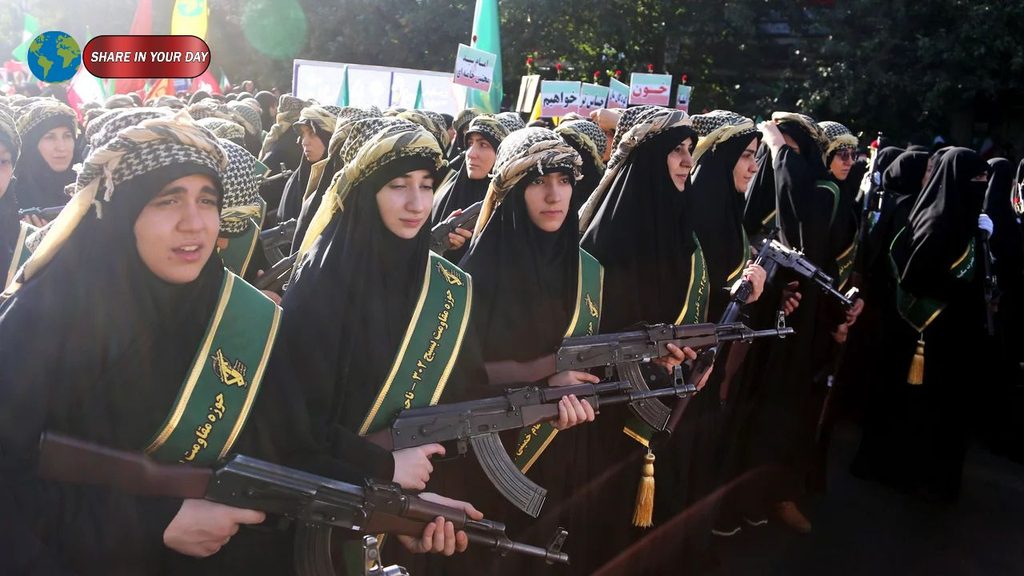
Meanwhile, large demonstrations were held across Iran on Friday in a government-organized display of support for the country amid the continuing conflict. Iranian state media reported hundreds of thousands of participants, while officials said hundreds of thousands had registered for limited military training. The figures could not be independently verified.
The latest developments leave the region facing several overlapping risks: attacks on commercial vessels, disruption of oil infrastructure, fighting involving Iranian-backed groups and the possibility of further U.S. military action.
With tanker traffic under pressure and energy supplies already affected by attacks on alternative routes, the Strait of Hormuz remains one of the most closely watched flashpoints in the conflict.