North Korea Missile Launch Sends Fresh Warning to Washington
A North Korea missile launch on Sunday added another layer of tension to an already difficult relationship between Pyongyang, Washington and Seoul. South Korean officials said North Korea fired two short-range ballistic missiles from its eastern coastal area toward the sea.
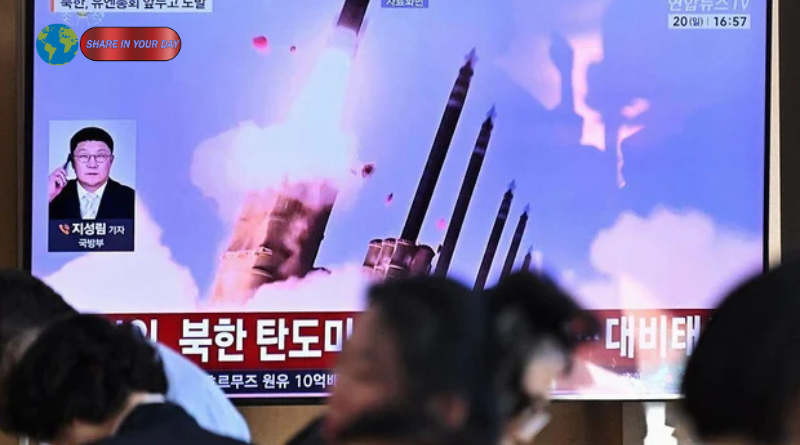
The launches took place about three hours apart from the Wonsan area on North Korea’s east coast. South Korea’s military said the first missile traveled roughly 280 miles, while the second traveled more than 370 miles before falling into the sea.
The latest weapons test comes at a sensitive moment. North Korea has recently reiterated its status as a nuclear-armed state and rejected international pressure over its nuclear weapons program.
The launches also followed weeks of tension surrounding U.S.-South Korean military exercises. Although the Trump administration reduced the scale of a joint drill in an apparent effort to create space for diplomacy, Pyongyang has continued to criticize the exercises.
For Washington and its allies, the latest North Korea missile launch demonstrates that reducing the scale of military exercises has not stopped Pyongyang from conducting weapons tests.
Two Ballistic Missiles Fired From Wonsan
South Korea’s Joint Chiefs of Staff detected two launches from the Wonsan area on Sunday.
According to South Korean authorities, the first missile traveled approximately 450 kilometers. The second covered more than 600 kilometers. Both weapons ultimately landed in waters off North Korea’s eastern coast.
South Korean and U.S. authorities were analyzing the second missile to determine its exact specifications.
The launches were not reported to have caused casualties or damage outside North Korea.
U.S. Indo-Pacific Command said American officials were aware of the missile launches and were consulting with allies and partners. The command assessed that the events did not pose an immediate threat to U.S. personnel or territory or to America’s regional allies.
That assessment is significant because North Korea possesses a wide range of missiles with different capabilities. Short-range systems can primarily threaten targets in South Korea and surrounding areas, while North Korea’s longer-range programs have been designed to potentially reach much farther.
The latest launches were identified as short-range ballistic missiles rather than intercontinental ballistic missiles.
Why North Korea Is Increasing Missile Activity
The North Korea missile launch comes as Pyongyang has stepped up its military demonstrations.
North Korea has repeatedly opposed joint military exercises involving the United States and South Korea. Its government argues that such exercises are preparations for an attack, while Washington and Seoul describe them as defensive measures intended to maintain readiness.
The dispute has persisted for years.
In August, President Donald Trump ordered a reduction in the scale of U.S.-South Korean military exercises, reviving debate over whether a smaller military presence could help create conditions for renewed engagement with Kim Jong Un’s government. Reuters reported that the decision had reopened one of the longstanding disagreements surrounding the U.S.-South Korea alliance.
North Korean officials, however, have continued to criticize the exercises.
Kim Jong Un’s sister, Kim Yo Jong, previously dismissed the reduction in the scale of the drills, arguing that their nature remained provocative. North Korea subsequently carried out additional weapons demonstrations.
The pattern suggests that Pyongyang is using military activity alongside diplomatic messaging.
Kim Jong Un’s Nuclear Position Remains Central
The latest missile launches also come after North Korea reinforced its position that it will continue developing its nuclear capabilities.
Pyongyang has rejected international calls to abandon its nuclear weapons program. The country has also repeatedly described its nuclear arsenal as essential to its national security.
That position presents one of the biggest obstacles to renewed U.S.-North Korean negotiations.
Talks between former President Donald Trump and Kim Jong Un reached an impasse in 2019. Since then, North Korea has continued developing its weapons capabilities while diplomatic engagement has remained limited.
The central disagreement has not fundamentally changed.
The United States and its allies have historically sought the denuclearization of the Korean Peninsula. North Korea, meanwhile, has increasingly described its nuclear weapons as a permanent component of its defense strategy.
That gap makes negotiations particularly difficult.
U.S. Says There Is No Immediate Threat
Despite the latest North Korea missile launch, the United States did not report an immediate threat to American territory.
U.S. Pacific Command said the launches were being monitored and that American officials were consulting with regional allies and partners. The command emphasized the continued U.S. commitment to defending the American homeland and its allies in the region.
The distinction between an immediate military threat and a broader security concern is important.
A short-range missile launched toward the sea may not directly threaten the U.S. mainland. However, repeated launches can provide North Korea with opportunities to test weapons, improve operational procedures and demonstrate military capabilities.
They also create additional pressure on South Korea and Japan.
For Seoul, North Korean short-range missiles represent a direct security concern because many such systems are capable of reaching targets across South Korea.
Japan is also closely involved in monitoring North Korean missile activity because the country lies within the broader regional missile environment.
South Korea Condemns the Launch
South Korean officials condemned the missile tests and called on North Korea to stop launching ballistic missiles.
Ballistic missile launches by North Korea are prohibited under multiple United Nations Security Council resolutions. Those resolutions are part of the international sanctions framework created in response to Pyongyang’s nuclear and missile programs.
South Korea’s government said it was maintaining military readiness while working with the United States and other partners.
The response illustrates the difficult balance facing Seoul.
South Korean President Lee Jae Myung has expressed support for dialogue with North Korea, while the country’s military continues preparing for potential threats from Pyongyang.
That combination of diplomacy and deterrence has remained a central feature of South Korea’s approach to the North.
The Role of U.S.-South Korea Military Exercises
Military exercises have become one of the most persistent sources of tension on the Korean Peninsula.
Washington and Seoul maintain that their exercises help prepare allied forces to respond to a potential North Korean attack. Pyongyang routinely describes them as evidence that the United States and South Korea are preparing for offensive action.
The disagreement creates a cycle.
The United States and South Korea conduct military exercises to demonstrate readiness. North Korea responds with weapons tests or threats. Washington and Seoul then reinforce their security cooperation.
The recent decision to reduce the scale of exercises was therefore closely watched for signs that it could create room for diplomacy.
So far, however, the missile activity suggests that the military component of the relationship remains active.
North Korea’s Message to Washington
The latest North Korea missile launch can also be viewed in the context of Pyongyang’s broader strategy toward Washington.
North Korea has historically used weapons tests to demonstrate capabilities and attract international attention. Missile launches can also provide a way for the government to signal dissatisfaction without directly engaging in military conflict.
The latest launches occurred after North Korean officials criticized U.S.-South Korean military activity.
At the same time, there is no indication from the reported launches that North Korea was preparing for an immediate attack on the United States or its allies.
That distinction matters.
Weapons tests can increase tensions without necessarily signaling an intention to begin a war.
Experts and governments therefore typically examine several factors, including missile type, launch location, flight path, frequency of testing and accompanying statements from North Korean authorities.
A Second Missile Test Within Days
The Sunday launch was not an isolated development.
Reuters reported that the two missiles represented North Korea’s second missile test within a week. The repeated launches came amid heightened tensions involving U.S.-led military activities in the region.
Earlier in September, North Korea also fired several short-range ballistic missiles toward waters off its east coast.
The repeated activity suggests that Pyongyang is maintaining a steady weapons-testing schedule rather than conducting a single isolated demonstration.
North Korea later described one of its recent weapons demonstrations as part of a live-fire drill involving multiple military units and weapon systems, according to reports citing state media.
The frequency of these tests is being closely monitored by South Korea, Japan and the United States.
Russia and China Add Another Layer
North Korea’s growing relationships with Russia and China are also relevant to the wider security environment.
Pyongyang has deepened ties with Moscow in recent years, while maintaining its longstanding relationship with Beijing.
The changing geopolitical environment has complicated efforts to isolate North Korea economically and diplomatically.
North Korea has faced extensive international sanctions over its nuclear and missile programs. However, the effectiveness of those sanctions depends partly on enforcement and cooperation among major powers.
As relations between the United States, Russia and China have become more strained, the broader diplomatic environment surrounding North Korea has also become more complicated.
That could make international efforts to pressure Pyongyang more difficult.
What Happens Next?
The immediate focus will be on how North Korea responds to future U.S.-South Korean military activity and whether Washington or Pyongyang takes steps toward renewed dialogue.
The United States has indicated that it remains committed to its alliances with South Korea and Japan.
At the same time, the Trump administration has previously signaled interest in engaging Kim Jong Un.
North Korea’s position remains more difficult to reconcile with Washington’s traditional demands because Pyongyang continues to emphasize its nuclear weapons program.
The next phase could therefore involve a combination of weapons testing, military signaling and diplomatic messaging.
For South Korea and Japan, the priority will remain monitoring North Korea’s missile capabilities and maintaining coordination with Washington.
For the United States, the challenge is balancing deterrence with its stated interest in diplomacy.
Why the Latest Missile Launch Matters
The North Korea missile launch does not appear to represent an immediate attack on the United States or its allies. U.S. Pacific Command specifically said the launches did not pose an immediate threat based on its current assessment.
Nevertheless, the tests matter because they highlight the continuing gap between military deterrence and diplomacy on the Korean Peninsula.
North Korea continues to develop and test weapons while maintaining its nuclear ambitions. The United States and South Korea continue to emphasize their defensive alliance, even as Washington has experimented with reducing the scale of joint exercises.
The latest launches therefore reinforce a familiar reality: tensions between Pyongyang and Washington remain unresolved.
Whether the next development is another weapons test, a new diplomatic message or an attempt to restart negotiations will depend on decisions made by all sides.
For now, South Korea, the United States and Japan are continuing to monitor North Korea’s military activity closely.