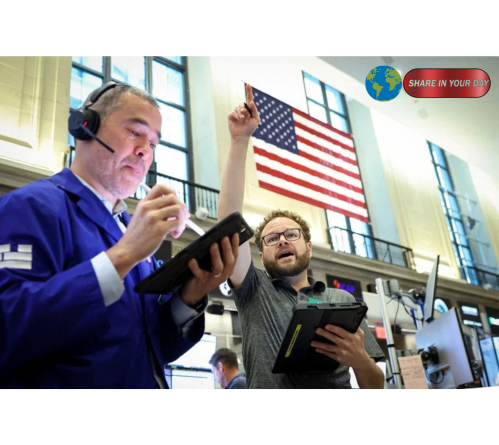
Market Movers: 5 Forces Shaping Stocks Today
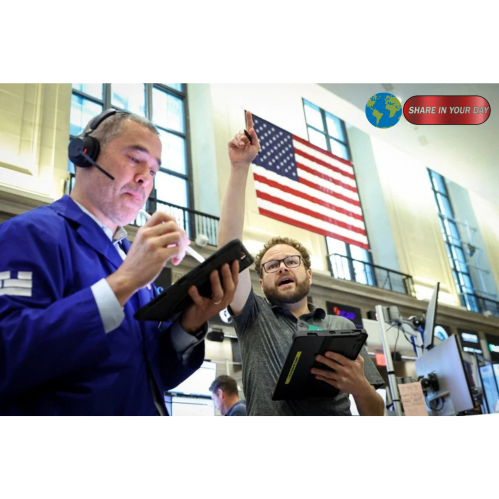
Global markets opened the new trading week with investors balancing two powerful forces: renewed geopolitical risks in the Middle East and continued optimism surrounding artificial intelligence. The latest market movers include intensifying fighting between Houthi forces and Saudi-aligned forces in Yemen, a retreat in oil prices, stronger expectations for technology demand and a proposed U.S.-China mechanism for communicating about serious AI-related risks.
U.S. stock futures moved higher Monday as investors focused on technology shares and signs that oil supplies from the Gulf region were recovering. Dow futures gained about 0.5%, while S&P 500 futures also rose 0.5%. Nasdaq 100 futures climbed about 0.7%, reflecting continued appetite for AI-related stocks.
At the same time, the geopolitical backdrop remains fragile. Fighting in Yemen has intensified around the strategically important Bab el-Mandeb Strait, while fresh threats between the United States and Iran have reinforced concerns about energy security.
The result is a market caught between optimism about technology and economic growth and fear that another escalation in the Middle East could push energy prices higher.
Market Movers: Stocks Start the Week Higher
The first major signal for investors came from U.S. stock futures.
By early Monday trading, Dow futures had risen 239 points, or 0.5%. S&P 500 futures were up 0.5%, while Nasdaq 100 futures advanced 0.7%. The gains suggested that investors were willing to look beyond immediate geopolitical risks and focus on strong demand for technology-related assets.
The previous session on Wall Street had been mixed. The S&P 500 and Nasdaq Composite finished higher, while the Dow Jones Industrial Average slipped.
Technology stocks were again among the strongest performers. Analysts pointed to so-called AI “pick-and-shovel” companies, including semiconductor manufacturers and other businesses providing the infrastructure required to build and operate AI systems.
That theme has become increasingly important for global markets. Investors are looking beyond individual AI applications and toward the companies supplying chips, memory, networking equipment and other infrastructure.
Recent data from South Korea provided another boost. Exports during the first 20 days of September reached a record level, helped by strong demand for semiconductors. Reuters reported that chipmakers including Intel, Micron and AMD were among the companies benefiting from the renewed optimism.
The strength in semiconductor demand has helped offset some concerns about slowing economic activity and elevated interest rates.
Houthi-Saudi Tensions Add a Major Geopolitical Risk
One of the most important market movers remains the worsening situation in Yemen.
Fighting between Iran-backed Houthi militants and Saudi-aligned forces reportedly intensified over the weekend. The conflict is particularly important for financial markets because of the location of the fighting.
The Houthis are seeking greater leverage around the Bab el-Mandeb Strait, a narrow waterway connecting the Gulf of Aden with the Red Sea. The passage is strategically important for global shipping and energy transportation.
Saudi Arabia has increasingly depended on routes around the Red Sea as the broader Middle East conflict has disrupted other energy corridors.
The Houthis have also claimed attacks involving missiles and drones aimed at Riyadh and Saudi oil facilities. Those developments raise the possibility that the conflict could spread beyond Yemen and affect regional energy infrastructure.
For investors, the biggest concern is not necessarily the immediate damage from an individual attack. Instead, markets are watching whether repeated attacks could reduce oil exports, disrupt shipping or force companies to reroute cargo.
Any sustained disruption would have consequences far beyond the Middle East.
Higher transportation costs could feed into consumer prices. More expensive energy could increase production costs for manufacturers and put additional pressure on central banks already struggling with inflation.
That makes the Bab el-Mandeb Strait an important part of the current market picture.
Oil Prices Fall Despite Rising Middle East Risks
Perhaps the most surprising development is that crude prices moved lower even as geopolitical tensions increased.
Brent crude fell about 2.1% to around $101.66 a barrel in the Investing.com report. The contract had briefly approached $110 a barrel during the previous week.
Reuters also reported that Brent fell around 2% to approximately $101.70 per barrel on Monday.
The decline appears to be linked to improving expectations for oil flows.
Data from shipping analytics firm Kpler showed Saudi oil exports had recovered to slightly above 4 million barrels per day during September. That represented a significant improvement from approximately 2.4 million barrels per day in August.
Saudi Arabia is also seeking to restore flows through its east-west pipeline after damage caused by attacks.
Meanwhile, the head of U.S. Central Command said crude oil, cargo and liquefied natural gas shipments during the previous two weeks had reached their highest level in six months, according to Reuters.
Those developments have given traders some confidence that the immediate supply shock may be less severe than feared.
However, the decline in oil prices does not mean the energy outlook has become safe.
Reuters cited estimates suggesting global oil and refined-product inventories could be depleted within five to 10 weeks if disruptions continue, compared with estimates of 15 to 20 weeks only two weeks earlier.
That leaves energy markets highly sensitive to any new attacks on infrastructure or shipping.
U.S.-China AI Safety Talks Create a New Market Theme
Another major force influencing markets is the changing relationship between Washington and Beijing.
U.S. Treasury Secretary Scott Bessent and Chinese Vice Premier He Lifeng held talks in New York that included discussions about creating a mechanism for communicating about serious AI-related incidents.
The proposed system would focus particularly on AI events that could create national security risks. The proposal could receive additional attention when U.S. President Donald Trump and Chinese President Xi Jinping meet later this week.
The idea reflects an unusual combination of competition and cooperation.
The United States and China are aggressively competing for leadership in artificial intelligence. Both countries are investing heavily in advanced models, chips and computing infrastructure.
Yet officials and researchers in both countries are increasingly concerned about risks associated with advanced AI.
Potential dangers include AI-assisted cyberattacks, biological misuse, major model failures and systems that become difficult for humans to control. AI could also pose risks to critical infrastructure such as financial networks, transportation systems, telecommunications and electricity grids.
A notification mechanism would not end the technology rivalry between Washington and Beijing. Instead, it could provide a channel for communication if an AI-related incident creates a national security crisis.
That distinction is important.
The two countries continue to disagree sharply over semiconductor technology, export controls and the development of advanced AI systems. Analysts therefore expect the room for broader cooperation to remain limited.
Still, even a narrow safety dialogue could help reduce the risk of miscalculation.
AI Stocks Remain a Powerful Driver
The market’s reaction to AI developments is becoming increasingly important because technology companies account for a large share of major U.S. stock indexes.
Investors continue to focus heavily on companies that provide the infrastructure behind AI.
Chipmakers have become particularly important. Strong semiconductor exports from South Korea provided fresh evidence that global demand for computing hardware remains robust.
This helps explain why Nasdaq futures were outperforming Dow futures at the start of the week.
The AI boom has also broadened beyond the largest technology companies.
Companies producing memory, semiconductor manufacturing equipment, networking components and data-center infrastructure can all benefit from increased spending on AI computing.
That creates a powerful market dynamic.
If AI investment remains strong, technology earnings could continue to support equity valuations even while other parts of the global economy face pressure from higher borrowing costs.
However, investors are also increasingly questioning how sustainable the AI investment cycle will be.
That makes upcoming earnings reports, semiconductor demand and corporate spending plans particularly important for the next phase of the market.
Trump Signals Creation of an “AI Force”
AI policy added another unexpected element to Monday’s market discussion.
President Donald Trump said over the weekend that he plans to appoint a new adviser to create what he described as an “AI force.”
The announcement came as debates intensify over whether governments should impose stronger safeguards on advanced artificial intelligence.
Trump has generally emphasized the need for the United States to remain ahead of China in AI development and has argued against policies that could slow the industry.
Nvidia CEO Jensen Huang has also pushed back against some of the more extreme warnings about AI. According to Investing.com, Huang said there was “0% chance” that humanity would become extinct by 2030 and argued that unnecessarily frightening people about AI was irresponsible.
The contrasting positions highlight the difficult policy balance facing Washington.
The government wants to encourage investment and maintain technological leadership. At the same time, officials are under growing pressure to address risks associated with increasingly capable AI systems.
The proposed U.S.-China notification mechanism could therefore become part of a broader effort to manage those risks without slowing technological development.
Interest Rates Remain a Critical Market Risk
Behind the headlines about oil and AI, interest rates remain one of the most important forces affecting global assets.
U.S. Treasury yields have remained elevated as investors assess the possibility of another Federal Reserve rate increase later in 2026.
Reuters reported that markets were pricing a roughly 56% probability of another Federal Reserve hike in October, while a move by the end of the year was considered highly likely.
Higher interest rates can create pressure on stocks because they increase borrowing costs and reduce the relative attractiveness of risky assets.
They can also make government bonds more appealing compared with equities.
Oil prices make the situation more complicated.
If crude remains high for an extended period, inflation could become more persistent. That could encourage central banks to maintain restrictive monetary policy for longer.
By contrast, a sustained decline in oil prices could reduce inflation pressure and give central banks more flexibility.
This explains why investors are watching every major oil-market development.
Bonds Recover as Oil Prices Retreat
Global bond markets also benefited from the decline in oil prices.
European government bonds rallied Monday after suffering significant losses in recent weeks.
German 10-year yields fell five basis points to around 3.472%, while French 10-year yields declined by roughly 10 basis points to 4.469%, according to Reuters.
The move reflects the close relationship between energy prices and inflation expectations.
When oil prices rise sharply, investors often anticipate higher inflation and potentially higher interest rates. That can push bond yields higher.
When oil prices retreat, some of that pressure can ease.
However, the broader bond market remains under strain.
Reuters reported that the average 10-year yield across the Group of Seven major economies was around 4.2%, its highest level since 2008.
That means investors cannot yet assume that falling oil prices have permanently changed the interest-rate outlook.
What Investors Are Watching Next
The latest market movers point to a week dominated by several competing narratives.
First, investors will watch the Middle East for signs of further escalation between the Houthis and Saudi Arabia. Any major attack against oil infrastructure or shipping could quickly reverse the recent decline in crude prices.
Second, traders will monitor U.S.-Iran developments. Fresh threats from both sides indicate that the broader conflict remains unresolved.
Third, markets will pay close attention to the meeting between Trump and Xi. The proposed AI safety mechanism is only one part of a much broader U.S.-China relationship that includes trade, technology and semiconductor restrictions.
Fourth, investors will continue watching semiconductor demand. Strong Asian export data has reinforced the argument that AI infrastructure spending remains powerful.
Finally, interest-rate expectations will remain central to market direction.
The key question is whether lower oil prices can reduce inflation pressure enough to offset continued concerns about global energy security and elevated borrowing costs.
The Bigger Picture for Global Markets
The market’s reaction on Monday illustrates how quickly investor attention can shift between competing narratives.
Only a few days ago, oil prices near $110 a barrel were intensifying concerns about inflation and interest rates. Now, crude has moved back toward $100 as Saudi exports recover and shipments through the Gulf improve.
At the same time, enthusiasm around AI has returned to the center of the equity story.
The result is a market that remains highly sensitive to headlines.
Geopolitical escalation could send energy prices higher and hurt stocks. Strong AI demand could push technology shares higher and support major indexes. A breakthrough in U.S.-China relations could improve sentiment further, while renewed trade or technology tensions could have the opposite effect.
For now, investors appear willing to look past some geopolitical risks because oil flows have improved and technology demand remains strong.
But that optimism remains fragile.
The next major move in global markets could depend on whether the current combination of falling oil prices and strong AI demand continues—or whether another geopolitical shock changes the balance.
For investors, the lesson is clear: today’s market movers are not coming from a single sector. Oil, AI, interest rates, geopolitics and U.S.-China relations are increasingly connected, and developments in one area can quickly reshape expectations across the entire financial system.
This article is for informational purposes only and is not financial advice. Market conditions can change rapidly, and investors should consider their own risk tolerance and financial circumstances before making investment decisions.