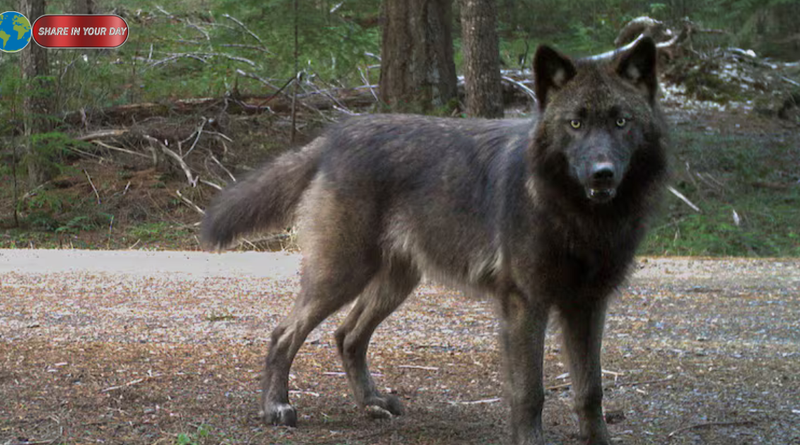
Gray Wolf Protections Face New Federal Review
Gray wolf protections are once again at the center of a political and environmental fight in the United States after President Donald Trump ordered federal officials to review whether gray wolves have recovered enough to lose or have their protections reduced under the Endangered Species Act.
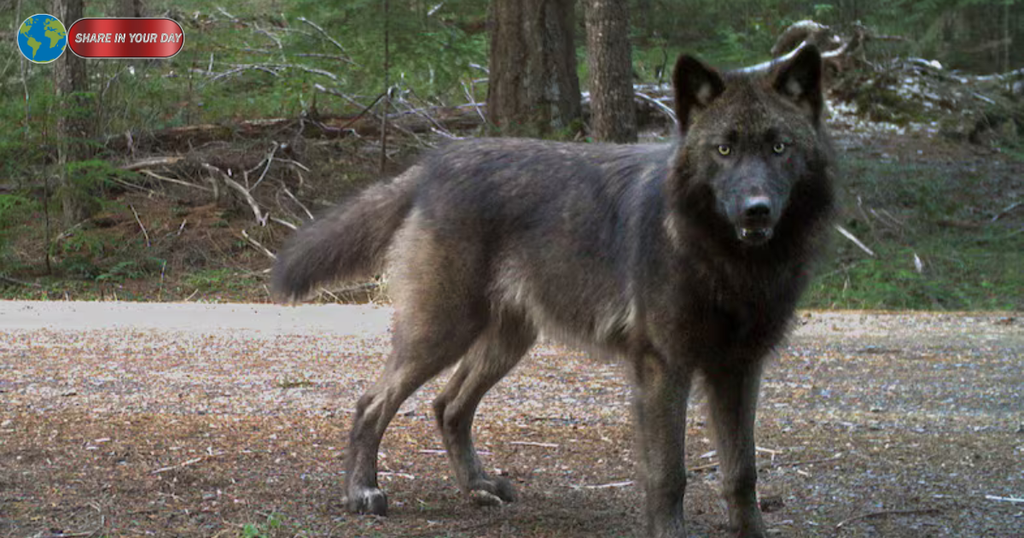
The September 4 executive order is part of a broader effort by the Trump administration to support American ranchers and address concerns over livestock losses attributed to predators. The order directs the Interior secretary to determine whether gray wolves and Mexican wolves meet federal recovery criteria for delisting or downlisting. TThe White House
But in the Pacific Northwest, the immediate consequences could be more limited than the headline suggests.
Oregon and Washington have their own protections for wolves, meaning that removing federal safeguards would not automatically open the door to unrestricted hunting or killing in those states.
That distinction is important because the region has spent decades rebuilding wolf populations after the animals were largely eliminated from the Pacific Northwest during the 20th century.
What Trump’s Wolf Order Actually Does
The White House order does not immediately remove gray wolves from the Endangered Species Act.
Instead, it starts a process that could eventually lead to delisting or downlisting.
Under the order, the Interior Department has 90 days to determine whether gray and Mexican wolves meet the recovery criteria established under federal law. If officials conclude that the criteria have been met, they are instructed to begin the process of changing their federal status. TThe White House+1
The order also calls for recommendations to Congress concerning full delisting or downlisting.
In addition, the administration wants federal officials to work with states on their own wolf regulations. The stated goal is to give ranchers greater flexibility when wolves threaten livestock.
The administration has framed the policy as part of a larger effort to strengthen the American ranching industry.
The White House says ranchers are dealing with a range of economic pressures, including a historically low national cattle herd and high production costs. The administration also argues that federal rules can make it difficult for ranchers to respond when predators attack livestock. TThe White House
Why Gray Wolf Protections Matter in the Northwest
The Pacific Northwest has a complicated relationship with gray wolves.
Wolves once occupied large parts of Oregon and Washington. But decades of hunting, trapping, poisoning and organized predator-control campaigns dramatically reduced their numbers.
By the middle of the 20th century, gray wolves had disappeared from much of the region.
Their return began decades later, largely through natural migration from established populations in neighboring areas.
As wolves returned, conservationists celebrated what they viewed as an important ecological recovery.
Ranchers, however, raised concerns about livestock predation and the economic costs associated with protecting herds from wolves.
That conflict has shaped wolf policy throughout the region.
The debate is particularly complicated because federal and state protections do not always cover exactly the same geographic areas.
Oregon and Washington Have Their Own Rules
One of the most important details for understanding the new federal review is that federal delisting does not automatically mean wolves can be hunted throughout Oregon and Washington.
State law matters.
Oregon and Washington maintain their own policies governing the treatment of wolves, including restrictions on recreational hunting.
That means a federal decision could alter the legal framework surrounding wolves without immediately eliminating every protection currently in place.
For conservationists, that provides an important layer of protection.
For ranchers seeking more authority to remove wolves that threaten livestock, however, state restrictions could continue to be a source of frustration.
The result is likely to be another round of political pressure at the state level.
The Pacific Northwest Already Has a Complicated Wolf History
The current controversy cannot be separated from an earlier federal decision.
In 2011, Congress removed federal protections for gray wolves in Montana and Idaho, along with the eastern portions of Oregon and Washington.
That created what conservation advocates describe as a split regulatory system.
Different wolf populations in the same broader region could therefore be subject to different federal rules depending on where they lived.
The legal history became even more complicated in 2020, when the Trump administration removed federal Endangered Species Act protections for gray wolves across most of the lower 48 states.
That decision was challenged in court.
A federal judge later restored protections for wolves in several regions, finding that the government’s approach did not adequately address the status of wolves across their broader range. NNorthwest Progressive Institute
The latest Trump initiative therefore represents another chapter in a dispute that has continued for years.
Ranchers Welcome a New Focus on Wolves
Some ranchers have welcomed the administration’s decision to reconsider federal wolf protections.
They argue that livestock producers need greater authority to respond when wolves attack cattle, sheep or other animals.
For ranchers who have experienced repeated livestock losses, the issue is about more than wildlife conservation.
It is also about the financial risk of running a livestock operation.
The Trump administration has connected the wolf policy to a broader effort to support ranchers.
The September executive order directs federal agencies to review policies affecting ranchers and develop recommendations intended to improve their financial viability and market access. TThe White House
The administration also wants to make it easier for ranchers to receive compensation for confirmed predator losses.
It has directed agencies to examine how depredation claims are investigated and evaluated.
The order further calls for consideration of changes that could allow more rapid federal authorization of lethal wolf removal in situations involving threats to livestock or human safety. TThe White House
Not All Ranchers See Wolves as the Main Problem
The political response from ranchers is not completely uniform.
Some livestock producers strongly support removing federal protections.
Others argue that wolf policy does not address the biggest economic problems facing ranchers.
Cattle producers are currently dealing with a range of challenges, including fuel costs, cattle prices, drought, labor expenses and broader market conditions.
That means even a major change in wolf policy may have only a limited effect on the financial health of many ranching operations.
The distinction is significant.
Wolf attacks can impose real costs on individual ranchers. But changing federal wildlife policy does not necessarily solve the broader economic pressures affecting the livestock industry.
Conservationists Warn Against Premature Delisting
Environmental organizations have strongly criticized efforts to weaken federal wolf protections.
Their argument is straightforward: the return of wolves to parts of the West does not necessarily mean the species has recovered across its historic range.
Gray wolves once occupied a vast area of North America.
Today, their distribution remains uneven.
Some populations have grown substantially, while others remain small or geographically isolated.
Conservation groups therefore argue that federal protection remains necessary to ensure that recovering populations can continue expanding into suitable habitat.
The concern is particularly strong in places where wolves have only recently returned.
Groups including the Center for Biological Diversity have warned that removing federal protections could make newly established populations more vulnerable. CCenter for Biological Diversity+1
The Wolf’s Return Has Changed the Ecosystem
The conservation argument is not based only on the number of wolves.
Scientists and wildlife managers also consider the ecological role of predators.
Gray wolves occupy an important position near the top of the food chain.
Their presence can influence prey behavior and population dynamics, potentially affecting vegetation and other wildlife species.
This is one reason wolf recovery has attracted attention beyond the question of whether there are enough animals to remove federal protection.
Supporters of wolf conservation argue that the return of the species can help restore ecological processes that disappeared when wolves were eliminated.
Critics counter that ecosystem management must also account for ranching communities and the practical realities of livestock production.
The debate therefore involves competing ideas about what successful recovery should look like.
What Would Delisting Mean for Oregon?
For Oregon, the effects of a federal change could depend heavily on the state’s existing rules.
The state has developed its own wolf-management framework as populations have expanded.
That framework attempts to balance conservation with livestock protection.
A federal delisting could shift more responsibility toward state wildlife managers.
It could also increase pressure on Oregon lawmakers and wildlife officials to reconsider their own policies.
But it would not necessarily mean that wolves suddenly become legal targets across the state.
State-level protections can remain in place even when federal protections are removed.
This is one reason the Pacific Northwest situation differs from states such as Idaho, where wolf management has historically been more permissive.
What About Washington?
Washington faces a similar situation.
The state’s wolf population has grown since wolves began returning, but their distribution remains concentrated in certain parts of the state.
Wildlife officials have developed management policies intended to address both conservation and livestock conflicts.
A federal decision could therefore create additional room for state-level management without eliminating Washington’s own restrictions.
The question would then become whether state officials decide to maintain existing safeguards or revise them.
That could become a major political battle.
Gray Wolf Protections Could Become a State Issue
If the federal government eventually removes or reduces protections, much of the practical debate could shift from Washington, D.C., to state capitals.
Oregon and Washington would have to decide how aggressively to manage their wolf populations.
Ranchers could push for more lethal-control authority.
Conservation groups could demand stronger safeguards.
Wildlife agencies would have to evaluate population numbers, breeding success, geographic distribution and livestock conflicts.
That process could take years.
The federal order therefore should not be interpreted as an immediate change in the legal status of every gray wolf in the Pacific Northwest.
It is better understood as the beginning of another potentially lengthy regulatory and political process.
A Larger Fight Over the Endangered Species Act
The wolf debate is also part of a much larger argument over the future of the Endangered Species Act.
The law has long been a target for critics who say federal wildlife protections can restrict economic development, agriculture and resource management.
Supporters argue that the law has prevented numerous species from disappearing and remains one of the country’s most important conservation tools.
The Trump administration has pursued broader changes to federal environmental policy.
In September 2026, a group of states also sued the administration over changes they say weaken protections under the Endangered Species Act. The lawsuits challenge several federal rules involving endangered species and critical habitat. RReuters
That wider legal environment could influence how future wolf decisions are challenged.
Why the 90-Day Review Matters
The 90-day timeline is one of the most important near-term developments.
The Interior secretary is expected to assess whether gray and Mexican wolves have reached the recovery threshold required for a change in federal status.
That does not mean the final status automatically changes after 90 days.
Instead, the determination could trigger additional administrative and legal steps.
Any eventual delisting would likely face scrutiny from conservation organizations, state governments and potentially the courts.
The history of wolf delisting shows how complicated those disputes can become.
Previous decisions have faced lawsuits and judicial review.
The Debate Could Last for Years
The fight over gray wolf protections is unlikely to end with the current executive order.
Even if federal agencies recommend delisting, opponents could challenge the decision.
If protections remain, ranching groups could continue pressing for congressional or administrative action.
States could also adopt different policies, producing an increasingly fragmented system across the West.
That would make wolf management more dependent on geography.
A wolf living in one state could face very different rules from a wolf just across the state line.
For an animal whose natural range crosses political boundaries, that creates a significant management challenge.
What Happens Next?
The next major step is the federal review ordered by the Trump administration.
Officials will examine whether gray wolves have met federal recovery criteria.
The review could eventually lead to a recommendation for delisting, downlisting or maintaining existing federal protections.
Meanwhile, Oregon and Washington will remain central to the debate because their state-level rules provide additional protections for wolves.
Ranchers will continue to push for greater flexibility in dealing with livestock conflicts.
Conservation groups will continue arguing that wolves need federal safeguards to complete their recovery.
The outcome will depend on science, politics, federal law and state wildlife policy.
Conclusion
The latest fight over gray wolf protections is not simply a battle between ranchers and environmentalists.
It is a debate over how the United States defines wildlife recovery and who should have the authority to manage species that cross state and federal boundaries.
President Trump’s September order has opened the door to another review of federal wolf protections. The administration says the move will give ranchers more tools to address livestock predation and reduce regulatory burdens. TThe White House
But for wolves in Oregon and Washington, the practical impact could initially be limited because both states have their own protections.
The animals have already survived one of the most dramatic declines in the history of the American West. Their return has demonstrated that populations can recover when given enough habitat and protection.
The question now is whether federal officials believe that recovery has gone far enough.
For ranchers, the answer may be yes.
For many conservationists, it is too soon.
And for the gray wolves of the Pacific Northwest, the next chapter of that debate could determine how secure their future really is.
Image ALT Text
Gray wolf protections in the Pacific Northwest under Trump’s 2026 order
Suggested Featured Image
Use a licensed photograph of a gray wolf in Oregon or Washington wilderness, preferably from a government wildlife agency or another source that permits editorial reuse. The image should visually support the article rather than depict a captive wolf.
Recommended External Sources
- Original OPB report — primary source for the regional reporting.
- White House executive order — Supporting America’s Ranchers — official source for the September 4, 2026 order.
- White House fact sheet — administration’s explanation of the wolf and ranching provisions.
- Center for Biological Diversity — Northern Rocky Mountain gray wolves — conservation context.
Internal links: Since no target website/domain was provided, I have not fabricated internal URLs. Once you provide your website domain, I can add natural internal-link placements to relevant existing articles or categories.