Moon Population Could Be Limited by Water, Scientists Warn
For decades, the idea of building permanent cities on the Moon has lived at the intersection of science, technology and science fiction. Future lunar settlements have often been imagined as bustling communities filled with thousands or even millions of residents.
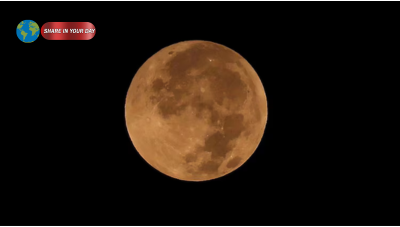
But new research suggests that one of the most basic resources needed to make such a future possible could become the biggest obstacle: water.
Scientists studying the long-term prospects for human settlements on the Moon say the amount of usable water available there may place a hard limit on how large a lunar population can become. Their findings suggest that ambitious plans for vast lunar cities may need to be reconsidered unless major advances are made in recycling, resource extraction and energy production.
The study, published in the journal Frontiers in Space Technologies, examines how long different-sized lunar populations could survive using the water resources currently believed to exist on the Moon. Researchers Martin Elvis of the Smithsonian Astrophysical Observatory and astrophysicist Jonathan McDowell also considered how much energy would be required to support a growing settlement.
Their conclusion is not that humans cannot establish a lasting presence on the Moon. Instead, they argue that the physical limitations of the lunar environment need to be taken seriously before planners envision enormous cities.
Lunar Water Is Valuable — and Difficult to Reach
Much of the Moon’s known water is believed to exist as ice inside permanently shadowed regions near the lunar poles. These areas receive little or no direct sunlight and remain extraordinarily cold.
Some estimates have suggested that the Moon could contain as much as 1 billion tons of water ice in these regions. That sounds enormous by Earth standards, but the researchers say such an amount may not be enough to support a huge lunar population for very long.
For a city of around 1 million people, the researchers estimate that the available water could be consumed surprisingly quickly if little or no recycling were used. Under that scenario, the supply could last only about two years.
That creates an immediate problem. Constructing a city capable of supporting 1 million people would take far longer than two years, meaning such a settlement could not depend on a simple, one-time supply of lunar ice.
Water would be needed for drinking, agriculture, sanitation, industrial processes and potentially the production of oxygen and fuel. Losing even small amounts of water over time could therefore become a major problem.
Recycling Could Change the Equation
The situation becomes more manageable if lunar settlers can recycle water at extremely high efficiency.
Researchers point to the International Space Station as an example. Its systems can recover about 98% of water used by astronauts. Applying similar efficiency to a lunar settlement could dramatically extend the lifetime of its water supply.
Even with that level of recycling, however, a city of 1 million residents might have access to its available water for roughly a century under the researchers’ assumptions.
That may sound like a long time, but building a massive city on another world would require enormous investments in transportation, infrastructure, housing, energy systems and scientific facilities.
The researchers therefore argue that water conservation would have to be treated as a central part of lunar planning rather than an afterthought.
Smaller Settlements May Be More Realistic
The study suggests that a much smaller lunar community could be considerably more sustainable.
A settlement of roughly 1,000 people could potentially use lunar water resources without facing the same immediate pressure as a city of hundreds of thousands or millions. Researchers compare such a population with the number of people who spend the winter in Antarctica.
At around 100,000 residents, however, water management would become much more important.
This does not mean a lunar settlement of 100,000 people is impossible. It means that increasingly sophisticated systems would be required to reduce consumption and recover as much water as possible.
Food production could also play an important role. Technologies such as vertical farming could reduce resource requirements, while diets that rely less heavily on meat could potentially lower water consumption.
Energy Is Another Major Challenge
Water is not the only limitation.
A large lunar city would also require an enormous and dependable energy supply. Solar power could provide electricity for smaller settlements and potentially support a city with around 1 million residents, according to the researchers.
But if the lunar population expanded into the millions, nuclear power could become essential.
The Moon presents a particularly difficult environment for energy generation. Some areas experience extremely long periods of darkness, while permanently shadowed regions remain in near-total darkness. Solar installations would therefore need to be carefully positioned and supported by energy-storage systems or alternative power sources.
Nuclear systems could provide a more consistent supply, but developing and operating large nuclear facilities on the Moon would introduce additional engineering and logistical challenges.
International Cooperation Could Become Essential
The researchers say humanity may also need to rethink how lunar resources are managed.
As countries and private companies prepare for a new era of lunar exploration, competition over valuable resources could become a serious issue. Water near the lunar poles could become particularly important because of its potential uses for life support, agriculture and fuel production.
Rather than allowing countries or organizations to compete for control of limited supplies, the researchers argue that international cooperation could help prevent conflict and encourage responsible resource management.
The Moon is likely to become an increasingly important destination for scientific research and exploration. But the research suggests that building enormous lunar metropolises will require much more than rockets and construction technology.
Water recycling, resource discovery, efficient agriculture, energy generation and international cooperation will all play critical roles.
For now, the most realistic vision may not be a sprawling lunar megacity, but a carefully designed community capable of living within the Moon’s physical limits.
The dream of establishing humanity beyond Earth remains alive. The new research simply suggests that making that dream sustainable will require respecting one of the oldest rules of survival: resources are never unlimited.