
US Strikes Iran as Hormuz Tensions Explode
US strikes Iran in a dramatic escalation that has ended a month-long lull between Washington and Tehran. American forces attacked two Iranian launchers on Larak Island in the Strait of Hormuz on Sunday, August 30, after U.S. officials said Iranian Revolutionary Guard forces were preparing to launch rockets carrying sea mines into the strategically important waterway. TThe Washington Post+1
The operation immediately raised fears of another cycle of military retaliation. Iran responded by launching ballistic missiles toward U.S. military positions in Jordan, while the United Arab Emirates reported intercepting an Iranian drone near its territorial waters. Jordan said its air defenses intercepted eight missiles that entered its airspace. AAl Jazeera+1
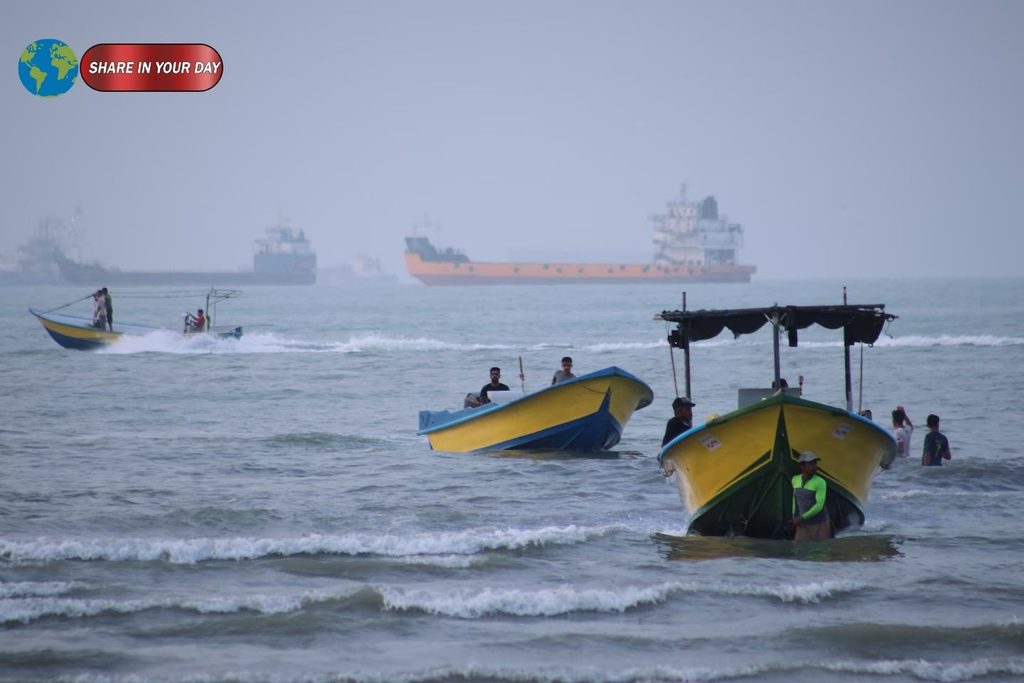
The exchange is significant because it marks the first known direct U.S. military strike against Iranian targets since late July. It also puts the Strait of Hormuz, one of the world’s most important energy corridors, back at the center of the conflict.
US Strikes Iran Over Alleged Mine Threat
According to U.S. Central Command, American forces observed Islamic Revolutionary Guard Corps personnel preparing to launch rockets equipped with sea mines toward the Strait of Hormuz.
The United States then targeted two Iranian launchers on Larak Island.
The stated objective was limited: prevent the Iranian forces from deploying mines that could threaten commercial shipping through the strait. A U.S. military spokesman said American forces were continuing to monitor the area and remained prepared to protect the free flow of commerce. TThe Washington Post+1
The location of the attack is especially important.
Larak Island lies near the entrance to the Strait of Hormuz, giving military forces positioned there a strategic vantage point over one of the world’s busiest maritime passages. Any serious disruption could have consequences well beyond the Middle East because energy shipments passing through the region are closely tied to global markets.
The United States had recently conducted operations to clear mines from shipping routes in the area. President Donald Trump also warned Iran that newly placed mines would be destroyed. TThe Washington Post
That warning now appears to have been followed by military action.
Why the Strait of Hormuz Matters
The Strait of Hormuz is a narrow maritime chokepoint connecting the Persian Gulf with the Gulf of Oman and the Arabian Sea.
Its importance goes far beyond regional politics.
The U.S. Navy has described the strait as one of the world’s busiest shipping lanes and has previously estimated that roughly one-fifth of global energy supplies pass through it annually. Hundreds of vessels can move through the waterway during a typical week. CCUSNC
For that reason, any threat to commercial shipping can quickly become an international economic problem.
A mine does not need to sink a large number of ships to create disruption. Even the possibility that mines have been placed in a major shipping lane can force commercial operators to slow down, reroute vessels or wait for military clearance.
That is why the latest US strikes Iran confrontation is being watched closely by governments, energy companies and financial markets.
The concern is not simply another exchange of missiles.
It is whether the fighting could make the Strait of Hormuz too dangerous for normal commercial traffic.
Iran Retaliates Against US Forces in Jordan
Iran did not remain silent following the attack.
The Islamic Revolutionary Guard Corps warned that the American strike would bring retaliation. Iranian forces subsequently launched ballistic missiles toward U.S. military facilities in Jordan, according to reports from Iranian state media and other sources. AAl Jazeera+1
Jordan’s military said eight missiles were intercepted after entering the country’s airspace.
The reported interception prevented the immediate consequences from becoming even more severe. No injuries were initially reported at the targeted bases, according to reports. AAl Jazeera+1
The United Arab Emirates also reported intercepting an Iranian drone near its territorial waters.
That development adds another layer of risk because several Middle Eastern countries host American military personnel and infrastructure. A conflict involving Iran and the United States can therefore spread beyond the two countries themselves.
The more regional military facilities become involved, the greater the possibility of miscalculation.
A Month-Long Lull Comes to an End
The latest confrontation breaks a period of relative calm between Washington and Tehran.
The Washington Post reported that the new exchange was the first direct clash between the two sides in about a month. The Trump administration had been attempting to combine military pressure with economic measures against Iran while avoiding a sustained new campaign of attacks. TThe Washington Post
That strategy has now been tested.
The U.S. military strike was described as limited and focused on specific Iranian launchers. However, Iran’s retaliation shows how quickly a single military operation can produce a wider confrontation.
The situation is especially difficult because both governments have strong incentives to demonstrate that they will respond to attacks.
Washington wants to prevent Iran from threatening shipping lanes and U.S. forces.
Tehran wants to demonstrate that American strikes against Iranian territory will carry consequences.
That creates a dangerous cycle.
If Washington strikes again, Iran could retaliate against U.S. bases or regional allies. If Iran attacks again, the United States could respond with additional military operations.
Each step could make the next round harder to avoid.
US Military Presence Adds to the Risk
The latest fighting comes as a large U.S. military presence remains deployed across the Middle East.
The Washington Post reported that approximately 50,000 U.S. troops are in the region, with many involved in operations connected to the pressure campaign against Iran. U.S. military commanders have also raised concerns about the sustained operational tempo and its effect on American forces. TThe Washington Post
That is an important factor in understanding the latest escalation.
The United States has considerable military capabilities in the region. But maintaining a high operational tempo for months can put pressure on personnel, aircraft, ships and logistics.
The Army’s 82nd Airborne Division is also extending the deployment of elements that were previously mobilized for the regional crisis. According to the Post, the deployment is being extended to a year, underscoring the possibility that U.S. planners expect the confrontation to continue. TThe Washington Post
The expanded deployment does not necessarily mean that a ground invasion is imminent.
However, it demonstrates that Washington is preparing for multiple possibilities rather than assuming the conflict will end quickly.
Oil Markets Watch the Strait Closely
The renewed fighting is also an economic story.
Oil markets reacted to the latest escalation as traders assessed the possibility of further disruption in the Strait of Hormuz. Reuters reported that Brent crude moved above $90 a barrel as tensions increased following the Larak Island strike and Iranian retaliation. RReuters
The reason is straightforward.
If shipping through the strait becomes less reliable, oil supplies can become more expensive to transport and insure. Even if physical supplies remain available, the perception of increased risk can push prices higher.
Higher oil prices can then affect transportation, manufacturing and consumer prices around the world.
For countries heavily dependent on imported energy, the consequences could be particularly significant.
This makes the Strait of Hormuz one of the most important economic pressure points in the current conflict.
What Happens Next?
The immediate question is whether the latest US strikes Iran confrontation remains limited or develops into another prolonged exchange.
Several factors will determine the next stage.
First, Washington will have to decide whether further Iranian military activity near the Strait requires additional strikes.
Second, Iran will have to decide whether its initial retaliation is sufficient or whether it wants to conduct additional attacks against American positions.
Third, regional governments will attempt to prevent their territory from becoming a battlefield.
The UAE has already called for de-escalation after the latest attacks. Jordan also has a strong interest in preventing its territory from becoming a launch point for attacks against Iran or a target for Iranian retaliation. AAl Jazeera+1
Meanwhile, commercial shipping operators will be watching the waterway closely.
The key indicator will be whether vessels continue to transit the Strait of Hormuz normally or begin avoiding the area in larger numbers.
Could the Conflict Expand?
A wider conflict remains a serious possibility, although the latest strike does not automatically mean that a major regional war is inevitable.
The United States has characterized its operation as a targeted response to a specific threat.
Iran, however, has already demonstrated that it is willing to respond militarily.
That distinction matters.
A limited strike can remain limited if both sides decide that further escalation is not in their interests. But the presence of U.S. forces across the region means Iran has multiple potential targets, while American forces have substantial capabilities to strike Iranian military infrastructure.
The biggest danger may therefore come from a sequence of retaliatory decisions rather than one single attack.
One side responds.
The other side responds again.
Then the original objective becomes secondary to deterrence, reputation and political pressure.
The Strategic Importance of Larak Island
Larak Island may be relatively small, but its location gives it considerable strategic importance.
It sits close to the Strait of Hormuz and near Iran’s southern coastline. Military activity in and around the island can therefore affect the security environment surrounding commercial shipping.
The decision to strike launchers there also sends a broader message.
Washington is signaling that it intends to prevent Iranian forces from using the waterway to threaten international commerce.
Tehran, meanwhile, has signaled that attacks on Iranian territory will not go unanswered.
That makes Larak Island more than simply the location of one military strike.
It has become a symbol of the wider struggle over control, security and freedom of navigation in the Strait of Hormuz.
Global Attention Turns to Hormuz
The latest US strikes Iran escalation demonstrates how quickly a regional military incident can become a global concern.
The immediate military exchange involved American and Iranian forces, but its potential consequences extend to Jordan, the UAE, commercial shipping companies, oil producers and consumers around the world.
The Strait of Hormuz remains the critical pressure point.
If the waterway remains open, the latest confrontation could eventually be contained.
If mines, missiles or other attacks significantly disrupt shipping, however, the economic consequences could become much larger.
For now, the situation remains fluid.
The United States has demonstrated that it is prepared to strike Iranian assets when it believes shipping is under imminent threat. Iran has demonstrated that it is prepared to retaliate against American military positions.
The next few days will reveal whether Sunday’s attack was a tightly contained operation or the beginning of another dangerous chapter in the U.S.-Iran conflict.
One thing is already clear: the month-long lull has ended, and the Strait of Hormuz is once again at the heart of the confrontation.
Image
Recommended featured image: U.S. Navy carrier strike group transiting the Strait of Hormuz. The U.S. Navy has previously published imagery and background material on carrier operations through the waterway.
U.S. Navy — Strait of Hormuz carrier image/source
Image ALT Text
US strikes Iran: U.S. Navy carrier operating in the Strait of Hormuz
Suggested Image Caption
U.S. naval forces operate in the strategically important Strait of Hormuz.
External Sources
- The Washington Post — U.S. strikes Iranian missile sites on Larak Island
- Reuters — U.S. forces strike two Iranian launchers on Larak Island
- Al Jazeera — Iran’s retaliation after the Larak Island strike
Internal Link Suggestions
Because you haven’t supplied the target domain yet, use these as internal-link anchor placeholders in WordPress:
- latest Iran war updates →
/iran-war/ - Strait of Hormuz explained →
/strait-of-hormuz/ - US military news →
/us-military/ - Middle East conflict →
/middle-east/
SEO note: The article is written to target “US strikes Iran” naturally, without forcing repetitive keyword usage. Yoast/RankMath can vary depending on your exact WordPress settings, theme, existing internal links and SEO plugin version, so no one can honestly guarantee every indicator will be green without checking the finished page in the actual plugin