
Christian Castro Released After Texas Court Ruling
Christian Castro, the U.S. Immigration and Customs Enforcement officer facing criminal charges in Minnesota, was released from a Texas jail Thursday after a federal judge declined to force Texas to immediately extradite him to Minnesota.
Castro had been held in Cameron County, Texas, since his arrest on May 29. Minnesota authorities wanted him returned to face four counts of second-degree assault with a dangerous weapon and one count of falsely reporting a crime.
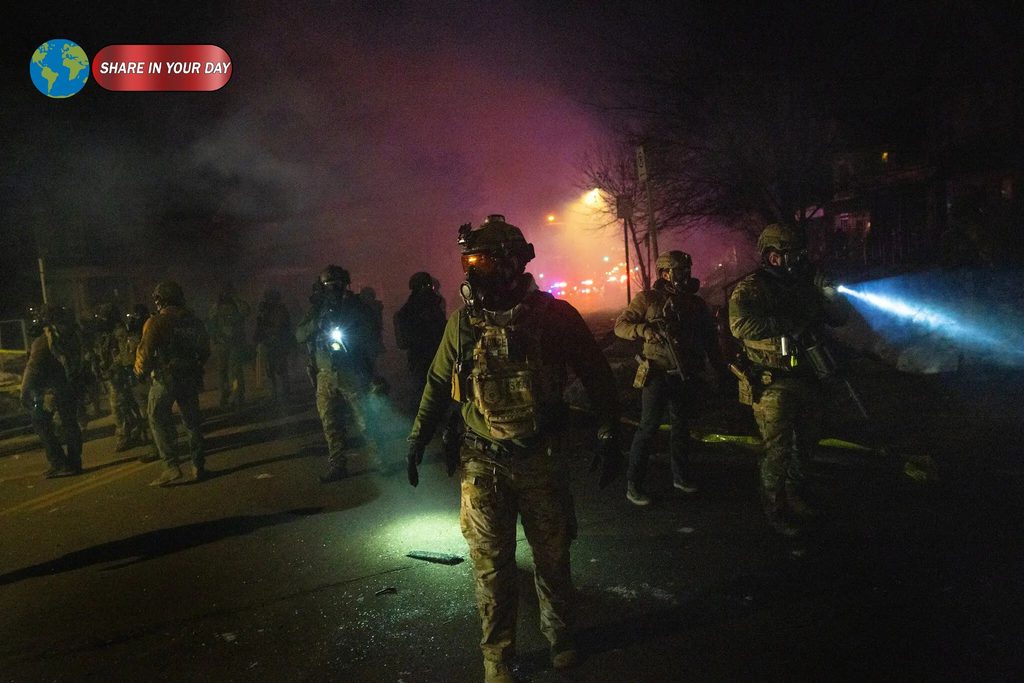
The case has become a major legal and political dispute between Minnesota and Texas. It also raises broader questions about interstate extradition, accountability for federal officers and the limits of state authority.
A federal judge ruled Wednesday that Minnesota had not shown Texas Gov. Greg Abbott had actually refused the extradition request. Instead, the court found that Abbott had not yet made a final decision.
That ruling allowed the 90-day detention period under Texas law to expire. Castro was subsequently released from the Cameron County detention facility in Brownsville.
Here are three key facts about the case.
1. Christian Castro Faces Five Charges in Minnesota
The criminal case against Christian Castro began with a shooting in Minneapolis on Jan. 14, 2026, during Operation Metro Surge, a major federal immigration enforcement operation.
According to Minnesota prosecutors, Castro fired a gun through the front door of a Minneapolis home while several people were inside. The bullet struck Julio Cesar Sosa-Celis, a Venezuelan national, in the leg.
Minnesota authorities later charged Castro with four counts of second-degree assault with a dangerous weapon and one count of falsely reporting a crime.
The allegations are serious, but they remain allegations. Castro is presumed innocent unless and until he is proven guilty in court.
The Minnesota Attorney General’s Office said prosecutors believe there is probable cause that Castro fired into an occupied home and later provided false information about what happened.
The state’s criminal complaint says surveillance footage and other evidence contradicted the initial account of the incident. According to the complaint, Castro was outside the home when he raised his weapon toward the front door and fired.
The complaint also alleges that the bullet traveled through the door, struck Sosa-Celis in the leg and ultimately hit a wall in a child’s bedroom.
The Hennepin County Attorney’s Office has described the case as part of a broader investigation into conduct during Operation Metro Surge.
For readers seeking more background on the official case, the Minnesota Attorney General’s Office has published information about the charges and extradition dispute.
2. Christian Castro Was Arrested in Texas
After Minnesota prosecutors filed charges, a nationwide arrest warrant was issued for Castro.
Texas Rangers arrested him on May 29, 2026, in Cameron County. A local judge then ordered him held while Minnesota sought his extradition.
The arrest initially appeared to move the case toward a conventional interstate transfer.
However, the process became increasingly complicated after Texas Gov. Greg Abbott did not sign the requested extradition paperwork.
Minnesota officials argued that the governor had a legal obligation to return Castro to the state where the alleged offenses occurred.
On Aug. 18, Minnesota Attorney General Keith Ellison announced a lawsuit against Abbott, seeking a court order that would require Texas to facilitate Castro’s return.
Minnesota officials argued that interstate extradition is intended to be a routine legal process. They also warned that Castro could leave the country if released.
The state specifically expressed concern that Castro might flee to Mexico because of his location near the U.S.-Mexico border.
The Minnesota Attorney General’s Office said Castro had been arrested in Texas on May 29 and that Abbott had not approved the requested transfer despite repeated efforts by Minnesota officials.
The dispute quickly became more than a question about one criminal defendant. It turned into a confrontation over the relationship between state governments and the constitutional extradition process.
3. Texas Governor Greg Abbott Questioned Whether Castro Was a Fugitive
The central legal dispute involves a seemingly simple question: Was Christian Castro actually a fugitive from Minnesota?
Abbott’s position was that the circumstances were not straightforward.
According to court filings, Abbott questioned whether Castro should legally be considered a fugitive because Castro did not allegedly flee Minnesota after the shooting.
Instead, federal authorities reassigned Castro to Texas, which was reportedly his home base.
That distinction became important in the extradition dispute.
Minnesota officials argued that the reason Castro ended up in Texas was irrelevant. Their position was that he was present in Minnesota when the alleged crime occurred and was later located in Texas while wanted under a Minnesota warrant.
Texas officials took a different approach.
Abbott’s office said the governor was still evaluating whether Castro qualified for extradition. The Texas governor’s office also indicated that the state was investigating the circumstances surrounding Castro’s transfer to Texas.
A federal judge ultimately sided with Texas on the immediate legal question.
U.S. District Judge Fernando Rodriguez Jr. ruled that Minnesota had not established that Abbott had actually rejected the extradition request. Instead, the governor had not yet made a final decision.
The judge also concluded that existing law did not establish a specific deadline requiring Abbott to make an extradition decision.
That finding was crucial because Castro’s 90-day detention period in Texas was expiring.
Reuters reported that the judge acknowledged that Castro could potentially flee after his release and that such a development could make Minnesota’s prosecution more difficult. However, the judge concluded that the possibility of flight did not change the legal analysis.
Why Christian Castro Was Released
Texas law limits how long a person can remain in custody while awaiting extradition proceedings.
Castro was arrested on May 29. By Thursday, Aug. 27, he had reached the 90-day detention limit.
Because Abbott had not issued the extradition warrant and the federal judge declined Minnesota’s request to extend Castro’s detention, authorities released him.
The Cameron County sheriff confirmed the release early Thursday morning.
The development represented a significant setback for Minnesota prosecutors, who had argued that Castro should remain in custody until the extradition dispute was resolved.
Minnesota officials had asked the federal court for emergency relief. They wanted Castro kept in jail while their broader lawsuit against Abbott continued.
The judge rejected that request.
The decision did not dismiss the Minnesota criminal charges against Castro. It also did not determine whether he was guilty or innocent of the allegations.
Instead, the ruling dealt primarily with whether Texas could continue holding him while Minnesota sought his extradition.
That distinction is important.
Christian Castro’s release does not mean the Minnesota criminal case has ended.
It means that Minnesota currently does not have custody of him.
The Shooting That Started the Case
The underlying incident occurred during an immigration enforcement operation in Minneapolis.
According to Minnesota’s criminal complaint, ICE agents were pursuing a man who eventually ran toward a residence.
The complaint says Castro followed the man toward the house. Another individual was outside the residence with a snow shovel.
Investigators later reviewed surveillance footage from a Minneapolis city camera.
According to the complaint, the person holding the shovel placed it on the ground before Castro fired his weapon.
The surveillance footage described in the complaint shows Castro eventually standing several feet from the front door. Investigators say he raised his arms toward the entrance and fired.
A 911 caller inside the residence reported that multiple adults and children were inside when the shot was fired.
The bullet struck Sosa-Celis in the leg.
Minnesota prosecutors later said the evidence did not support the initial account that Castro had been attacked with a shovel, broom or another weapon.
The Minnesota Attorney General’s Office said the evidence instead indicated that Castro was outside the home and fired into the residence.
The criminal complaint contains the state’s allegations and evidence supporting probable cause. It is not a final judicial finding of guilt.
A Case With Wider Political Consequences
The Christian Castro case has become a flashpoint in the political conflict over immigration enforcement.
Minnesota officials have strongly criticized Abbott’s handling of the extradition request.
Ellison said Minnesota would continue its efforts to bring Castro back to the state.
After the federal judge’s ruling, Ellison argued that the decision did not end Minnesota’s legal campaign.
His office has said it will continue litigating the extradition issue and pursuing ways to ensure Castro faces the charges filed against him.
The Texas governor’s office, meanwhile, defended its position.
Abbott’s representatives have argued that Texas has authority to evaluate whether an extradition request meets the applicable legal requirements. They have also criticized Minnesota’s legal strategy.
That disagreement reflects a broader national debate about federal immigration enforcement and the authority of states to investigate or prosecute federal officers.
The dispute is particularly notable because Abbott has been one of the country’s most prominent supporters of aggressive immigration enforcement.
Minnesota leaders, meanwhile, have criticized the federal government’s immigration operations and have pursued state investigations into incidents involving federal officers.
The Castro case therefore sits at the intersection of criminal law, immigration policy and constitutional questions about interstate cooperation.
What Happens Next for Christian Castro?
The biggest unanswered question is whether Christian Castro will eventually return to Minnesota.
His release does not erase the charges.
However, Minnesota officials must now navigate the extradition process without having Castro physically detained in Texas.
The state could continue its lawsuit against Abbott. It could also pursue other legal avenues depending on developments in Texas and Minnesota courts.
Meanwhile, the governor’s office may still reach a decision on the extradition request.
If Abbott ultimately approves the request and Texas authorities locate Castro, Minnesota could seek to take custody of him.
The timing and practical consequences remain uncertain.
The situation could become more complicated if Castro leaves Texas or the United States.
Minnesota officials have already raised concerns about a possible flight to Mexico. A departure from the country could create additional legal and logistical challenges for prosecutors.
At the same time, the defense position remains important.
Castro has not been convicted of the charges. The allegations against him must be tested in court, and he retains the right to defend himself against the accusations.
Why the Christian Castro Case Matters
The case has implications beyond one ICE officer.
At its core, the dispute asks how states should cooperate when a person accused of a crime crosses state lines.
Interstate extradition is normally a routine part of the U.S. criminal justice system. But the Castro case has become unusually contentious because the defendant is a federal immigration officer and because Texas and Minnesota have sharply different political positions on immigration enforcement.
The case also highlights the tension between federal and state authority.
ICE operates under the federal Department of Homeland Security. Yet Minnesota prosecutors are seeking to hold a federal officer accountable under state criminal law.
That creates difficult legal questions about federal immunity, state jurisdiction and the limits of federal authority.
Those questions may become increasingly important as immigration enforcement expands into cities and states where local officials oppose federal policies.
For now, however, the immediate development is clear: Christian Castro is no longer in the Texas jail where he had been held for three months.
He remains charged in Minnesota.
And the legal battle over whether he will ultimately face those charges in a Minnesota courtroom is far from over.
Key Takeaways
- Christian Castro was released from a Texas jail on Aug. 27, 2026.
- He faces four second-degree assault charges and one false-reporting charge in Minnesota.
- The charges stem from a Jan. 14 shooting in Minneapolis.
- Minnesota says Castro shot Julio Cesar Sosa-Celis in the leg after firing through a home’s front door.
- Castro was arrested by Texas Rangers on May 29.
- Texas law limited his extradition detention to 90 days.
- A federal judge declined to force Gov. Greg Abbott to immediately approve extradition.
- The judge said Abbott had not formally denied the request.
- Minnesota officials have warned that Castro could flee and said they will continue pursuing the case.
- His release does not dismiss the Minnesota criminal charges.
Related Resources
For readers interested in health and wellness information, Vein Center Tanzania maintains a dedicated health and medical blog covering vascular health and related topics.
The site’s information about varicose vein treatment is separate from this news report and should not be considered related to the criminal case discussed above.
Readers seeking information about the clinic can also visit the Vein Center Tanzania homepage.
Sources
- Reuters report on the federal ruling
- Minnesota Attorney General — Christian Castro extradition lawsuit
- Minnesota Attorney General — Aug. 26 court-ruling statement
- Hennepin County Attorney — Castro arrest announcement
Image
Recommended featured image: Christian Castro after his arrest in Texas, using a properly licensed news photograph or official booking image where permitted.
Image ALT Text: Christian Castro, ICE agent charged in Minnesota shooting, after Texas arrest
Suggested image caption: Christian Castro was arrested in Texas in May and released after reaching the state’s 90-day extradition detention limit.
SEO image filename: christian-castro-texas-release.jpg