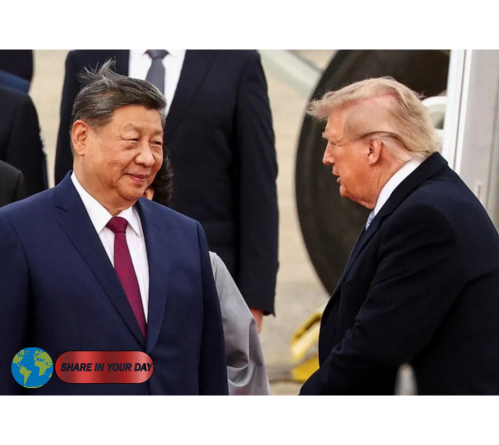
Trump Xi Jinping Visit Opens With Formal Welcome in Washington
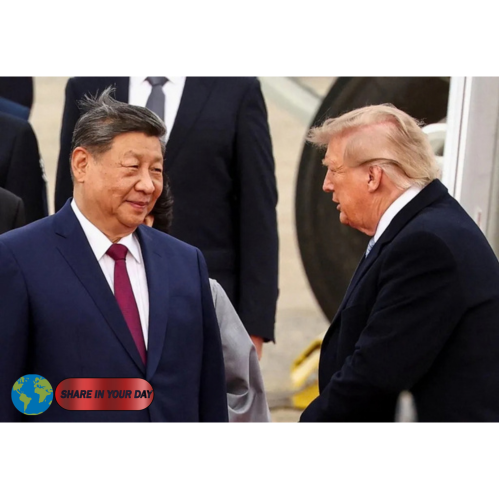
The Trump Xi Jinping visit began in Washington with an elaborate welcome ceremony as the Chinese president arrived in the United States for a three-day state visit focused on trade, technology, Taiwan, Iran and broader relations between the world’s two largest economies.
US President Donald Trump personally welcomed Xi Jinping at Joint Base Andrews in Maryland on Wednesday. The arrival featured a military band, ceremonial cannon fire and a flyover by a B-1 bomber, highlighting the significance Washington has attached to the visit.
The meeting comes at a complicated moment for US-China relations. Washington and Beijing continue to compete over trade, advanced technology and strategic influence, while disagreements over Taiwan and other geopolitical issues remain unresolved.
The extension gives negotiators additional time to work on a broader economic arrangement while preventing an immediate return to another round of intensified tariff pressure.
Why the Trump Xi Jinping Visit Matters
The Trump Xi Jinping visit is the Chinese leader’s first trip to the United States in nearly three years, according to Reuters. The meeting is taking place against a backdrop of significant disagreements between Washington and Beijing.
Trade remains one of the most immediate issues.
The United States and China have spent years imposing tariffs and other trade restrictions on each other’s goods. The measures have affected manufacturers, consumers and international supply chains, while companies in both countries have adjusted their sourcing and investment strategies.
The current trade truce has provided a temporary framework for reducing some of those tensions. Its extension means the two governments have more time to negotiate rather than immediately allowing the existing arrangement to expire.
Bessent said the extension would run through January 10. Reuters reported that the two sides were also considering further discussions on tariffs affecting specific categories of goods.
However, the extension does not amount to a comprehensive settlement of the broader US-China trade dispute.
Instead, it preserves the existing period of economic de-escalation while negotiations continue.
US-China Trade Truce Extended to January 2027
The trade truce was originally scheduled to expire on November 10. The new January 10 deadline creates an additional two months for Washington and Beijing to negotiate.
According to Reuters, Bessent said US and Chinese officials had reached the agreement following discussions with Chinese Vice Premier He Lifeng.
The agreement is significant because tariffs have become one of the central tools in the economic relationship between the two countries.
For businesses, an extension can provide additional time to plan around tariffs, supply chains and investment decisions. For policymakers, it creates another period during which negotiations can take place without an immediate deadline forcing a new escalation.
The two governments are also discussing the possibility of tariff reductions covering some non-sensitive goods, although the precise scope of any future agreement remained under negotiation.
Reuters reported that US and Chinese officials were still working through details, meaning businesses should not interpret the truce extension as the final resolution of tariff disputes.
Trump and Xi Face a Broad Agenda
Trade is only one part of the Trump Xi Jinping visit.
The leaders are expected to discuss technology, Taiwan, rare-earth minerals, narcotics, artificial intelligence and Iran. Each issue presents its own set of disagreements and potential areas for limited cooperation.
Technology has become particularly important in the relationship.
Washington has imposed restrictions affecting China’s access to certain advanced technologies, while Beijing has sought greater technological independence. Semiconductors, artificial intelligence and other strategic technologies have become closely connected to economic and national-security policy.
The two countries may also discuss AI-related cooperation and ways to communicate about potential incidents or risks associated with rapidly developing artificial intelligence systems.
Meanwhile, rare-earth minerals remain another important issue because China plays a major role in global supply chains for many critical materials.
Any disruption involving those supplies could affect manufacturers around the world, including industries producing electronics, electric vehicles and other advanced products.
Taiwan Remains a Major Point of Disagreement
Taiwan is another sensitive issue expected to feature prominently in discussions between Trump and Xi.
China claims Taiwan as part of its territory, while Taiwan operates with its own elected government and military and maintains extensive unofficial relations with the United States and other countries.
Washington’s policy toward Taiwan has long been a major source of tension with Beijing.
Reuters reported that Xi was expected to raise China’s position on Taiwan during the talks, while Trump was expected to maintain US export controls despite Chinese objections.
The Taiwan issue makes the summit particularly important beyond trade.
Even if the two governments reach limited economic agreements, disagreements over security and technology could continue to shape the relationship.
For that reason, the trade truce extension should not be interpreted as an end to strategic competition between Washington and Beijing.
Iran Adds Another Complication
The Trump Xi Jinping visit is also taking place while the United States remains involved in a prolonged conflict with Iran.
That creates another potential area of discussion between Washington and Beijing.
Reuters reported that Iran was among the issues expected to feature in the talks. The United States could seek greater Chinese cooperation on regional issues, while Beijing has its own economic and strategic interests in maintaining relations with Tehran.
The broader geopolitical environment therefore makes the summit more complicated than a traditional trade negotiation.
Washington and Beijing may have reasons to avoid additional instability even while remaining competitors on several fronts.
A Highly Orchestrated State Visit
The opening of Xi’s visit was carefully staged.
Trump and Xi met at Joint Base Andrews after Xi’s arrival, with the ceremony featuring military honors and a B-1 bomber flyover. Reuters described the welcome as an unusually high-profile reception.
The visit also includes a state dinner expected to bring together prominent figures from the technology and business sectors.
Among those expected to attend are Apple CEO Tim Cook, Nvidia CEO Jensen Huang and OpenAI CEO Sam Altman, according to Reuters reporting.
The participation of major technology executives is notable because technology is now central to the US-China economic relationship.
Companies such as Apple and Nvidia have extensive exposure to both markets, while artificial intelligence has become an increasingly important component of the competition between the two countries.
The schedule also includes a visit to the National Archives, where important US historical documents are displayed.
What Businesses Are Watching
Companies in the United States, China and other economies will be watching the summit for signs of how trade policy could develop after January.
The two-month extension offers temporary certainty, but businesses still face questions about the longer-term tariff environment.
Manufacturers need to know whether current tariffs will remain, whether additional duties could be imposed and whether certain products could receive exemptions or reductions.
Investors are also watching the talks because changes in US-China trade policy can affect currencies, commodities, shipping and global manufacturing.
The relationship between the two countries extends far beyond bilateral commerce. China is a major manufacturing center, while the United States remains one of the world’s largest consumer markets.
That means changes in their economic relationship can have consequences far beyond Washington and Beijing.
The Limits of the Trade Truce
Although the extension is important, it has clear limits.
The two sides still disagree over Taiwan, advanced technology, industrial policy and strategic competition. Rare-earth supply chains and export controls remain sensitive areas.
Reuters reported that expectations for a broader breakthrough during the visit were relatively limited, with both governments still facing major differences.
That means the January deadline could become another important moment in the relationship.
If negotiations make progress, the two governments could use the additional time to develop a broader agreement. If disagreements remain unresolved, tariff tensions could return when the extension expires.
For now, however, the extension keeps the two economies inside a negotiated framework rather than immediately returning to a more confrontational trade environment.
What Comes Next After the Trump Xi Jinping Visit?
The next phase will depend on what the two governments announce during and after the visit.
Reuters reported that Washington and Beijing were expected to issue separate announcements rather than a single joint statement, allowing each side to emphasize its own priorities and achievements.
That approach reflects the complexity of the relationship.
Both governments have domestic audiences to consider, while businesses and international markets are looking for practical information about tariffs and supply chains.
Another Trump-Xi meeting could also take place later in 2026, potentially around the Asia-Pacific Economic Cooperation summit in China or the G20 meetings in the United States, according to Reuters.
The continuation of leader-level talks would provide another channel for managing disagreements.
For now, the most concrete economic development is the extension of the trade truce until January 10, 2027.
A Temporary Pause in a Larger Rivalry
The Trump Xi Jinping visit demonstrates how closely cooperation and competition are now intertwined in US-China relations.
Washington and Beijing are negotiating over trade while simultaneously competing over technology and strategic influence. They can cooperate in selected areas while maintaining significant disagreements in others.
The two-month trade truce extension therefore represents a continuation of negotiations rather than a final settlement.
For now, the message from both sides is that negotiations remain open. The next major test will be whether those negotiations can produce a longer-term framework before the January 10, 2027 deadline.