McDonald’s $8.5B Franchisee Investment Revealed
McDonald’s is committing approximately $8.5 billion to support franchisees through 2036, putting restaurant modernization, technology and operational improvements at the center of its latest growth strategy. The company says about $5 billion of that support is expected to be deployed through 2030.
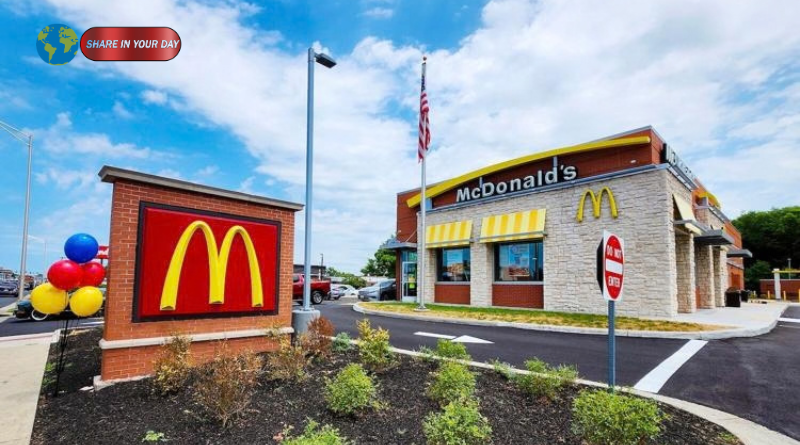
The investment comes as McDonald’s faces a changing fast-food market. Persistent inflation, pressure on household budgets and aggressive competition over value have made it increasingly important for major restaurant chains to improve both customer experience and restaurant economics. Reuters reported that McDonald’s has experienced slower performance in recent quarters, adding urgency to its expanded strategy.
The company is calling the broader plan McDonald’s > NEXT. It is designed to build on the restaurant chain’s existing technology and operational infrastructure while putting greater emphasis on food quality, customer experience, value, restaurant productivity and franchisee economics.
For franchise owners, the plan could mean financial assistance with upgrades that might otherwise require substantial capital spending.
McDonald’s $8.5B Franchisee Investment Targets Modernization
The core of the McDonald’s $8.5B franchisee investment is a partnership approach between the corporation and its franchise operators.
McDonald’s says the support will come through a combination of rent relief and capital support. The goal is to accelerate restaurant modernization, technology deployment and operational improvements without placing the entire financial burden on franchisees.
The company expects the program to continue through 2036, with approximately $5 billion allocated through 2030.
That makes the initiative more than a short-term promotional campaign. Instead, McDonald’s is positioning NEXT as a multiyear transformation of its restaurant system.
McDonald’s operates more than 46,000 restaurants globally, and approximately 95% of its restaurants worldwide are owned and operated by independent local business owners. That franchise structure makes the financial health and willingness of franchisees to invest particularly important to the company’s long-term strategy.
Why McDonald’s Is Spending Billions on Franchisees
Restaurant operators have faced rising costs for labor, supplies, construction and other expenses. At the same time, consumers have become more selective about where they spend money.
That combination creates a difficult equation for fast-food companies.
Restaurants need to remain affordable enough to attract customers while also generating sufficient returns for franchise owners. Meanwhile, customers increasingly expect faster service, reliable orders, convenient digital ordering and a more modern restaurant environment.
McDonald’s is attempting to address those pressures by investing in the physical and technological infrastructure behind its restaurants.
Reuters reported that inflation and competition around value offerings have pressured McDonald’s and other fast-food chains. The company also recently faced weaker-than-expected U.S. sales growth, with efforts to reconnect with lower-income consumers becoming an important part of its strategy.
The new investment therefore focuses not only on making restaurants look newer but also on making them easier and more efficient to operate.
McDonald’s NEXT Strategy Goes Beyond Restaurant Remodeling
The McDonald’s NEXT strategy is divided into four broad areas: Menu > NEXT, Consumer > NEXT, Restaurant > NEXT and People > NEXT.
Restaurant > NEXT is particularly relevant to the $8.5 billion franchisee support program.
According to McDonald’s, the company wants to simplify restaurant operations, modernize designs and deploy technology that can improve efficiency. One major component is the broader rollout of ArchIQ, a generative-AI-enabled system intended to help restaurants with operational tasks.
McDonald’s says the combined restaurant initiatives are designed to generate approximately 250 basis points of gross restaurant-level efficiency gains.
The company estimates that this could translate into roughly $100,000 in annual cash-flow benefits for the average U.S. restaurant once the improvements are implemented. McDonald’s also estimates an approximately four-year payback for franchisees after its partnering support.
Those figures are company projections rather than guaranteed results, and actual outcomes will depend on individual restaurants, markets and implementation.
AI Technology Will Play a Bigger Role
One of the most notable parts of McDonald’s restaurant modernization program is the growing role of artificial intelligence.
The company has been building a common technology platform and data infrastructure across its restaurant system. Under NEXT, McDonald’s intends to use those capabilities more extensively to improve restaurant operations.
ArchIQ is designed to help with tasks such as drive-thru operations, inventory management and scheduling. The broader objective is to reduce operational complexity and give restaurant teams more tools to manage daily activities.
The technology push also reflects a broader change across the restaurant industry.
Fast-food companies increasingly use digital ordering, automated systems, artificial intelligence and data analytics to improve speed and accuracy. For McDonald’s, the challenge is to introduce those technologies while keeping the customer experience consistent across a huge franchise network.
McDonald’s says its scale gives it an advantage because successful technologies can potentially be deployed across thousands of locations.
Restaurant Designs Are Also Changing
The McDonald’s $8.5B franchisee investment is not limited to software and artificial intelligence.
The company is also planning physical changes to restaurants.
McDonald’s has described plans involving upgraded play areas, improved dining rooms, more open kitchens and more visible McCafé beverage preparation areas. The company says these changes are intended to improve customer perceptions of food quality and hospitality.
Other modernization efforts include improved facilities for delivery orders and kitchen layouts designed to support more efficient operations.
These changes come at a time when customers are using restaurants in increasingly different ways.
Some customers still visit dining rooms, while others rely on drive-thru lanes, delivery platforms or mobile ordering. A modern restaurant therefore needs to accommodate multiple forms of service simultaneously.
McDonald’s NEXT is designed around that reality.
The Franchisee Economics Matter
For franchisees, restaurant remodeling can be expensive.
The Boston Globe reported that U.S. franchisees typically spend substantial amounts on required remodeling over time, while McDonald’s new plan adds additional investment requirements as the company pursues broader modernization. The corporation says it will provide support through capital assistance and rent relief.
That financial arrangement is significant because franchisees ultimately operate individual restaurants and must consider the return on every major investment.
McDonald’s says the expected efficiency improvements could produce approximately $100,000 in annual cash-flow benefits for the average U.S. restaurant.
The company estimates the investments can achieve an approximately four-year payback after its support is taken into account.
However, these are forward-looking company estimates. Actual results could vary depending on restaurant size, location, sales levels, labor costs, construction expenses and how quickly new systems are adopted.
McDonald’s Also Wants More Market Share
The investment program is part of a larger effort to increase McDonald’s competitive position.
Under NEXT, McDonald’s is targeting a 1.5-percentage-point increase in its share of the chicken category and another 1.5-percentage-point increase in beverages by 2030. The company also intends to maintain its leadership position in beef.
Those goals point toward areas where McDonald’s sees opportunities for additional customer visits.
Chicken has become one of the most competitive segments in fast food, while specialty beverages have expanded beyond traditional coffee offerings. McDonald’s is therefore looking to compete across multiple menu categories rather than rely solely on its traditional burger business.
The company’s menu strategy also includes continued product innovation designed to respond to changing consumer preferences.
Aiming for Stronger Restaurant Productivity
McDonald’s financial targets extend beyond customer traffic.
The company expects operating margins to reach the low-to-mid 50% range by 2030. It is also targeting approximately 2.5% contribution to systemwide sales growth from unit expansion in 2027, moderating to about 2% by 2030.
These targets illustrate why restaurant productivity is such an important component of NEXT.
If restaurants can serve customers more efficiently while improving accuracy and reducing operational complexity, McDonald’s expects that to strengthen restaurant economics.
The company describes the strategy as a cycle: better customer experiences should generate more visits, greater efficiency should improve restaurant economics, and stronger economics should create additional capacity for investment.
Competition Is Raising the Stakes
McDonald’s does not operate in isolation.
The U.S. fast-food market includes major national chains competing aggressively on price, chicken, burgers, beverages, convenience and digital ordering. At the same time, consumers have more restaurant choices than ever.
Value has become particularly important as consumers respond to higher costs.
Reuters reported that competition around value offerings has contributed to pressure across the fast-food industry.
For McDonald’s, the challenge is finding a balance between affordability and profitability.
The company wants to attract price-sensitive customers without relying exclusively on deep discounts. At the same time, it needs to provide franchisees with an economic model that makes continued investment possible.
That helps explain why NEXT combines customer-facing changes with efficiency initiatives.
What the $8.5 Billion Means for Customers
Customers may not immediately notice the full financial scale of the program.
Instead, changes are likely to appear gradually at individual restaurants.
A customer could encounter a remodeled dining area, a redesigned kitchen, improved ordering technology, upgraded play facilities or changes to how delivery orders are handled.
Technology may also become more visible behind the scenes.
More accurate ordering, better inventory management and improved scheduling could affect how quickly restaurants prepare food and respond to demand.
McDonald’s is also looking to strengthen hospitality and consistency across its system. Its broader Make It Golden initiative is designed to emphasize food quality and customer service as part of the NEXT strategy.
What Comes Next for McDonald’s
The McDonald’s $8.5B franchisee investment represents a long-term commitment rather than a single remodeling program.
Approximately $5 billion is expected to be provided through 2030, while the full partnership support is planned through 2036.
That gives McDonald’s and its franchisees several years to implement the changes.
The company’s success will ultimately depend on execution.
Modernized restaurants alone may not guarantee stronger sales. Likewise, artificial intelligence will only create value if employees and franchisees can effectively use the technology.
McDonald’s will therefore need to demonstrate that its investment produces measurable improvements in customer traffic, restaurant efficiency and franchisee economics.
For now, the company has laid out an ambitious plan: invest billions alongside franchisees, modernize restaurants, expand technology, improve operational efficiency and compete more aggressively in chicken and beverages.
The next phase will be turning those targets into results at thousands of individual restaurants.
Why the McDonald’s Investment Matters
The significance of the McDonald’s $8.5B franchisee investment extends beyond restaurant renovations.
It represents a broader attempt to reshape how one of the world’s largest restaurant systems operates.
McDonald’s is combining physical upgrades with artificial intelligence, digital infrastructure, employee training and menu innovation. The strategy also acknowledges that franchisees need financial support if the company expects them to make substantial investments in their restaurants.
The company says the ultimate objective is to create stronger restaurant economics while giving customers more reasons to visit.
Whether those investments deliver the projected returns will become clearer as NEXT rolls out through 2030 and beyond.
For McDonald’s, however, the direction is clear: the next stage of growth will depend not only on what appears on the menu, but also on how efficiently, consistently and conveniently the entire restaurant system can deliver it.