Netanyahu UN Speech: Fiery Attack Stuns World Leaders
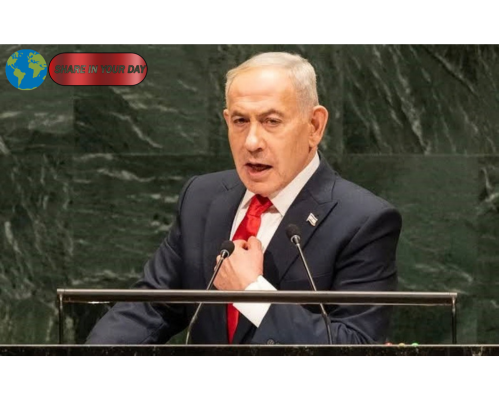
Israeli Prime Minister Benjamin Netanyahu delivered a fiery Netanyahu UN speech on Thursday, September 24, using the United Nations General Assembly stage to defend Israel’s military actions, attack Iran and criticize several Western allies and political opponents. The address was met with a dramatic walkout by dozens of international delegates before Netanyahu had even fully begun speaking.
The speech came at a particularly sensitive moment for Netanyahu. Israel is facing growing international criticism over its military campaign in Gaza, while Netanyahu is simultaneously campaigning for another term ahead of Israel’s October 27 election.
Rather than offering a conciliatory diplomatic message, Netanyahu used the high-profile UN platform to present Israel as a country fighting on multiple fronts against determined enemies.
He also directly confronted New York City Mayor Zohran Mamdani, one of his most vocal American critics, while sharply criticizing Britain, France, Qatar and Türkiye.
The result was one of the most confrontational moments of this year’s UN General Assembly.
Netanyahu UN Speech Begins With Dramatic Walkout
The atmosphere inside the UN General Assembly was already tense when Netanyahu approached the podium.
Dozens of delegates walked out as he began speaking, creating a highly visible diplomatic protest. Some delegates reportedly jeered or booed, while members of Netanyahu’s own delegation stood and applauded.
Netanyahu responded by calling those leaving the chamber “moral cowards” and challenged others to follow them out.
The extraordinary opening immediately transformed the speech into a confrontation between Israel and some of its strongest international critics.
The walkout also reflected a broader shift in international attitudes toward Israel as criticism of the Gaza war has intensified.
For Netanyahu, however, the reaction appeared to reinforce the central message he wanted to deliver: that Israel is increasingly standing alone against what he describes as hostile forces and governments.
The Israeli prime minister portrayed the country as being engaged in a broad struggle involving multiple regional fronts.
Netanyahu Says Israel Is Fighting a Seven-Front War
One of the central themes of the Netanyahu UN speech was Israel’s claim that it faces threats from multiple directions.
Netanyahu described Israel as fighting a “seven-front war,” identifying Gaza, the occupied West Bank, Syria, Lebanon, Iran, Yemen’s Houthi movement and Iran-linked militias in Iraq as parts of the broader conflict.
He insisted that Israel would ultimately prevail.
The statement came after a period of major regional escalation involving Israel, Iran and armed groups aligned with Tehran.
Netanyahu also returned to the issue of Iran’s nuclear program, portraying Israel’s military action against Iranian nuclear facilities as necessary for Israel’s survival.
He said destroying Iran’s nuclear facilities had been extremely difficult but characterized the decision to act as one of the easiest decisions he had made as prime minister.
That argument is particularly significant because Iran remains one of the central issues shaping Israel’s security policy and Netanyahu’s political message.
Iranian President Masoud Pezeshkian had addressed the UN shortly before Netanyahu and criticized what he described as a double standard involving nuclear weapons and international inspections.
The contrasting speeches highlighted the deep divide between Tehran and Jerusalem.
Netanyahu Takes Aim at Zohran Mamdani
Perhaps the most personal portion of Netanyahu’s address was directed at New York City Mayor Zohran Mamdani.
Mamdani has been a prominent critic of Netanyahu and Israeli policy toward Palestinians. He previously said he would seek Netanyahu’s arrest if legally possible during the Israeli leader’s visit to New York.
Netanyahu used his UN appearance to respond directly.
He accused Mamdani of attempting to prevent him from attending the UN and of trying to silence Israel’s position.
Netanyahu also accused the mayor of antisemitism, allegations Mamdani has rejected. After the speech, Mamdani described Netanyahu’s accusations as baseless and accused the Israeli leader of attempting to distract from the situation in Gaza.
The confrontation was unusual because a sitting Israeli prime minister used an international diplomatic forum to engage so directly with the mayor of the host city.
However, the political calculation was clear.
Mamdani has become an increasingly important figure in debates over Israel and Palestine in New York, while Netanyahu is fighting for political survival at home.
That made the dispute relevant to both American and Israeli audiences.
Israel’s Western Allies Also Face Netanyahu’s Anger
Netanyahu did not limit his criticism to Israel’s traditional adversaries.
Britain and France, two historic partners of Israel, were also targeted during the speech.
Both countries have become increasingly critical of Israel’s actions and have taken measures targeting Israeli exports connected to the occupied West Bank. Netanyahu accused critics in those countries of hypocrisy and rejected accusations that Israel was pursuing colonial policies.
The criticism reflects an increasingly complicated relationship between Israel and several European governments.
While European nations continue to recognize Israel’s security concerns, disagreements over Gaza, Palestinian statehood and settlement policies have become increasingly pronounced.
Netanyahu’s willingness to criticize allies from the UN podium demonstrated how far the diplomatic relationship has deteriorated.
He also criticized Qatar and Türkiye, accusing them of promoting narratives against Israel.
Qatar rejected Netanyahu’s accusations, according to reports.
Netanyahu Thanks Trump for Supporting Israel
Despite his criticism of several international partners, Netanyahu made a point of praising U.S. President Donald Trump.
He described Trump as Israel’s strongest partner in its conflict with what he called “barbarians.”
The U.S. delegation joined Israel’s representatives in applauding the remark.
Netanyahu said the United States and Israel had worked together during military operations against Iran and credited Washington with supporting Israel during the wider regional conflict.
The praise is politically significant.
American support remains central to Israel’s military and diplomatic position, even as questions have emerged about the relationship between Netanyahu and Trump.
The two governments have shared major strategic interests, particularly regarding Iran, but differences have also emerged over how regional conflicts should be managed.
Netanyahu’s public praise at the UN therefore served as both a diplomatic signal and a political message to audiences in Israel and the United States.
Gaza Remains at the Center of the Controversy
The Netanyahu UN speech also focused heavily on accusations surrounding Israel’s military campaign in Gaza.
Netanyahu rejected allegations that Israel has committed genocide and defended the conduct of Israeli forces.
Israel has consistently denied accusations of genocide and says its military operations are directed against Hamas and other armed groups.
However, international criticism has continued to intensify over the humanitarian consequences of the conflict.
According to figures cited by Al Jazeera, more than 73,000 Palestinians have been killed in Gaza since the October 2023 Hamas-led attack on Israel. Netanyahu rejects allegations that Israel has committed genocide.
The International Criminal Court also issued an arrest warrant for Netanyahu in 2024 over alleged war crimes. Netanyahu rejects the allegations.
His appearance at the UN therefore carried an additional layer of controversy because he traveled to New York despite the outstanding ICC warrant.
The United States, meanwhile, denied Palestinian President Mahmoud Abbas a visa, meaning Abbas addressed the General Assembly through a prerecorded video message rather than appearing in person.
A Speech Designed for Israeli Voters?
Although Netanyahu was speaking to diplomats from around the world, analysts said much of the address appeared aimed at voters in Israel.
That interpretation is especially important because Israel is scheduled to hold parliamentary elections on October 27.
Netanyahu is fighting to remain in power, making national security and his record as Israel’s wartime leader central themes of his campaign.
Ariel Cohen of the Atlantic Council told Al Jazeera that the speech was better suited to an election rally in Israel than a diplomatic setting because Netanyahu was communicating directly with his domestic political audience.
The argument helps explain the speech’s combative tone.
Instead of emphasizing compromise or international reconciliation, Netanyahu highlighted threats, military strength and Israeli determination.
His repeated message was that Israel must remain strong because its enemies are determined to destroy it.
That message has long been central to Netanyahu’s political identity.
The UN Speech Highlights Israel’s Growing Diplomatic Isolation
The reaction inside the General Assembly provided a stark visual representation of Israel’s diplomatic difficulties.
The sight of delegates leaving while Netanyahu spoke contrasted sharply with the applause from Israel’s supporters.
Outside the UN, protests also took place.
Demonstrators criticized U.S. military support for Israel and called for an end to the Gaza war. Several protesters were detained during demonstrations in New York, with actor Susan Sarandon among those arrested at a separate protest.
The protests showed that Netanyahu’s visit had become a major political flashpoint far beyond the UN chamber.
For Israel’s critics, his presence represented an unwillingness to accept international criticism.
For Netanyahu and his supporters, the protests and diplomatic walkout reinforced their argument that Israel faces an increasingly hostile international environment.
Both interpretations are likely to influence political debate in the weeks ahead.
Netanyahu’s Message: Israel Will Continue Fighting
Despite the international backlash, Netanyahu gave no indication that Israel intends to fundamentally change its approach.
He emphasized determination and repeatedly framed the conflict as a battle for Israel’s survival.
His closing message was built around unity and victory.
Netanyahu argued that Israel’s history, values and courage are stronger than the forces attempting to undermine it.
That message is likely to resonate with his political base, particularly voters who believe Israel must prioritize military security over international pressure.
At the same time, the speech is unlikely to ease criticism from European governments, Palestinian leaders or international organizations.
Instead, it may deepen existing divisions.
What Netanyahu’s UN Speech Means for Israel
The importance of the Netanyahu UN speech extends beyond the dramatic scenes inside the General Assembly.
It demonstrated how Israel’s prime minister is attempting to balance three increasingly difficult challenges: the war in Gaza and wider regional conflict, growing diplomatic criticism, and a crucial domestic election.
Netanyahu used the international stage to defend Israel’s military strategy while simultaneously speaking directly to voters back home.
Meanwhile, his praise for Trump underlined the continuing importance of the U.S.-Israel relationship.
The dramatic walkout ensured that the speech would receive global attention, but it also illustrated the diplomatic challenge Netanyahu faces.
As Israel approaches its October election, the prime minister is presenting himself as the leader willing to withstand international pressure and continue defending the country by force when necessary.
Whether that strategy strengthens his political position remains uncertain.
What is clear is that Netanyahu’s UN appearance was less a traditional diplomatic address than a forceful political declaration — one designed to reassure supporters, confront critics and demonstrate that Israel’s prime minister has no intention of backing down.