NASA PRIMA Telescope: 2033 Launch Gets Green Light
The NASA PRIMA telescope has moved into a major new stage of development, giving astronomers a potential new tool for studying the cold, dusty and otherwise hidden regions of the universe. NASA has selected PRIMA, short for the PRobe far-Infrared Mission for Astrophysics, to advance into Phase B, making it the first mission in the agency’s new Probe Explorer class.
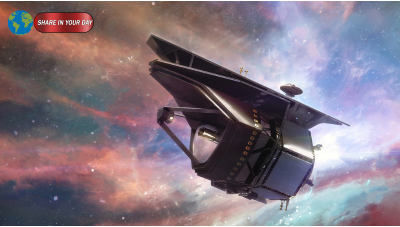
The observatory is currently targeted for launch in 2033 and is planned to operate for five years. If it passes its future confirmation review, NASA says the project’s cost will be capped at $1.2 billion, excluding launch and other non-project costs.
PRIMA will focus on far-infrared light, a portion of the electromagnetic spectrum that can reveal information hidden from many existing telescopes. NASA says the mission is designed to help scientists investigate the formation of planets and stars, the growth of galaxies and black holes, and the buildup of dust and heavy elements across cosmic history.
NASA PRIMA Telescope Opens a New Infrared Window
The basic idea behind PRIMA is straightforward: observe the universe at wavelengths that remain difficult to study.
Astronomers use different wavelengths of light to investigate different physical processes. Visible light can reveal stars and galaxies, while infrared observations can penetrate dusty environments and expose objects that are difficult to see at shorter wavelengths.
Far-infrared observations go even farther.
According to NASA, PRIMA is designed to help bridge the gap between existing infrared observatories, including the James Webb Space Telescope, and radio telescopes. Its 5.9-foot, or 1.8-meter, telescope will conduct deep and sensitive surveys of the universe.
That capability could provide scientists with information about some of the universe’s most important formation processes.
Young planetary systems, for example, can be surrounded by disks of gas and dust. Those disks contain the raw materials from which planets can form.
Far-infrared observations can help scientists study these cold environments and the chemical signatures associated with planetary formation.
NASA PRIMA Telescope Will Study Planet Formation
One of PRIMA’s major scientific goals is understanding how planets originate.
Scientists know that planets form from material surrounding young stars. However, the earliest stages of that process involve cold gas, dust and molecules that are not always easy to observe directly.
PRIMA is intended to investigate those environments in far-infrared wavelengths.
NASA says the mission will address questions involving the origins of planets outside our solar system, as well as the formation and evolution of stars, galaxies and black holes.
This could complement observations from other major facilities.
The James Webb Space Telescope has already transformed infrared astronomy by observing distant galaxies, stars, exoplanet atmospheres and planetary systems. PRIMA would not simply duplicate Webb’s work. Instead, it would extend observations into a different wavelength range.
NASA previously described PRIMA as a mission capable of filling a critical gap between wavelengths accessible to Webb and those observed by radio facilities.
That makes the telescope potentially useful as a complementary observatory rather than a replacement for Webb.
PRIMA Will Investigate Galaxies and Black Holes
The NASA PRIMA telescope will also investigate how galaxies and their central black holes evolved over cosmic history.
Most large galaxies are believed to contain supermassive black holes at their centers. These objects can become extraordinarily energetic when matter falls toward them.
At the same time, galaxies themselves undergo enormous changes as stars form, die and redistribute elements throughout their environments.
Understanding how black holes and galaxies developed together remains one of the major questions in astrophysics.
PRIMA’s far-infrared observations could provide additional evidence about these processes, particularly in regions where dust hides activity from other types of telescopes.
NASA says the mission will investigate how galaxies and their black holes have grown and evolved over cosmic history.
Cosmic Dust Is a Major Part of the Mission
Dust may appear insignificant compared with stars and galaxies, but it plays an important role in cosmic evolution.
Interstellar dust can block visible light. At the same time, dust absorbs radiation and can re-emit energy at infrared wavelengths.
That makes infrared astronomy particularly valuable for studying dusty environments.
PRIMA is designed to investigate how dust and heavy elements have built up throughout the universe.
Those observations could help scientists better understand the life cycle of matter.
Elements heavier than hydrogen and helium are produced through stellar processes and other cosmic events. Over billions of years, these materials become incorporated into new stars, planets and other structures.
By observing far-infrared signatures from distant environments, PRIMA could help astronomers trace portions of this long-term process.
NASA PRIMA Telescope Is the First Probe Explorer
PRIMA is significant not only because of its scientific objectives.
It is also the first mission selected for NASA’s new Probe Explorer class.
NASA established the class to fill a gap between smaller Explorer missions and much larger flagship observatories. The concept originated from recommendations in the National Academies’ 2020 astronomy and astrophysics decadal survey.
In 2024, NASA selected two concepts for further study: PRIMA and the Advanced X-ray Imaging Satellite, known as AXIS. Both were candidates for becoming the first mission in the new category.
PRIMA has now been selected to move forward.
The change from concept study to Phase B represents a substantial milestone, but it does not mean the telescope is already fully approved for construction.
NASA says PRIMA must undergo a confirmation review based on technical, programmatic and cost performance before it can enter Phase C implementation.
The NASA PRIMA Telescope Has a $1.2 Billion Cap
NASA’s cost target is another important part of the mission.
If confirmed, PRIMA’s project cost will be capped at $1.2 billion, excluding launch and other non-project costs.
That makes PRIMA considerably different from some of NASA’s enormous flagship astronomy projects.
The Probe Explorer concept is intended to deliver significant scientific capabilities while maintaining tighter cost and schedule controls.
NASA’s earlier 2024 announcement had described the new mission class as filling the space between flagship and smaller-scale missions. At that point, NASA said Probe Explorer missions would have a $1 billion mission-cost cap excluding launch and certain contributions.
The latest PRIMA announcement now specifies a $1.2 billion project cost cap.
This cost-controlled approach could become important for future astrophysics missions if PRIMA demonstrates that ambitious observatories can be developed within a more limited program framework.
PRIMA Telescope Targets a 2033 Launch
NASA currently plans to launch PRIMA in 2033.
That timeline gives engineers several years to move from preliminary design into full development, testing and launch preparation.
The mission’s development will be managed by NASA’s Jet Propulsion Laboratory in Southern California. NASA’s Goddard Space Flight Center and Marshall Space Flight Center are also involved. International partners include agencies and institutions from Europe, Canada, South Korea and Japan.
NASA says the current plan calls for a five-year scientific mission once the observatory begins operations.
The 2033 target is therefore an important milestone, but it should not be interpreted as a guaranteed launch date. The mission still faces technical, programmatic and cost reviews before implementation is finalized.
Why Far-Infrared Astronomy Matters
Far-infrared astronomy provides access to information that other wavelength ranges cannot always capture as effectively.
NASA-backed research on PRIMA has highlighted scientific targets including protoplanetary disks, star formation, active galactic nuclei, black-hole growth and the buildup of dust and metals in galaxies.
The far-infrared range can be particularly useful for observing cold material.
That matters because many of the processes involved in star and planet formation occur in environments dominated by dust and relatively low temperatures.
The universe can therefore look very different when observed at far-infrared wavelengths compared with visible light.
Instead of focusing primarily on bright stars, astronomers can investigate the colder material surrounding them and the energetic processes hidden inside dusty regions.
NASA PRIMA Telescope Could Complement Webb
The launch of PRIMA would add another capability to an already expanding fleet of space observatories.
The James Webb Space Telescope remains a major infrared observatory, while NASA’s Nancy Grace Roman Space Telescope is designed for wide-field infrared surveys.
PRIMA would operate in another portion of the infrared spectrum.
The three missions could therefore contribute different pieces of information to the same scientific questions.
For example, an astronomer studying a distant galaxy might use one observatory to identify its structure, another to examine its infrared properties and PRIMA to investigate far-infrared emissions associated with dust and star formation.
Combining observations across wavelengths can provide a more complete picture than any individual telescope can deliver.
The Mission Builds on NASA’s Explorer Program
PRIMA also extends the long history of NASA’s Explorers Program.
NASA describes the Explorers Program as its oldest continuously operating program designed to provide relatively frequent and cost-conscious access to space for scientific investigations. The program began with Explorer 1 in 1958, which discovered Earth’s radiation belts.
Since then, the program has supported more than 100 missions.
PRIMA’s Probe Explorer classification represents an expansion of that philosophy into a larger and more capable category of astrophysics missions.
The goal is to combine significant scientific ambition with a defined cost structure.
That could give researchers another pathway for proposing major observatories between smaller missions and enormous flagship programs.
International Partners Join PRIMA
The NASA PRIMA telescope will also have an international dimension.
NASA says the mission includes contributions from CNES of France, ASI of Italy, DLR of Germany, the Canadian Space Agency, the Korea Astronomy and Space Science Institute, Japan’s JAXA and the UK Space Agency.
International collaboration is common in large astronomy projects because observatories often require specialized instruments, engineering expertise and scientific participation from multiple countries.
PRIMA’s international partnerships could therefore broaden both the technical capabilities of the mission and the community of scientists who will use its observations.
NASA Science has previously described PRIMA as an observatory intended for the broader astronomical community, with a large share of observing time expected to be available through general observer programs.
What Happens Before the 2033 Launch?
The next major step is continued Phase B development.
Engineers will advance the preliminary design while NASA evaluates whether the mission is technically and financially ready to proceed.
The eventual confirmation review will be critical.
NASA will consider technical performance, programmatic progress and cost before deciding whether PRIMA can enter Phase C implementation.
If the mission passes that process, development can progress toward construction, integration and testing.
Only after those stages will the telescope be prepared for its journey into space.
Therefore, while NASA’s 2033 launch target is now established, the coming years will determine whether PRIMA can remain on that schedule.
A New Chapter for Infrared Space Astronomy
The NASA PRIMA telescope represents more than another telescope added to NASA’s growing space-science portfolio.
It is the first demonstration of a new mission class intended to occupy a middle ground in astrophysics.
Scientifically, PRIMA will focus on a part of the infrared spectrum that can reveal cold dust, planetary-building material and hidden activity in galaxies and around black holes.
Technologically, the mission will require extremely sensitive instruments and sophisticated thermal control.
Programmatically, it will test whether NASA can deliver an ambitious astrophysics observatory under a defined cost cap and within a relatively compressed development timeline.
If everything proceeds according to the current plan, PRIMA could reach space in 2033 and begin a five-year investigation of some of the universe’s most difficult-to-see phenomena.