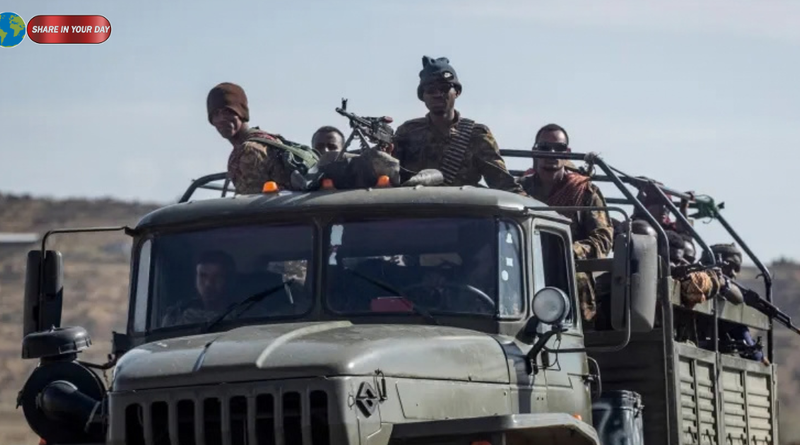
Ethiopia Army Promises Restraint as Fighting Escalates
The Ethiopia army promises restraint message comes as renewed fighting in the country’s north raises concerns that a fragile peace agreement could collapse and lead to a broader conflict.
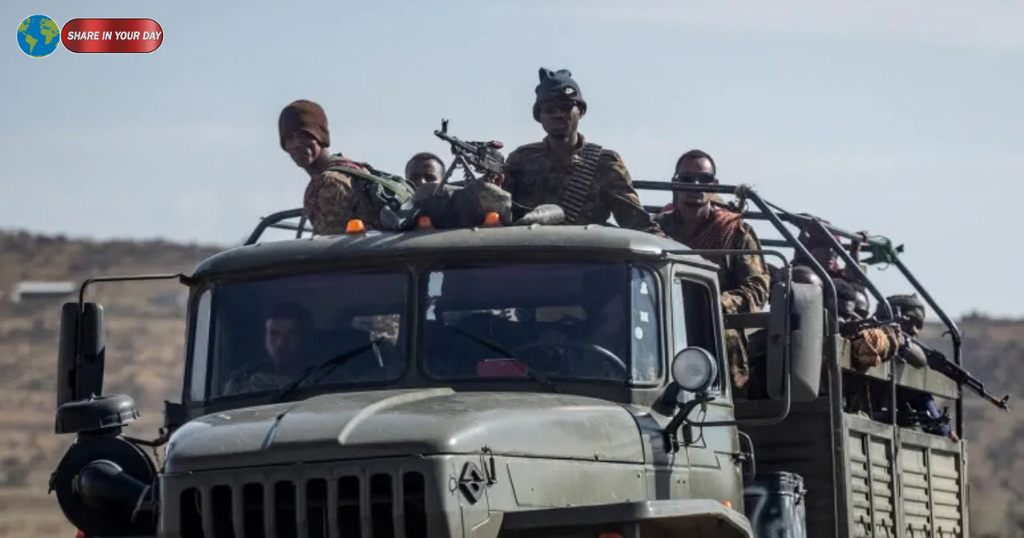
Ethiopian Army Chief of Staff Field Marshal Berhanu Jula said the federal military was responding to what he described as provocations from the Tigray front with “wisdom and restraint.” His comments came after several days of intensified fighting involving federal forces and Tigrayan forces in northern Ethiopia.
The escalation has spread beyond Tigray into neighbouring Afar and Amhara regions. It follows the formation of a new alliance involving seven armed groups that have declared their intention to remove Prime Minister Abiy Ahmed’s government. AAl Jazeera+1
At the same time, both sides have accused the other of initiating the latest fighting. Because communications have been disrupted in parts of the north, independent verification of individual battlefield claims remains difficult.
Ethiopia Army Promises Restraint Amid Growing Tensions
Berhanu Jula’s comments represent the Ethiopian military’s latest public response to fears of another major conflict.
According to Al Jazeera, the army chief said federal forces were exercising “strategic calm” rather than seeking a large-scale confrontation. He also argued that the Tigray front’s support was declining and that its leadership faced internal divisions. AAl Jazeera
Those statements come at a sensitive moment.
The Tigray People’s Liberation Front, or TPLF, remains a major political and military force in the region. The group fought the federal government during the 2020–2022 Tigray war, a conflict that caused enormous civilian suffering and displacement.
A peace agreement signed in Pretoria in November 2022 ended the full-scale war. However, several major political, territorial and security disputes remained unresolved.
Those unresolved issues have increasingly complicated the post-war settlement.
Why Fighting Has Returned to Tigray
The latest escalation did not emerge suddenly.
Tensions between the federal government and Tigrayan authorities have increased throughout 2026. Earlier clashes were followed by reports of military mobilisation and drone strikes.
In September, fighting intensified in southern Tigray and later spread into Afar and Amhara. Tigrayan forces also seized control of several airports, prompting Ethiopian Airlines to suspend flights to and from parts of the region. AAl Jazeera+1
Both sides have offered competing explanations for how the latest escalation began.
Tigrayan forces have accused the federal government of launching a major offensive involving ground forces, artillery and drones. Government officials, meanwhile, have accused the TPLF of initiating attacks against federal positions.
The competing claims mean that individual reports from the battlefield should be treated cautiously.
Reuters also reported that the renewed clashes represent the most serious escalation since the 2020–2022 war. RReuters
The Pretoria Agreement Under Pressure
The Pretoria Agreement remains central to understanding the current crisis.
The November 2022 deal halted the devastating war between Ethiopia’s federal government and the TPLF. It created a framework for disarmament and political reconciliation while addressing some of the consequences of the conflict.
However, important questions remained unresolved.
One of the most sensitive issues concerns disputed territory in western Tigray. The area was taken by forces from neighbouring Amhara during the previous war, while Tigrayan authorities continue to seek its return.
The fate of displaced civilians is closely connected to the territorial dispute.
Other unresolved issues include the political administration of Tigray, the status of armed forces in the region and the implementation of provisions contained in the peace agreement. Al Jazeera reported that the TPLF regained control of Tigray’s regional administration earlier in 2026, further complicating the post-war political arrangement. AAl Jazeera
The result has been a peace process that stopped large-scale warfare but did not resolve every underlying dispute.
Seven Armed Groups Form New Alliance
Another major development is the emergence of the Ethiopian Peoples’ Forces Alliance for Survival.
Seven armed groups announced the alliance earlier this month and said they intended to remove Abiy Ahmed’s government and establish an inclusive transitional government.
The coalition includes the TPLF, the Amhara Fano National Movement and the Oromo Liberation Army. It also includes groups from the Somali, Afar and Benishangul-Gumuz regions. AAl Jazeera+1
The alliance is notable because some of its members were previously enemies.
During the 2020–2022 Tigray war, Fano forces fought alongside the federal government against the TPLF. Fano subsequently became involved in a separate armed conflict with the federal government in Amhara.
The new alliance therefore brings together movements with different histories and political objectives.
Their shared opposition to the federal government does not necessarily mean that they agree on Ethiopia’s future political structure.
Reuters reported that analysts have questioned how effectively the groups can cooperate because of geographical distance, organizational weaknesses and political differences. RReuters
Ethiopia and Eritrea Exchange Accusations
Eritrea has also become part of the growing regional tensions.
Ethiopian military officials have accused Eritrea of funding and supporting armed groups seeking to weaken the Ethiopian government.
Eritrea has denied the allegations.
The relationship between the two countries is particularly sensitive because Ethiopia and Eritrea fought a separate border war from 1998 to 2000. Although Abiy Ahmed and Eritrean President Isaias Afwerki later established closer relations, tensions have resurfaced.
Ethiopia’s lack of direct access to the Red Sea has also become an important strategic issue.
Eritrea has expressed concern about Ethiopia’s ambitions regarding Red Sea access, while Ethiopian officials have repeatedly stressed the country’s economic and strategic need for reliable access to maritime trade routes.
Any further deterioration in relations could therefore add another dimension to Ethiopia’s internal conflicts.
Communications Blackout Raises Concern
The renewed fighting has also disrupted communications in northern Ethiopia.
Internet and telephone services were reported to have stopped working in parts of Tigray as fighting intensified. The disruption has raised memories of the communications blackout and restrictions imposed during the 2020–2022 conflict. AAl Jazeera
During the previous war, Tigray was largely cut off from the outside world.
That created serious challenges for civilians, humanitarian organizations and journalists attempting to understand developments on the ground.
The latest disruption is therefore being closely watched.
Limited communications can make it more difficult to verify casualty figures, determine which side controls particular areas and establish whether reports of attacks against civilians are accurate.
It can also make it harder for families to contact relatives in affected areas.
Civilians Face Renewed Uncertainty
For civilians in Tigray, the latest developments bring back memories of a war that ended less than four years ago.
Al Jazeera recently reported that some young men have left Tigray because they fear forced recruitment as political and military tensions increase.
The reports include accounts from young Tigrayans who said they were concerned about being compelled to join armed forces. Human Rights Watch has also raised allegations of forced recruitment in the region, including reports involving young people. AAl Jazeera
These concerns illustrate how quickly military mobilisation can affect daily life.
Families that had begun rebuilding after the previous war now face uncertainty over security, transportation, communications and access to basic supplies.
There are also wider humanitarian concerns.
The previous conflict caused extensive displacement and severe disruption to food supplies and essential services. A return to sustained fighting could place additional pressure on communities that have not fully recovered.
Reports of Heavy Fighting Continue
The Ethiopian military has reported significant casualties among Tigrayan fighters.
On September 24, the Ethiopian National Defence Force said it had killed 272 TPLF fighters and wounded another 260 during a counteroffensive in Amhara. The military also said several fighters had been captured. AAl Jazeera
Such figures are difficult to independently verify.
The TPLF and other armed groups have provided their own accounts of the fighting, while access to affected areas remains restricted.
For that reason, casualty figures and claims of territorial control should be regarded as statements from the parties involved unless independently confirmed.
This is particularly important as communications disruptions make real-time verification more difficult.
What the Army’s Restraint Message Means
The Ethiopian army’s public emphasis on restraint does not mean the fighting has stopped.
Instead, the statement indicates that federal authorities are presenting their military strategy as controlled and measured while tensions remain high.
The army has said it prefers “strategic calm” over a broader confrontation.
At the same time, federal and Tigrayan forces continue to face each other in several areas, while the new armed alliance adds another layer of uncertainty.
The situation therefore remains fluid.
The most important question is whether the latest fighting remains concentrated in northern Ethiopia or develops into a wider conflict involving armed groups in multiple regions.
Why the New Alliance Matters
The seven-group alliance could affect the conflict beyond Tigray.
Its members operate in different parts of Ethiopia, including Oromia, Amhara, Tigray, Afar and the Somali region.
That geographic spread means renewed violence could potentially place pressure on several fronts.
However, the alliance also faces significant internal challenges.
The groups have different political goals and longstanding disputes. Some have previously fought each other, while others have separate territorial and political claims.
The TPLF and Fano, for example, have opposing positions over western Tigray despite now sharing opposition to the federal government.
Reuters reported that analysts have cautioned that these differences could limit the alliance’s ability to operate as a unified force. RReuters
International Concerns Grow
The latest escalation has attracted international attention because Ethiopia is one of Africa’s largest and most strategically important countries.
A broader conflict could have consequences beyond Ethiopia’s borders.
The country shares borders with Eritrea, Sudan, South Sudan, Kenya, Somalia and Djibouti. Several of those countries already face security or political challenges.
The possibility of renewed large-scale fighting therefore raises concerns about displacement, humanitarian access and regional stability.
The United Nations has also expressed concern over reports involving drone use against civilians in northern Ethiopia, according to Al Jazeera’s reporting. AAl Jazeera
The international community faces the difficult task of encouraging implementation of the peace agreement while avoiding actions that could further escalate tensions.
What Happens Next?
The immediate trajectory of the conflict remains uncertain.
The Ethiopian government’s insistence that the army is exercising restraint could create space for political engagement if fighting decreases.
However, continued military mobilisation by either side could make negotiations more difficult.
Several issues will be particularly important to watch.
First is whether fighting continues around Tigray’s borders with Amhara and Afar.
Second is whether the seven-group alliance can maintain cooperation despite its internal differences.
Third is whether communications and transportation links in northern Ethiopia can be restored.
Finally, the implementation of the Pretoria Agreement remains a critical issue.
A durable reduction in violence would require more than a temporary military pause. The unresolved political and territorial disputes that contributed to the renewed tensions would also need to be addressed.
Ethiopia Faces a Critical Test
The latest developments represent a serious challenge for Ethiopia’s post-war political settlement.
The Ethiopia army promises restraint message comes at a time when federal forces, Tigrayan forces and other armed groups are involved in an increasingly complex security situation.
The government says it wants to avoid a large-scale confrontation. Tigrayan forces say they are responding to federal military pressure. Seven armed groups have meanwhile announced a common objective of removing Abiy Ahmed’s government.
The competing claims underscore the uncertainty surrounding the current crisis.
The 2022 Pretoria Agreement succeeded in ending the previous full-scale war, but key disputes remained unresolved. Four years later, those unresolved issues have once again become central to Ethiopia’s security situation.
For civilians, the priority remains preventing another prolonged conflict and maintaining access to essential services and humanitarian assistance.
For the international community, the immediate challenge is monitoring developments, supporting civilian protection and encouraging mechanisms that can reduce the risk of further escalation.
As fighting continues, the Ethiopian army’s pledge of restraint will be closely watched alongside developments on the ground and any renewed diplomatic efforts.
Suggested Image
Use a properly licensed news photograph showing Ethiopian or Tigrayan forces in the current 2026 conflict.
Recommended ALT text: Ethiopia army promises restraint as fighting intensifies in Tigray
Source image reference: Al Jazeera’s September 27 report uses an Associated Press photograph of Ethiopian armed forces amid the current escalation. Licensing should be checked before publication. AAl Jazeera